Sourcing the right thermal packaging is often a balancing act between budget constraints and performance anxiety. When you receive a quote from a cold shipping bag distributor, the numbers can sometimes feel arbitrary. Why does one insulated tote cost $5.00 while a visually similar one commands $15.00?
For procurement managers in the pharmaceutical, fresh food, or logistics sectors, understanding the “why” behind the price tag is crucial. It’s not just about distributor markup; it is about the physics of insulation, the rigor of compliance, and the complexity of the supply chain.
Whether you are working with an established industry player like Weierken or scouting new suppliers, knowing the cost drivers allows you to negotiate better and choose the right product for your specific cold chain needs. Below, we break down the five critical factors that dictate the wholesale price of cold shipping bags.
1. Insulation Material Grade and Structural Complexity
The primary driver of cost is, unsurprisingly, the technology used to keep the cold in and the heat out. A cold shipping bag distributor isn’t just selling you a bag; they are selling you a thermal management system. The cost variance here can be massive depending on the performance requirements.
Material Selection: The Core of the Cost
If your requirement is to keep a sandwich cool for three hours, a distributor will quote you based on standard EPE (Expanded Polyethylene) foam. This is cost-effective, lightweight, and widely available.
However, if you are shipping vaccines or high-value steaks that need to stay below 4°C for 48 hours, the material specs change drastically.
- VIPs (Vacuum Insulation Panels): These offer the highest thermal resistance per inch but are significantly more expensive to manufacture and handle.
- PCM (Phase Change Materials): Integrating pockets or linings designed for specific PCMs adds to the complexity.
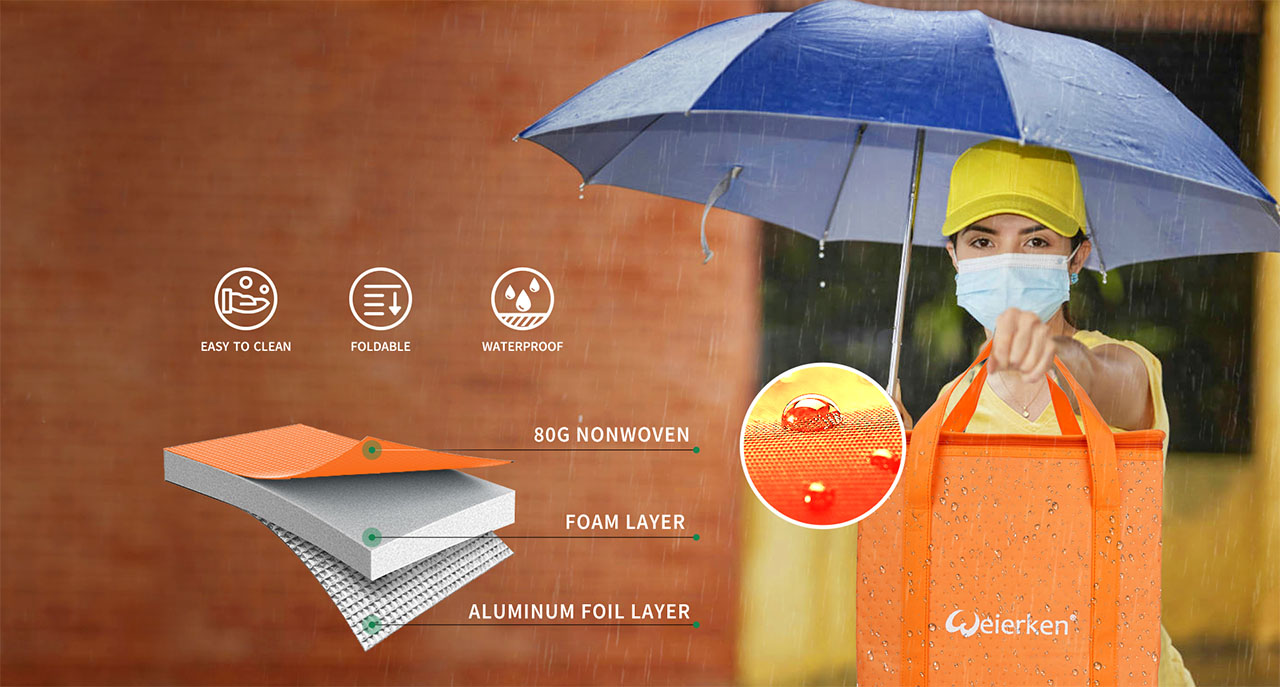
- Multi-layer Composites: High-performance bags often use a “sandwich” of reflective foil, high-density foam, and PVC. Each layer adds to the raw material cost.
Manufacturing Craftsmanship
How the bag is put together matters as much as the material itself. A cheap bag is stitched together. A professional cold chain bag is often engineered.
- Seamless Welding: For medical or liquid transport, leakage is not an option. Distributors offering High-Frequency (HF) welding technology will charge more because this process creates a fully waterproof, airtight seal that prevents cold air from escaping through needle holes.
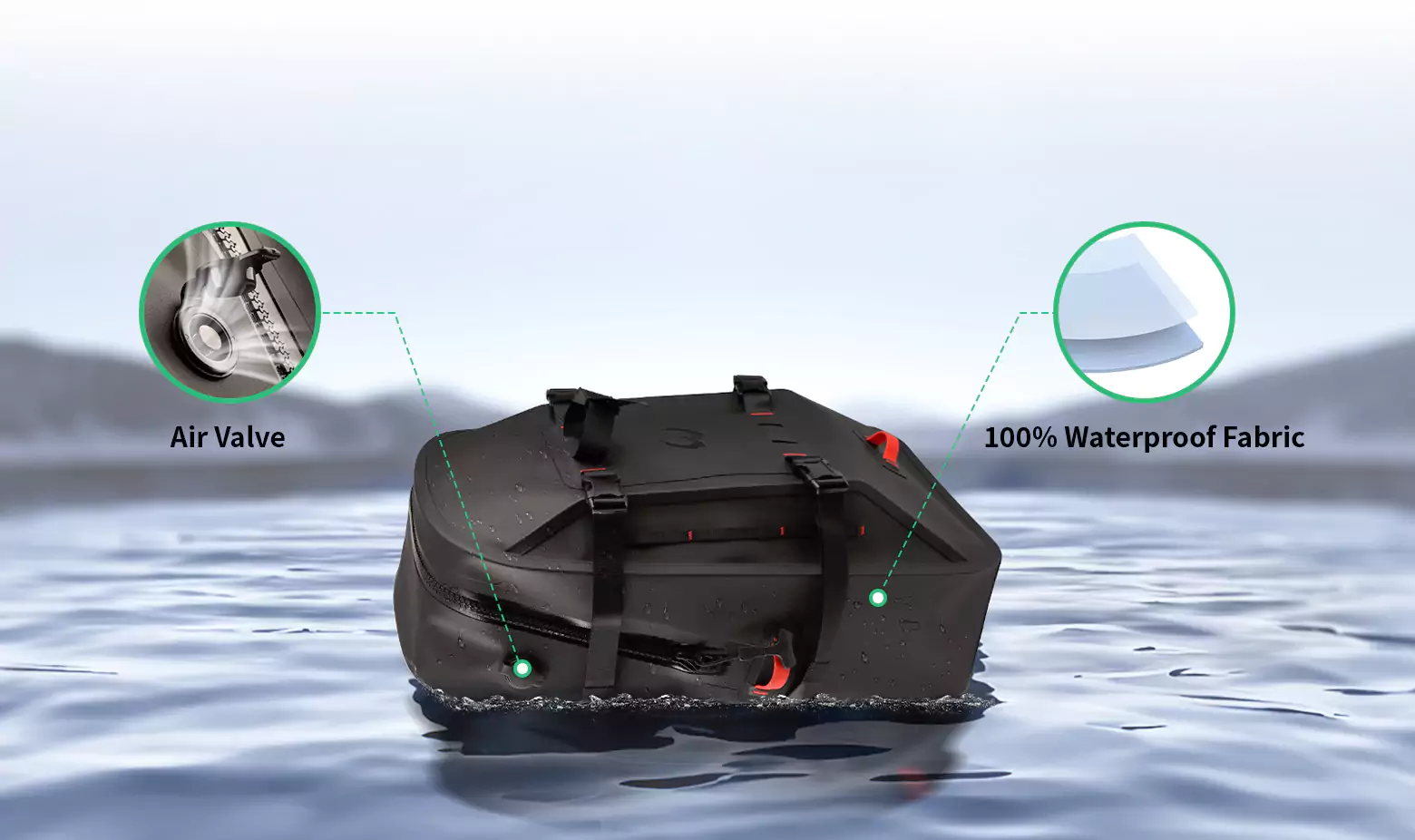
- Zipper Systems: A standard nylon zipper is cheap. A waterproof, airtight zipper (similar to those on diving suits) is a premium component that significantly raises the unit price but is essential for maintaining internal temperatures.
Structural Design Features
The more complex the structure, the higher the labor and manufacturing cost. A simple tote is easy to automate. But if you require:
- Reinforced hard-shell corners for stackability.
- Internal adjustable dividers to separate frozen and chilled goods.
- Protective bumpers to survive rough courier handling.
These features require manual assembly steps, driving up the price your cold shipping bag distributor must charge to maintain a margin.
2. Industry Compliance and Performance Testing
In the world of cold chain logistics, a bag is just a bag until it is certified. For industries like pharmaceuticals or food delivery, the liability of a spoiled shipment far outweighs the cost of the packaging. Therefore, reliable distributors like Weierken invest heavily in compliance, and this investment is amortized into the product cost.
Material Certification
You aren’t just paying for plastic and foam; you are paying for safety.
- Food Safety: Inner linings must be FDA or LFGB approved to ensure they don’t leach chemicals into food.
- Environmental Standards: Compliance with REACH (Europe) or RoHS ensures the materials are free from hazardous substances.
- Recyclability: Sourcing verified recyclable or biodegradable materials often comes with a premium compared to virgin non-recyclable plastics.
Performance Validation (The “Invisible” Cost)
A reputable cold shipping bag distributor doesn’t guess; they test. Before a high-end cold shipping bag hits the market, it often undergoes rigorous testing in environmental chambers.
- ISTA 7D Testing: This is the gold standard for thermal transport testing. Running these profiles to prove a bag maintains temperature for 24, 48, or 72 hours costs thousands of dollars per SKU.
- Drop and Leak Tests: Ensuring the bag survives a 3-foot drop without the liner bursting requires destructive testing (sacrificing inventory) and third-party lab fees.
When you see a higher price tag, you are often paying for the assurance that the bag will actually perform as advertised, backed by a test report.
3. Customization and OEM/ODM Service Depth
Standard “off-the-shelf” products are always cheaper because the Research and Development (R&D) costs have already been covered. However, most businesses need something unique. The degree of customization is a major lever for price.
Basic Branding (OEM)
If you simply want your logo on an existing model, the cost impact is minimal. Screen printing or heat transfer labels add pennies to the dollar, and the setup fees are low. This is the entry-level service most distributors provide.
Functional and Structural Customization (ODM)
If you approach a supplier and say, “I need a bag that fits this specific medical device and has a transparent pocket for a data logger on the outside,” you have moved into ODM territory.
- R&D Costs: The engineering team (like the experts at Weierken) has to design the pattern, calculate thermal load, and prototype the structure.
- Molds and Tooling: If your design requires a custom-sized plastic handle, a specific molded hard bottom, or a unique zipper pull, new molds must be created. Mold fees can range from hundreds to thousands of dollars. These are either paid upfront or amortized into the unit price of the first few orders, artificially inflating the “per bag” cost initially.
4. Purchase Volume and Supply Chain Partnership
Wholesale pricing is never static; it is a sliding scale based on volume and relationship depth. The “economy of scale” is real, but there are other business factors at play.
The Volume Threshold
Manufacturing has setup costs. Cutting fabric for 100 bags takes almost as much setup time as cutting for 1,000.
- MOQ (Minimum Order Quantity): If you can’t meet the distributor’s MOQ, they might still serve you, but you will pay a surcharge to cover the machine setup and small-batch material sourcing.
- Raw Material Purchasing: High-volume orders allow the cold shipping bag distributor to buy fabric and insulation in bulk directly from the factory, bypassing middlemen and lowering the cost per yard, savings which are passed on to you.
Partnership Models
The nature of your contract influences the price.
- VMI (Vendor Managed Inventory): Some distributors offer to hold stock for you and ship it as you need it (Just-In-Time). While this frees up your warehouse space and cash flow, the distributor will add a warehousing and management fee to the unit price.
- Payment Terms: If you demand Net-60 or Net-90 day payment terms, the distributor is essentially financing your inventory. To cover the cost of capital and risk, the unit price may be slightly higher than if you paid a 50% deposit upfront.

5. Geography, Logistics, and Total Cost of Ownership (TCO)
Finally, where the bag is made and how it gets to you can double the final cost. When comparing quotes, you must look at the Incoterms.
Manufacturing Origin
- Domestic Production: Sourcing locally means fast communication and short shipping times, but higher labor and real estate costs.
- Overseas Production (e.g., Asia): This offers significantly lower labor costs, allowing for more complex sewing and detailing at a lower price. However, you introduce lead times of 30-60 days.
The Logistics of “Shipping Air”
Cold shipping bags are bulky. Even when foldable, they take up volume.
- Freight Costs: If you are buying from an overseas cold shipping bag distributor, ocean freight can be a substantial part of the cost. If the bags are rigid (non-foldable), you are essentially paying to ship air across the ocean.
- Duties and Tariffs: A quote of $10.00 FOB (Free on Board) might turn into $13.50 DDP (Delivered Duty Paid) once you factor in US customs duties, harbor maintenance fees, and broker fees.
Inventory Strategy
Smart distributors can help mitigate this by optimizing packaging—vacuum sealing soft bags to reduce volume, for example. However, this extra packing step adds a small labor cost. When analyzing the price, always ask for the “Landed Cost” to make a true apple-to-apples comparison.
The price of a cold shipping bag is rarely just a number; it is a reflection of its capabilities. A low-cost bag might save money upfront but cost you thousands in spoiled product and damaged brand reputation later. Conversely, over-engineering a bag for a short, non-critical trip is a waste of budget.
The key is transparency. A professional cold shipping bag distributor—one that operates with the integrity of a brand like Weierken—will walk you through these five factors. They will help you balance material grade with budget, navigate compliance without overspending, and optimize logistics to lower your total landed cost.
When requesting your next quote, don’t just ask “How much?” Ask “What am I paying for?” The answer will tell you everything you need to know about the quality of the product and the partnership.
Frequently Asked Questions (FAQ)
1. Why are shipping costs so high for cold shipping bags compared to other products?
Cold shipping bags, especially those with thick insulation, are voluminous. Logistics companies charge based on “dimensional weight” (volume) rather than actual weight. Even light bags can be expensive to ship if they take up a lot of space. A good cold shipping bag distributor will vacuum pack or fold the items efficiently to minimize this cost.
2. Can I use standard ice packs with any cold shipping bag?
Technically yes, but the performance depends on the bag’s insulation. A high-end bag with VIP insulation will make a standard ice pack last much longer than a basic foil-lined bag. For specific temperature requirements (like 2-8°C), your distributor should calculate the correct ratio of coolant to cargo volume.
3. What is the typical Minimum Order Quantity (MOQ) for a custom-sized bag?
For fully custom sizes (ODM), the MOQ is usually higher, often starting at 1,000 to 3,000 units. This is because the factory needs to cut specific fabric patterns and set up the production line. For standard sizes with just a logo print, MOQs can be as low as 300-500 units.
4. How does a “reusable” bag affect the long-term cost?
While a reusable heavy-duty cold bag costs more upfront (perhaps 3x-5x a disposable one), the cost per trip drops significantly if you have a “closed-loop” logistics system where you can retrieve the bags. If you are shipping one-way to customers who won’t return the bag, cheaper disposable or semi-disposable options are usually better financially.
5. Does the color of the bag affect the price?
Generally, no, provided you choose a standard color (silver, white, blue, black) that the distributor stocks. However, if you require a specific Pantone color match for the fabric, the fabric mill requires a high minimum yardage run, which can increase the cost or MOQ significantly.