Finding the right manufacturing partner is critical for your business. The bags you source carry your brand name and directly impact how customers perceive your service. If a bag fails—if it leaks, tears, or lets food go cold—your reputation suffers.
You need a set of clear standards to evaluate potential suppliers. These criteria go beyond just looking at a sample. They dig into how the bag is made, what it is made of, and whether the manufacturer can deliver quality consistently. A professional lunch bag fabricator like weierken builds products that withstand daily commercial use.
Here are the five key criteria you must use to select a partner for insulated food bags.
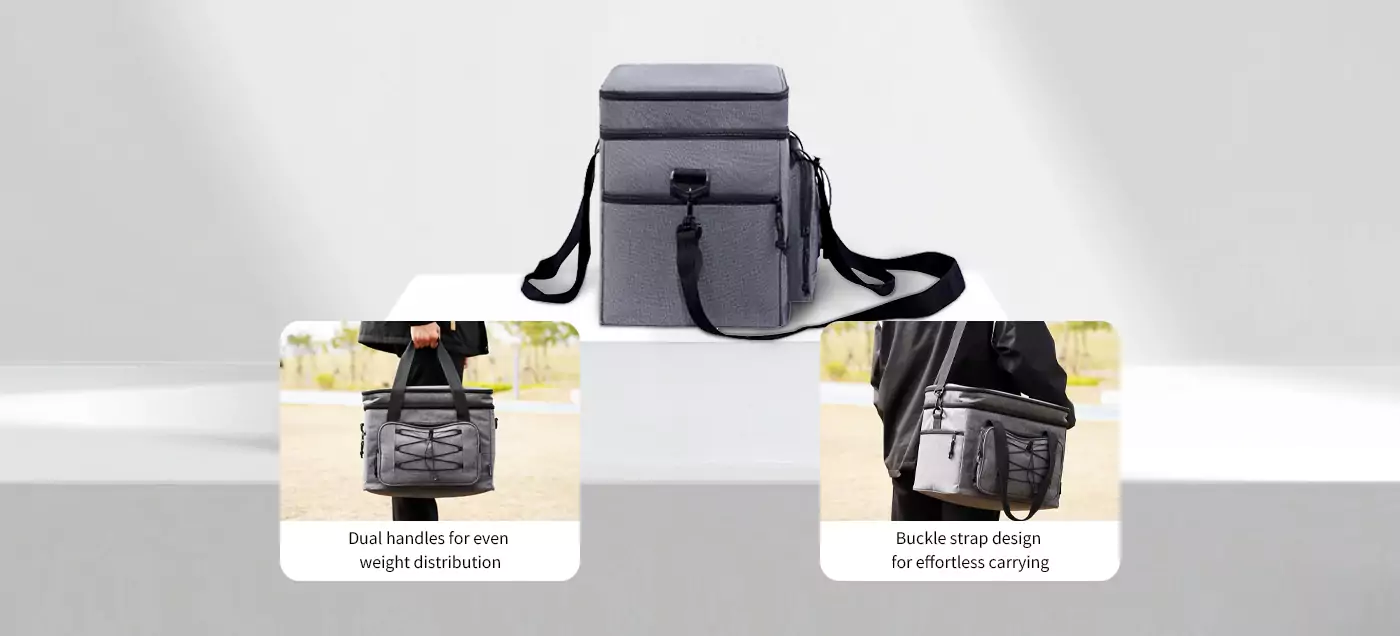
1. Food Safety and Material Compliance
The inside of the bag touches food packaging directly. Sometimes, containers leak or sweat. When that happens, the inner liner must not release harmful chemicals. This is the foundation of consumer safety and your legal responsibility.
Material safety is non-negotiable. You must verify that all materials contacting food meet the regulations of your target market. Different regions have different standards. You need a fabricator who understands these global requirements and can provide proof of compliance.
Key Evaluation Points:
- Request test reports: Ask the lunch bag fabricator for third-party food-grade test reports. These must show compliance with FDA (US), LFGB (Germany/EU), or GB 4806 (China) standards.
- Check for harmful substances: Confirm the materials are free from heavy metals, phthalates, and formaldehyde. Ensure there is no risk of migration, especially in warm conditions.
- Review insulation materials: Even the inner foam, like PE cotton or EVA, must be non-toxic and odorless. Ask for a material composition statement.
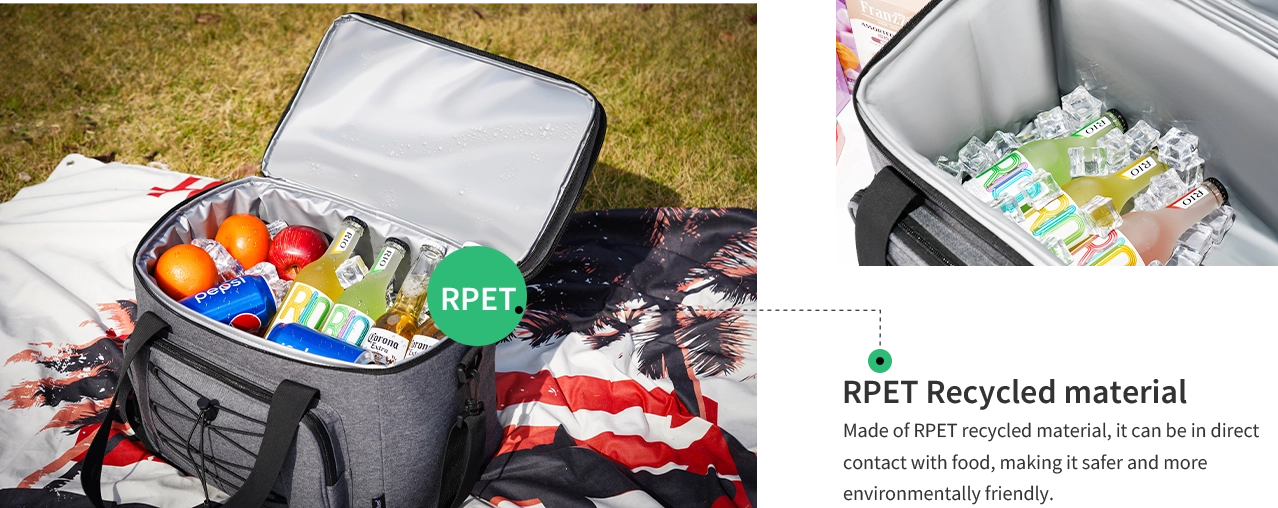
- Ask about sustainability: Many buyers now prefer eco-friendly options. Inquire if the fabricator offers rPET recycled fabrics or bio-based materials.
2. Verified Thermal Performance
The main job of an insulated lunch bag is temperature retention. You need to keep hot food hot and cold food cold until it reaches the customer. This performance must be proven, not just promised.
Good insulation depends on the type, thickness, and structure of the materials inside. A single layer of thin foam will not hold temperature for long. Professional designs use multi-layer composites, often including a reflective aluminum layer to bounce heat back.
Key Evaluation Points:
- Demand data: Require third-party thermal test reports based on standards like ASTM D3103. You need to know how long the bag maintains hot food above 60°C or cold food below 5°C at a specific room temperature, like 25°C.
- Understand the build: Ask about the insulation layer. What material is used? What is the thickness and density? Is there a multi-layer structure with an aluminum reflector?
- Discuss customization: For ODM projects, confirm the lunch bag fabricator can tailor the insulation for your specific needs. A 30-minute local delivery requires different engineering than a two-hour catering run.
- Test samples yourself: Do not rely only on reports. Get a sample, put a temperature logger inside with hot water, and check the drop over time.
3. Structural Durability and Craftsmanship
Commercial use is tough. Bags get loaded heavy, dropped on pavement, and shoved into delivery vehicles. They need to survive this every day. Durability comes from smart design and careful construction.
Pay close attention to the stress points. Handles and straps take the most force. If they are not reinforced, they will pull out. The seams are also critical. Ordinary stitching creates holes that can leak and weaken the fabric.
Key Evaluation Points:
- Check reinforcement: Look at the handle and strap attachments. Do they use “bar-tack” stitching or extra layers of fabric at the connection points? Is the bottom reinforced?
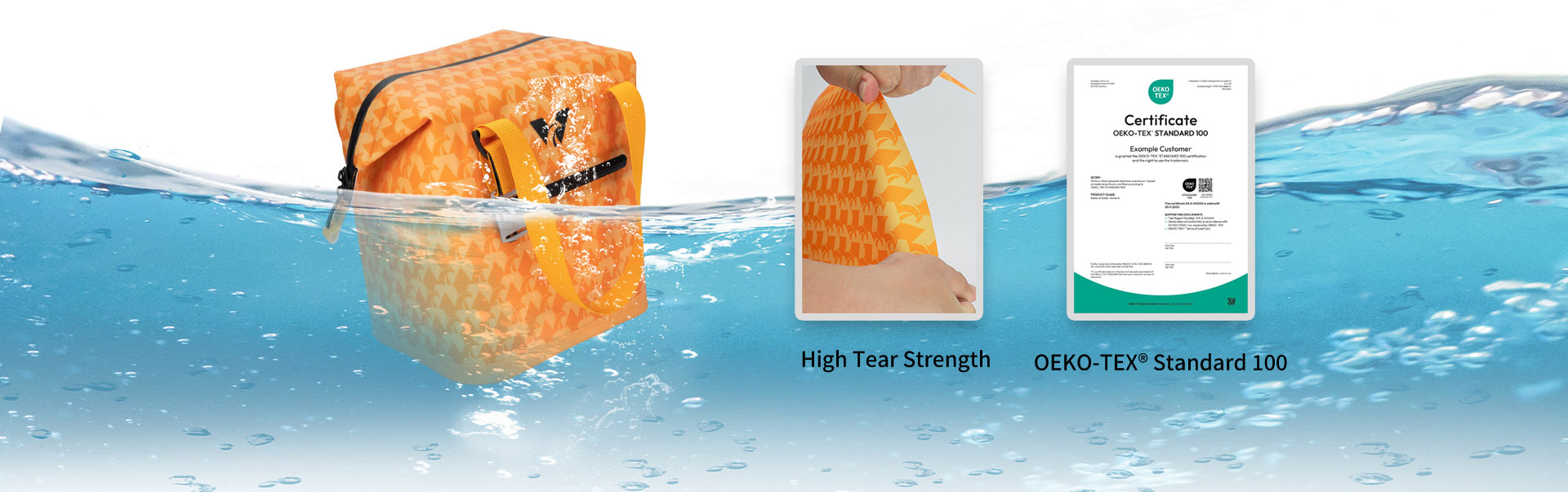
- Inspect seam sealing: Does the lunch bag fabricator use high-frequency welding or seamless taping? This prevents air and moisture from leaking through stitch holes.
- Examine the zipper: What brand of zipper is used? Reputable names like YKK are a good sign. Is it a waterproof zipper, or does it have a protective cover?
- Review test reports: Ask for weight-bearing pull test reports and drop test reports. This data shows how the bag holds up under stress.
- Look at stitch quality: On samples, check if the stitching is straight and even. Are there loose threads?
4. Customization Capabilities
Your brand needs to stand out. Standard, off-the-shelf bags rarely fit a brand’s specific image or functional requirements. You need a lunch bag fabricator who can turn your ideas into reality.
Customization ranges from simple color changes to completely new designs. The manufacturer’s ability to handle this efficiently affects your time to market and product uniqueness. Some fabricators only print logos on existing shapes. Others can engineer a bag from scratch.
Key Evaluation Points:
- OEM basics: Can they adjust dimensions to fit your specific containers? Can they match your brand colors using Pantone numbers? What printing methods do they offer (heat transfer, silk screen, embroidery)?
- ODM depth: Does the lunch bag fabricator have an in-house design team? Can they take a concept, create 3D renderings, and suggest improvements for manufacturing?
- Functional innovation: Ask if they can develop special features. This might include leak-proof liners for soups, separate pockets for ice packs, or adjustable dividers inside.
- Sample lead time: How fast can they produce a sample? How many rounds of revision are included, and what are the costs?
5. Quality Control and Supply Chain Reliability
A great sample means nothing if the bulk production is inconsistent. You need a lunch bag fabricator who can deliver thousands of units that all match the quality of the first sample. This requires a formal quality management system.
Reliability also means they can deliver on time, even during peak seasons. You need to understand their capacity, their material sourcing, and their commitment to ethical manufacturing.
Key Evaluation Points:
- Quality systems: Are they ISO 9001 certified? Do they perform inspections at every stage: incoming materials (IQC), during production (IPQC), and on finished goods (FQC)?
- Dedicated QC team: Ask if they have dedicated quality control staff. Request to see examples of their inspection records for past orders.
- Production capacity: What is the factory’s monthly output? Can they scale up if your order volume grows?
- Material sourcing: Do they keep safety stock of key materials? Do they have backup suppliers to avoid delays?
- Social compliance: Are they audited by BSCI or Sedex? This is often required for importing into Europe and North America.
- Peak season planning: How do they handle order spikes? Can they guarantee capacity during your busiest months?
Summary
Selecting a lunch bag fabricator is a strategic decision. It requires you to look past the surface and evaluate the materials, the engineering, and the systems behind the product. By applying these five criteria—food safety, verified insulation, structural durability, customization ability, and quality control—you protect your brand and your customers. A manufacturer with strong technical capabilities, such as weierken, can provide the documentation and partnership you need.
Frequently Asked Questions
Q1: What food safety certifications should a lunch bag fabricator have?
You should look for third-party test reports confirming compliance with the regulations for your country. The most common are FDA (for the US market), LFGB (for Germany and much of Europe), and GB 4806 (for China). These reports verify that the inner liner does not contain harmful chemicals that could migrate to food.
Q2: How long should an insulated lunch bag keep food hot?
It depends on the bag’s construction and the intended use. A basic bag might hold heat for 1-2 hours. A high-performance bag with thick, multi-layer insulation and VIP panels can maintain temperatures for 4-6 hours or more. You need to ask the lunch bag fabricator for test data based on your specific delivery time requirements.
Q3: Can I order a small batch of custom bags to test the market?
Many manufacturers have minimum order quantities (MOQs). However, some are flexible. When you contact a lunch bag fabricator, be upfront about your volume. Some may offer a pilot run or sample order to help you test the market before committing to a large production run.
Q4: What is the difference between PE foam and EVA foam for insulation?
PE (Polyethylene) foam is a common, cost-effective insulation. It is lightweight and provides decent thermal protection. EVA (Ethylene-Vinyl Acetate) foam is generally more flexible, has a softer feel, and can offer slightly better insulation properties. The best choice depends on your budget and performance needs.
Q5: How can I ensure the custom printed logo won’t peel off?
Ask the lunch bag fabricator about the printing method and durability. For fabric bags, heat transfer and silk screen are common. For a more premium, long-lasting look, embroidery is an option. Request information on the ink or material used and ask if they have done any adhesion or wash testing.
Q6: Why is welded seam construction better than stitching?
Stitching creates thousands of tiny needle holes. These holes can allow air to pass through, which reduces insulation efficiency. They can also let water leak in. Welded seams, using high-frequency or ultrasonic technology, join the material without piercing it. This creates an airtight, waterproof seal that improves both thermal performance and durability.
Ready to Source Your Insulated Food Bags?
Do not compromise on quality or safety. Partner with a manufacturer who understands the commercial demands of the food industry. Contact weierken today to discuss your project, request material certifications, and get a quote for bags that will enhance your brand’s reputation.