

Finding the right Fishing Cooler Bag Factory involves more than just comparing prices. For fishing enthusiasts and professional distributors, a cooler bag is a piece of critical equipment. It must keep the catch fresh, withstand sharp fins, and resist the harsh marine environment. At weierken, we know that a failure in the field means spoiled inventory and unhappy customers.
Unlike standard lunch bags, a soft-sided fishing cooler needs specific engineering. You are looking for a partner who understands thermal insulation, puncture resistance, and marine-grade durability. This article provides a systematic framework to help B2B buyers vet potential suppliers and secure high-quality products.
1. Verify Thermal Performance with Real-World Data
The primary job of any bait bag or fish kill bag is maintaining a temperature between 0°C and 4°C. Don't settle for vague marketing claims like "keeps ice for days." A professional Fishing Cooler Bag Factory should provide concrete data to back their claims.
Request a thermal insulation curve. This test usually involves placing 2kg of ice inside the bag at an ambient temperature of 30°C. The factory should track how long it takes for the internal temperature to rise from 0°C to 5°C. A high-quality bag should maintain this range for at least 6 to 48 hours depending on the insulation type.
Understanding Insulation Material Options
EPE Pearl Cotton: An economical choice for short trips, offering 2-3 hours of cold retention.
Aluminum Foil Composite Foam: Better performance for 3-5 hours, common in mid-range outdoor cooler bags.
VIP (Vacuum Insulation Panels): The gold standard. These can keep fish fresh for over 10 hours, making them ideal for long-range offshore fishing.
Always ask if the factory uses closed-cell foam insulation. This material does not absorb water, which is vital for maintaining thermal efficiency over time. weierken recommends requesting a third-party test report from labs like SGS or TÜV to ensure the data is unbiased.
2. Inspect Puncture Resistance and Physical Toughness
Fishing gear is sharp. Between fish fins, hooks, and knives, a weak fabric will tear within days. When auditing a Fishing Cooler Bag Factory, you must evaluate the tensile strength and puncture resistance of their materials.
Inquire about ASTM D4833 standards. A reliable bag should handle at least 40N of puncture force. Standard 600D Oxford cloth often fails here, which is why top-tier factories use 840D TPU coated nylon or heavy-duty PVC tarpaulin. These materials offer the abrasion resistance needed for rocky shores and boat decks.
Physical Durability Checklist
Tear Strength: Must exceed 100N in both directions using the trapezoid tear method.
Seam Strength: Critical load points, like handles and straps, should withstand at least 15kg of pull force.
Taber Abrasion Test: The exterior should survive 500 cycles under a 1kg load without showing the inner foam.
A smart move is to ask the factory for a sample and perform a manual "screwdriver test." Try to pierce the fabric with moderate pressure. If it yields easily, it won't survive a thrashing Red Snapper. weierken ensures all stress points are reinforced with box-stitching or high-frequency welding.
3. Audit Waterproof Seals and Saltwater Corrosion Resistance
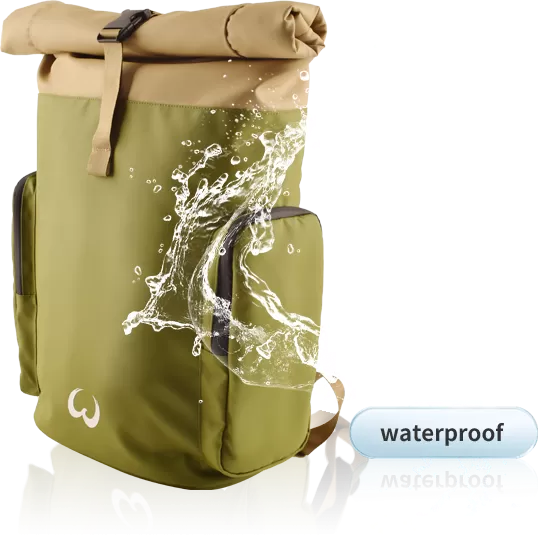
A leakproof fishing bag is non-negotiable. If fish blood and melted ice leak into a car trunk or boat cabin, the smell is permanent. Your chosen Fishing Cooler Bag Factory must demonstrate mastery over waterproof construction.
Look for high-frequency (HF) welding. Unlike traditional sewing, HF welding fuses the fabric layers together, creating a 100% airtight seal. If the factory only uses needles and thread, the bag will eventually leak through the stitch holes. Furthermore, the main opening should feature a waterproof zipper (like YKK Aquaguard) or a roll-top closure system.
Combating the Marine Environment
Salt Spray Resistance: All metal hardware, including D-rings and zipper pulls, must be stainless steel or treated with an anti-rust coating.
ASTM B117 Compliance: Ask for reports showing at least 96 hours of salt spray testing without red rust.
One-Way Drain Valves: These allow users to flush out scales and slime without opening the main compartment.
During a factory audit, perform a "submersion test." Inflate a sample bag with air or fill it with paper towels, submerge it in water for 60 seconds, and check for bubbles or moisture. A professional Fishing Cooler Bag Factory will have a dedicated station for this quality control step.
4. Evaluate ODM/OEM Customization and MOQ Flexibility
Most B2B buyers need custom fishing gear that reflects their brand identity. You need a factory that acts as a partner in design, not just a mass production line. weierken specializes in transforming sketches into market-ready products quickly.
Ask about their prototyping speed. Can they deliver a functional insulated fish bag sample within 7 days? Does the sample come with its own insulation performance data? A factory with an in-house R&D team is much more valuable than a middleman who outsources design.
Customization Options to Look For
Functional Add-ons: Padded shoulder straps, tool loops, integrated rulers, and transparent ID windows.
Branding Techniques: Silk-screen printing, heat transfer, 3D silicone patches, or embroidery with high colorfastness.
MOQ (Minimum Order Quantity): While standard runs are 500-1000 units, ask if they support trial orders of 300 units for new designs.
Clarify how they handle molding costs for high-frequency welding. Some factories charge a one-time fee, while others amortize it into the unit price. Clear communication regarding these costs prevents budget overruns during the product development phase.
5. Confirm Quality Control and Lead Time Reliability
The fishing season is short. If your Fishing Cooler Bag Factory misses a delivery window by two weeks, you could lose an entire season of sales. You need to see a documented Quality Management System (QMS).
A reliable supplier uses a multi-layered QC process. This starts with Incoming Quality Control (IQC), where every roll of TPU fabric and every batch of zippers is checked against AQL standards. During production, In-Process Quality Control (IPQC) monitors welding temperatures and stitch counts every hour.
Ensuring On-Time Delivery
Peak Season Planning: Ask how the factory manages the surge in orders between March and August. Do they have backup production lines?
On-Time Delivery Rate: A reputable factory should maintain a rate of 95% or higher. Ask for their records for the last six months.
Batch Traceability: Ensure every shipment has a unique batch number. This allows you to trace any defect back to the specific material source or production date.
When signing a contract, include specific penalties for late delivery, such as a 0.5% deduction per day. This ensures the factory prioritizes your bulk order. weierken prides itself on transparency, providing clients with weekly photo updates during the manufacturing process.
Common Questions About Fishing Cooler Bag Factories
What is the difference between a standard cooler and a fishing cooler bag?
A fishing cooler bag is specifically designed with puncture-resistant liners to handle sharp fins and marine-grade hardware to resist salt corrosion. They are often longer and narrower to accommodate large fish species, unlike square lunch coolers.
How do I know if a factory is truly a manufacturer or just a trader?
Ask for a video walk-through of the high-frequency welding machines. Traders rarely own this expensive equipment. Also, check their ISO 9001 certification; the scope should clearly state "manufacturing" or "production."
What are the most durable materials for a fishing cooler bag?
The most durable choice is TPU-coated 840D nylon. It is 100% waterproof, extremely resistant to tears, and remains flexible even in cold weather. PVC is a cheaper alternative but can crack over time and is less environmentally friendly.
Can I get a custom logo on a small order of 300 bags?
Many Fishing Cooler Bag Factories allow custom logos on smaller orders if you use their existing molds. However, unique shapes or sizes usually require a higher MOQ to cover the cost of new welding molds.
What is the typical lead time for a bulk order?
For a standard bulk production run, expect 25 to 35 days after sample approval. If you require specialized customized materials or have complex OEM requirements, this can extend to 45 days. Always plan ahead for the spring fishing rush.
How do factories test for leaks?
The most common method is the air pressure test. The bag is inflated, and pressure is monitored for 24 hours. Any drop indicates a micro-leak in the heat-sealed seams or the zipper. Another method is the water submersion test mentioned earlier.
Partner with an Expert Fishing Cooler Bag Factory
Choosing a Fishing Cooler Bag Factory is a strategic decision that affects your brand's reputation for years. By focusing on thermal data, puncture resistance, and waterproof technology, you can avoid the common pitfalls of cheap manufacturing. At weierken, we combine technical expertise with a deep understanding of the fishing industry to deliver superior products.
Are you ready to develop a high-performance fishing tackle bag or insulated kill bag? Our team is standing by to assist with technical specifications, material selection, and OEM services tailored to your market needs.