

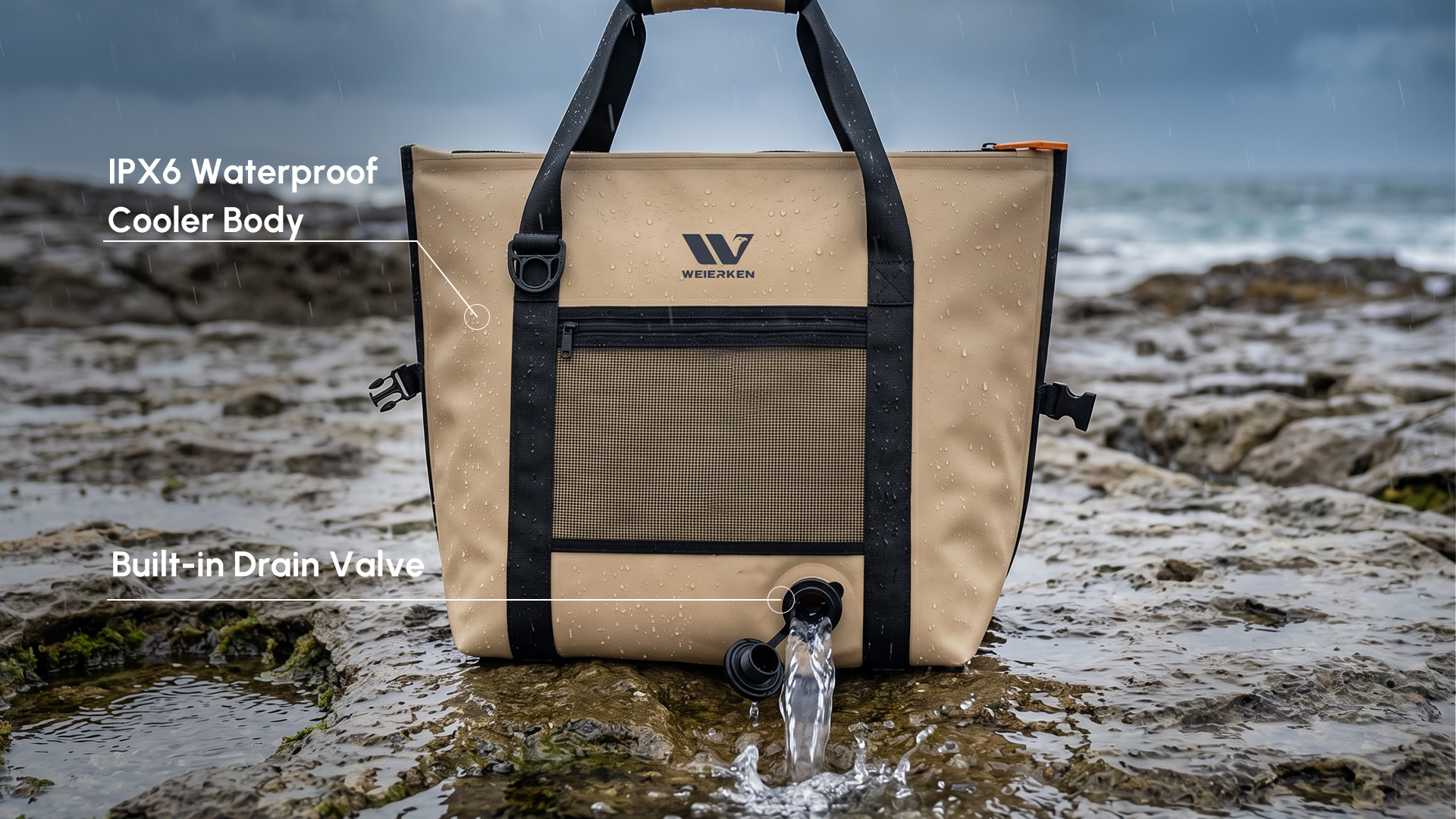
A leaking fish catch bag is every angler's nightmare. Bloody brine and melted ice seeping across a boat deck or car trunk create foul odors, breed bacteria, and ruin gear. For fishing brands, outdoor outfitters, and marine equipment distributors, product failure at this level destroys customer loyalty instantly.
Standard cut-and-sew manufacturing cannot deliver a truly waterproof container. Needle punctures invite liquid to escape under the slightest pressure. Building a 100% watertight, puncture-proof, and thermally efficient fish bag requires specialized manufacturing techniques, advanced polymer welding, and strict testing protocols.
When you evaluate a potential leakproof catch bag supplier, you need to verify how they test their products before mass production. At Weierken, we put every production batch through rigorous quality checks. Here are the five non-negotiable quality tests every professional catch bag manufacturer must pass to guarantee zero leakage and long-term durability.
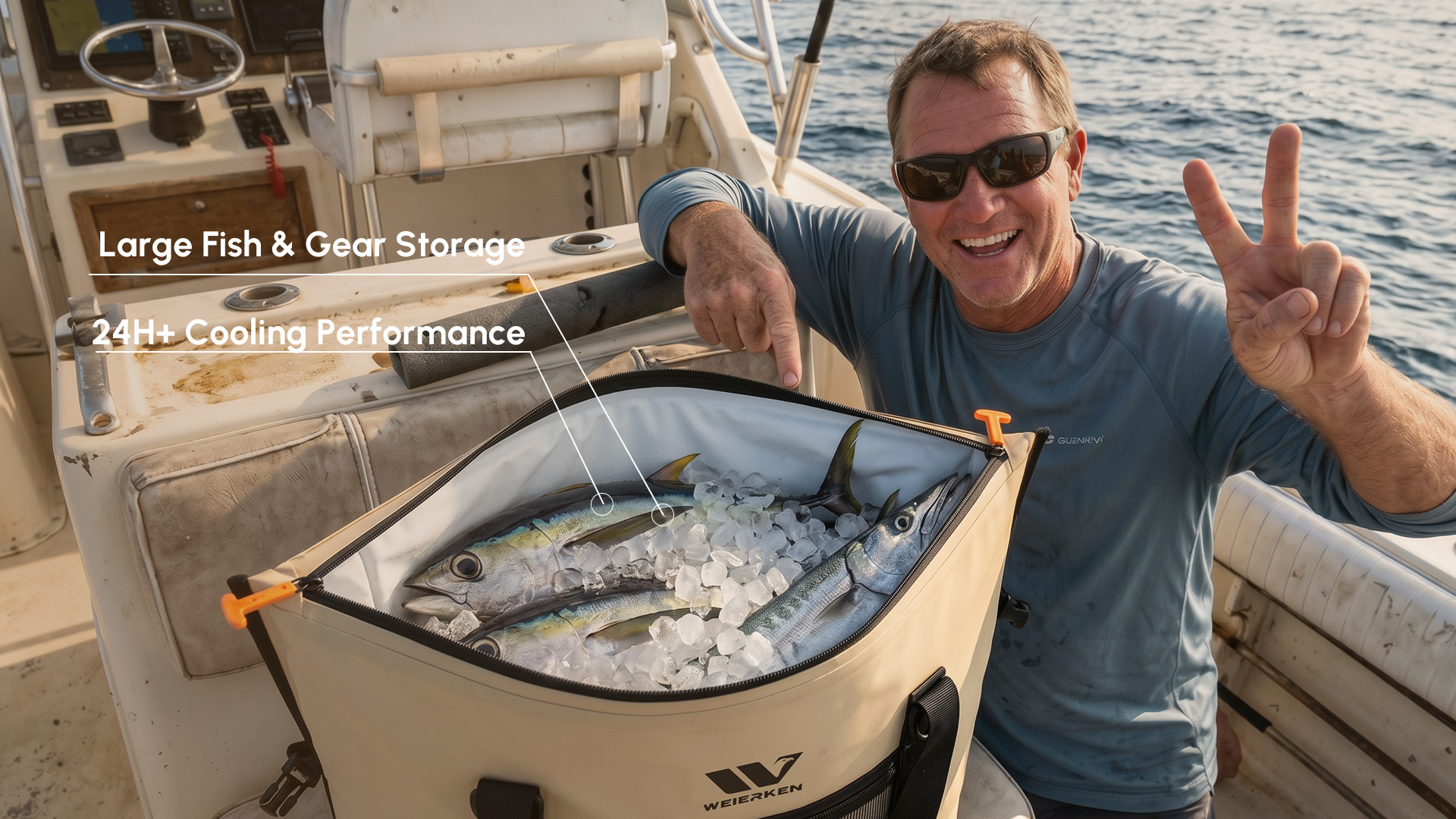
1. Hydrostatic Seam & Radio-Frequency (RF) Welding Test
Traditional sewing punches thousands of microscopic holes through fabric. Even seam-sealing tape can degrade over time when exposed to salt water, fish blood, and UV rays. A professional leakproof catch bag supplier uses Radio-Frequency (RF) or high-cycle thermal welding rather than thread stitches on all liquid-bearing seams.
RF welding uses high-frequency electromagnetic energy to melt thermoplastic polyurethane (TPU) or heavy-duty PVC coatings at the molecular level. When cooled under pressure, the two separate sheets fuse into one uniform piece of material. The resulting seam is just as strong as the original fabric.
To verify seam integrity, reputable manufacturers conduct two specific hydrostatic tests:
Continuous Static Water Test: Technicians fill the catch bag with water to maximum capacity and let it rest on a dry testing surface for 48 to 72 hours. Inspectors check all perimeter seams, bottom welds, and drain plug junctions for moisture transfer or weeping.
Hydrostatic Head Pressure Test: Specialized test equipment exerts targeted hydraulic pressure directly against welded seam joints. The joint must withstand predefined PSI thresholds without delaminating or allowing water molecules to pass through.
Weierken operates automated RF welding machinery that applies precise heat, pressure, and dwell time. This automated process removes human error, ensuring consistent seam strength across thousands of production units.
2. Airtight & Watertight Zipper Inversion Testing
The zipper is usually the weakest link on any soft cooler or fish kill bag. Standard nylon coil or water-resistant zippers only repel light splashes. Once a bag fills with slush, ice, and heavy fish, liquid sloshes directly against the zipper track during transport.
A reliable leakproof catch bag supplier uses heavy-duty, pressure-rated airtight zippers. These zippers feature thick TPU-laminated tape with interlocking teeth that compress a continuous rubber or polyurethane gasket when pulled closed.
Factory quality teams validate zipper performance through two intensive tests:
Full Inversion Slosh Test: Workers fill the fish bag halfway with water, zip it completely shut, and flip it upside down. The bag remains inverted on a dry surface for several hours to confirm that zero liquid escapes through the teeth or the zipper end-stop.
Submersion Air-Pressure Test: Inspectors inflate the closed bag with compressed air and submerge it under 0.5 meters of water. A steady stream of air bubbles immediately highlights any micro-gaps around the zipper docking end or tooth alignment.
Passing these tests ensures that your customers can toss a loaded catch bag into the back of an SUV or lay it flat on a rocking boat deck without leaking a single drop of dirty ice water.
3. Puncture, Tear, and Abrasion Resistance Testing
Fishing environments present constant physical hazards. Sharp dorsal fins from sea bass and grouper, stainless steel gaffs, treble hooks, and rough, non-skid fiberglass boat decks will quickly destroy weak fabrics. A durable fish kill bag must survive repeated internal and external abuse.
Top-tier manufacturers build catch bags using heavy-gauge exterior fabrics, such as 840D or 1000D TPU-laminated nylon, combined with thick, food-grade interior liners. Before cutting materials, the factory laboratory conducts mechanical fabric testing:
Drop-Dart Puncture Test (ASTM D1709 / F1306): A weighted, pointed dart drops from specified heights directly onto fabric samples. This measures the precise force required for sharp fish spines or hooks to pierce through the interior lining.
Martindale Abrasion Test: Automated oscillating discs rub abrasive paper against the bottom fabric under continuous load. High-quality marine-grade fabrics must withstand thousands of friction cycles without exposing the underlying base cloth.
Tear Propagation Test: Testers make a small incision in the material and apply mechanical pull force. Premium TPU fabrics resist tear propagation, preventing small cuts from turning into catastrophic failures.
Using food-grade, puncture-resistant TPU liners also prevents fish slime from soaking into raw fibers, which stops persistent mildew and bad smells from forming over time.
4. Thermal Retention & Foam Integrity Testing
A catch bag serves as a mobile, soft-sided cold storage locker. Keeping fish fresh requires maintaining internal temperatures below 4°C (40°F) for extended trips. Thermal performance relies on the quality and thickness of the insulating foam layer.
Low-grade manufacturers often cut costs by using open-cell polyurethane foam. Open-cell foam behaves like a kitchen sponge; when a small puncture happens, it absorbs bloody water, rots, and loses its insulating ability. A professional leakproof catch bag supplier uses closed-cell EVA or NBR foam, which features sealed air pockets that cannot absorb water even when submerged.
To verify thermal performance, manufacturers use controlled environmental chambers:
High-Temperature Melt Test: The bag is filled with a standard 1:1 ice-to-capacity ratio and placed in an environmental test chamber set to 40°C (104°F) to simulate hot summer sunlight on open water.
Temperature Logging: Digital thermal sensors track internal core temperatures over 24, 48, and 72 hours. Premium catch bags must keep ice intact and preserve food-safe temperatures for at least 48 hours in extreme heat.
Foam Compression Recovery: The foam core undergoes repeated heavy compression cycles to verify that it bounces back to its original thickness without permanently flattening.
5. Heavy-Duty Dynamic Load & Handle Tensile Stress Test
A large 40-inch to 60-inch catch bag loaded with tuna, crushed ice, and saltwater can easily weigh between 70 and 150 pounds. When two anglers lift that weight off a boat deck, extreme tensile force concentrates on the handle anchor points.
If handles are stitched directly into a single layer of fabric, the stitching can tear out under load. Experienced manufacturers weld reinforced anchor plates onto the main body before securing heavy-duty nylon webbing with structural box-x stitching.
Factories run dynamic load tests to prevent handle failure in the field:
Jolt Oscillation Test: The catch bag is loaded with metal weights equal to 1.5 times its rated carrying capacity. A mechanized arm hoists the loaded bag by its carry handles, dropping and catching it rhythmically for hundreds of cycles to simulate aggressive lifting and bouncing during transit.
Tensile Pull Bench Test: Specialized pull-testing machines stretch the webbing straps, D-rings, and welded attachment patches until failure occurs, recording the exact breaking point in kilograms of force.
Drain Valve Pull Test: Technicians pull the molded drain plug at sharp angles to confirm it will not rip loose from the welded side wall under heavy field use.
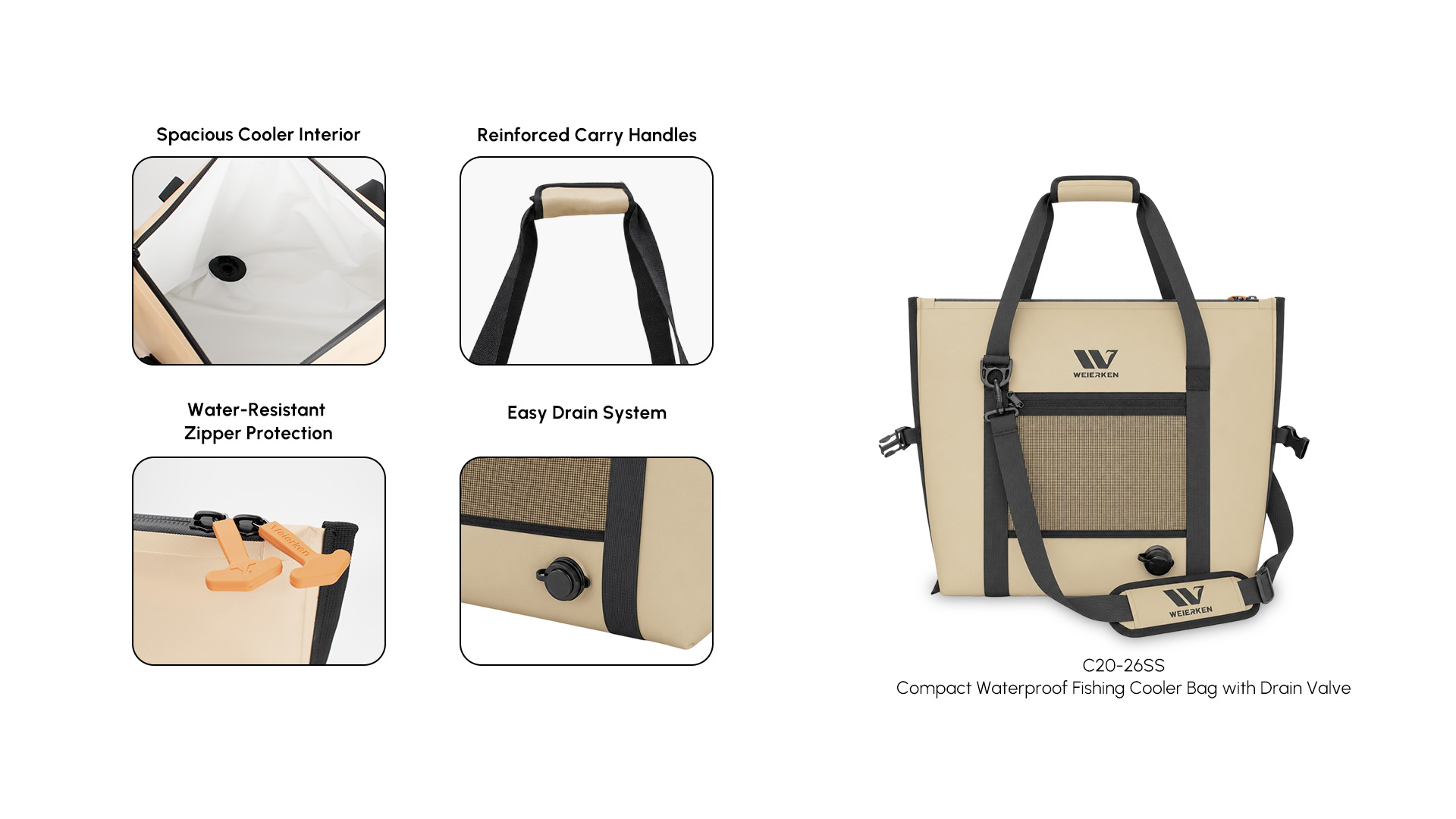
Buyer's Sourcing Checklist: Finding the Right Manufacturing Partner
Verifying test procedures is vital, but high-volume commercial buyers also need a manufacturing partner with the physical production capacity, supply chain stability, and engineering experience to deliver consistent quality across every batch.
When selecting your manufacturing partner, consider these core operational capabilities:
Dual-Country Manufacturing Footprint: Global tariff changes can disrupt import margins. Working with a supplier that maintains production facilities in both China and Cambodia provides tariff flexibility, lowers trade risks, and keeps landed costs predictable.
Mass Production Capacity: Look for large-scale operations. Factories spanning over 80,000 square meters with a workforce of 3,000+ skilled employees can handle large OEM/ODM production runs without missing delivery deadlines.
Proven Industry Experience: Choose a factory with an established track record. Manufacturers with over 20 years of experience (such as Weierken, founded in 2006) have refined their welding techniques, tooling design, and raw material sourcing to serve leading outdoor brands worldwide.
Comprehensive In-House Tooling: Suppliers that build custom molds for drain valves, handles, and airtight zipper docks can develop proprietary bag designs faster while maintaining tight dimensional tolerances.
Frequently Asked Questions (FAQ)
Q1: Which material is best for heavy-duty leakproof catch bags: TPU or PVC?
A1: Both materials offer excellent waterproofing when RF welded. Heavy-duty PVC tarpaulin (500D-1000D) is cost-effective, tough, and easy to clean. TPU (Thermoplastic Polyurethane) is lighter, remains flexible in freezing temperatures, offers higher puncture resistance per ounce, and is 100% food-grade and eco-friendly. Most premium fishing brands choose TPU for their top-tier catch bag lines.
Q2: Why do catch bags leak at the corners after a few months of use?
A2: Corner leaks usually happen because of poor RF welding tool design or low-grade foam selection. When sharp internal corners are welded under uneven pressure, weak spots develop along the fold. Additionally, if cheap open-cell foam is used, water seepages can cause the interior layers to rot and separate. Quality suppliers use rounded structural welds and closed-cell foam to prevent corner fatigue.
Q3: What makes an airtight zipper different from a standard water-resistant zipper?
A3: A standard water-resistant zipper uses coated tape over conventional teeth, which only protects against light rain and splashes. Under standing water pressure, moisture penetrates the teeth gaps. An airtight, submersible zipper features molded teeth that lock tightly together, compressing an internal rubber seal to block both liquid and air even when fully inverted or submerged.
Q4: How long can a professionally manufactured insulated catch bag hold ice?
A4: When built with 0.5-inch to 0.8-inch closed-cell EVA foam, welded airtight construction, and quality outer fabrics, a high-end catch bag can keep ice intact for 48 to 72 hours in ambient temperatures up to 35°C–40°C (95°F–104°F), matching the thermal performance of many hard-sided rotomolded coolers.
Q5: Can we customize bag dimensions, drain plugs, and logo placement for OEM orders?
A5: Yes. An experienced OEM/ODM manufacturer can customize bag lengths (from compact 30-inch kayak bags up to 100-inch giant offshore gamefish bags), integrated ruler markings, drain valve placements, heavy-duty shoulder straps, and custom colorways using silk-screen, heat transfer, or welded badge branding.
Q6: How does sourcing from Cambodia benefit catch bag importers in the US and Europe?
A6: Manufacturing in Cambodia helps international brands avoid high import tariffs on specific marine and textile products made in China. Suppliers with dual facilities across China and Cambodia allow brands to optimize production costs, balance lead times, and maintain an agile supply chain.
Partner with an Experienced Catch Bag Manufacturer
Your brand reputation depends on the strength of your products. Selling a catch bag that leaks blood onto a customer's vehicle causes immediate returns, negative reviews, and lost sales. Working with an experienced leakproof catch bag supplier that conducts strict hydrostatic, zipper, puncture, and load tests protects your brand's standing in the market.
Weierken has delivered high-performance waterproof bags, soft coolers, and outdoor gear since 2006. With three dedicated production bases, over 80,000 square meters of manufacturing space, and dual-facility operations across China and Cambodia, we help leading outdoor brands build durable, market-ready products.
Ready to develop your custom leakproof fish kill bag line?
Contact the engineering and OEM team at Weierken today to request material samples, review technical specifications, or get a production quotation for your upcoming project.
Email: service@weierkenbag.com
Website: weierkenbag.com