


Procuring delivery equipment for a restaurant chain or a delivery platform involves more than just browsing a catalog. Your choice of a take out insulated bag factory directly impacts whether a customer receives a steaming hot meal or a soggy, lukewarm disappointment. When you partner with a high-quality manufacturer like Weierken, you move from buying a commodity to investing in a logistics asset.
The market is flooded with suppliers claiming to offer the best prices. However, experienced procurement managers know that the cheapest bag often carries the highest long-term cost. To help you navigate this complex supply chain, follow these five essential tips to identify a reliable partner.
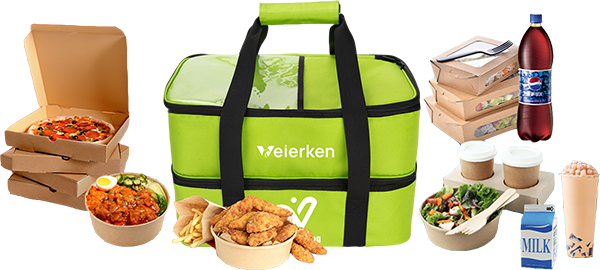
Tip 1: Evaluate Insulation Performance and Data Accuracy
The primary reason you seek a take out insulated bag factory is temperature control. If the bag fails to keep food at the safety-standard temperature of 60°C or above for at least 45 minutes, it is essentially useless. You must demand more than just marketing promises; you need empirical data.
A professional factory should provide clear insulation performance reports. Ask them to show a temperature curve. For instance, if you place a container of 90°C rice inside the bag at an ambient room temperature of 25°C, what is the recorded temperature after 30, 60, and 90 minutes?
Look closely at the internal construction. Low-cost bags use thin 2mm or 3mm foam. A premium food delivery bag manufacturer typically uses 5mm PE foam or even 8mm PE foam for superior thermal resistance. Furthermore, the interior lining should feature high-reflectivity Aluminum foil. This material reflects radiant heat back toward the food rather than letting it escape through the bag walls.
Tip 2: Check Load-Bearing Capacity and Material Durability
Food delivery is a high-intensity operation. Bags are tossed into bike trunks, stretched by heavy soup containers, and dragged across counters. To ensure your bags last for months rather than weeks, you must inspect the raw material specifications.
Most buyers look at the exterior fabric first. You should prioritize high-density polyester. Ask the take out insulated bag factory about the denier count of their fabric. While 600D Oxford cloth is a standard industry choice for lightweight bags, heavy-duty applications often require 1680D Oxford cloth. The higher the denier, the better the abrasion resistance.
Pay attention to the hardware and stress points:
- Waterproof zippers: These prevent heat loss through the zipper teeth and keep rain from soaking the insulation layer.
- Reinforced Stitching: Ensure the handles feature “X-stitching” or box-stitching at the attachment points.
- Bottom Support: Does the bag include a removable PE board or a hard plastic base? This prevents the “sagging” effect that can crush food containers.
A durable bag should comfortably hold 15-20 kilograms without showing signs of seam failure. Weierken subjects all prototypes to rigorous weight-stress tests to guarantee they survive real-world delivery conditions.
Tip 3: Assess Bulk Customization and OEM Capabilities
If you are buying for a brand, you don’t want a generic blue or red bag. You need a partner that understands the nuances of an OEM service. A versatile take out insulated bag factory should allow you to customize every aspect of the bag to fit your specific operational needs.
Can the factory adjust the internal dimensions to fit your signature bento boxes? Can they add adjustable dividers to keep drinks separate from hot appetizers? These structural customizations are just as important as aesthetic ones.
Regarding branding, verify their printing technology. Ask about:
- Silk-screen printing: Ideal for high-contrast, durable single-color logos.
- Heat transfer printing: Perfect for complex, multi-colored designs or photographic logos.
- Embroidery: Gives a premium look for high-end catering services.
Make sure to clarify their Minimum Order Quantity (MOQ). While large factories prefer high-volume orders, a professional partner like Weierken often provides flexible options for growing brands that need to test the market before committing to thousands of units.
Tip 4: Verify Factory Qualifications and Global Compliance
Working with an uncertified take out insulated bag factory exposes your business to significant legal and supply chain risks. If a bag is made with toxic materials or produced in an unethical environment, it can damage your brand reputation permanently.
Before signing any contract, request a copy of the factory’s audit reports. A reputable manufacturer should hold certifications such as:
- ISO 9001: This ensures consistent quality management systems are in place.
- BSCI or Sedex: These social compliance audits prove the factory treats its workers fairly and follows safety regulations.
- FDA or LFGB: Crucial for food-contact materials. Even though the food is inside a container, the Aluminum foil or PEVA liner must be food-grade and lead-free.
A factory that welcomes third-party audits is a factory that has nothing to hide. This transparency is the foundation of a long-term B2B partnership.
Tip 5: Inspect Sample Quality and Delivery Reliability
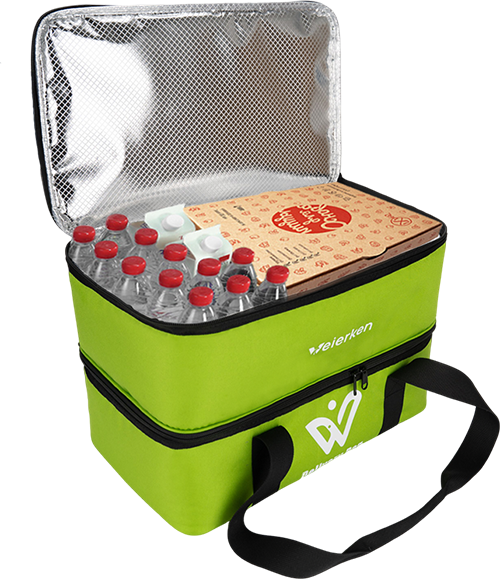
Never place a bulk order based solely on a PDF catalog or digital photos. A reputable take out insulated bag factory will always encourage you to order a pre-production sample. This is your chance to perform a “stress test” on the product before spending your budget.
When the sample arrives, perform these simple tests:
- The Sniff Test: Cheap, low-quality PVC or glues often emit a sharp chemical odor. This smell can transfer to the food packaging, upsetting customers.
- The Zipper Test: Open and close the bag 50 times in a row. If the waterproof zippers snag or feel flimsy, they will fail within a week of actual use.
- The Seam Test: Pull hard on the handles. If you see daylight through the stitching holes, the tension is too loose.
Finally, evaluate the factory’s communication and reliability. Did the sample arrive on time? Did they answer your technical questions promptly? Delivery reliability is just as important as product quality. If they cannot meet a sample deadline, they will likely struggle with a 10,000-unit bulk order during the peak winter season.
Choosing the Right Partner
In summary, selecting a take out insulated bag factory requires a balance of technical scrutiny and business intuition. By focusing on insulation density (like 8mm PE foam), fabric strength (like 1680D Oxford cloth), and factory compliance, you protect your brand’s bottom line.
At Weierken, we have refined our manufacturing process to meet the specific needs of the global food delivery industry. We believe that a delivery bag is the silent ambassador of your brand. When the bag works perfectly, the customer forgets it’s there—they only remember the delicious, hot food inside.
Frequently Asked Questions (FAQ)
Q1: How much does EPE foam thickness matter for heat retention?
It is critical. A bag with 8mm PE foam can maintain food temperature significantly longer than a standard 3mm version. The thicker the foam, the better the thermal barrier against outside air.
Q2: Can the factory produce bags that are both waterproof and insulated?
Yes. By using 1680D Oxford cloth with a PVC backing and pairing it with waterproof zippers, a factory can create a bag that keeps rain out while keeping heat in.
Q3: What is the benefit of a food-grade Aluminum foil liner?
Beyond insulation, food-grade liners are easier to sanitize. They do not absorb odors and are resistant to oil and grease, which is essential for maintaining hygiene in food delivery.
Q4: How long does it take to produce a custom sample?
Most professional factories can produce a custom-sized or logo-printed sample within 5 to 10 working days, depending on the availability of specific materials.
Q5: What should I look for in a “burst test” for delivery bags?
A burst test checks the maximum weight a bag can hold before a seam rips. For heavy catering orders, you should look for a bag that survives at least 20kg of static weight.
Q6: Does the factory handle international shipping and customs?
Top-tier factories usually offer various shipping terms like FOB, CIF, or DDP. This allows you to choose whether you want to handle the logistics or have the factory deliver directly to your warehouse.
Optimize Your Delivery Fleet Today
Are you tired of inconsistent quality and lukewarm deliveries? It is time to work with a take out insulated bag factory that understands the science of thermal logistics.
Contact Weierken today to discuss your customization needs, learn how our materials outperform the competition, and request a quote for your wholesale order. Let us help you deliver perfection every time.


