Motorcycle riding exposes gear to extreme, unpredictable weather. Riders face sudden torrential downpours, deep water crossings, and muddy off-road trails. These harsh conditions serve as the ultimate test for any piece of luggage strapped to a bike.
As a B2B buyer, you carry the responsibility of sourcing luggage that will not fail your customers. A leaking pannier destroys expensive electronics and ruins road trips. You must select a highly competent motorcycle bag fabricator capable of engineering truly watertight products.
At weierken, we know that verbal promises about water resistance mean nothing on a rain-soaked highway. You need hard data, standardized testing, and proven manufacturing techniques. Buyers must cut through marketing jargon and evaluate technical specifications directly.
To protect your brand reputation and ensure rider safety, your chosen motorcycle bag fabricator must meet five specific waterproof standards. Use this technical guide to assess their capabilities and secure a reliable manufacturing partner.
1. Fabric Waterproof Rating: The Hydrostatic Pressure Test
Understanding the Standard
The core metric for measuring a fabric’s ability to resist water penetration is the hydrostatic pressure test. Technicians measure this in millimeters of water column (mmH₂O). A higher number indicates the fabric can withstand greater water pressure before leaking.
When a motorcycle travels at 100 kilometers per hour through a storm, rain hits the luggage with significant force. Basic water-resistant fabrics will wet out and leak immediately under this intense dynamic pressure.
Requirements for Motorcycle Luggage
You must match the fabric specification to the intended riding environment.
- Daily Commuting: Urban bags require a minimum rating of ≥1500mm.
- Long-Distance Touring: Touring panniers and tail bags need ≥3000mm to survive sustained rain.
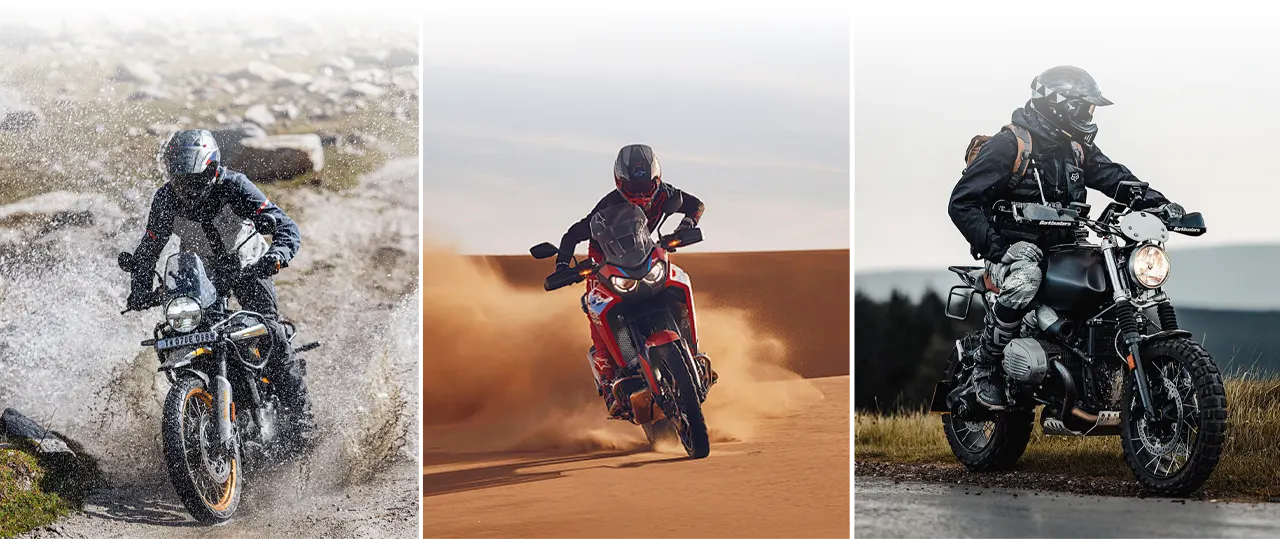
- Extreme Adventure Riding: Off-road expedition gear demands ≥5000mm to ≥10000mm. Achieving this usually requires heavy-duty TPU laminated composite fabrics.
How to Verify the Fabricator
Do not accept simple “waterproof” labels. You must demand actual laboratory data from your motorcycle bag fabricator. Ask them to provide third-party hydrostatic pressure test reports based on recognized global standards, such as ISO 811 or AATCC 127.
2. Seam Sealing Standards: Waterproof Taping or Welding
Understanding the Standard
A fabric with a 10000mm waterproof rating means nothing if the seams leak. Traditional sewing needles punch thousands of tiny holes into the fabric. Water naturally seeks these weak points. A professional motorcycle bag fabricator must seal every single seam to create a watertight barrier.
Factories achieve this through two main methods: applying waterproof seam tape via heat presses, or using high-frequency (HF) welding to fuse thermoplastic materials together without needles.
Requirements for Motorcycle Luggage
Every exposed seam on the exterior of the bag must feature complete sealing. This specifically applies to the top lids, side panels, and bottom gussets.
- If using seam tape, the tape width must measure ≥20mm to ensure adequate coverage.
- The tape must adhere perfectly to the fabric backing, showing absolutely no peeling, lifting, or air bubbles.
- For extreme adventure luggage, HF welding provides a vastly superior, permanent waterproof bond.
How to Verify the Fabricator
Perform a rigorous physical inspection of the sample bags. Turn the bag inside out and trace the seam tape with your fingers to check for consistent adhesion. Furthermore, ask your motorcycle bag fabricator for seam sealing strength reports, such as standard peel tests, to guarantee long-term durability.
3. Zipper Waterproofing Standards: Watertight Coils and Storm Flaps
Understanding the Standard
Standard nylon zippers act as open doors for rainwater. The gaps between the zipper teeth allow water to flow directly into the main compartment. A reliable motorcycle bag fabricator engineers specific solutions to block water ingress at these vulnerable access points.
You have two primary engineering choices: install specialized waterproof zippers or design overlapping storm flaps to physically shield standard zippers from rain.
Requirements for Motorcycle Luggage
The main compartment openings must utilize premium waterproof zippers, such as YKK AquaGuard®. These feature a polyurethane film laminated directly over the zipper tape.
- Alternatively, the design must incorporate heavy-duty storm flaps covering the zipper track.
- These flaps require secure fastening systems, using strong Velcro or metal snap buttons to prevent wind from blowing them open at highway speeds.
- The zippers themselves must pass continuous spray tests without allowing a single drop inside.
How to Verify the Fabricator
Inspect the back side of the zipper tape to confirm the presence of an unbroken waterproof PU film layer. Next, subject the finished sample to a simulated heavy rain spray test. Aim a pressurized hose directly at the zipper area for several minutes to check for any internal moisture.
4. Overall Waterproof Rating: The IPX Protection System
Understanding the Standard
While hydrostatic tests measure fabric, the IPX rating system measures the entire assembled product. The International Electrotechnical Commission (IEC) created this system to classify degrees of protection against water intrusion. The number following “IPX” indicates the exact level of water resistance.
At weierken, we routinely target IPX6 or higher for our premium adventure motorcycle luggage, ensuring maximum protection for our B2B clients’ end-users. You must set clear IPX targets before starting production.
Requirements for Motorcycle Luggage
Determine the correct IPX level based on your product’s market positioning:
- IPX4 (Splash Resistance): Suitable for basic urban commuting bags dealing with light drizzle or road spray.
- IPX5 (Water Jet Resistance): Withstands low-pressure water streams. Good for heavy rain and gentle motorcycle washing.
- IPX6 (Strong Jet Resistance): Endures heavy seas and powerful water jets. Mandatory for serious touring luggage facing highway storms.
- IPX7 (Temporary Submersion): Survives dropping the bike in a river crossing. Highly recommended for hardcore off-road adventure saddlebags.
How to Verify the Fabricator
Ask your motorcycle bag fabricator to supply an official third-party IPX certification report based on the IEC 60529 standard. A factory claiming an IPX7 rating without an independent lab report is likely guessing at their production capabilities.
5. Durability Standards: Hydrolysis and UV Aging Resistance
Understanding the Standard
Waterproof performance naturally degrades over time. Prolonged exposure to heavy rain causes hydrolysis, which breaks down cheap PU coatings. Simultaneously, intense sunlight (UV radiation) causes waterproof fabrics to become brittle, crack, and eventually leak.
A high-quality motorcycle bag fabricator combats this degradation by adding advanced anti-hydrolysis agents and UV stabilizers directly into the raw material formulation during the coating process.
Requirements for Motorcycle Luggage
You need assurance that the bag will remain waterproof after three years of hard riding, not just on the showroom floor.
- Subject the fabric to accelerated aging tests in a laboratory setting.
- After 1000 hours of continuous UV exposure, the fabric’s hydrostatic pressure retention rate must remain at ≥80%.
- The waterproof coating must show no signs of sticky degradation or flaking after accelerated hydrolysis chamber testing.
How to Verify the Fabricator
Request specific, long-term durability data. A seasoned motorcycle bag fabricator will readily provide anti-hydrolysis test reports (e.g., ISO 1419) and UV aging test reports (e.g., ISO 4892). These documents prove the material maintains its structural integrity over years of harsh outdoor use.
Actionable Advice for B2B Buyers
Evaluating a motorcycle bag fabricator requires strict diligence and formal documentation. Never base your procurement decisions on glossy brochures or marketing claims. Implement these actionable steps immediately:
First, demand all five corresponding third-party test reports during your initial factory audit. If a supplier cannot produce ISO or IEC testing documents, treat that as a massive red flag and look elsewhere.
Second, always request physical, fully finished waterproof samples. Conduct your own simplified shower or hose tests at your facility. Fill the bag with dry paper towels, spray it aggressively for ten minutes, and check for any dampness.
Third, explicitly outline your waterproof performance acceptance criteria in your manufacturing contract. Define exact IPX ratings, mmH₂O requirements, and specific warranty terms regarding waterproof failures within the first year of retail sale. Hold your factory accountable for their production quality.
Securing a dependable motorcycle bag fabricator ensures your products survive the brutal realities of motorcycle travel. Riders trust your brand to protect their laptops, dry clothes, and camping gear during torrential storms. Failing that trust leads to devastating product reviews and lost B2B contracts.
By strictly enforcing these five waterproof standards—hydrostatic pressure, seam sealing, zipper integrity, IPX ratings, and UV durability—you eliminate amateur factories from your supply chain. You build a foundation of measurable, verifiable quality control.
At weierken, we engineer our motorcycle luggage to exceed these rigorous global standards. We build gear designed to conquer the worst weather conditions on the planet, backing our manufacturing with transparent testing data.
Ready to upgrade your motorcycle luggage production?
Do you need a verified, professional motorcycle bag fabricator to bring your next waterproof design to life? Our engineering team is ready to discuss your IPX requirements, fabric specifications, and production timelines. Send us your B2B inquiry today and let’s build adventure-ready gear together!
Frequently Asked Questions (FAQ)
1. What is the typical Minimum Order Quantity (MOQ) for IPX6 waterproof motorcycle bags?
Because specialized TPU fabrics and high-frequency welding processes require precise machine calibration, the MOQ usually starts between 500 and 1,000 pieces per style. A flexible motorcycle bag fabricator might negotiate a slightly lower MOQ for a first-time trial order if you select standard stock material colors.
2. Is high-frequency welding always better than taped seams for motorcycle luggage?
For extreme wet-weather riding, high-frequency (HF) welding is vastly superior. HF welding physically melts two pieces of TPU-coated fabric together, creating a permanent, seamless bond that cannot peel off. Taped seams work well for urban commuting bags but eventually degrade and peel after years of heavy use and temperature fluctuations.
3. Can a motorcycle bag fabricator customize an existing design to meet a higher IPX rating?
Yes. An experienced factory can upgrade a standard bag by changing the primary fabric to a heavier TPU, replacing stitched seams with welded joints, and swapping standard zippers for roll-top closures or YKK AquaGuard zippers. However, these structural changes will significantly impact the unit cost.
4. Why do some waterproof motorcycle bags feel sticky after a few years?
This stickiness indicates hydrolysis failure. Cheap polyurethane (PU) coatings break down chemically when exposed to prolonged moisture and heat. A premium motorcycle bag fabricator prevents this by using higher-grade ether-based TPU materials or adding specialized anti-hydrolysis chemical agents during the fabric lamination process.
5. How long does the sampling process take for a fully welded waterproof motorcycle bag?
Developing a high-frequency welded sample takes longer than a traditional sewn bag. The factory must often mill custom metal tooling dies for the welding machines to match your specific bag panels. You should expect the initial sampling phase to take between 20 to 30 days from the approval of the technical drawings.