Let’s be blunt. As a procurement manager or supply chain lead, your day is a minefield of potential failures. A salad arrives soggy and lukewarm at a corporate catering event. A batch of prepared cold meals loses its chill during a summer delivery, risking spoilage and customer safety. The financial and reputational cost isn’t just a line item; it’s a direct hit to your operation’s credibility. At the heart of this logistical challenge is a deceptively simple piece of equipment: the salad thermal bag.
Choosing the wrong salad thermal bag distributor isn’t an inconvenience; it’s a strategic misstep. The market is flooded with options, but true reliability—the kind that ensures consistency, safety, and value—is rare. Your vendor becomes an extension of your quality promise. This guide breaks down the six non-negotiable criteria you must evaluate, turning a complex decision into a clear, actionable checklist. We’ll also glance at how a specialist like Weierken aligns with these rigorous benchmarks.
1. Product Quality & Thermal Performance Standards
This is your zero-eth principle. If the bag fails here, nothing else matters.
Insulation Duration: Cold & Hot Test Data
Don’t accept marketing claims. Demand verifiable, standardized test data. A professional thermal bag distributor should provide clear metrics: e.g., “maintains internal temperature below 4°C (39°F) for X hours in a 30°C (86°F) ambient environment” for cold storage, and equivalent heat retention data for hot meals. Look for tests performed by independent labs.
Food-Safe Material Compliance
The interior lining is in constant contact with food. Compliance with FDA (USA) and LFGB (Europe) standards is the bare minimum. Request Material Safety Data Sheets (MSDS) or certificates of compliance for all materials. This isn’t just about legality; it’s about customer health.
Durability & Waterproof Assessment
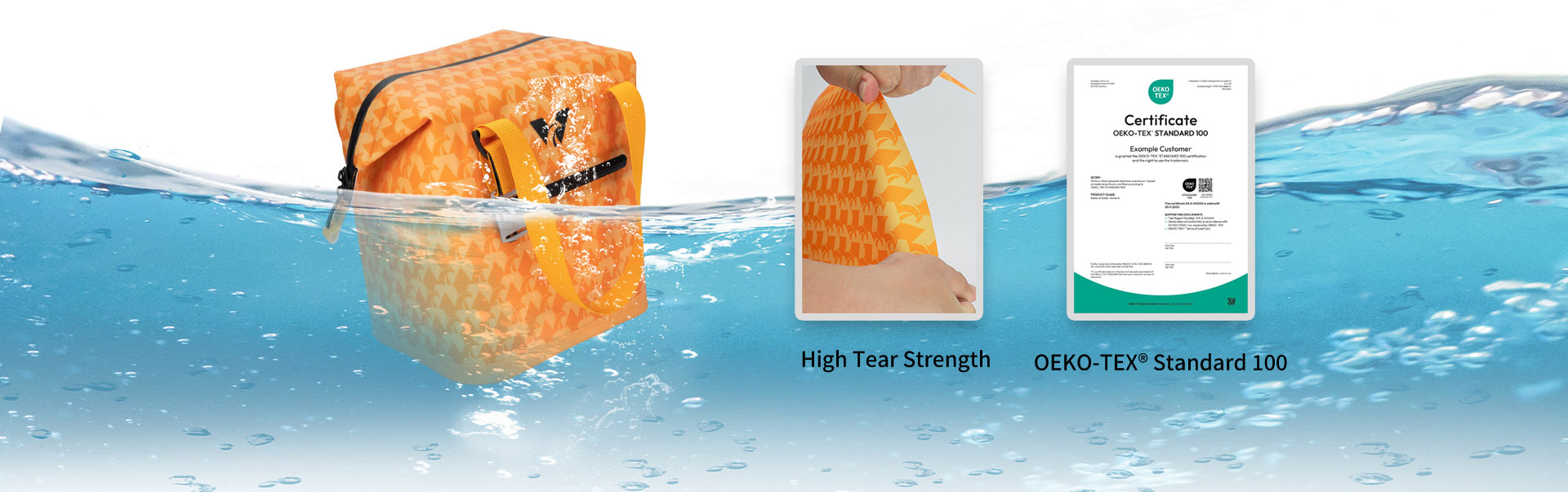
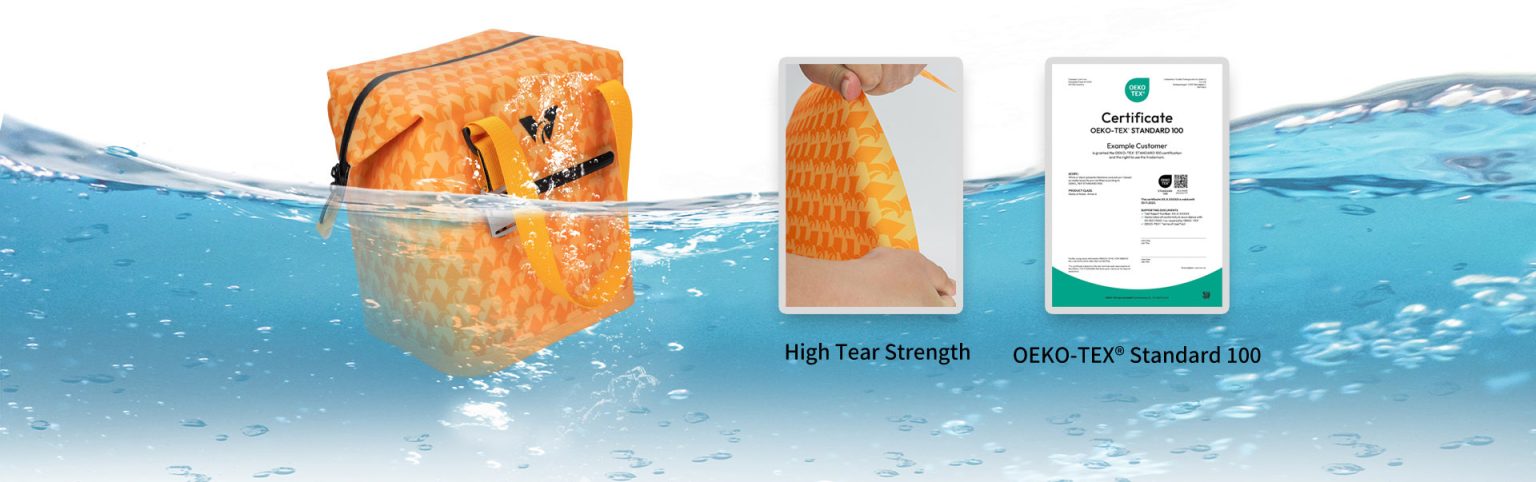
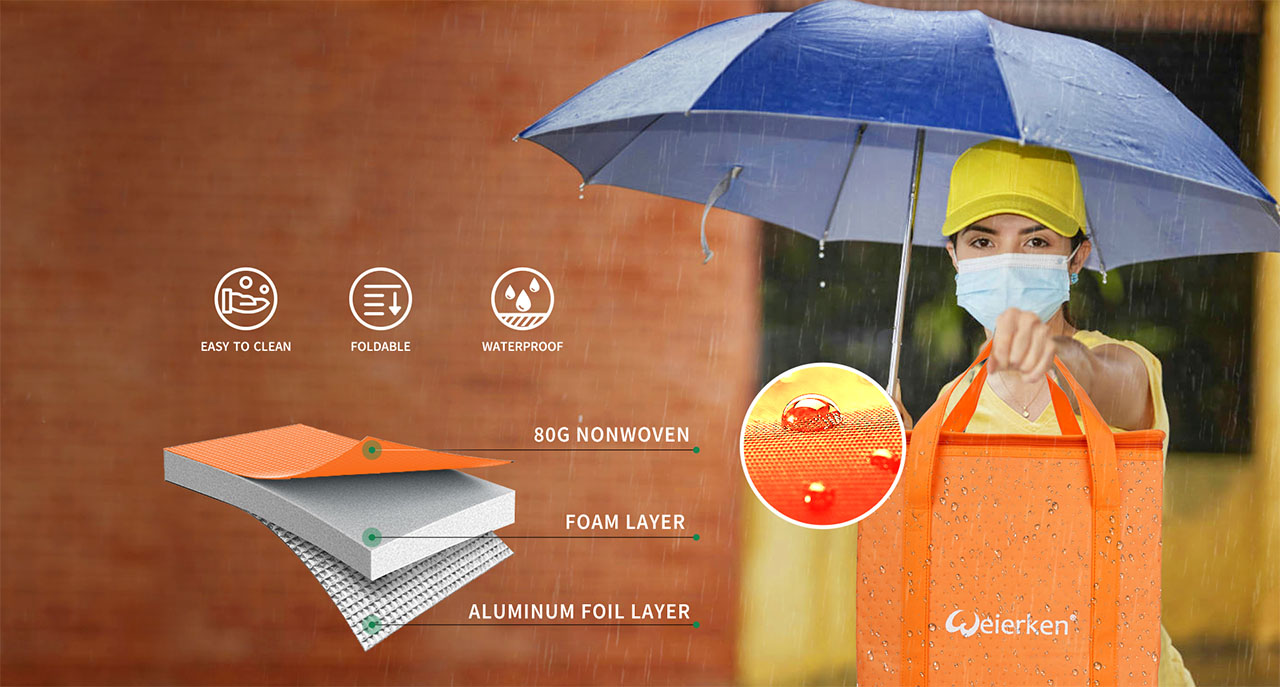
Bags face daily abuse—scrapes, spills, and weather. Assess the fabric denier, stitching strength, zip quality, and seam sealing. A high-quality insulated food delivery bag will have robust, waterproof exteriors and sealed seams to prevent leakage and tears, extending the product’s lifecycle and protecting your deliveries.
2. Supplier Credentials & Compliance Certifications
A distributor’s paperwork tells the story of their operational discipline.
ISO, BSCI, & Quality Management Systems
Certifications like ISO 9001 demonstrate a structured approach to quality control from design to delivery. BSCI audits ensure socially responsible production. These are proxies for a distributor’s professionalism and commitment to consistent, ethical manufacturing.
Factory Audit & Production Capacity
Can you or a third party audit their production facility? A reliable salad bag supplier will be transparent. Assess their factory scale, machinery, and workforce. Understanding their capacity prevents future bottlenecks when you need to scale your orders.
Sustainability & Environmental Policies
Modern supply chains value sustainability. Inquire about the use of recyclable materials (like PEVA/EVA-free liners, recyclable insulation), reduction of PFAS/PFOA, and overall environmental policies. Partners like Weierken often prioritize these elements, which aligns with corporate ESG goals and brand image.
3. Supply Chain Stability & Delivery Capability
A perfect bag is useless if it doesn’t arrive on time, every time.
Order Response Time & Minimum Order Quantity (MOQ)
Evaluate their responsiveness to initial inquiries and order processing. A low or flexible MOQ is crucial for startups or to test a new product line, while high-volume buyers need confirmation that large orders are handled efficiently.
Inventory Management & Peak Season Guarantee
Ask pointedly: “How do you ensure supply during my peak season (like summer) or Chinese New Year factory closures?” A top-tier salad thermal bag distributor will have proactive inventory planning and raw material hedging to guarantee your supply continuity.
Logistics & Regional Distribution Network
Do they have warehousing or logistic partnerships in your key regions (e.g., North America, Europe, Australia)? This can drastically reduce lead times and shipping costs. Their logistics agility is a direct contributor to your operational efficiency.
4. Customization & Service Support
Off-the-shelf solutions often fall short. Your brand and your specific needs are unique.
Logo Printing, Size, and Structural Customization
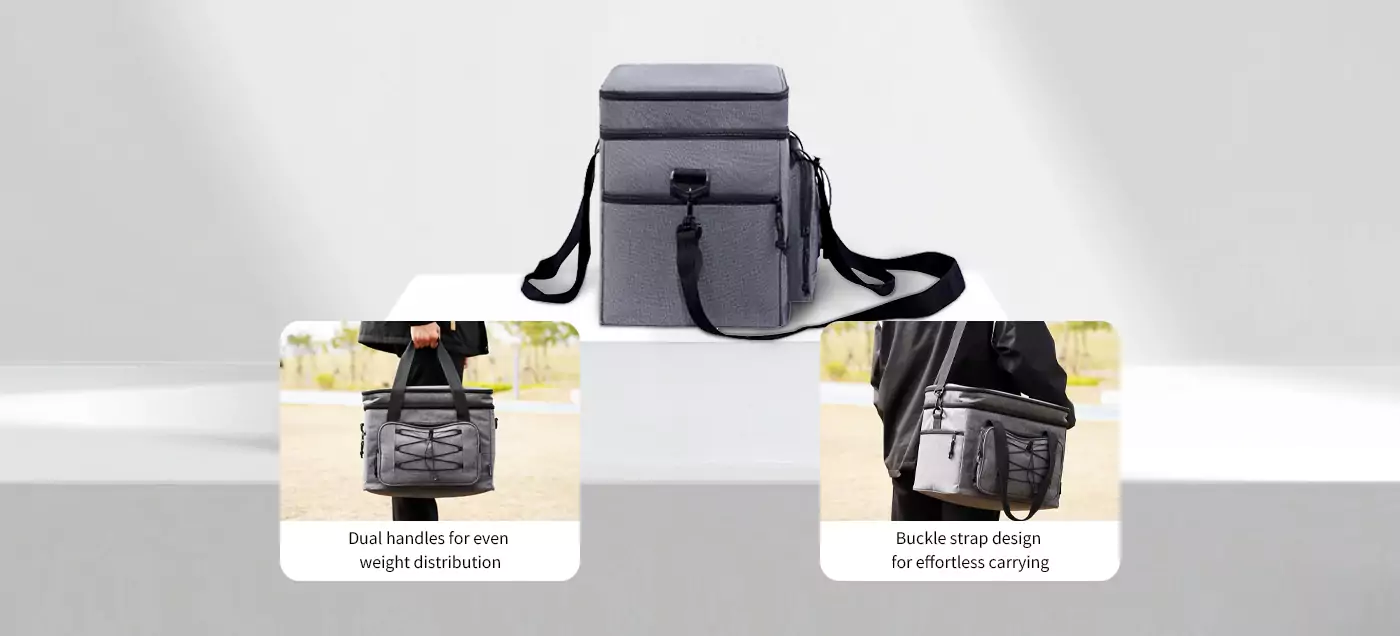
Branding is key. Ensure they offer clean, durable logo printing methods (screen printing, heat transfer). More importantly, can they customize dimensions, compartment layouts, or handles to fit your specific delivery boxes or rider setups? True partnership involves co-creation.
After-Sales Support & Problem Resolution
What happens when there’s a quality issue with a batch? A clear, responsive after-sales process—from problem reporting to replacement or credit—is essential. Avoid distributors who disappear after the sale.
Sample Testing & Pre-Shipment Inspection (PSI)
Always test before you buy. A confident supplier will provide samples for your real-world testing. For large orders, the option for a third-party Pre-Shipment Inspection is critical to verify quality and quantity before shipment leaves the factory.
5. Pricing Structure & Cost Transparency
The lowest price can be the most expensive choice when quality and reliability fail.
Competitive & Transparent Pricing
The quoted price should be clear about what’s included: Is it EXW, FOB, or DDP? Are taxes and standard freight included? Transparent salad thermal bag distributors provide detailed breakdowns, avoiding nasty surprises.
Volume Discounts & Annual Agreement Rates
For long-term partnerships, inquire about tiered pricing or annual contract rates. This rewards loyalty and provides budget predictability for both parties. A partner like Weierken often structures such agreements to foster strategic relationships.
Hidden Cost Vigilance
Be alert for potential hidden costs: mold fees for custom designs (though these are usually one-time), design fees, or excessive charges for sample revisions. These should be discussed and agreed upon upfront.
6. Industry Reputation & Client Portfolio
Past performance is the best predictor of future behavior.
Service to Reputable Brands
Has the distributor served known restaurant chains, meal kit companies, or food delivery platforms? This experience indicates they understand the high-stakes demands of the food service and logistics industries.
Client Reviews & Repeat Order Rate
Seek out testimonials or case studies. A high client repeat order rate is a powerful, often overlooked, metric. It signals consistent satisfaction and reliable performance over time.
Export Experience & International Order Handling
If you operate globally or plan to, ensure your thermal bag manufacturer has proven experience handling international orders, export documentation, and navigating varied customs regulations smoothly.
Selecting the right partner is a calculated investment in your operational integrity. It’s about moving beyond a simple transaction to a strategic alliance that mitigates risk and enhances your service quality. By applying these six criteria rigorously, you filter out vendors and identify true partners. Companies that specialize in this niche, such as Weierken, typically build their entire operation around excelling in these very areas—from material science and certification to flexible supply chains and client-centric service. Your due diligence today ensures the salads—and your reputation—arrive perfectly tomorrow.
FAQ: Selecting a Salad Thermal Bag Distributor
Q1: What is the most critical factor to check first when vetting a salad thermal bag distributor?
A1: The most critical first step is verifying product quality and safety data. Immediately request certified test reports for insulation performance (both cold and hot) and material compliance certificates (FDA/LFGB). Without this foundational data, you cannot assess the core functionality and safety of the bags.
Q2: We have a unique delivery box size. Can distributors really customize bags to fit exactly?
A2: Yes, a capable custom insulated bag manufacturer should offer comprehensive customization. This includes not just logo printing, but also tailoring the bag’s internal/external dimensions, divider configurations, and closure mechanisms to fit your specific containers. Always request a prototype sample to test the custom fit before bulk ordering.
Q3: How can I ensure the distributor won’t fail to deliver during our busy summer season?
A3: Address supply chain stability head-on. During vetting, specifically ask about their peak season inventory strategy and request references from clients they’ve supplied during high-demand periods. A reliable salad thermal bag supplier will have safety stock, confirmed raw material allocations, and a clear plan to mitigate seasonal disruptions.
Q4: Are there any red flags in a distributor’s price quote I should watch for?
A4: Absolutely. Be wary of quotes that are vague or lack detail on Incoterms (e.g., FOB, DDP). Watch for unusually low prices, which may indicate subpar materials. Ensure all potential costs are clarified upfront, including mold fees for custom designs, sample costs, and whether pricing includes certification compliance. Transparency is key.
Q5: Why is a distributor’s factory audit capability important, even if I don’t plan to visit myself?
A5: The willingness to undergo a factory audit—by you or a third-party agency—is a strong indicator of transparency and operational confidence. It verifies their claimed production capacity, quality control processes, and working conditions. Even if you don’t visit, knowing they are “audit-ready” significantly reduces supply chain risk.