


Imagine this scenario: It’s a rainy Tuesday night. Your driver pulls up to a customer’s door, hands over the pizza, and leaves. Five minutes later, your phone buzzes with a notification. It’s a one-star review. “Pizza was cold and the box was soggy.”
In the food logistics business, your reputation literally hangs on a zipper and a layer of foam. You might have the best chefs and the fastest drivers, but if the gear fails, the experience fails.
This is why sourcing isn’t just about finding the cheapest option on Alibaba or a local directory. It is about finding a partner who understands the stakes. Finding the right food delivery bag distributor is often the difference between a thriving delivery operation and one buried under customer complaints. Whether you are a procurement manager for a massive fleet or a business owner scaling up operations, vetting your supplier is critical.
Industry veterans, like those at weierken, understand that a bag is more than just a container; it is a promise of quality kept between the kitchen and the dining table. Before you sign that purchase order, you need to dig deep. Here are the six critical questions you must ask to ensure your distributor is up to the task.
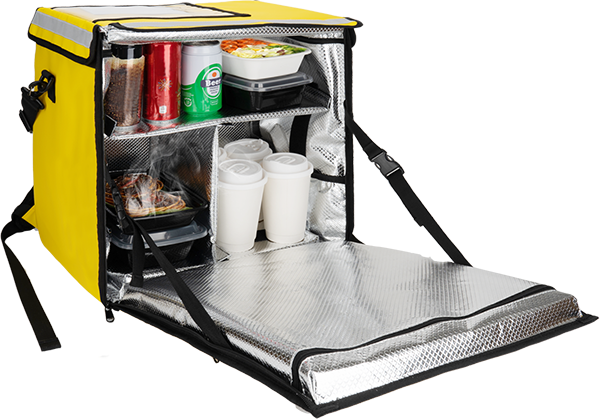
1. Product Certification & Safety Compliance
“Are your bags certified with food-grade standards like FDA or LFGB? Can you provide the detection reports?”
This should always be your opening question. It sets the tone for the rest of the conversation. If a supplier hesitates here, it is a massive red flag.
Why Material Safety is Non-Negotiable
Food safety regulations are tightening globally. When hot food sits in a closed container, steam creates moisture. If the inner lining of your delivery bag contains harmful chemicals, heavy metals, or unstable dyes, that condensation can transfer toxins directly onto the food packaging or the food itself.
A professional food delivery bag distributor should be able to instantly provide documentation proving their materials meet FDA (for the US market) or LFGB (for the European market) standards.
What to Look For in the Reports
Don’t just take a “yes” for an answer. Ask for the PDF. Check the dates on the reports—are they from this year, or from 2015? Materials change, and suppliers change raw material providers. You need to ensure that the PVC, aluminum foil, or PEVA lining used in the current batch is safe.
By verifying this, you protect your brand from potential lawsuits and public relations disasters. You are not just buying a bag; you are buying risk mitigation.
2. Thermal Performance & Test Data
“Can you provide third-party thermal performance test reports? What is the heat retention duration at different ambient temperatures?”
Marketing brochures love to use phrases like “Keep Food Hot for Hours!” But what does that actually mean? Two hours? Four hours? And under what conditions?
The Science Behind the Insulation
You need objective data, not sales pitch fluff. A reputable food delivery bag distributor should have tested their products in simulated environments.
Ask for specific data points:
- Ambient Temperature: How does the bag perform when it’s -10°C (14°F) outside versus 35°C (95°F)?
- Temperature Curve: Does the temperature drop linearly, or does it hold steady for 30 minutes before plummeting?
Validating the Materials
This question also forces the distributor to talk about their material layering. Are they using cheap, low-density foam, or are they using high-density EPE foam combined with reflective aluminum foil?
If they can show you a graph from a third-party lab (like SGS or Intertek) showing that a pizza stays above 60°C (140°F) for 45 minutes in winter conditions, you have a winner. If they only offer anecdotes (“Trust me, it works great”), walk away.
3. Production Capacity & Supply Stability
“What is your current lead time? Can you support emergency rush orders? What is your maximum production capacity?”
Your business isn’t static, and your supply chain shouldn’t be rigid. One of the biggest pain points for buyers is hitting a peak season—like the Super Bowl or a holiday rush—only to find out their supplier has a 60-day backlog.
Matching Capacity to Your Growth
You need to assess if the supplier’s size matches your ambition. If you are ordering 500 bags now but plan to order 5,000 next quarter, can they handle that jump without sacrificing quality?
Ask them about their factory setup. Do they have their own facility, or are they outsourcing? Manufacturers with their own production lines, such as weierken, often have better control over scheduling and can accommodate “emergency adds” better than a middleman who has to negotiate with a third-party factory.
The “What If” Scenario
Ask them specifically: “If I need 1,000 extra units delivered in two weeks, is that physically possible?” Their answer will tell you a lot about their inventory management and raw material reserves. You want a partner who acts as a buffer against supply chain volatility, not one who adds to it.
4. Customization & Supporting Services
“Do you support Logo printing, custom sizes, and material selection? Do you have a design team to assist with optimization?”
In the gig economy and food delivery sector, the bag is a mobile billboard. A generic black bag is a wasted marketing opportunity.
The Power of Branding
A competent food delivery bag distributor must offer flexible customization. But it goes beyond just slapping a logo on the side.
- Printing Tech: Do they use screen printing, heat transfer, or embroidery? Which one lasts longer in rain and sun?
- Ergonomics: Can they tweak the strap design because your riders are complaining about back pain? Can they add a divider for drinks?
Soft Power Support
This is where the “Design Team” question comes in. Sometimes you have a rough idea, but you don’t know the engineering constraints.
A supplier that adds value will say, “If you move the zipper here, it will be more water-resistant,” or “If we change this fabric to 500D PVC, it will look better with your logo.” This consultative approach separates a mere vendor from a strategic partner. It helps elevate your brand’s professional image on the street.
5. After-Sales Support & Warranty Policies
“How do you handle quality issues? Is there a warranty period, and what is the return/exchange process?”
Even with the best factories, defects happen. A zipper jams. A strap tears. The stitching comes loose. The problem isn’t the defect; it’s how the distributor handles it.
Defining the Safety Net
Don’t wait until a shipment arrives with defects to figure this out. Get it in writing.
- Warranty Period: Do they offer 6 months? 1 year?
- Evidence: What do they need from you? Usually, photos or videos of the defect are standard.
- Resolution: Do they send replacements with the next order, or do they issue a credit note?
Long-Term Relationship Health
If a food delivery bag distributor has no clear policy or says “we don’t accept returns,” they are not interested in a long-term relationship. They are looking for a quick sale. A confident supplier stands behind their product quality because they know their defect rate is low.
Ensuring you have a clear path to resolution protects your investment and ensures your operations don’t stall due to bad gear.
6. Cost Structure & Long-Term Cooperation Value
“Beyond the unit price, do you offer tiered pricing? Are there benefits for long-term contracts, such as inventory management?”
Novice buyers focus on the price tag. Smart buyers focus on TCO—Total Cost of Ownership.
Looking at the Bigger Picture
A bag that costs $1 less but needs replacing every 3 months is more expensive than a durable bag that lasts a year.
- Tiered Pricing: “If I commit to 10,000 units a year, delivered in batches, what is my price?”
- Stocking Agreements: Some distributors will hold stock for you. They produce a large batch to lower costs but ship them to you monthly. This improves your cash flow and saves you warehousing space.
The Hidden Costs
Ask about shipping terms (FOB vs. DDP). Sometimes a low unit price is offset by exorbitant logistics fees. A transparent discussion about costs shows the distributor that you are serious about the numbers and looking for a sustainable economic partnership.
Choosing the right equipment supplier is a strategic decision that impacts your brand image, your food safety compliance, and your bottom line. It is not a decision to be taken lightly.
By asking these six questions, you peel back the layers of marketing and get to the truth of a supplier’s capabilities. You verify that they respect safety standards, understand thermal dynamics, and have the operational muscle to support your growth.
Whether you are looking for high-end customization or rugged durability, the market has options. Brands like weierken have built their reputation by answering these tough questions with transparency and solid data, proving that they are not just selling bags—they are enabling better deliveries.
Take the time to vet your food delivery bag distributor properly. Your drivers, your customers, and your pizzas will thank you.
Ready to upgrade your fleet with verified, high-performance delivery gear? Don’t settle for “good enough.”
[Click Here to Send an Inquiry to Weierken Today] and get a professional quote tailored to your business needs.
FAQ: Common Questions About Food Delivery Bag Distributors
Q1: What is the minimum order quantity (MOQ) usually required by a food delivery bag distributor?
A1: MOQs vary significantly depending on customization. For off-the-shelf stock bags, distributors might allow small orders (e.g., 50-100 units). However, for fully custom bags with specific sizes, colors, and logos, a professional food delivery bag distributor typically requires an MOQ of 500 to 1,000 units to make the production run cost-effective.
Q2: How do I know if a distributor’s bags are actually waterproof?
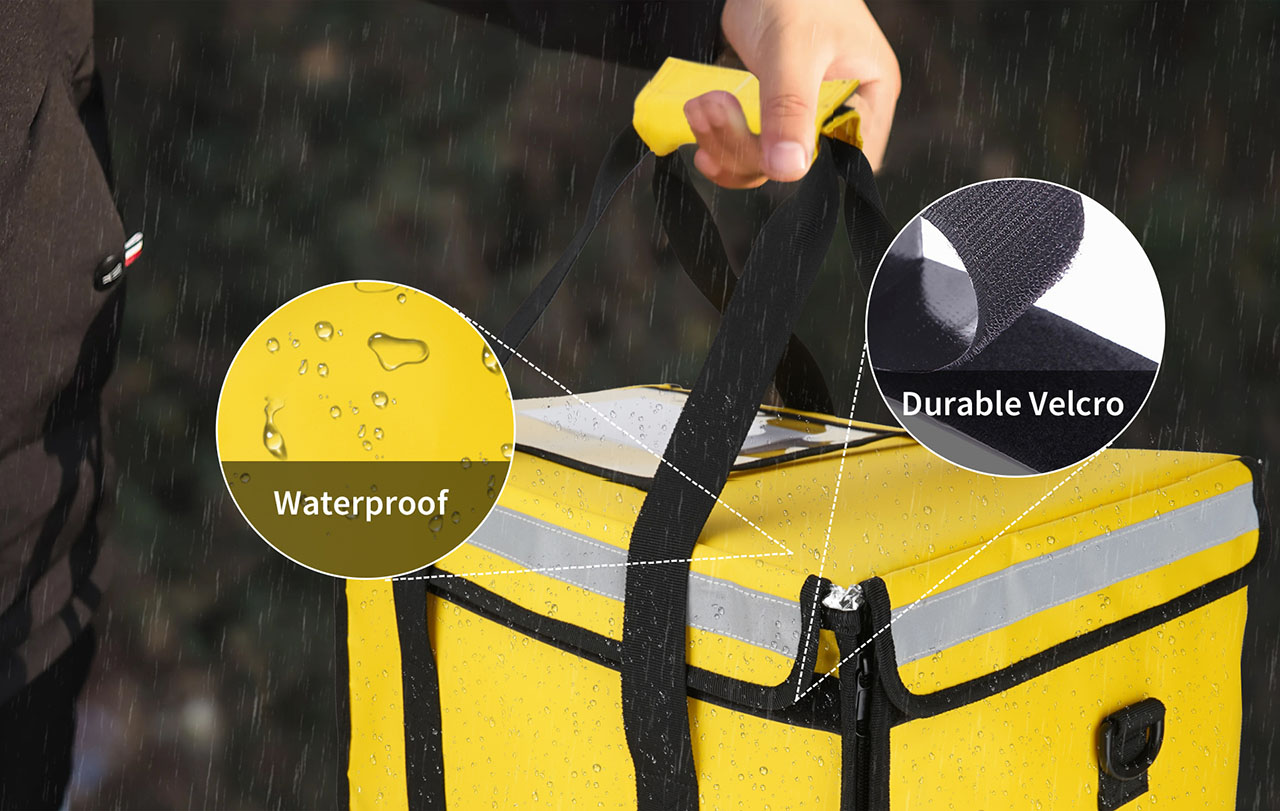
A2: You should ask about the material specifications. Bags made from PVC (Tarpaulin) are generally 100% waterproof and easier to clean than nylon or polyester. Ask the distributor if the zippers are also waterproof or “water-resistant,” as this is a common leakage point during heavy rain.
Q3: Can a food delivery bag distributor help with shipping and logistics?
A3: Yes, experienced distributors often offer various shipping terms (Incoterms). They can handle everything from Ex-Works (you pick up at the factory) to DDP (Delivered Duty Paid), where they handle shipping, customs, and delivery to your door. Always clarify who pays for duties and taxes before ordering.
Q4: What is the average lifespan of a commercial delivery bag?
A4: This depends on usage intensity. For full-time daily use, a high-quality bag from a reputable distributor should last between 6 to 12 months. Cheaper alternatives might fail within 1 to 3 months. Asking about material density (e.g., 500D vs. 1680D fabric) can give you a clue about durability.
Q5: Why is the sample cost from a distributor so high compared to the unit price?
A5: Making a single custom sample requires stopping a production line, setting up printing plates, and manual labor for cutting and stitching a unique design. This disrupts the factory flow. However, most distributors will refund the sample cost once you place a bulk order.


