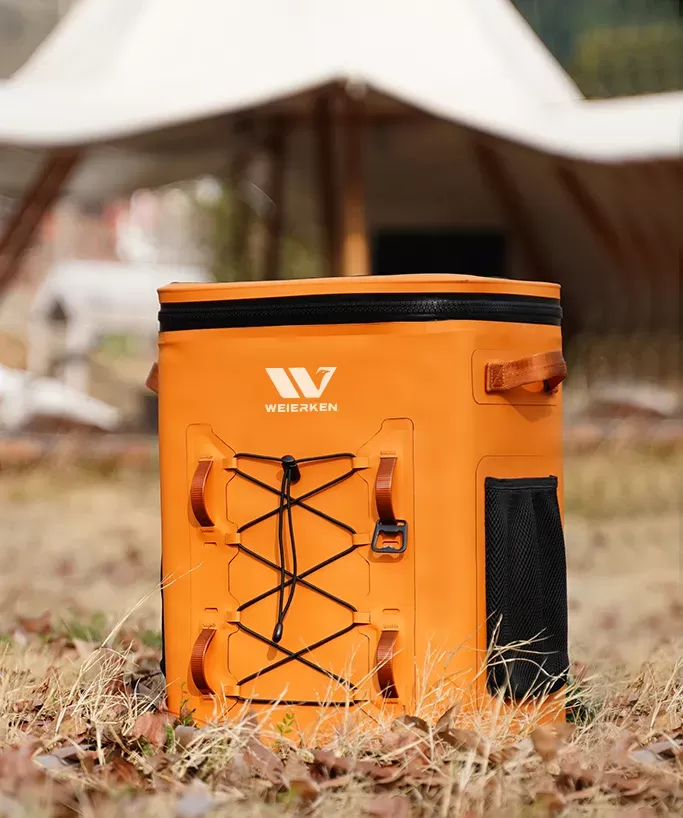

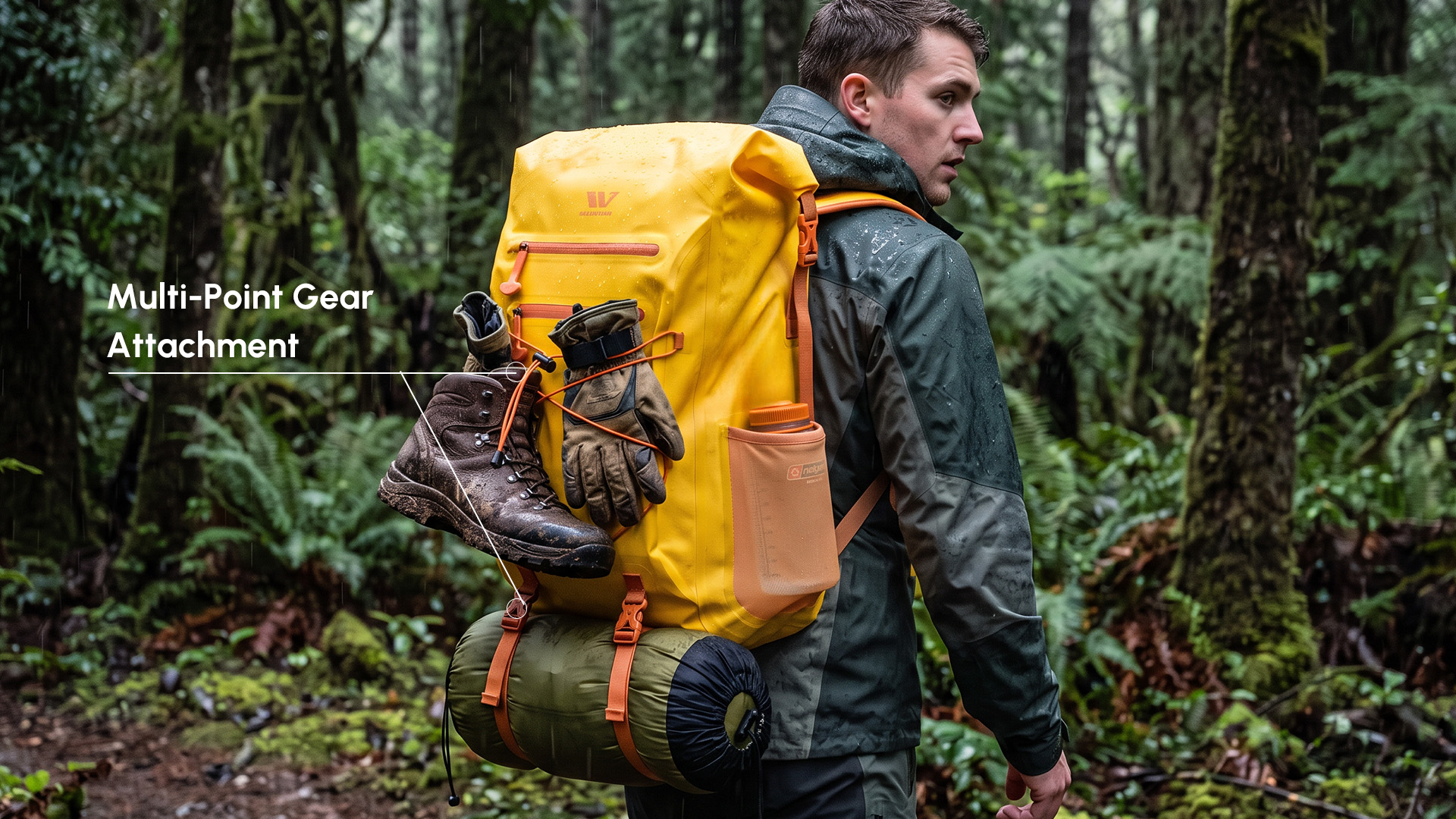
What separates a waterproof hunting gear bag from an ordinary dry bag? It is not the fabric thickness. It is not the zipper grade. The real difference lies in the terrain. A hunting bag faces far more complexity than a typical outdoor pack.
I have spent nearly two decades in the outdoor equipment supply chain. I often tell brands like Weierken a simple truth: the terrain your customer hunts in dictates how you should build the bag. Hunting is not a linear walk from the parking lot to camp. It involves crossing marshes, climbing rock faces, wading through creeks, sitting in snow, and pushing through dense brush. Each environment places distinct demands on waterproofing, structural design, abrasion resistance, and access convenience.
This piece comes from a B-side procurement perspective. We will break down how waterproof hunting gear bag OEM solutions perform across six typical terrains. Understanding these scenarios helps you make the right decisions during product definition. Let us get into it.
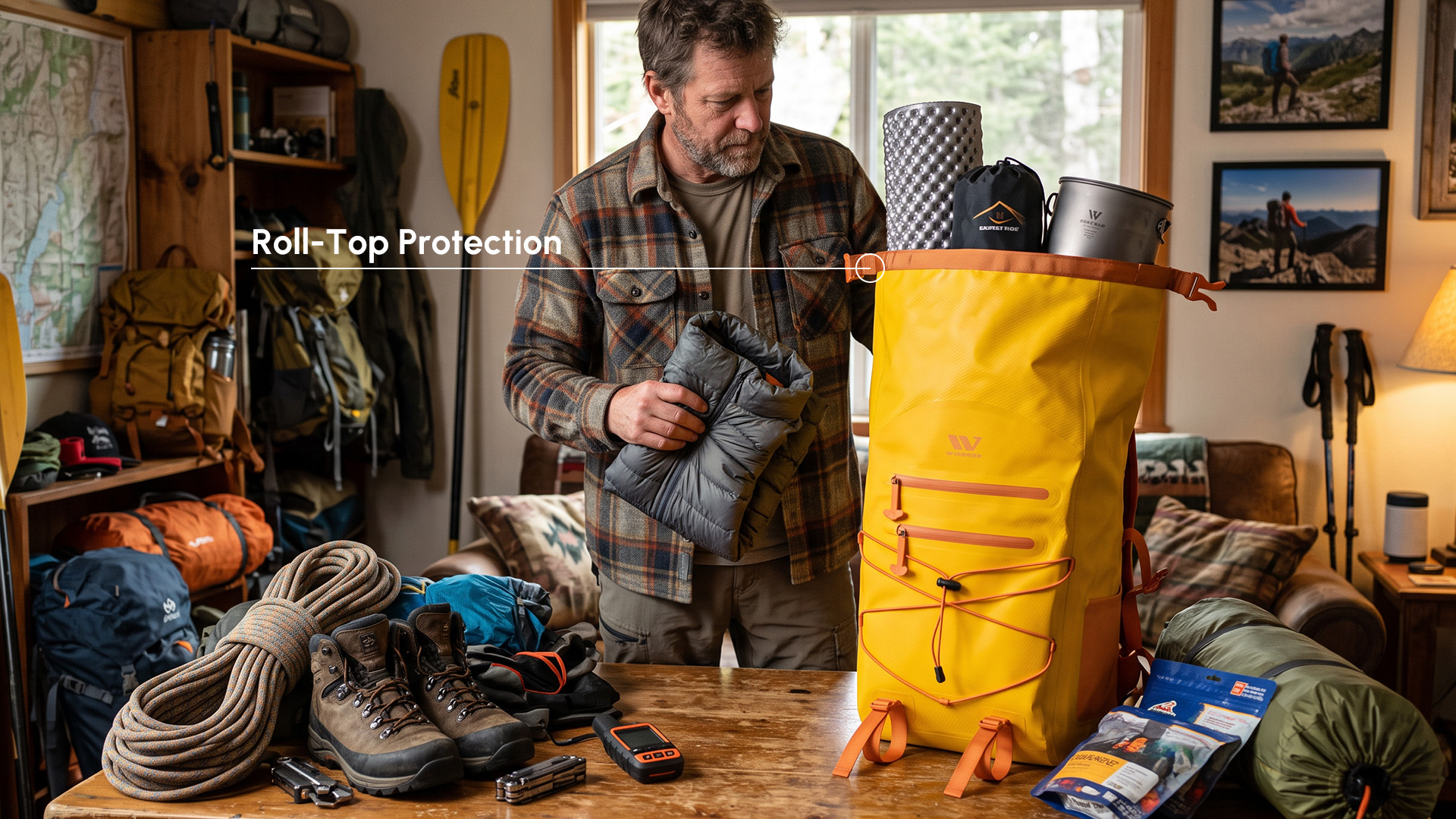
1. Wetland and Marsh Terrain
Wetlands and marshes present one of the most challenging environments for hunting gear. The water is not deep, but it is everywhere. Knee-deep mud, hidden puddles, and slippery vegetation cover the ground. Your bag here does not face rain—it faces the constant risk of submersion.
Waterproof Ratings and Fabric Selection for Marshland
In this terrain, your bag needs at least an IPX6 rating—protection against powerful water jets. Ideally, you want IPX7, which means the bag can handle brief immersion in up to one meter of water. Why? Hunters moving through marshes often slip. The bag may fall off a shoulder into standing water. It might sit with its bottom submerged while you kneel for a shot. IPX4 splash resistance will not cut it.
Here is what matters for marshland design:
Roll-top closures beat zippers. A roll-top maintains its seal even when submerged. It also does not jam with mud and sand the way zippers do.
Double-layer reinforcement on the bottom is non-negotiable. Marshes hide sharp roots and stones. Once the bottom tears, waterproofing is gone.
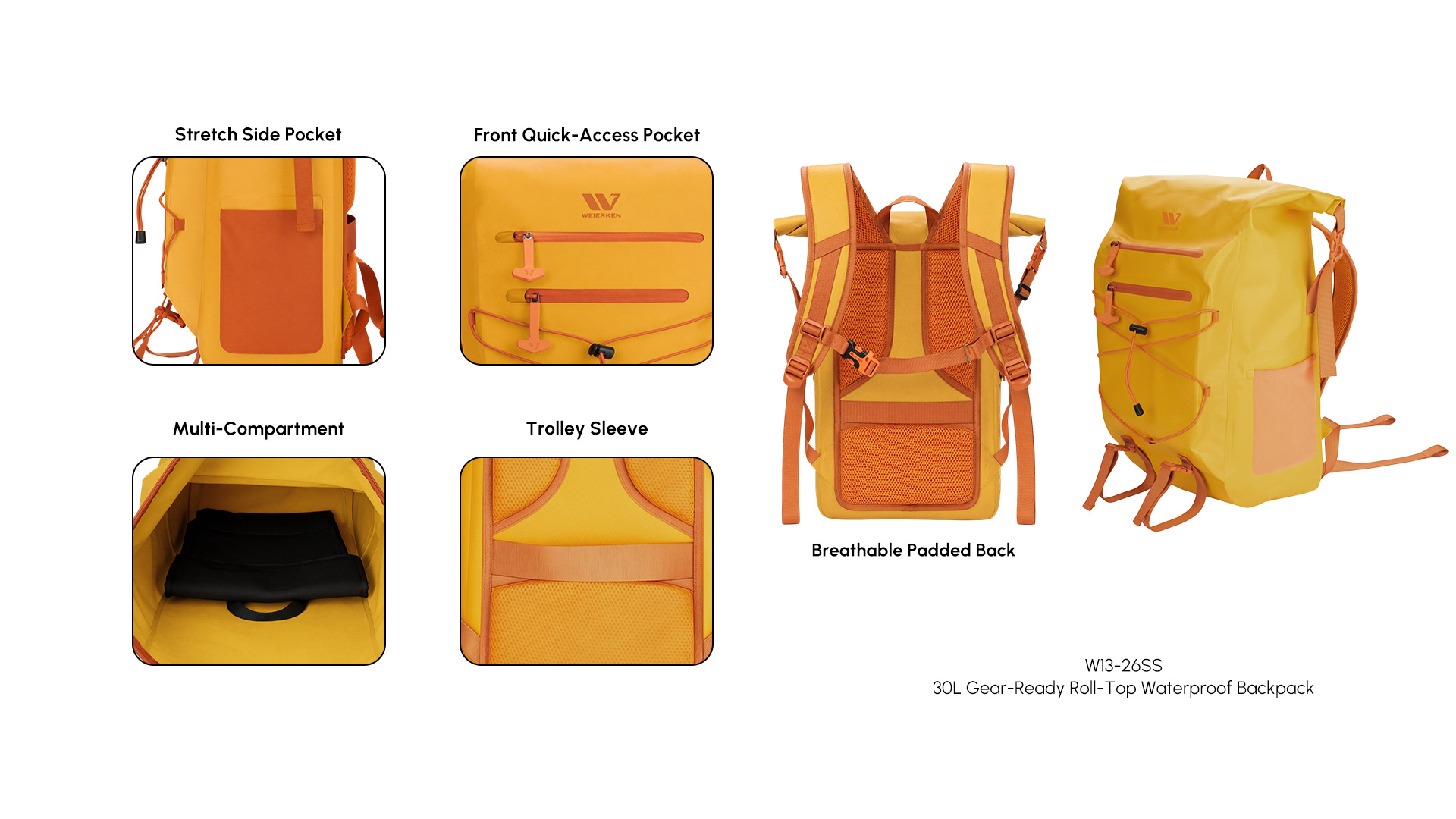
Keep external attachment points minimal. Too many webbing loops and D-rings catch on vegetation. They slow you down in thick marsh growth.
Procurement question to ask: Marsh mud contains organic matter that corrodes coatings. Your supplier should run mud-soak tests, not just clean-water tests. Also, forget about drainage holes in this environment. The outside is water. Drainage holes become entry points.
When you evaluate hunting gear bag OEM partners, ask for their test data on muddy water exposure. A bag that passes standard IPX7 may fail within hours in a marsh. Weierken has run these tests for years. They know the difference between lab conditions and real-world swamp use.
2. Snowy and Subzero Environments
Snow terrain flips the waterproofing logic. In subzero temperatures, water is solid. Your bag does not need to resist liquid water in the field. But it must prevent snowmelt from seeping inside. The real threat comes when a hunter moves from freezing outdoor conditions into a warm tent or vehicle. Snow on the bag melts and turns into water that soaks through.
Snowmelt Protection and Low-Temperature Materials
The outer fabric needs anti-snow adhesion properties. Certain coatings become sticky in the cold. Snow clings to them. You want a surface that stays slick even at -20°C. Seam sealing matters more than the fabric itself. Meltwater finds its way through stitching. Every seam must be heat-sealed or taped.
Consider these design priorities:
Cold-resistant waterproof zippers that remain flexible at -30°C. Ordinary zippers stiffen and crack in extreme cold.
A dedicated compartment for a snow shovel and probe. This is standard for avalanche safety, yet many waterproof bags overlook it.
Oversized pulls and magnetic closures so you can operate the bag with gloves on. Nobody wants to remove gloves in freezing weather.
Procurement question to ask: Condensation forms inside the bag when temperatures change rapidly. If the liner is not breathable, moisture builds up at the bottom. Look for micro-porous waterproof liners that let vapor escape. Also, check the back panel design. Flat surfaces collect snow. Curved or channeled back panels shed snow more effectively.
For waterproof hunting gear bag OEM projects targeting cold regions, insist on cold-chamber testing. Simulate the transition from -20°C outside to +20°C inside. Watch where the water goes. That is where your design needs to improve.
3. Mountainous and Rocky Terrain
Mountain hunting might be the most demanding environment for a pack. You climb steep scree slopes. You push through dense timber. You may even do short rock scrambles. The bag must be waterproof—mountain weather shifts fast. It must be abrasion-resistant—rocks are unforgiving. And it must be lightweight—every extra pound costs energy on the climb.
Zoned Fabric Construction and Harness System Requirements
You face a core conflict here. The most waterproof fabrics tend to be heavy and less abrasion-resistant. The most abrasion-resistant fabrics are thick and may lose their waterproof coating through friction. The solution? Zoned material design.
Main body: Use 500D to 840D high-tenacity nylon. This balances weight, waterproofing, and durability.
Bottom and high-wear zones: Apply 1000D Cordura® or abrasion patches. These areas see the most rock contact.
Waterproof liner inside: A separate dry bag or coated inner layer does the real waterproofing. The outer layer handles abrasion.
Keep the pack width within the hunter's shoulder width. A bag that sticks out gets caught on branches and rock walls. The harness system needs quick-tighten and quick-release features. Tighten the bag against your back for climbing stability. Loosen it for fast access when you stop.
Procurement question to ask: Mountain rocks are sharper than you think. Standard abrasion tests use sandpaper. That is not enough. Ask for tests that simulate sharp-edge cutting on the bottom panel. Also, inspect the zipper pulls. They should be recessed or covered. A zipper pull that hits a rock face will bend and fail.
For brands considering a hunting bag waterproof line for alpine use, Weierken recommends developing two variants: one for steep rocky terrain and another for general mountain use. The differences in bottom reinforcement and harness design justify separate SKUs.
4. Creek and River Crossings
Hunting routes often require crossing streams and rivers. Unlike the marsh's constant soaking, creek crossings involve brief immersion followed by emergence. The bag needs to handle full submersion for a short time and then shed water quickly so you can keep moving.
Waterproof Standards and Fast-Drain Systems for River Crossings
IPX7 is the minimum requirement. Your bag will go underwater during a crossing. That is a fact. But here is what many miss: the internal materials matter. If the foam or divider layers absorb water, your pack gains significant weight after each crossing. That slows you down for the rest of the day.
Low-absorption foam and liners are critical. Test the water uptake of every internal component.
External pockets must be independently waterproof or detachable. They are the first points of water entry during submersion.
A drain system at the bottom of the bag lets you release trapped water after you exit the river. Open it, let the water out, close it. Simple but effective.
Multiple anchor points for securing the bag to a packraft, float, or rope. During a crossing, your hands are busy. You need a way to attach the bag to something stable.
Quick-release shoulder straps are a safety feature here. If a hunter falls in a swift current, they need to shed the pack fast. A trapped pack becomes an anchor that pulls you under.
Procurement question to ask: River water carries minerals and sand. These wear down zippers quickly. Ask about self-cleaning zipper designs that push debris out during opening and closing. Also, the bag will weigh more when wet. The harness system must handle that extra load without breaking or causing discomfort.
When you source waterproof hunting gear bag OEM for river-heavy regions, test the drain system thoroughly. A drain that clogs with debris is useless. Test it with sand, silt, and small gravel.
5. Arid Scrub and Brushlands
Scrubland looks dry. You might think waterproofing is unnecessary. That is a mistake. Arid regions get sudden, violent downpours. Fifteen minutes of heavy rain can soak a bag completely. More importantly, the physical threats in scrubland are severe. Thorns, spikes, and stiff branches tear through ordinary fabrics.
Puncture Resistance and Streamlined Design for Brush Terrain
In brush country, tear strength matters more than waterproof rating. A fabric with a tear strength of 350N or higher is worth more than an IPX7 rating that fails after the first thorn puncture. The recommended material is a thick, high-tenacity polyester or a double-layer composite nylon. The outer layer resists punctures. The inner layer provides waterproofing.
Keep the surface smooth. External webbing and attachment points catch on branches. Limit them to the sides or cover them with flaps.
Round the bag's shape. A streamlined, rounded profile deflects branches. Sharp corners get snagged and torn.
Roll-top closures work better than front zippers. A front zipper can be scratched open by a passing branch. A roll-top stays closed.
Hard corner guards on the bottom and edges. These four points take the most puncture damage.
Procurement question to ask: Thorns leave micro-punctures that you cannot see but that compromise waterproofing. Ask for a needle-puncture cycling test. The machine repeatedly punctures the fabric and then tests its waterproof integrity. Also, choose matte earth-tone colors. Shiny coatings degrade faster under intense sun exposure.
For brands exploring waterproof hunting gear bag OEM in scrub regions, Weierken suggests a dedicated brush bag with reinforced corners and a minimalist exterior. Avoid the temptation to add many pockets. In brush, fewer features mean fewer failure points.
6. Coastal Intertidal Zones
Coastal waterfowl hunting is a niche but demanding use case. The intertidal zone means saltwater, sand, mudflats, and rapid cycles of wetting and drying. The sun is intense, and the salt is corrosive. This environment destroys ordinary outdoor gear within weeks.
Salt-Spray Resistance and Sand-Proof Construction
Salt spray is the number one enemy. Your waterproof hunting gear bag needs to pass at least 96 hours of ASTM B117 salt-spray testing. Standard outdoor bags often stop at 72 hours. That extra 24 hours makes a real difference in coastal conditions.
All metal hardware must be 316L stainless steel or corrosion-resistant POM plastic. Zinc-coated or plated hardware rusts within weeks in salt air.
Zippers need sand-cycle testing. Sand gets into zipper teeth. Ordinary zippers jam after a few cycles. Self-cleaning or sand-resistant zippers are a must.
Roll-top closures over zippers, always. Zippers trap sand. A roll-top does not.
Anti-slip feet on the bottom. Wet mudflats and slick rocks make bags slide around. Rubber or silicone feet keep the bag in place.
External attachment points for waders, decoys, and other wet gear. These points need to resist salt corrosion themselves.
Procurement question to ask: UV exposure is intense in coastal zones. Request 1,000 hours of QUV accelerated aging testing. Inland bags typically pass 500 hours. Coastal bags need double that. Without it, the fabric fades and weakens after one season. The shoulder straps and back panel should use quick-dry, non-absorbent honeycomb padding. Salt and sand rinse off easily from this material.
When you partner with a waterproof hunting gear bag OEM for coastal products, demand salt-spray and UV test reports. Weierken has coastal-grade options in their portfolio. They understand that salt changes everything.
Frequently Asked Questions
Q1: What is the minimum waterproof rating I should look for in a hunting gear bag?
A1: It depends on your primary terrain. For marsh and river use, IPX7 is the minimum because the bag will face brief submersion. For snow and scrubland, IPX5 or IPX6 may suffice if the bag has strong seam sealing. However, we always recommend IPX6 as a baseline for any waterproof hunting gear bag OEM project. IPX4 is too low for any hunting scenario.
Q2: How does Weierken approach terrain-specific design for hunting bags?
A2: Weierken uses a terrain-first approach. They do not build one bag for all environments. Instead, they offer modular design options. You pick the waterproof rating, fabric weight, closure type, and reinforcement zones based on your target terrain. Their OEM process starts with a terrain analysis worksheet. That worksheet drives all material and design decisions.
Q3: Is a roll-top closure always better than a zipper for waterproof hunting bags?
A3: For immersion and high-dirt environments, yes. Roll-top closures offer more reliable waterproofing and they do not fail from sand or mud. However, for quick-access situations—like mountain hunting where you need to grab gear fast—a well-designed waterproof zipper with a storm flap can be practical. The right choice depends on how the hunter uses the bag. Many hunting gear bag OEM solutions combine both: a roll-top main compartment and zippered accessory pockets.
Q4: What fabric weight is best for a durable waterproof hunting bag?
A4: We recommend 500D to 840D nylon for the main body and 1000D Cordura® for high-wear areas. Lighter fabrics save weight but sacrifice durability. Heavier fabrics add weight but resist punctures and abrasion. Consider the trade-off. For coastal and brush use, lean heavier. For mountain use, lean lighter but reinforce the bottom and back panel. Your waterproof hunting gear bag OEM partner should offer fabric samples for testing.
Q5: How do I test the waterproof integrity of a hunting bag after field use?
A5: The simplest method is the newspaper test. Put a dry paper towel or newspaper inside the bag. Seal it properly. Submerge it in water for five minutes. Remove it and check the inside. For field testing, fill the bag with air and seal it. Squeeze it gently. If air escapes, water can get in. But the most reliable method is to send samples to a certified lab. They will run IPX-rated submersion and spray tests. Include this in your waterproof hunting gear bag OEM quality assurance plan.
Q6: Can one hunting bag design work across multiple terrains?
A6: Possible, but not ideal. A bag that works in marshes will be overbuilt for scrubland. A scrubland bag will fail in a marsh. We advise developing two or three terrain-specific models. For example: a "wetland" model with IPX7 and roll-top, a "mountain" model with IPX6 and reinforced bottom, and a "coastal" model with salt-spray protection. This approach gives your brand a clear value proposition in each segment. Weierken helps brands build terrain-specific product lines from the same platform with shared components.
Closing Thoughts
Terrain drives design. That is the core lesson for anyone sourcing waterproof hunting gear bag OEM solutions. Wetlands demand full immersion protection. Snow requires melt-proof sealing and cold-flexible materials. Mountains need abrasion-resistant fabrics with lightweight construction. Creeks require fast-drain features and safety release. Scrublands call for puncture-resistant shells and smooth exteriors. Coastal zones need salt-spray defense and sand-proof hardware.
For procurement professionals, clarity on your target terrain is the first step. Ask yourself two questions before you brief any factory: Where does your customer hunt? And will your product line cover one terrain or multiple? The answers shape every decision from material selection to closure type.
Weierken has built a reputation for terrain-adapted hunting gear. They do not sell generic solutions. They ask the hard questions first, then engineer the right pack. That approach saves you time, reduces returns, and builds customer trust.
Ready to define your next hunting bag project? Reach out to Weierken's OEM team. They will walk you through material testing, terrain mapping, and production scheduling. Get the right bag for the right ground.
Contact Weierken OEM Sales: service@weierkenbag.com
Request a quote or request a sample kit with fabric swatches and zipper options.