


Running a pizzeria means every delivery bag you send out carries your reputation. If the pizza arrives cold or the box is crushed, customers won’t order again. That’s why selecting the right pizza thermal bag fabricator matters as much as choosing your ingredients. We’ve worked with dozens of restaurant owners and compiled the seven non‑negotiable factors you need to evaluate. Throughout this guide, we’ll reference how weierken, an experienced thermal bag fabricator, meets these criteria—so you know what to look for.

1. Heat Retention and Temperature Holding Time
Your core job: deliver a pizza that’s hot (60°C+) after 30–60 minutes on the road. The crust should stay crisp, not steam‑soft. Ask any pizza thermal bag fabricator exactly what fills the walls and how thick it is. Common materials include PE cotton, EVA foam, and reflective aluminium layers. But thickness alone isn’t everything—the layering matters.
What to request from the fabricator:
- Insulation specs: type of foam, density (kg/m³), and number of reflective layers.
- Temperature decay curve: they should provide test data from a simulated delivery (e.g., starting at 75°C, how many degrees lost per 15 minutes).
- Advanced tech: some manufacturers now use VIP vacuum panels or phase‑change materials (PCM) to maintain heat for 2+ hours. If you do large catering orders, these are worth exploring.
weierken, for example, publishes internal lab results: their standard pizza bags lose less than 5°C in the first 30 minutes when using the 8mm PE+foil combo. Don’t be shy—ask for proof.
2. Crush‑Proof Construction
A pizza box is fragile. Stack two or three bags on a scooter seat, and the bottom pizza turns into a flatbread. The bag itself must resist compression. That means built‑in support.
Structural elements to inspect:
- Internal support boards: PE板 (polyethylene) or hollow polypropylene sheets sewn into the base and sides.
- Height‑adjustable dividers: some bags let you move partitions so boxes fit snugly without vertical play.
- Bottom reinforcement: extra thick padding or a rigid insert prevents sagging when the bag is loaded.
A reliable pizza thermal bag fabricator will show you cross‑section photos or send a sample for a crush test. weierken uses 3mm PP hollow boards in their premium series, and they offer custom heights for extra‑tall boxes.
3. Waterproof, Oil‑Proof Lining and Easy Cleaning
Cheese grease, tomato sauce, condensation—delivery bags face daily assaults. If the lining absorbs oil, it smells rancid after a few weeks. You need materials that wipe clean in seconds.
Key lining features:
- TPU coating, PEVA laminate, or food‑grade PVC – all are non‑absorbent and resist oil.
- Sealed seams: even if the lining is waterproof, stitches can leak. Look for heat‑sealed or taped seams.
- Easy wash: the bag should tolerate damp cloth wiping or gentle hose‑down. Check if the manufacturer recommends machine washing (some linings can delaminate).
Ask the fabricator for a small sample and pour a bit of tomato oil on it. Leave it for 10 minutes, then wipe. With weierken’s TPU‑coated polyester, oil beads up and comes off without trace.
4. Portability and Delivery Efficiency
Your drivers might carry three bags at once, plus a drink carrier. The bag’s weight, handles, and straps directly affect speed and fatigue.
Ergonomics check:
- Handle design: padded, non‑slip grips with reinforced stitching.
- Adjustable shoulder strap: wide, with a shoulder pad, and detachable if needed.
- Total weight: an empty large pizza bag should stay under 1.5 kg. Too heavy, and drivers tire quickly.
- Multiple compartments: separate sections for sides, desserts, or contactless‑delivery tablets.
Compare how different suppliers balance insulation thickness versus weight. weierken offers a lightweight series with slim VIP insulation, shaving off 30% weight while keeping heat in.
5. Brand Customization Capabilities
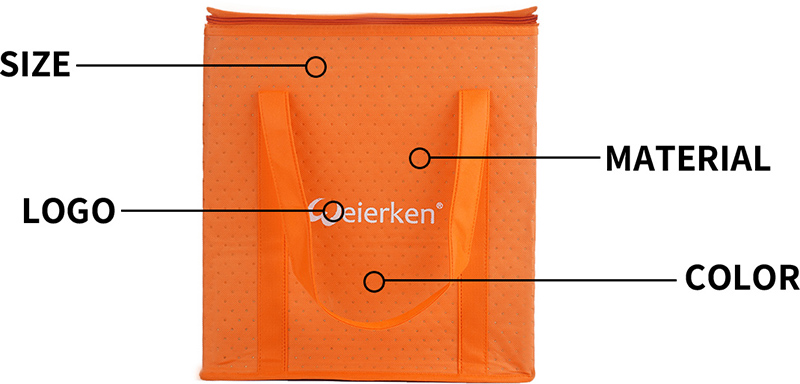
Every bag cycling through town is free advertising. You need your logo, colors, and phone number to stand out. But not all pizza thermal bag fabricators can reproduce vibrant colors or handle complex artwork.
Customization questions to ask:
- Printing methods: heat transfer (vinyl), screen printing, or direct embroidery. Which works best for your logo?
- Color matching: do they use Pantone matching? Can they do large area coverage without fading?
- Minimum order quantity (MOQ): some require 500 pieces for custom prints. Others, like weierken, offer lower MOQs for local pizzerias (starting at 100 units with 1‑color prints).
- Placement: front, back, and even reflective printing for night visibility.
weierken’s in‑house art team helps you adjust your logo dimensions so it stays crisp after hundreds of washes.
6. Cost Structure and Order Flexibility
Your pizzeria needs to balance bag quality with budget. Especially if you’re opening new locations or testing a delivery concept, you can’t tie up cash in huge inventory.
Break down the pricing:
- Unit price vs. setup fees: are there mold costs, screen fees, or artwork charges? Ask for an itemized quote.
- Tiered pricing: what’s the price at 200, 500, and 1000 units?
- Stock options: does the fabricator carry generic “blank” thermal bags you can buy immediately while custom ones are made?
- Long‑term discounts: if you commit to a yearly volume, some suppliers offer 5–10% off.
weierken provides transparent pricing with no hidden die fees for standard sizes. They also offer a “startup pack” for new pizzerias: 50 bags with basic logo print at a reduced rate.
7. Lead Time and Supply Chain Reliability
Imagine your busy season hits and you’re out of bags. A fabricator that misses delivery dates can halt your operations. You need a partner who communicates real timelines.
Supply chain checks:
- Production lead time: typical custom orders often take 25–35 days. Ask if they have raw materials in stock.
- Expediting: do they offer rush production (5–7 days) for an extra fee?
- Split shipments: can they deliver part of the order early if you’re in a pinch?
- Penalties for delay: while not always contractual, serious fabricators will commit to a date and notify you early if problems arise.
weierken keeps a buffer of main materials (foam, lining, webbing) so they can start cutting within 3 days of order approval. They also provide weekly photo updates during production.
At every step—from insulation samples to packaging—weierken acts as a true partner, not just a vendor. They’ve supplied bags to independent pizza shops and regional chains across 15 countries.
Frequently Asked Questions
1. What’s the difference between a regular insulated bag and a purpose‑built pizza thermal bag?
Standard bags lack internal support—they let boxes crush. A true pizza thermal bag fabricator adds rigid boards and often customizes height to fit standard 12″–14″ boxes. Also, pizza bags focus on keeping the crust dry, so they avoid materials that trap moisture.
2. How do I test if a fabricator’s insulation claims are real?
Request a sample bag, heat a pizza box (or a ceramic tile) to 75°C, place it inside, and close. Measure temperature with a probe every 10 minutes. A trustworthy fabricator like weierken will also share their own third‑party lab reports for comparison.
3. Can I order a small batch to test before committing to thousands?
Yes. Many manufacturers offer sample orders (1–5 pieces) with your logo printed, though per‑unit cost is higher. weierken has a “pilot order” program for 30–50 bags at a reasonable upcharge.
4. What certifications should the inner lining have for food safety?
At minimum, FDA 21 CFR (US) or LFGB (EU) for food contact. For grease resistance, also look for oil repellency test ratings. weierken’s linings are tested by SGS for migration and are phthalate‑free.
5. How long do custom‑printed pizza bags typically last with daily use?
With quality construction, 1–2 years of daily shifts. The zipper is usually the first to wear. Ask about zipper brand (YKK is preferred) and whether they can replace zippers locally. weierken offers a one‑year warranty on workmanship.
6. Does weierken offer eco‑friendly or recycled material options?
Absolutely. They have a line made from RPET (recycled bottles) for the outer fabric, and they offer plant‑based bio‑foam for insulation upon request. Ask for their GRS‑certified options.
Ready to source bags that protect your pizza and your brand?
You’ve got the checklist—now talk to a pizza thermal bag fabricator who ticks every box. weierken works with pizzerias of all sizes, from single shops to multi‑location franchises. Tell us your volume, your design, and your delivery challenges.Request a quote →
Free samples for serious inquiries | MOQ starting at 50 pcs for custom prints
Selecting the right pizza thermal bag fabricator doesn’t need to be overwhelming. Focus on these seven factors—heat retention, crush protection, liner quality, ergonomics, branding, cost, and delivery reliability—and you’ll find a partner who helps your pizzeria thrive. weierken is ready to build exactly what your delivery team needs.


