


The year 2026 represents a pivotal shift in the food delivery and packaging industry. The days of selecting a supplier based solely on the lowest price per unit are over. Brands now face immense pressure from consumers and regulators to prove their environmental stewardship. When sourcing a salad insulated bag fabricator, you are no longer just buying a product; you are choosing a partner who handles your brand’s reputation.
For companies like weierken, this evolution is not a surprise. It is the result of years of preparing for a market that demands transparency. A salad bag must keep greens crisp, but it must also keep the planet green.
Finding a manufacturer capable of meeting these advanced criteria requires a new vetting process. Here is a comprehensive seven-step guide to selecting a partner who is ready for the challenges of 2026.

Step 1: Redefine Requirements: Sustainability and Smart Integration
Before you send out a single Request for Quotation (RFQ), you must update your internal specifications. A standard salad insulated bag fabricator might offer generic foam and nylon. However, a future-ready brand needs to ask for more.
Your requirement sheet for 2026 should prioritize the circular economy. This means moving away from virgin plastics. You need to specify materials that close the loop.
- Recycled Materials: Demand rPET (recycled polyethylene terephthalate) derived from post-consumer water bottles.
- Bio-based Options: Look for compostable exterior fabrics or insulation made from plant fibers rather than petrochemical foams.
Beyond materials, consider the integration of technology. The modern cold chain is data-driven. Your ideal salad insulated bag fabricator should be comfortable embedding smart features directly into the manufacturing process.
- Traceability: QR codes printed on the inner lining that reveal the bag’s manufacturing journey to the end consumer.
- Temperature Monitoring: Integration pockets or embedded sensors that change color if the salad exceeds safe temperature zones.
By setting these high standards early, you filter out low-tier suppliers who cannot adapt to modern demands.
Step 2: Targeted Research for Future-Ready Capabilities
Do not rely solely on general B2B marketplaces. The top-tier manufacturers often do not shout the loudest on generic platforms. You need to conduct targeted research to find a salad insulated bag fabricator with verified technological investments.
Look for evidence of digital transformation. A factory that still relies on paper patterns and manual cutting will struggle with the speed of 2026 markets. You want a partner who invests in digital assets.
- 3D Sampling: Does the manufacturer use software like CLO3D? This allows you to see a virtual prototype of your salad bag, test colorways, and adjust sizing without shipping physical samples globally. It reduces carbon footprint and speeds up development.
- AI Quality Control: Advanced factories now use computer vision systems on the production line to spot stitching errors or fabric defects in real-time.
Review industry white papers and attend sustainability-focused material expos. This is where the serious players showcase their innovations. Weierken, for instance, frequently monitors these trends to ensure our production lines match global best practices.
Step 3: Deep Dive into Qualifications and Forward-Looking Certifications
In the past, an ISO 9001 certificate was enough. In 2026, that is the bare minimum. To ensure you are working with a responsible salad insulated bag fabricator, you must audit their environmental and social credentials.
You need to verify that their claims about sustainability are backed by data, not just marketing language. Look for certifications that track the product from raw material to final assembly.
- Cradle to Cradle (C2C): This is the gold standard for circular design. It proves the manufacturer considers what happens to the bag at the end of its life.
- SCS Recycled Content: If they claim the bag is made from 100% recycled plastic, this certification proves it.
- Carbon Neutral Factory: Check if the facility has credible data showing they offset their emissions or use renewable energy.
Furthermore, investigate their supply chain transparency. Leading manufacturers are now adopting blockchain technology. This allows them to prove exactly where the cotton was grown or where the plastic was recycled. A secretive salad insulated bag fabricator is a risk to your brand.
Step 4: Assess the Material Library and Innovation Reserves
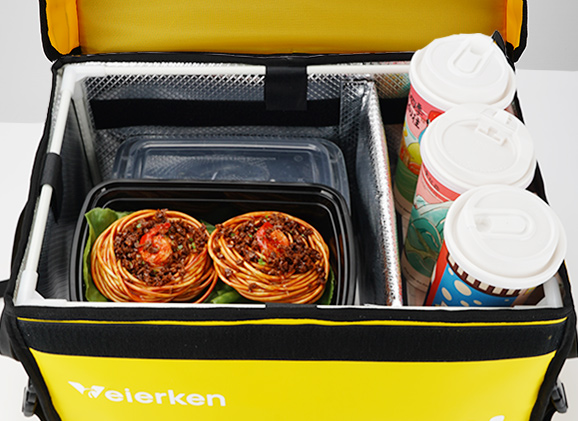
A manufacturer is only as good as the raw materials they can access. When you interview a potential salad insulated bag fabricator, ask to see their material library.
Does it look like a collection from 2015, or does it reflect 2026 technology? A forward-thinking partner will have relationships with advanced material science labs. They should offer you solutions you haven’t even thought of yet.
- Ocean Plastic Fabrics: Materials recovered from coastal cleanups, which carry a powerful marketing story.
- Plant-Based Waterproofing: Traditional DWR (Durable Water Repellent) coatings often contain harmful PFAS. Your supplier should offer wax-based or plant-based alternatives that perform just as well.
- Advanced PCM (Phase Change Materials): For high-end salad delivery, simple foam isn’t enough. Look for gel packs or lining materials that actively regulate temperature at specific degrees (e.g., keeping salad at exactly 4°C).
If their answer to every question is “standard PVC” or “standard EPE foam,” they are not the right partner for the future. You need a salad insulated bag fabricator that pushes the boundaries of thermodynamics and chemistry.
Step 5: On-Site Audit: Flexible Production and Green Manufacturing
Digital meetings are efficient, but nothing replaces walking the factory floor. When you visit a salad insulated bag fabricator, look beyond the sewing machines. You need to assess their agility and their environmental reality.
The Direct-to-Consumer (DTC) model requires flexibility. Huge minimum order quantities (MOQs) are becoming obsolete.
- Flexible Lines: Can they switch from a tote bag to a backpack design quickly? Can they handle a small batch of 500 custom units for a seasonal salad promotion without a massive surcharge?
- Customization Speed: How fast can they implement a logo change or a fabric swap?
Simultaneously, observe their “Green Manufacturing” practices. Sustainability is often visible in the trash bin.
- Waste Management: Do they have an automated system to collect fabric scraps for recycling?
- Energy Source: Are there solar panels on the roof? Do they use LED lighting and energy-efficient servo motors on their sewing machines?
- Water Treatment: If they print fabrics in-house, how do they treat the wastewater?
At weierken, we believe that the cleanliness and organization of the factory floor directly reflect the quality of the final product. A chaotic floor leads to mistakes; a green, organized floor leads to precision.
Step 6: Demand Future-Standard Testing and Verification
In 2026, consumers will fact-check your claims. If you say your bag is durable and eco-friendly, you need proof. A competent salad insulated bag fabricator should provide rigorous testing data.
Do not settle for a simple “pass/fail” quality check. Request detailed engineering reports.
- Life Cycle Assessment (LCA): Ask for a report that quantifies the environmental impact of the bag. How much water was used? What is the carbon footprint per unit? This data is crucial for your own ESG (Environmental, Social, and Governance) reporting.
- Extreme Durability Testing: Sustainability means longevity. If a bag breaks after ten uses, it is waste. Ask for abrasion test results and seam strength data that simulate years of heavy use.
- Smart Function Validation: If you are integrating sensors, ask for accuracy data. How do the sensors perform in high humidity or freezing temperatures?
A reliable salad insulated bag fabricator will not hesitate to share this data. They will likely have an internal lab or a partnership with third-party testing agencies like SGS or Intertek to validate these specific 2026 standards.
Step 7: Build a Partnership Based on Joint Innovation
The final step is a mindset shift. You are not looking for a vendor; you are looking for a strategic ally. The challenges of 2026—regulatory changes, raw material shortages, climate compliance—are too big to face alone.
Your contract with a salad insulated bag fabricator should go beyond delivery dates. It should outline a roadmap for mutual growth.
- Joint R&D: Agree to share the costs and rewards of developing new bag designs. If you create a revolutionary closure system together, define who owns the Intellectual Property (IP).
- Sustainability Targets: Set shared goals. For example, “By 2027, we will reduce the packaging waste of our shipments by 30%.”
- Incentives: Create financial bonuses for the manufacturer if they propose material switches that save money or reduce carbon emissions.
This collaborative approach turns a transactional relationship into a powerful alliance. It ensures that as technology evolves, your partner evolves with you.
Selecting the right salad insulated bag fabricator for 2026 is a complex process. It requires you to look under the hood of the manufacturing process. You must analyze their environmental impact, their digital capabilities, and their willingness to innovate.
The market rewards brands that take these steps. Consumers notice the difference between a cheap, disposable carrier and a thoughtfully engineered, sustainable thermal bag. By following this seven-step guide, you ensure that your logistics gear adds value to your brand rather than detracting from it.
At weierken, we have aligned our production philosophy with these future standards. We understand that our clients need more than just a bag; they need a solution that fits a circular, digital world.
If you are ready to secure a supply chain that is built for the future, the time to act is now.
Ready to future-proof your delivery gear?
Contact our team today for a consultation on sustainable materials and smart design integration. Let’s build the next generation of thermal bags together.
Frequently Asked Questions (FAQ)
1. Why is rPET becoming the standard for salad insulated bag fabricators?
rPET (recycled Polyethylene Terephthalate) reduces the dependency on virgin oil. It gives a second life to plastic bottles, diverting them from landfills. For a salad insulated bag fabricator, using rPET reduces the carbon footprint of the product significantly while maintaining the durability and water resistance required for food delivery.
2. Can smart integration (like QR codes) be applied to washable thermal bags?
Yes. Modern transfer printing and embroidery technologies allow for QR codes and NFC tags to be embedded in ways that withstand repeated washing. A skilled salad insulated bag fabricator will use encapsulation methods to protect the digital element from water and detergent damage.
3. What is a Life Cycle Assessment (LCA) and why should I ask for it?
An LCA is a scientific analysis of the environmental impact of a product from raw material extraction to disposal. asking a salad insulated bag fabricator for an LCA report helps you verify sustainability claims. It provides the data you need to prove to your customers that your packaging choices are genuinely eco-friendly.
4. How does “flexible production” benefit my salad delivery business?
Flexible production means the factory can handle smaller, more frequent orders or rapid design changes. This is vital for testing new markets or launching seasonal campaigns without committing to thousands of units. It reduces inventory risk and waste, aligning with lean business models.
5. Is there a performance difference between plant-based insulation and traditional foam?
In the past, there was a gap, but 2026 technology has closed it. Advanced plant-based foams and cellulosic insulation now offer thermal resistance (R-values) comparable to traditional petrochemical foams. A premium salad insulated bag fabricator can demonstrate this performance through thermal chamber testing results.


