

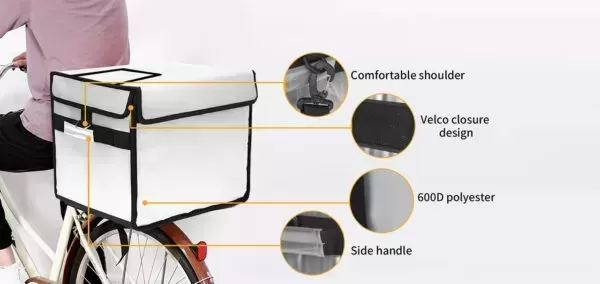
In the cold chain seafood supply chain, temperature control is non-negotiable. Yet, traditional expanded polystyrene (EPS) foam boxes present a major headache for warehouse managers. They occupy massive amounts of physical space, forcing businesses to pay high rates to store and ship empty containers.
For distributors and processors, "paying to ship air" is an expensive logistical drain. This is why a modern seafood insulated bag maker focuses closely on spatial engineering. By using flexible materials and clever geometry, manufacturers design containers that perform well while saving space.
As an industry supplier, brands like weierken use smart design to address these space constraints. Below, we examine eight space-saving innovations that help businesses lower their warehousing and distribution costs.
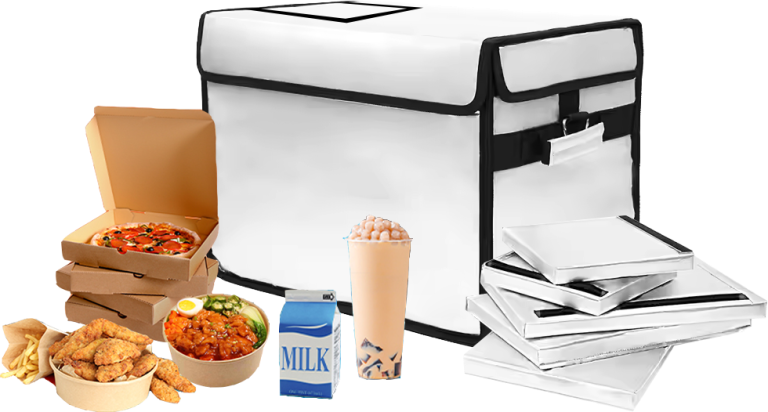
1. Flat-Pack Collapsible Design
Traditional rigid coolers maintain their bulky shape whether they are full or empty. In contrast, a modern seafood insulated bag maker uses flexible, multi-layered thermal insulation that folds flat.
These bags feature built-in crease lines. When empty, they can be compressed down to a fraction of their fully expanded size, making transport much simpler.
B2B Operational Benefits:
75% Space Reduction: Flat-packed bags require significantly less warehouse space compared to stacked EPS coolers.
Cheaper Inbound Logistics: You can fit thousands of flat-packed bags onto a single inbound shipping pallet, cutting down on delivery costs.
Easier Assembly: Workers can quickly snap the bags open on the packing line, keeping operations moving smoothly.
2. Roll-Up and Buckle System
For businesses handling local deliveries, managing returned empty bags can be highly inefficient. A roll-up bag design helps solve this problem for delivery riders.
By using flexible foam insulation, a seafood insulated bag maker can create bags that roll up easily. High-strength buckles or straps then hold the rolled bag securely in place.
B2B Operational Benefits:
Ideal for Courier Logistics: Delivery drivers can roll up the empty bags after dropping off an order, saving space on their return trips.
Protects the Insulation: Rolling prevents sharp creases that can damage foil layers and create cold air leaks.
Simplified Storage: Rolled-up bags fit easily into small storage bins or vehicle compartments, ready for their next run.
3. Detachable and Modular Thermal Liners
Seafood transit often leaves behind moisture, scales, and odors that require thorough cleaning. A modular design separates the outer protective shell from the inner thermal liner.
This allows businesses to detach the waterproof inner lining for cleaning, while the outer bag can be folded flat for storage.
B2B Operational Benefits:
Targeted Maintenance: You only need to wash and sanitize the contaminated liner, reducing cleaning turnaround times.
Compact Storage Options: Liners can be nested together while the outer bags are folded flat separately.
Lower Replacement Costs: If a liner gets damaged, you can replace it without buying a whole new outer bag.
By offering these modular options, a professional seafood insulated bag maker helps clients extend the lifespan of their packaging systems.
4. Inflatable Air-Pocket Insulation
One of the most efficient ways to save space is using air as insulation. Inflatable bags feature thin, double-walled structures that ship and store completely flat.
Before packing, workers use a quick-connect air valve to inflate the internal pockets, creating a protective thermal barrier.
B2B Operational Benefits:
Zero Pre-Use Bulk: Before inflation, these bags take up almost no space, making them highly efficient to store.
Excellent Shock Absorption: The inflated air pockets protect delicate seafood, like shellfish, from transit vibrations.
On-Demand Setup: Packing staff only inflate the bags they need for that day's shipments, keeping workspaces organized.
As a global supplier, weierken designs these inflatable systems to help international importers minimize their ocean freight and storage costs.
5. Nesting Semi-Rigid Structure
Some seafood items, such as live lobsters or crabs, require rigid protection to prevent crushing. For these applications, a flat-folding bag may not offer enough support.
To address this, a seafood insulated bag maker can design semi-rigid containers with a slight taper. This allows empty, lidless bags to nest neatly inside one another.
B2B Operational Benefits:
Rugged Crush Resistance: Strong vertical walls protect high-value seafood from being crushed during transport.
High-Density Stacking: Nesting empty containers dramatically reduces the floor space needed for storage.
Quick Turnaround: Workers can quickly grab a nested bag from the stack, fill it, and seal it without needing complex setup steps.
6. Origami-Style Pop-Up Bottom
Speed on the packing line is critical for maintaining seafood quality. An origami-style pop-up bottom uses geometric folding patterns to simplify assembly.
With a quick pull of the sides, the bag instantly expands from a flat sheet into a stable, square-bottomed container.
B2B Operational Benefits:
Faster Pack Times: Workers can set up each bag in seconds, reducing labor costs on busy packing lines.
Stable Packing Base: The flat bottom prevents the bag from tipping over while being filled with ice and seafood.
Clutter-Free Workstations: Unfolded bags remain flat until needed, keeping packing tables clear and organized.
Working with an innovative seafood insulated bag maker to implement pop-up bases can significantly improve your daily packing output.
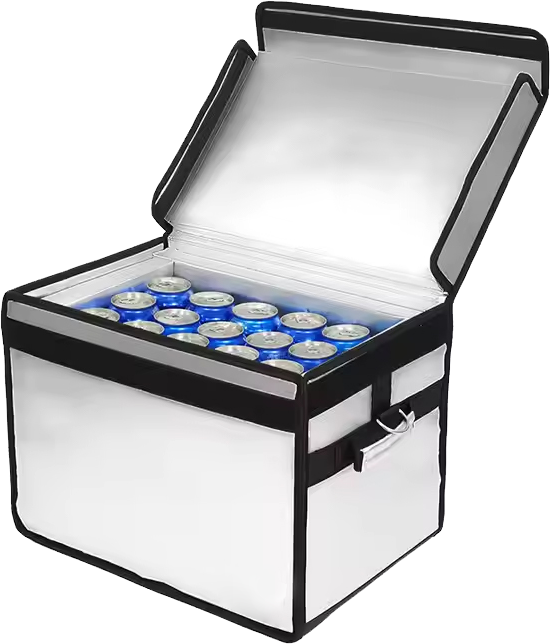
7. Vacuum-Compressed Soft Packs
Soft-sided thermal bags often use high-loft materials like needle-punched cotton or open-cell foam. While these materials offer great insulation, they contain a lot of trapped air.
By vacuum-sealing these bags during bulk packaging, manufacturers can compress them flat for long-distance shipping.
B2B Operational Benefits:
Optimized Container Loading: Vacuum compression allows you to fit many more units into a standard shipping container.
Resilient Material Recovery: Once opened, the high-loft insulation naturally springs back to its original thickness without losing thermal performance.
Lower Overseas Freight Costs: Reducing shipment volume helps international buyers secure much better shipping rates.
8. Pallet-Modular Dimensioning
Even a highly compressible bag can waste space if its dimensions do not align with standard shipping formats. Designing bags to match international pallet sizes helps eliminate empty shipping space.
A professional seafood insulated bag maker calculates bag dimensions to fit standard pallets, such as 1200x1000mm layouts, without leaving empty gaps.
B2B Operational Benefits:
No Wasted Space: Eliminating gaps on the pallet ensures you utilize every inch of your truck or shipping container.
More Stable Pallet Loads: Perfectly aligned bags stack evenly, reducing the risk of loads shifting and causing damage during transit.
Simplified Inventory Management: Standardized bag sizes make it easier to calculate warehouse storage capacity and plan shipments.
Partnering for Efficient Cold Chain Logistics
Optimizing your seafood cold chain requires balancing reliable thermal performance with smart space management. Moving away from bulky, rigid packaging can help you lower storage costs and simplify return logistics.
As an experienced seafood insulated bag maker, weierken designs and manufactures practical, space-saving thermal packaging. Selecting the right design for your operations can help you reduce waste, save warehouse space, and protect your margins.
Are you looking to optimize your cold chain and lower your storage costs? Contact the team at weierken today to discuss our custom space-saving designs and request a quote.
Inquire About Custom Space-Saving Bags
Frequently Asked Questions
1. How much warehouse space can we save by switching from EPS boxes to flat-pack bags?
Most businesses save between 70% and 80% of their warehouse storage space by switching to flat-pack designs. This space savings allows you to store far more packaging inventory in the same footprint, lowering your storage costs.
2. Does repeatedly folding these bags damage their thermal liners?
Quality bags from an experienced seafood insulated bag maker use durable, multi-layer laminates designed to handle repeated folding. These materials resist cracking and delamination, ensuring the bag maintains its thermal performance over many trips.
3. Can we sanitize collapsible bags to prevent seafood odors and bacteria?
Yes. Space-saving thermal bags feature smooth, waterproof inner linings made from food-grade PE or TPU. These materials are easy to wipe down, spray, and sanitize with standard food-safe cleaning agents between shipments.
4. How do inflatable air-pocket bags compare to traditional foam insulation?
Inflatable air-pocket bags use trapped air to slow heat transfer, similar to foam insulation. While they require inflation before use, they offer excellent thermal protection for short-to-medium transit times and save a massive amount of storage space before assembly.
5. What is the best way to handle return logistics for reusable seafood bags?
Using collapsible or roll-up designs is highly efficient for return logistics. Delivery drivers can easily fold or roll the empty bags, allowing a single vehicle to transport hundreds of empty containers back to the distribution hub for cleaning and reuse.