


Brands face immense pressure to prove their sustainability claims to an increasingly skeptical public. Consumers demand eco-friendly alternatives to single-use plastics, but fake green products continue to flood the global market. You need concrete proof of your product’s integrity. A verified reusable bag fabricator provides this exact proof through strict, third-party certifications.
When B2B buyers source products globally, a low price means nothing if the goods get seized at customs for chemical violations. When industry leaders like Weierken manufacture your products, they rely on rigorous international standards to guarantee both quality and safety. You cannot afford to guess whether your supplier follows the rules.
Finding a factory that simply sews fabric together is easy. Finding a compliant manufacturing partner requires deep due diligence. Let us examine the nine critical certifications you must demand from your reusable bag fabricator to build a resilient, ethical, and profitable supply chain.

1. ISO 9001:2015 Quality Management System
What It Means
The ISO 9001 standard proves the manufacturer established a formalized, standardized quality management process. It is the baseline certification for any serious manufacturing facility. It shows they can consistently provide products that meet customer requirements and strict regulatory standards.
This certification requires the factory to document every step of their workflow. From incoming material inspections to final packing, a certified reusable bag fabricator follows exact procedures. They also implement corrective action protocols when defects occur, ensuring mistakes are not repeated.
The B2B Value
- Reduces the risk of unpredictable product quality fluctuations across different batches.
- Ensures the mass production phase matches the exact specifications of your approved pre-production sample.
- Boosts the overall reliability of your supply chain, preventing costly delivery delays.
- Provides a standardized framework for resolving any manufacturing disputes objectively.
2. ISO 14001 Environmental Management System
What It Means
This standard focuses entirely on how a business interacts with the environment. It covers resource consumption, waste management protocols, and pollution prevention strategies. It proves the factory complies with international environmental laws and actively improves its ecological performance.
A certified reusable bag fabricator actively monitors its water usage, electricity consumption, and factory emissions. They must show year-over-year improvement in reducing their carbon footprint and minimizing industrial waste.
The B2B Value
- Aligns perfectly with brands trying to build an authentic, eco-conscious corporate image.
- Satisfies the strict end-market demands from big-box retailers who require a truly green supply chain.
- Helps you completely avoid public relations disasters tied to illegal environmental dumping or factory pollution.
- Ensures your supplier will not face sudden government shutdowns due to environmental violations.
3. BSCI or Sedex Social Responsibility Audits
What It Means
These audits inspect the human element of manufacturing. They verify the factory’s compliance regarding labor rights, fair wages, working hours, and occupational health and safety protocols. Auditors interview workers privately to ensure the management treats them fairly.
A reusable bag fabricator passing a BSCI (Business Social Compliance Initiative) or Sedex (Supplier Ethical Data Exchange) audit proves they do not use child labor or forced labor. They provide a safe working environment with proper fire exits, ventilation, and safety gear.
The B2B Value
- Guarantees moral and ethical compliance across your entire procurement network.
- Prevents devastating brand reputation damage caused by sweatshop scandals or labor abuse reports.
- Fulfills the mandatory entry requirements demanded by major European, British, and American corporate buyers.
- Improves worker retention at the factory, which translates to better and more consistent sewing quality for your bags.
4. GRS (Global Recycled Standard) Certification
What It Means
GRS verifies the exact percentage of recycled materials contained in a final product. It traces the materials chronologically from the recycling source directly to the final consumer good. Furthermore, it sets strict environmental and chemical restrictions for the manufacturing process.
When a specialized reusable bag fabricator holds this certification, they must keep recycled materials completely separated from virgin materials on the factory floor. They must also request Transaction Certificates (TC) from their yarn and fabric suppliers for every single batch.
The B2B Value
- Provides verifiable, third-party proof of recycled content to back up your marketing claims.
- Manufacturers like Weierken use GRS protocols to support a brand’s authentic, transparent green marketing campaigns.
- Meets the growing consumer expectation for genuinely sustainable products, allowing you to charge a premium price.
- Protects you from legal repercussions related to false advertising and “greenwashing” accusations.
5. OEKO-TEX Standard 100 Certification
What It Means
This globally recognized textile testing standard ensures fabrics, threads, and accessories contain no harmful chemical substances. Independent labs test the materials for toxic heavy metals, prohibited azo dyes, pesticides, and formaldehyde.
A professional reusable bag fabricator procures OEKO-TEX certified fabrics to guarantee the final product poses no threat to human health. This is especially critical for bags that frequently touch bare skin or are carried over the shoulder during hot, sweaty weather.
The B2B Value
- Enhances the baseline safety profile of your products significantly.
- Builds immediate consumer trust when the recognizable OEKO-TEX label is printed on your bag’s care tag.
- Eliminates the risk of consumers experiencing allergic reactions or skin irritation from your products.
- Gives your sales team a strong selling point when pitching to health-conscious retail buyers.
6. REACH Compliance (Including Test Reports)
What It Means
REACH stands for the Registration, Evaluation, Authorisation, and Restriction of Chemicals. It represents the strictest chemical regulation framework in the European Union. A compliant reusable bag fabricator provides test reports proving that Substances of Very High Concern (SVHC) remain strictly below legal limits.
Factories must continuously update their testing because the EU regularly adds new chemicals to the SVHC list. The testing covers everything from the main bag body fabric to the printing inks and metal zippers.
The B2B Value
- Acts as a mandatory legal threshold for legally importing and selling products in the European market.
- Protects your business from having massive shipping containers seized and destroyed by strict customs authorities.
- Prevents costly mandatory product recalls that occur when market surveillance authorities discover excessive chemical levels.
- Shows your domestic buyers that your products meet the highest international safety standards.
7. FDA or LFGB Food Contact Material Certification
What It Means
These highly specific certifications prove the bag materials meet the strict food contact safety standards of the United States (FDA) or the European Union (LFGB). Independent laboratories perform migration tests using chemical simulants like acetic acid and ethanol.
These tests verify that the materials will not migrate harmful chemical substances, strange odors, or toxic colors into the food items stored inside. A capable reusable bag fabricator must carefully select safe inner linings, such as PEVA or food-grade aluminum foil.
The B2B Value
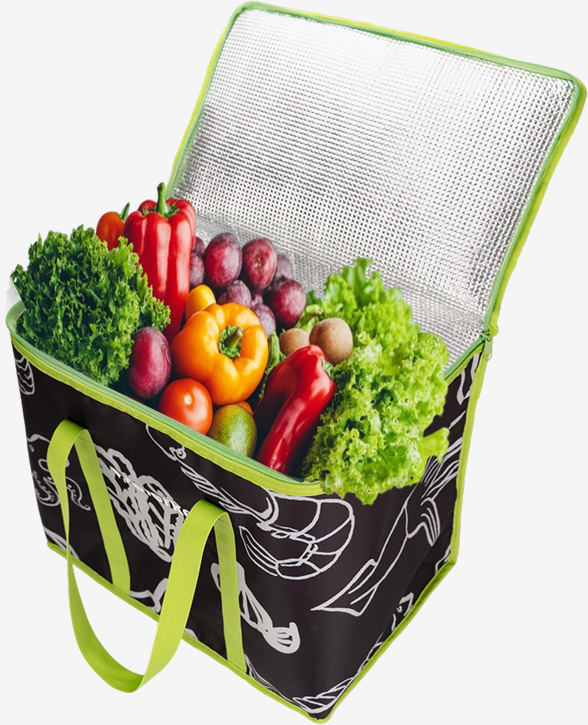
- Absolutely necessary if you sell insulated lunch bags, grocery cooler bags, or breathable produce sacks.
- Allows your B2B business to expand operations into the lucrative catering, grocery, and fresh food delivery sectors.
- Shields your brand from massive liability claims and lawsuits related to consumer food contamination.
- Gives supermarket chains the legal confidence they need to stock your products on their shelves.
8. EN 13432 or ASTM D6400 Compostable Certification
What It Means
These technical standards prove the product will safely biodegrade under commercial or industrial composting conditions. The reusable bag fabricator must pass rigorous tests measuring disintegration rates, heavy metal content, and ecological toxicity to plant life.
Materials like PLA (Polylactic Acid) or PBAT must break down completely within a specific timeframe (usually 180 days) leaving no toxic microplastics behind in the soil.
The B2B Value
- Provides bulletproof scientific backing when you print “100% compostable” on your packaging.
- Satisfies the aggressive regulatory requirements for degradable plastics currently rolling out in Western markets.
- Differentiates your brand from competitors who practice deceptive greenwashing with fake “oxo-degradable” additives.
- Appeals directly to zero-waste lifestyle stores and environmentally progressive corporate clients.
9. GOTS (Global Organic Textile Standard) Certification
What It Means
GOTS serves as the gold standard for organic fibers, primarily organic cotton. It covers the entire supply chain, from sustainable farming and ethical harvesting to responsible manufacturing and accurate retail labeling.
A GOTS-certified reusable bag fabricator must use low-impact dyes and process organic cotton entirely separate from conventional cotton. They must also meet strict social criteria regarding fair wages and safe working conditions for the farmers and factory workers.
The B2B Value
- Perfect for brands sourcing premium, high-margin organic cotton tote bags.
- Highlights your brand’s undeniable commitment to ecological agriculture and fair trade practices.
- Attracts highly conscious, affluent consumers who willingly pay a premium for certified organic goods.
- Creates a compelling brand narrative about protecting soil health and supporting farming communities.
Building a Secure and Compliant Supply Chain
When B2B clients evaluate a potential reusable bag fabricator, asking for a simple price quote is never enough. You must require the manufacturer to provide valid, unexpired certificates for the relevant standards listed above.
Always verify these documents through the issuing third-party organizations to spot fake certificates. Match the specific certifications to your exact product positioning and target market regulations. By auditing your suppliers carefully, you construct a safe, legally compliant, and truly sustainable supply chain that supports long-term business growth.
Frequently Asked Questions (FAQ)
1. Why does a reusable bag fabricator need ISO 9001 if they already provide excellent samples?
Samples are crafted slowly and carefully by master sample makers. ISO 9001 ensures the factory has the management systems and quality controls in place to replicate that exact sample quality when producing 50,000 units on a fast-moving assembly line.
2. Can a factory claim GRS certification without showing me a transaction certificate?
No, they cannot. A legitimate reusable bag fabricator will provide a Transaction Certificate (TC) specifically for your batch of bags. This document proves that the exact yardage of fabric used for your order was genuinely made from verified recycled materials.
3. What happens if my imported bags fail REACH compliance testing at European customs?
Customs authorities will immediately seize your shipment. Depending on the severity of the chemical violation, they will either destroy the goods locally or force you to ship them back to the origin country at your own expense. This severely damages your brand’s reputation and financial standing.
4. Is OEKO-TEX certification necessary for simple canvas grocery bags?
While not legally mandatory in every single country, having OEKO-TEX certification ensures your bags do not contain heavy metals or toxic azo dyes. This gives you a massive competitive advantage when pitching to large retail chains that have strict internal safety requirements.
5. How often should a reusable bag fabricator renew their BSCI or Sedex social audits?
These social compliance audits typically require a full renewal every one to two years, depending on their previous audit score. You should always ask your supplier to provide their most recent, unexpired audit report before signing any long-term manufacturing contract.
Ready to Upgrade Your Supply Chain?
Stop risking your brand’s reputation on unverified suppliers. Partner with a fully certified manufacturing team that understands the strict compliance requirements of the global market. At Weierken, we prioritize quality, safety, and transparency. Send your project details to us today, and let our certified reusable bag fabricator team provide a competitive quote and a robust compliance strategy for your next order. Inquiry now!


