It arrives lukewarm, soggy, or damaged. For a pizza business, a failed delivery isn’t just a disappointed customer; it’s a direct hit to your brand’s reputation. Often, the weakest link isn’t your recipe or your driver, but the unassuming gear that bridges your kitchen to the customer’s door: the pizza delivery bag.
Choosing the right pizza delivery bag distributor is a strategic operational decision, not just a simple purchase. The wrong partner can lead to constant replacements, inconsistent food quality, and hidden costs. The right one becomes an extension of your quality control team. This guide breaks down the five non-negotiable dimensions for evaluation.
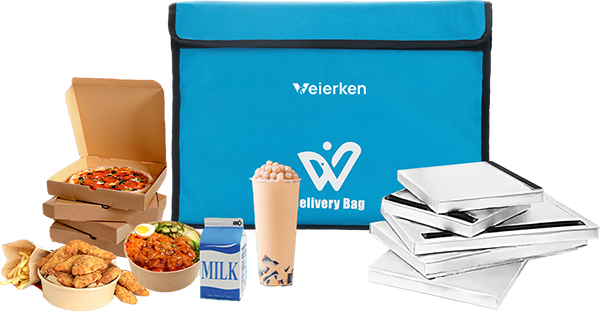
1. Thermal Performance & Product Durability
This is the core function. A bag must not only keep food hot but survive the brutal reality of daily logistics.
Insulation Benchmarks & Testing
Don’t just accept vague claims. A professional pizza delivery bag distributor should provide clear data. Ask: “What is the certified heat retention time for a standard 16-inch pizza from 85°C to a safe serving temperature of 63°C?” Reputable manufacturers like Weierken conduct standardized lab tests and share these metrics, often guaranteeing performance for 45-60 minutes under normal conditions. Request their testing methodology.
Material Strength & Practical Features
Durability hinges on materials. Look for high-denier, rip-stop outer fabric, robust zippers, and reinforced stitching at stress points. The interior lining must be easy to wipe clean and ideally feature waterproof, food-safe membranes to contain grease and moisture. A bag that is difficult or time-consuming to clean will quickly become a hygiene liability in a busy operation.
2. Supply Chain Stability & Customization Support
Your distributor’s reliability directly impacts your inventory and branding.
Order Response & On-Time Delivery
In a fast-paced business, running out of bags is not an option. Evaluate the distributor’s average lead times from order to shipment. Probe their contingency plans for raw material shortages or production delays. Consistent, on-time delivery is a critical marker of a professional operation.
Branding & Production Flexibility
Your delivery bag is a mobile billboard. Can the distributor seamlessly integrate your logo, colors, and contact information? Companies like Weierken often offer various printing methods (screen, heat transfer) and support custom sizes for specialty products like calzones or side orders. Assess their minimum order quantities (MOQs) for custom runs—flexibility here is key for growing chains.
3. Total Cost of Ownership (TCO) & Commercial Terms
The sticker price is only the beginning. True cost analysis looks at the entire lifecycle.
Beyond the Purchase Price
Calculate the TCO. A cheaper bag that needs replacement every six months is more expensive than a premium bag lasting three years. Factor in shipping costs, potential import duties, and even the operational cost of drivers struggling with poorly designed bags. A higher initial investment with a proven pizza delivery bag distributor often yields lower long-term costs.
Agreement Flexibility
Scrutinize the commercial terms. What are the standard payment terms? Are there discounts for bulk annual commitments or scheduled repeat orders? Is the MOQ for standard items manageable? Transparent and negotiable terms indicate a partner focused on long-term relationships, not just one-off sales.
4. Technical Support & After-Sales Service
Post-purchase support separates distributors from order-takers.
Warranty & Problem Resolution
A clear warranty policy is a sign of confidence. What defects are covered, and for how long? More importantly, what is the process for filing a quality complaint? A reliable partner will have a streamlined system for replacements or repairs, minimizing your operational downtime.
Training & Resources
Do they provide care guides, optimal loading techniques, or troubleshooting tips? Some top-tier distributors offer brief training materials or videos on maximizing bag lifespan and performance. This added value demonstrates an investment in your success.
5. Compliance Certifications & Industry Credentials
This is your safeguard for safety and professional standing.
Food Safety & Environmental Standards
The bag materials must be food-contact safe. Request certificates proving compliance with standards like FDA (USA) or LFGB (EU) regulations. Increasingly, businesses also seek REACH or RoHS compliance, ensuring materials are free from harmful substances. This is non-negotiable for liability and brand ethics.
Manufacturer’s Certifications
Investigate the manufacturer behind the distributor. Do they hold ISO 9001 (Quality Management) or ISO 14001 (Environmental Management) certifications? These system certifications indicate a controlled, professional production environment. Industry memberships or endorsements from pizza associations add further credibility.
Partnering with a pizza delivery bag distributor like Weierken, which is built to address these five pillars, transforms a utility item into a reliable brand asset. It ensures every pizza arrives as the chef intended, protects your bottom line, and supports scalable growth. Your choice in distributor is ultimately a choice to safeguard quality at the final—and most vulnerable—stage of service.
Frequently Asked Questions (FAQs)
Q1: What’s the most common mistake businesses make when choosing a pizza delivery bag distributor?
A1: The most common mistake is focusing solely on the unit price. This leads to overlooking total cost of ownership, which includes durability, thermal performance lifespan, and replacement frequency. A slightly more expensive bag from a reputable distributor often saves significant money and operational headaches in the long run.
Q2: How can I realistically test the thermal insulation properties claims of a distributor?
A2: Request a sample and conduct your own field test. Use a calibrated thermometer to log the internal temperature of a pizza at the time of bagging and again at delivery simulation after 30, 45, and 60 minutes. Compare the results against the distributor’s claims and your own delivery radius requirements.
Q3: We are a small, independent pizzeria. Can we still get custom-branded bags, or is it only for large chains?
A3: Many professional distributors, including Weierken, offer custom branding services with surprisingly low minimum order quantities (MOQs). It’s always worth inquiring. For very small batches, consider distributors who offer heat-transfer vinyl logos on standard bags as a cost-effective branding solution.
Q4: What specific material certifications should I ask for to ensure food safety?
A4: Always request documentation for food-contact compliance. Key certifications to look for include the U.S. FDA Title 21 CFR, EU LFGB, or similar national standards. These confirm the materials are non-toxic and safe for direct or indirect contact with hot food.
Q5: Why is the distributor’s supply chain stability more important than just their price list?
A5: Because consistent inventory is critical for your operations. An unreliable distributor with a cheap price can cause catastrophic disruptions if they fail to deliver on time, forcing you to use inferior bags or face shortages. A stable supply chain ensures you never compromise on delivery quality or run out of essential equipment.