That moment of truth when a customer opens their delivery order is everything. The steam rising from a hot dish, the refreshing chill of a cold salad—it’s the final, critical touchpoint of the customer experience. But what stands between your perfectly cooked meal and that satisfying unboxing? Often, it’s the humble yet vital meal delivery bag.
Choosing the right partner for this essential equipment is far from a trivial procurement task. A professional meal delivery bag distributor is more than a vendor; they are a strategic ally in your supply chain. Their reliability directly impacts your food quality, operational efficiency, and brand reputation.
This guide outlines the five key dimensions you, as a restaurant operator, delivery service, or B2B procurement head, must systematically evaluate. Making an informed choice ensures supply chain stability, cost control, and unwavering brand consistency. Partners like Weierken understand that excelling in these dimensions is what separates a simple supplier from a true business partner.
1. Product Quality and Durability: The Non-Negotiable Foundation
The core function of a delivery bag is preservation. Compromising on quality leads directly to compromised food, negative reviews, and wasted inventory. Scrutinize these aspects.
Thermal Performance Integrity
Ask for standardized test data. How long does the bag maintain specific temperature ranges (e.g., keep hot food above 140°F/60°C or cold food below 40°F/4°C)? Reputable distributors provide clear metrics for their insulation materials, such as thickened EPS foam or non-toxic fiber cotton.
Material and Construction
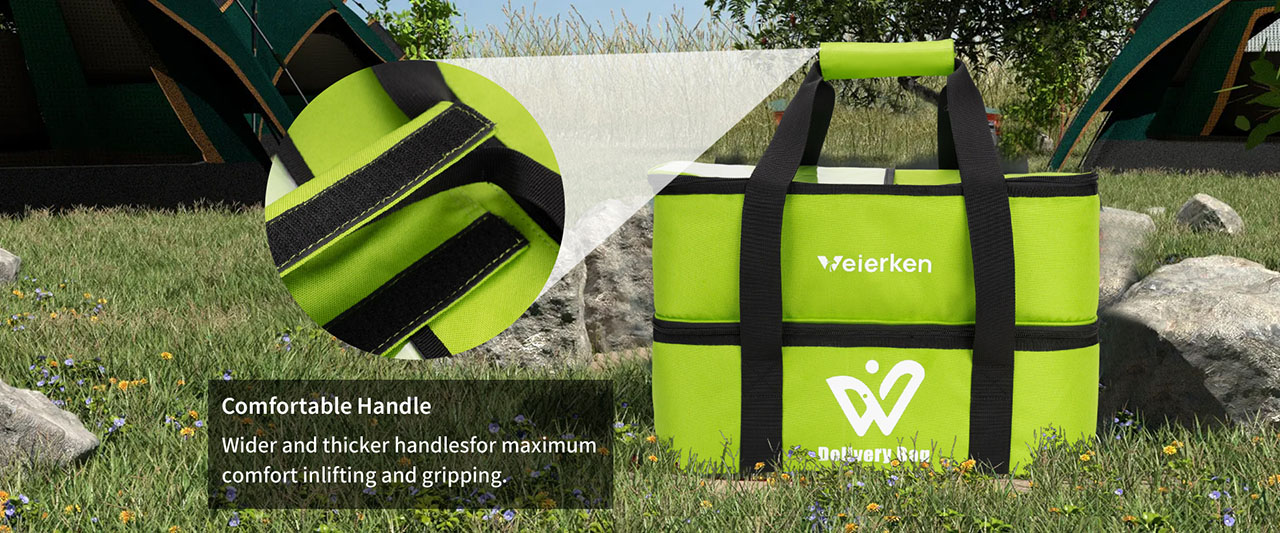
The bag’s shell must be tough. Look for high-density, tear-resistant Oxford fabric or polyester with reinforced stitching. Zippers should be robust and smooth. Seams must be double-stitched or welded to prevent leakage and fraying under daily use.
Leak-Proof and Waterproof Design
Spills happen. A quality bag has an easy-to-clean, waterproof inner lining—often made from PEVA or aluminum foil—that contains liquids. Sealed seams are crucial here. Some designs feature removable, washable liners for superior hygiene.
Environmental and Safety Compliance
Eco-consciousness is a brand value. Inquire about materials being food-safe, BPA-free, and recyclable. Distributors leading in sustainability, like Weierken, often offer bags made from recyclable materials and have clear end-of-life guidance.
2. Product Range and Customization Capability
A one-size-fits-all approach doesn’t work for diverse menus. Your distributor should offer solutions that match your operational scale and brand identity.
Variety in Sizes and Formats
From compact pizza pouches and large trunk-sized cargo bags to multi-compartment models for bundled orders, the range should cater to different delivery modes—bikers, drivers, or walkers. Versatility is key.
Customization as a Standard Service
This is where your brand comes to life. Evaluate their capacity for:
- Logo Printing: Techniques (screen printing, heat transfer, woven labels) affect durability and look.
- Color Matching: Can they offer brand-specific colors for the fabric?
- Tailored Designs: Will they work with you to create bags for unique items like sushi platters or drink carriers?
A partner with strong in-house customization capabilities ensures your brand is consistently and professionally represented on the go.
3. Price Structure and Cost-Effectiveness
The cheapest unit price can be misleading. True cost-effectiveness considers the total cost of ownership over the bag’s lifespan.
Transparent Pricing Tiers
Understand their pricing model. What are the price breaks at different MOQs (Minimum Order Quantities)? Are there costs for custom molds or setup fees for new designs? Clear, upfront pricing is a sign of a trustworthy meal delivery bag distributor.
Calculating Total Procurement Cost
Factor in everything:
- Unit cost per bag.
- Shipping and logistics fees.
- Any import duties if sourcing internationally.
- Potential costs for repairs or premature replacements.
A slightly higher initial investment in a more durable bag often yields a lower cost-per-delivery over time.
Value of Long-Term Partnership
Proactive distributors offer loyalty discounts, blanket order agreements, or consignment stock options for scaling clients. This fosters mutual growth and stability.

4. Supply Chain and Delivery Reliability
A distributor’s operational backbone is critical. Their logistical hiccups become your operational emergencies.
Inventory Stability and Scalability
Can they handle your sudden growth or seasonal spikes? Do they maintain sufficient safety stock for standard items? A reliable partner has robust inventory management and transparent communication about stock levels.
Lead Times and On-Time Delivery Record
What are standard and expedited production times for custom and stock orders? Request their historical on-time delivery rate. Consistency here is vital for your planning, especially when launching new services or locations.
Geographic Coverage and Logistics Network
Whether you need local city delivery or national distribution, their logistics network must match your footprint. Evaluate their warehouse locations and shipping partnerships for efficiency and cost.
5. After-Sales Service and Support
The relationship shouldn’t end at the point of sale. Comprehensive aftercare is the hallmark of a true partner.
Responsive Customer Service
Is post-purchase support easily accessible? A dedicated account manager or responsive support channel for order tracking, changes, or issues is invaluable.
Clear Warranty and Return Policies
Understand the terms. What constitutes a manufacturing defect? What is the process for returns or replacements? Fair policies protect your investment.
Added-Value Services
Look for distributors who offer more:
- Usage Training: Guides on proper bag handling to maximize lifespan.
- Care Recommendations: Tips on cleaning and maintenance.
- Sustainability Programs: Take-back or recycling initiatives for old bags, an area where innovators like Weierken are increasingly focused.
Choosing a professional meal delivery bag distributor is a strategic decision that ripples across your customer satisfaction, operational costs, and brand perception. By rigorously evaluating these five dimensions—Quality, Range, Cost, Reliability, and Support—you move beyond a transactional purchase to building a resilient supply chain partnership.
Investing time in this selection process pays daily dividends in consistent food quality, efficient operations, and a brand that is reliably presented, from your kitchen to the customer’s door. Partners who excel across these areas, such as Weierken, become integral to your service’s success, ensuring that the final mile of the delivery journey reinforces the quality and care invested in the first mile.
Frequently Asked Questions (FAQs)
Q1: What is the typical lead time when ordering from a meal delivery bag distributor?
A1: Lead times vary significantly. For standard, in-stock items, shipment may occur within 1-3 business days. For customized orders with logos or unique designs, typical production lead times range from 2 to 6 weeks, depending on complexity and the distributor’s capacity. Always confirm timelines before placing an order.
Q2: Can distributors help design a custom bag for a unique food product?
A2: Yes, most professional distributors offer custom design services. They can work with your specifications for dimensions, compartments, and closures to create a bag tailored for products like oversized pizzas, bento boxes, or multi-beverage carriers. This usually involves creating a new mold, which may incur a one-time setup cost.
Q3: What is the most important feature to prioritize for hot food delivery?
A3: While all features matter, the thermal insulation performance is paramount for hot food. Prioritize bags with high-quality, thick insulation (like closed-cell foam) and effective sealing mechanisms (like overlapping flaps or robust zippers) that are certified to maintain safe and optimal temperatures for your required delivery duration.
Q4: How do I assess the true durability of a delivery bag before a bulk purchase?
A4: Request a physical sample from the distributor. Subject it to real-world stress tests: open and close zippers repeatedly, check stitch density, inspect seam strength, and test the waterproof liner. Also, ask for testimonials or case studies from other B2B clients regarding long-term wear and tear.
Q5: Are there eco-friendly options available from meal delivery bag distributors, and what should I look for?
A5: Absolutely. The market is shifting towards sustainability. Look for bags made from recycled materials (like rPET fabric), biodegradable liners, or insulation from non-plastic alternatives. Ask about the product’s end-of-life: some distributors, aware of the environmental impact, now offer or are developing take-back or recycling programs for used bags.