The first bite of a meal isn’t taken with a fork; it is taken with the eyes the moment a delivery driver arrives at the doorstep. In the modern food economy, the vessel that carries the meal is just as critical as the ingredients within it. A soggy cardboard box or a lukewarm soup container can dismantle a brand’s reputation in seconds. This is why businesses are no longer looking for generic carriers; they are searching for a specialized lunch delivery bag distributor that can bridge the gap between kitchen quality and home dining. Companies like weierken have recognized that a delivery bag is not just a thermal tool—it is a mobile billboard and a guardian of food safety.
Choosing the right partner means looking beyond a catalog of stock items. It requires finding a distributor capable of deep customization through OEM (Original Equipment Manufacturing) and ODM (Original Design Manufacturing). Whether you are a global franchise or a local startup, the right bag ensures that your culinary vision survives the transit, maintaining the precise temperature and texture your chefs intended.
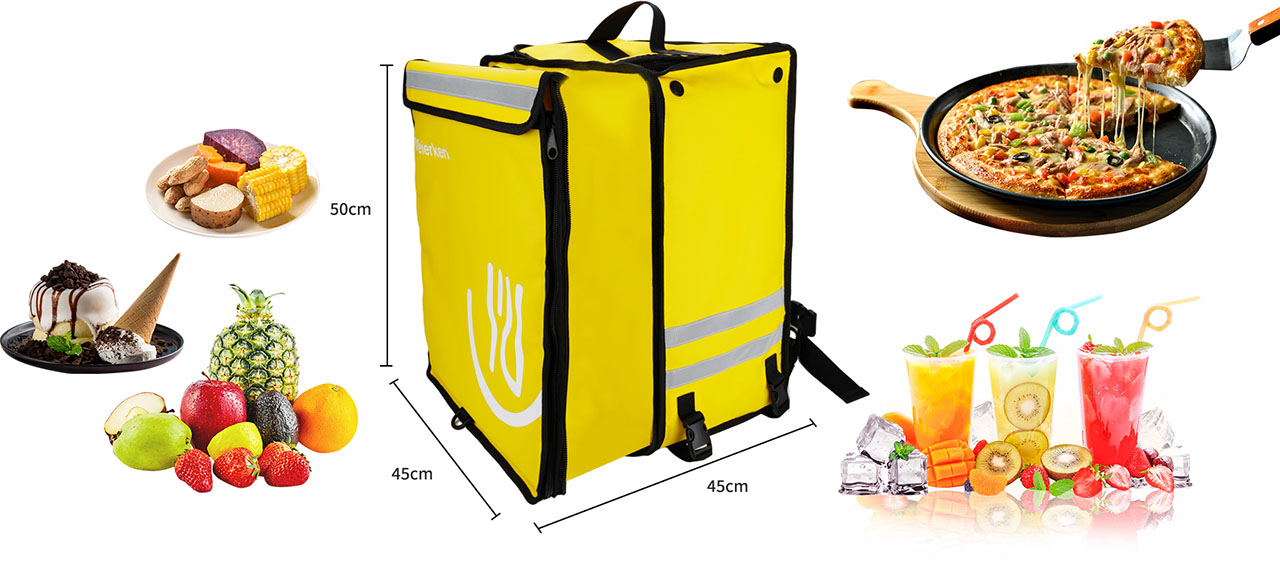
Why Your Business Needs a Strategic Lunch Delivery Bag Distributor
The landscape of food logistics has shifted from a “one-size-fits-all” approach to a highly segmented market. Different business models face unique challenges on the road, and a professional lunch delivery bag distributor must offer solutions tailored to these specific operational pressures.
Catering Chains and Brand Identity
For large-scale catering chains, consistency is the ultimate goal. When a customer sees a delivery rider, the branding on the bag should be unmistakable. A distributor offering OEM services allows these chains to incorporate specific pantone colors, high-fidelity logo printing, and even unique structural silhouettes that match the brand’s aesthetic. Beyond looks, these bags provide a sense of professionalism that reassures the customer they are receiving a premium product.
Delivery Platforms and High-Frequency Durability
Giant delivery platforms and third-party courier services operate on a high-volume, high-wear basis. Their riders are in and out of vehicles, navigating rain, sun, and urban congestion. These organizations need a lunch delivery bag distributor that prioritizes extreme durability and lightweight ergonomics. Features like reinforced stitching, heavy-duty zippers, and tear-resistant outer shells are non-negotiable for gear that might be used fifty times a day.
Corporate Meal and Office Lunch Providers
Corporate meal services often deal with bulk orders—think fifty hot lunches for a board meeting or a hundred salads for a tech seminar. This requires specialized internal partitioning. A good distributor will provide ODM designs that include adjustable dividers, allowing the same bag to hold a mix of hot trays, cold drinks, and delicate desserts without temperature cross-contamination.
Startups and Entry-Level Scalability
Food delivery startups often struggle with high overheads. They need a partner who can offer a “middle ground”—semi-customizable options with lower Minimum Order Quantities (MOQs). This allows them to enter the market with a professional look without the financial burden of a 10,000-unit initial order. Speed of delivery and cost-effectiveness are the priorities here.
Mastering OEM and ODM Customization with Your Lunch Delivery Bag Distributor
When you partner with a versatile lunch delivery bag distributor, you move from buying a product to co-creating a solution. The distinction between OEM and ODM is vital for your long-term supply chain strategy. OEM focuses on your branding on their existing high-quality templates, while ODM involves designing a completely new bag architecture from the ground up.
weierken has spent years perfecting this balance, ensuring that every stitch serves a functional purpose while reflecting the client’s corporate soul.
Visual Branding and Aesthetic Integration
Customization begins with the exterior. A distributor should offer various printing techniques, such as silk-screen printing, heat transfer, or even reflective embroidery for night-time safety. The choice of material also plays into the brand image—matte finishes for a modern, high-end look, or glossy, easy-clean surfaces for high-volume fast food.
Functional Engineering and Material Science
The core of a delivery bag is its insulation. A professional lunch delivery bag distributor will offer a variety of “sandwiches”—the layers of material that keep heat in. This typically involves an outer layer of 600D or 1680D Oxford cloth, a middle layer of thick EPE (Expanded Polyethylene) foam, and an inner lining of food-grade aluminum foil or PEVA. Advanced customization can even include antimicrobial linings to prevent odors and bacterial growth.
Smart Features and Hardware
In an era of tech-driven logistics, “dumb” bags are becoming obsolete. Top-tier distributors are now integrating smart modules. This might include external transparent pockets for order slips, power bank compartments for heated pads, or even GPS tracker slots to help fleet managers monitor their equipment. When you discuss your needs with a lunch delivery bag distributor, ask about their ability to integrate these hardware solutions.
How to Evaluate a Global Lunch Delivery Bag Distributor
Not all distributors are created equal. Finding a reliable partner in the global supply chain requires a rigorous vetting process. You aren’t just looking for a vendor; you are looking for a manufacturer who understands international standards and the nuances of food logistics.
Integrated Design and Production Capabilities
Does the distributor have their own factory, or are they just a middleman? Working with an integrated provider like weierken ensures that the communication between the design team and the production floor is seamless. This reduces errors in mass production and allows for faster prototyping. If a distributor can provide a physical sample within 7–10 days, it is a good sign of their operational efficiency.
Compliance and Food Safety Standards
Since these bags carry food, they must meet strict safety requirements. A reputable lunch delivery bag distributor should provide certifications for their materials, ensuring they are BPA-free, lead-free, and REACH or RoHS compliant for European markets. Furthermore, the waterproof nature of the bags should be tested—there is nothing worse than a soup leak that seeps into the insulation and becomes impossible to clean.
Logistics, MOQs, and Lead Times
The best product in the world is useless if it arrives three months late. Evaluate the distributor’s proximity to major shipping ports and their experience with international freight. Ask about their MOQ flexibility. While large orders drive the price down, a distributor that supports “growth phases” with tiered MOQs is a more valuable long-term partner.
Financial Stability and Long-Term Agreements
Customizing a line of delivery gear is a significant investment. You need to ensure the lunch delivery bag distributor is financially stable and willing to sign long-term service agreements. This guarantees that when you need to replace 500 bags next year, the materials and colors will match your current fleet perfectly.

Current Trends Shaping the Choice of a Lunch Delivery Bag Distributor
The delivery industry is evolving at breakneck speed. To stay competitive, your choice of a lunch delivery bag distributor must be influenced by where the market is going, not just where it is today. Professionalization is no longer optional; it is the baseline.
The Rise of Sustainability
Eco-consciousness is no longer a niche preference; it is a consumer demand. Distributors are now offering bags made from RPET (recycled plastic bottles) and other sustainable fabrics. If your brand promotes organic or “farm-to-table” food, using a recycled delivery bag from your lunch delivery bag distributor completes the story of your commitment to the planet.
Optimized Ergonomics for Rider Retention
In many regions, delivery riders are in high demand and short supply. Providing them with high-quality, ergonomic gear is a retention strategy. Bags with padded shoulder straps, chest buckles for weight distribution, and breathable back panels make a rider’s job significantly easier. A distributor who understands the human element of delivery adds immense value to your business.
Hybrid Temperature Control
As menus become more diverse, the need for hybrid bags grows. A single bag might need to keep a pizza at 65°C while keeping a liter of soda at 4°C. Modern lunch delivery bag distributor designs often include removable thermal “curtains” or dual-compartment systems that allow for these temperature differentials within a single unit.
The Strategic Value of Customization
In conclusion, the decision to hire a specific lunch delivery bag distributor is a strategic move that affects your bottom line, your brand equity, and your customer satisfaction. By choosing a partner like weierken that excels in OEM and ODM customization, you are investing in a tool that does more than just carry food—it preserves your hard work from the kitchen to the table.
Customization is the shield against the chaos of the “last mile.” It ensures that your food arrives in the condition your customers expect, wrapped in the branding they trust. As the delivery market continues to professionalize, the gap between those with generic gear and those with custom-engineered solutions will only widen. Make sure your business is on the right side of that divide.
Frequently Asked Questions (FAQ)
Q1: What are the primary benefits of working with a professional lunch delivery bag distributor for OEM projects?
A1: Working with a dedicated lunch delivery bag distributor for OEM projects allows you to leverage their existing, proven bag structures while applying your unique branding. This significantly reduces R&D costs and time-to-market while ensuring the bags meet industry standards for thermal retention and durability.
Q2: Can a lunch delivery bag distributor help with small-batch custom orders for startups?
A2: Yes, many distributors now offer flexible MOQ (Minimum Order Quantity) options. A specialized lunch delivery bag distributor understands that startups need to scale, so they may offer semi-custom options where logos can be added to pre-manufactured high-quality bags, allowing for a professional look without a massive initial investment.
Q3: How does a lunch delivery bag distributor ensure the bags stay clean and hygienic?
A3: Top-tier distributors use materials like aluminum foil or PEVA linings that are non-porous and easy to wipe down. A professional lunch delivery bag distributor can also offer antimicrobial coatings and designs with minimal internal seams, which prevents food particles from getting trapped and causing odors or bacterial growth.
Q4: What materials should I look for when choosing a lunch delivery bag distributor for long-distance transport?
A4: For long-distance delivery, you should ask your lunch delivery bag distributor for high-density EPE or EVA foam insulation (usually 8mm to 10mm thick) paired with a heavy-duty 1680D Oxford exterior. These materials provide the structural integrity and thermal resistance necessary to keep food at safe temperatures for extended periods.
Q5: Is it possible for a lunch delivery bag distributor to provide eco-friendly or recycled material options?
A5: Absolutely. As sustainability becomes a priority, any leading lunch delivery bag distributor will offer options like RPET (recycled polyester) or biodegradable linings. They can provide certifications to prove the recycled content, helping your brand align with environmental goals.
Q6: How long does the design and delivery process usually take with an ODM lunch delivery bag distributor?
A6: The timeline typically involves 1–2 weeks for initial design and prototyping, followed by 3–5 weeks for mass production depending on the volume. A reliable lunch delivery bag distributor like weierken will provide a clear roadmap and maintain communication throughout the manufacturing and shipping phases to ensure your deadlines are met.