The global logistics and food delivery market has undergone a seismic shift over the last decade. As the “last-mile” economy becomes the backbone of urban commerce, the equipment used by couriers has evolved from simple carriers to sophisticated, mobile workstations. For B2B procurement managers and logistics fleet owners, choosing the right delivery backpack distributor is no longer a trivial task of comparing prices; it is a strategic decision that affects operational efficiency, brand image, and long-term cost management.
When you partner with a high-caliber manufacturer like weierken, you quickly realize that a delivery bag is the most critical touchpoint between your service and the end consumer. However, the market is flooded with middle-men and low-quality options. To ensure you are investing in equipment that survives the rigors of the road, you need a rigorous evaluation framework.
Here are six expert tips to help you vet a delivery backpack distributor and ensure your fleet is equipped for success.
1. Deeply Assess Product Suitability for Specific Industry Scenarios
Not all delivery tasks are created equal. A bag designed for hot pizza delivery is fundamentally different from one meant for cross-city document couriers or grocery logistics. A professional delivery backpack distributor should be able to articulate how their designs solve specific pain points.
Thermal Retention and Insulation Tech
For food delivery, the “thermal window” is everything. Ask for specific data: How many degrees does the internal temperature drop over 30, 60, or 90 minutes? High-end distributors will provide testing data involving different ambient temperatures. Look for multi-layered insulation (EPE foam combined with aluminum foil or PEVA liners) that offers both heat retention and cold preservation.
Compartmentalization and Access
Efficiency in the field depends on how fast a driver can load and unload. Does the distributor offer a multi-pocket system? Can the internal space be divided to prevent a heavy beverage from crushing a light pastry? A quality wholesale delivery bag supplier will offer modular dividers that allow for customization based on the day’s order volume.
Weatherproofing and Hygiene
The exterior must be at least IPX4 water-resistant, utilizing materials like 1680D Oxford cloth or TPU-coated fabrics. Furthermore, because spills are inevitable, ask if the inner lining is removable or “wipe-clean” certified. Hygiene is a massive part of brand reputation in the B2B food sector.
2. Verify Durability and Ergonomic Performance with Hard Data
In the world of professional logistics, “it looks sturdy” isn’t enough. A courier might carry a loaded bag for 8 to 10 hours a day. If the ergonomics are poor, you face high staff turnover and potential liability for strain injuries.
Material Stress Testing
Don’t take marketing slogans at face value. Demand the “receipts”—specifically, Martindale abrasion test reports (which measure how many thousand “rubs” a fabric can take before failing) and zipper fatigue data. The zippers are usually the first point of failure; a reliable delivery backpack distributor should use industrial-grade, water-resistant zippers (like YKK or equivalent) tested for thousands of cycles.
Ergonomic Pressure Distribution
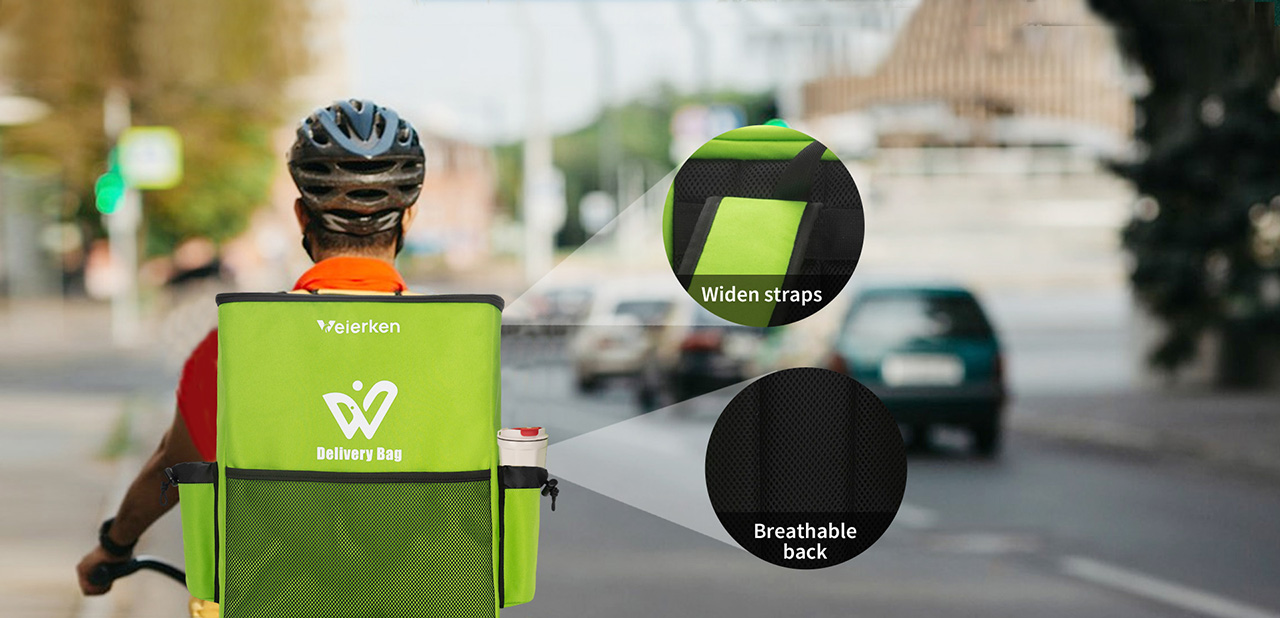
The best way to evaluate comfort is through pressure mapping. Ask the distributor if they have conducted tests on how weight is distributed across the shoulders, lumbar, and hips. Features like S-curved padded straps, chest buckles, and breathable back padding are non-negotiable for professional use. Brands like weierken often emphasize the “human-bag interface” to ensure that a 15kg load feels significantly lighter through smart weight distribution.
3. Scrutinize Supply Chain Resilience and Elasticity
The delivery industry is notoriously seasonal. Whether it’s the “Black Friday” rush, a sudden monsoon season, or a global sporting event, your demand for bags will fluctuate. A middle-man distributor will buckle under the pressure of a sudden 2,000-unit order; a true delivery backpack distributor with manufacturing roots will not.
Peak Demand Capacity
Inquire about their lead times during peak seasons. Do they have a “buffer stock” of core models? Evaluation of their raw material inventory (waterproof coatings, specialized insulation foam) is crucial. If they don’t have the fabric in stock, your “emergency order” could take three months to fulfill.
Regional Warehousing and Logistics
To minimize shipping costs and lead times, check if the distributor has a decentralized warehousing strategy. If you are a B2B buyer in Europe or North America, working with a distributor that has local hubs can save you thousands in air freight and customs headaches.
4. Define Customization Capabilities and Intellectual Property (IP) Boundaries
For many B2B buyers, the backpack is a walking billboard. Branding is essential, but customization goes deeper than just slapping a logo on a flap.
ODM vs. OEM Support
Can the delivery backpack distributor participate in the early design phase? If you need a specific compartment for a proprietary scanning device or a unique power-bank pocket for heated liners, you need a partner with strong ODM (Original Design Manufacturer) capabilities. Ask about their sampling cycle—a professional outfit should be able to produce a physical prototype within 7 to 14 days.
Ownership and Patent Clarity
This is a legal minefield. If you request a custom modification, who owns the design? If the distributor uses a patented “quick-release” buckle system, are you covered against IP infringement? Ensure that your contract clearly states the ownership of molds and any unique design elements created during your collaboration. This clarity is a hallmark of a professional food delivery bag manufacturer.
5. Examine After-Sales Support and the Consumables Ecosystem
A delivery backpack is a high-wear-and-tear asset. If a strap snaps after six months, you shouldn’t have to throw the whole bag away. The Total Cost of Ownership (TCO) is much lower when you work with a delivery backpack distributor that views the bag as a repairable tool rather than a disposable commodity.
Warranty and Parts Availability
What exactly does the warranty cover? Usually, manufacturers cover “manufacturing defects,” but the best partners offer “wear-and-tear support.” Ask if you can buy replacement parts separately:
- Detachable shoulder straps.
- Internal fiberglass or plastic support frames.
- Replacement insulation liners.
- Reflective strips and buckles.
Sustainability and Recycling Programs
As ESG (Environmental, Social, and Governance) becomes a priority for large corporations, ask your distributor if they offer a “buy-back” or recycling program for old bags. Can they refurbish old frames with new fabric skins? This not only saves money but aligns with modern sustainability goals.

6. Evaluate Their Value-Added Services as an Industry Partner
A mediocre distributor sells you a product; an expert distributor sells you a solution. The transition from vendor to partner happens when they provide insights that help your business grow.
Industry Insights and Data
Does the distributor understand the local nuances of your market? For example, couriers in high-humidity regions like Southeast Asia have different needs (ventilation) than those in the snowy winters of Canada (extra-thick insulation). A top-tier delivery backpack distributor should share data on courier preferences and failure rates in different climates.
Fleet Management Guidance
The best partners provide maintenance guides and cleaning protocols for your fleet. They might even help you model a replacement cycle—calculating exactly when it is more cost-effective to replace a bag than to keep repairing it. This level of professional depth is what separates companies like weierken from the rest of the pack.
Selecting a delivery backpack distributor is an investment in your delivery fleet’s uptime and your couriers’ health. By focusing on scenario-specific design, rigorous durability testing, supply chain elasticity, and long-term after-sales support, you ensure that your logistics operation remains seamless.
Brands like weierken have set a high bar in the industry by combining technical manufacturing prowess with a deep understanding of the courier experience. Remember, the cheapest bag is often the most expensive one when you factor in replacements, food temperature complaints, and rider fatigue. Choose a partner who understands that in the world of delivery, every detail counts.
FAQ: Frequently Asked Questions for B2B Buyers
Q1: What is the typical Minimum Order Quantity (MOQ) for a custom delivery backpack?
For standard models with a simple logo print, MOQs often start at 100–200 units. However, for full ODM customization (changes to the bag’s structure or custom fabric colors), a delivery backpack distributor may require 500 units or more to offset the cost of new molds and material sourcing.
Q2: How do I verify if a bag is truly waterproof vs. just water-resistant?
Water-resistant bags can handle light drizzle but will soak through in a downpour. To ensure your cargo stays dry, look for “seam-sealed” or “heat-welded” construction and fabrics with a TPU coating. Ask the delivery bag supplier for an IPX rating or a Hydrostatic Head test result (measured in mm).
Q3: Is aluminum foil or PEVA better for the internal lining?
Aluminum foil is excellent for heat reflection and is generally more affordable. However, PEVA (Polyethylene Vinyl Acetate) is often more durable, easier to wipe clean, and more eco-friendly. Most premium insulated backpack manufacturers now offer high-density PEVA for heavy-duty food service applications.
Q4: Can we request a sample before committing to a bulk order?
Absolutely. Any reputable delivery backpack distributor will provide a sample. Be prepared to pay a sample fee (often 2-3x the bulk price), which is typically refunded once the mass production order is placed.
Q5: How long does a professional delivery backpack typically last?
Under heavy daily use (6-8 hours a day, 5-6 days a week), a high-quality professional bag should last 12 to 18 months. If a bag fails in less than 6 months, it usually indicates a failure in material selection or construction quality.
Q6: Do these bags come with safety certifications for riders?
While the bags themselves don’t have “crash ratings,” they should comply with local visibility laws. Ensure your delivery backpack distributor uses certified retro-reflective materials (like 3M Scotchlite) that are visible from at least 200 meters away in low-light conditions.