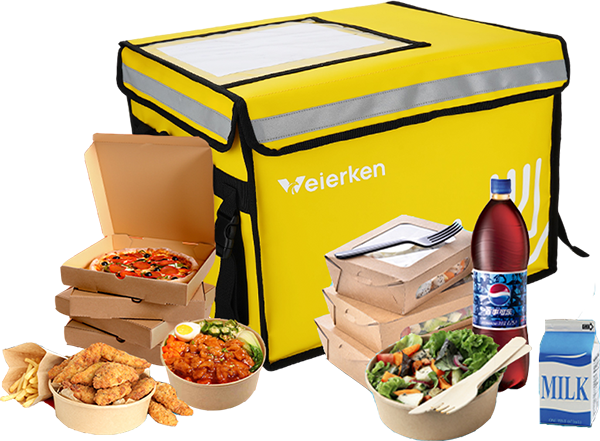
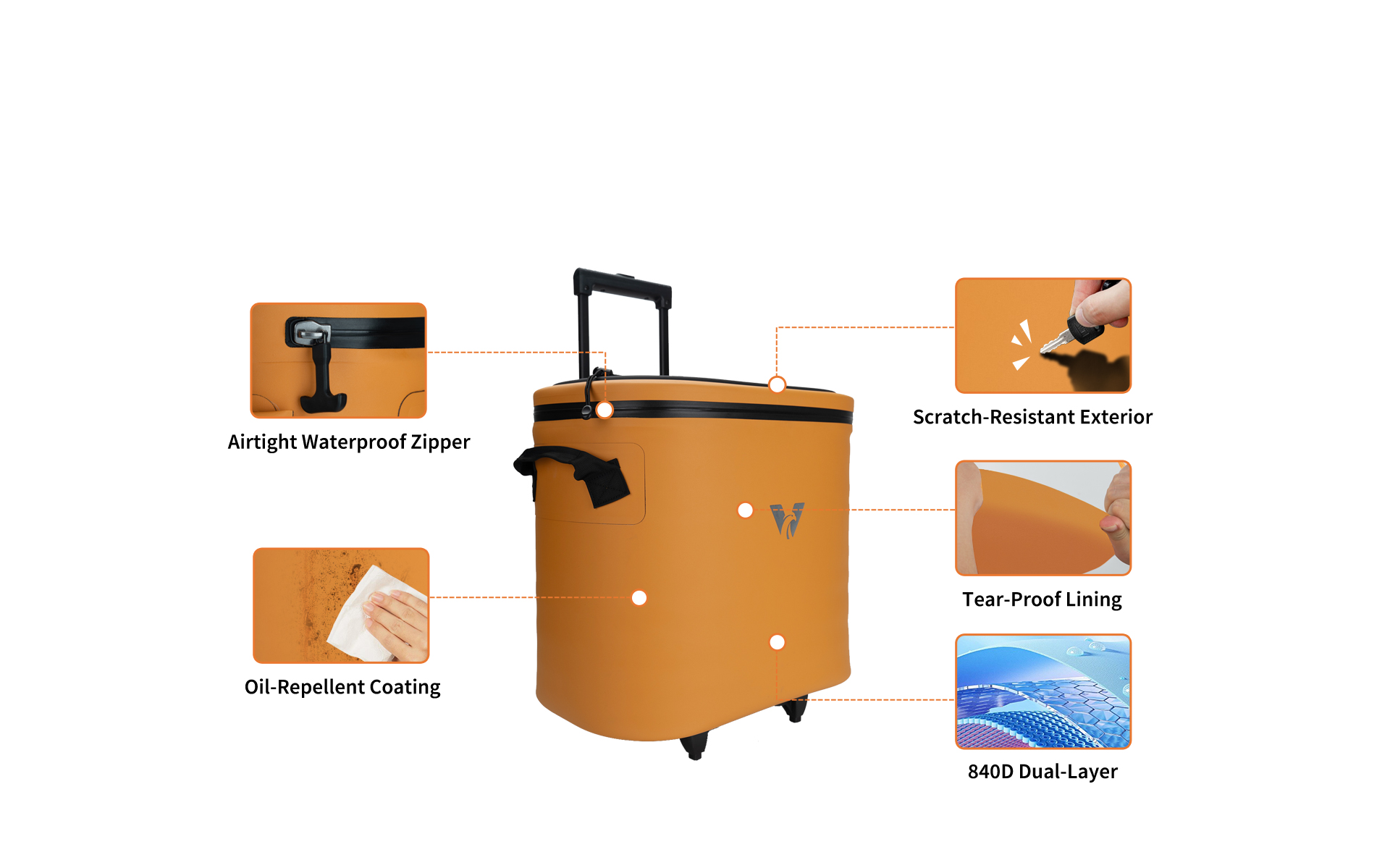
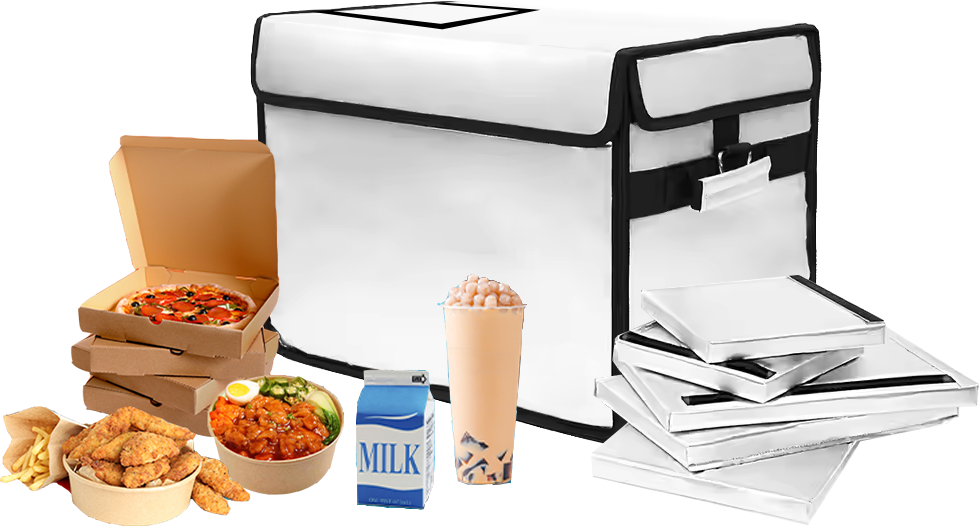
Imagine a delivery driver braking hard at a red light. In the back seat, a container of vinaigrette dressing pops open inside a thermal bag. If that bag is poorly made, the dressing seeps through the seams, stains the car seat, and leaves a lingering odor. For food delivery platforms and corporate clients, this isn’t just a mess; it is a liability.
As a professional salad thermal bag fabricator, we know that holding temperature is only half the battle. Keeping liquids inside the bag is equally vital. High-end clients demand reliability. They need assurance that a spilled soup or salad dressing won’t ruin a uniform or a vehicle.
At weierken, we have spent years refining the manufacturing processes that stop leaks before they happen. It is not just about sewing thick fabric together. It requires a deep understanding of polymer science, fluid dynamics, and precision engineering. This article outlines exactly how top-tier manufacturers achieve true leak-proof performance.
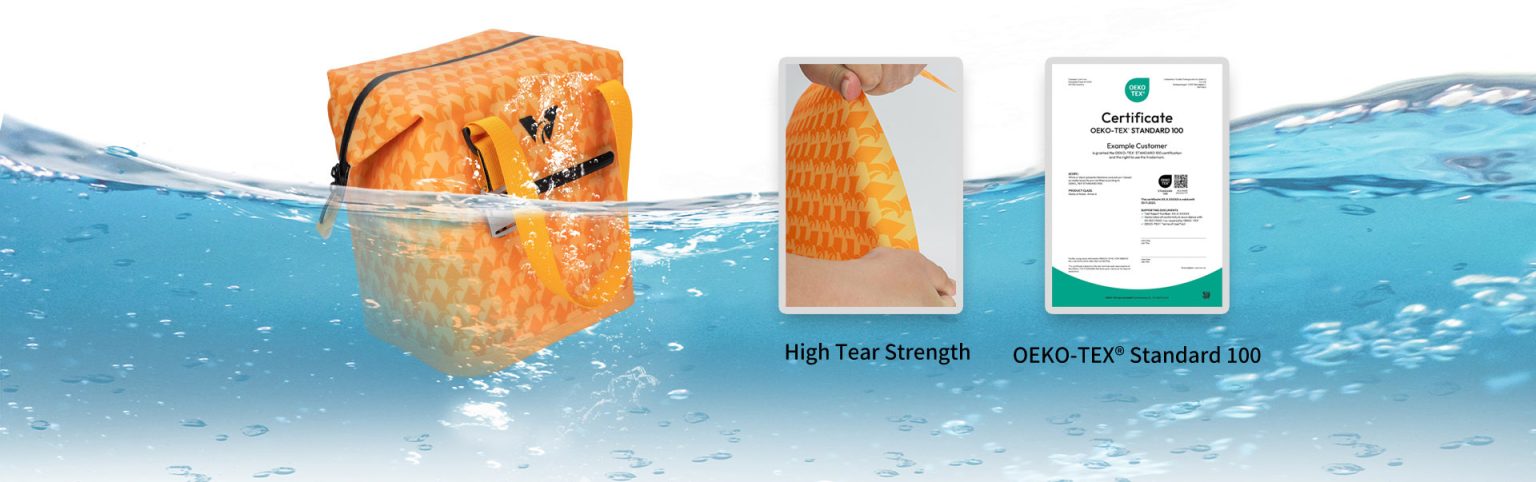
Material Science and Sealing Basics
The journey to a leak-proof bag begins at the molecular level. Standard fabrics are woven, meaning they have thousands of tiny holes between the threads. To stop liquid, you need a barrier that is chemically impermeable.
Seamless Integrated Liner Technology
Traditional bag liners are often stitched together. A needle punctures the material, creating a pathway for fluids. No matter how tight the stitch, liquid will eventually find a way through.
To solve this, a competent salad thermal bag fabricator abandons needles entirely for the internal liner. We utilize advanced thermoplastic materials, such as TPU (Thermoplastic Polyurethane) or food-grade PVC. These materials respond to specific manufacturing techniques that fuse them together.
- High-Frequency (HF) Welding: Also known as Radio Frequency welding, this process uses electromagnetic energy to excite the molecules within the TPU. The material melts from the inside out, fusing the overlapping sheets into a single piece.
- Rotational Molding: For rigid liners, we use a mold that rotates in an oven. The plastic coats the inside of the mold evenly, creating a seamless, tub-like structure without a single join.
The result is a “monolithic” interior. There are no seams to fail. The liner becomes a standalone vessel capable of holding water indefinitely.
Molecular-Level Sealing Coatings
The outer shell needs protection too. While the liner handles the heavy lifting, the external fabric protects the insulation. We employ molecular coating technologies during the lamination process.
Engineers apply a specialized waterproof adhesive between the outer nylon or polyester and the internal insulation foam. This isn’t standard glue. It acts as a cross-linking agent.
- Micro-Bonding: The adhesive penetrates the fibers of the fabric, closing off microscopic gaps.
- Hydrophobic Barriers: We often treat the face fabric with DWR (Durable Water Repellent) chemistry. This causes water to bead up and roll off rather than soaking in.
By ensuring the insulation layer is chemically bonded to the waterproof facings, we prevent “wicking,” where moisture travels sideways through the fabric layers.
Structural Design and Engineering for Leak Prevention
Materials provide the potential for waterproofing, but design dictates the performance. A skilled salad thermal bag fabricator approaches bag construction like a watertight building project. Every junction is a potential risk that must be engineered out.
Seamless Taping and Heat Sealing
Sometimes, stitching is necessary for structural strength on the outer shell. However, a needle hole is still a hole. To counter this, we implement a dual-defense system.
After a seam is sewn, the product moves to a taping machine. Here, a waterproof thermoplastic tape is applied over the stitch line on the inner side.
- Heat Activation: Hot air blows on the tape and the fabric coating, melting the adhesive.
- Pressure Rollers: Steel rollers press the molten tape into the needle holes.
This fills the punctures physically and chemically seals the join. It creates a bridge that water cannot cross. This technique mimics the construction of high-end waterproof mountaineering jackets, adapted for the rugged needs of food delivery.
“Liquid Seal Edge” Design
Gravity is the enemy of leak-proof designs. If a bag tips over, liquid rushes to the opening. Standard zippers are not watertight. Therefore, we utilize a design architecture called the “Liquid Seal Edge.”
This involves specific geometric configurations at the bag’s opening:
- Wide Overlaps: The material folds over itself by several inches before the closure mechanism engages.
- Roll-Top Systems: Similar to dry bags used in kayaking, the top of the liner rolls down three times and clips shut. This creates a labyrinth seal that liquid cannot navigate, even if the bag is inverted.
- Raised Bottom Construction: We design the liner to be slightly suspended or “floating” relative to the bottom seam, ensuring that pooled liquid stays in the center and away from corner stress points.
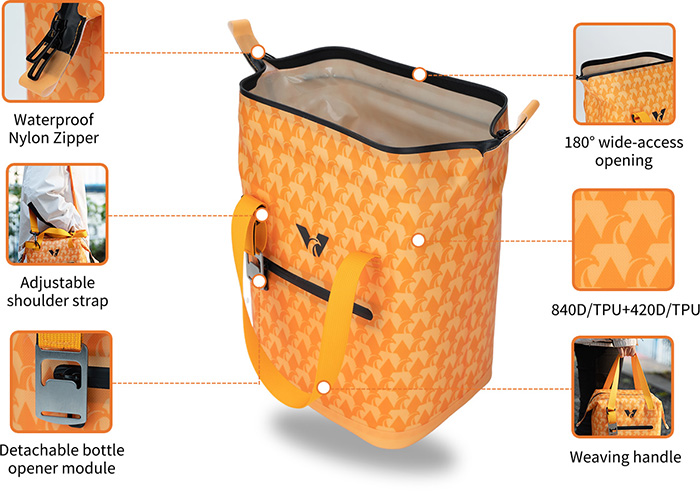
Sealing Solutions for Key Components
The opening is always the weakest link. A customer must be able to open the bag easily, but water must stay in. Balancing these opposing needs requires premium components.
Submersible-Grade Waterproof Zippers
Standard coil zippers leak instantly. As a premium salad thermal bag fabricator, we source zippers originally designed for diving suits and hazardous material suits.
We frequently utilize AquaGuard® style technology. These zippers feature a polyurethane coating on the backside of the tape. When the slider closes the teeth, the coating squeezes together to form a tight seal.
- Seamless Integration: The zipper tape is RF welded to the bag opening, not sewn. This eliminates the need for extra seam taping around the zipper.
- Splash Guards: We add a fabric flap over the zipper. This acts as a roof, diverting rain or spilled liquid away from the zipper teeth entirely.
Airtight Closure Systems
For clients requiring the highest level of performance—where a leak is absolutely unacceptable—we move beyond zippers.
- Magnetic Seals: Powerful neodymium magnets are embedded within the TPU liner lip. They snap together with force, creating a seal that holds air.
- Press-Lock Systems: Similar to heavy-duty freezer bags but on an industrial scale. These plastic tracks interlock physically.
When these bags are closed, they can often support the weight of a person standing on them without popping open. This creates a “sealed container” effect, trapping both temperature and fluids.
Quality Control and Testing in Production
Manufacturing the bag is only part of the job. Verifying its performance is where a reliable insulated bag manufacturer earns their reputation. At weierken, we do not leave this to chance.
In-Line Air Tightness Testing
Waiting until a bag is finished to test it is inefficient. We introduce testing stations in the middle of the production line.
Once the inner liner is formed (welded), but before it is inserted into the outer shell, it undergoes inflation testing.
- The liner is clamped to an air nozzle.
- It is inflated to a specific PSI (Pounds per Square Inch).
- Sensors monitor the pressure for 30 seconds.
If the pressure drops even slightly, it indicates a microscopic pinhole in the weld. The unit is immediately rejected. This ensures that every liner entering the assembly phase is structurally perfect.
Ultimate Immersion and Pressure Testing
The final exam is brutal. We perform batch testing on finished goods to simulate worst-case scenarios.
- The Inverted Dunk: The bag is filled with water, zipped shut, and hung upside down for 24 hours. We place dry paper beneath it. One drop on the paper means a fail for that batch.
- Hydrostatic Pressure Test: We apply external water pressure to the fabric and seams to see at what point water forces its way through. This is crucial for verifying the quality of the raw materials supplied to us.
- Agitation Simulation: Filled bags are placed on shaker tables to mimic the vibration of a scooter or car. This checks if the seams hold up under dynamic stress, not just static weight.

OEM/ODM Customization for Leak-Proof Tech
Every brand has different needs. Some prioritize cost; others prioritize absolute performance. As an experienced salad thermal bag fabricator, we tailor our anti-leak strategies to the client’s business model.
Collaborative Design and Risk Prevention
When we engage in Original Design Manufacturing (ODM), we act as consultants. A brand might present a sketch with sharp internal corners. We know that sharp corners are stress points where welds often fail.
We suggest rounded corners to distribute stress evenly. We identify “risk zones” where handles interact with the liner and propose reinforcement patches. This proactive approach saves the client money by avoiding mold modifications later.
Material and Process Verification
We provide choices. Not every bag needs a submersible zipper. We help clients navigate the trade-offs.
- Good: PEVA liner with sewn seams (Low cost, low leak protection).
- Better: Aluminum foil composite with taped seams (Mid cost, moderate protection).
- Best: HF Welded TPU liner (Higher cost, 100% leak proof).
We produce samples of each for the client to test. We provide data sheets comparing the tear strength and hydrolysis resistance of different polymers, empowering the client to make an informed decision.
Intellectual Property and Confidentiality
Developing a unique sealing mechanism or a custom composite fabric takes time and money. High-end manufacturers respect this.
We utilize strict Non-Disclosure Agreements (NDAs). If we develop a custom magnetic closure specifically for your salad delivery service, we ensure that design does not end up in your competitor’s catalog. Our mold storage is secure, and access to proprietary technical files is restricted.
The difference between a soggy mess and a pristine delivery lies in the engineering. Being a top-tier salad thermal bag fabricator means mastering the invisible details—the weld temperature, the adhesive chemistry, and the zipper tolerance.
It requires a shift from viewing a bag as “sewn fabric” to viewing it as an “engineered vessel.” Whether through high-frequency welding, submersible zippers, or rigorous air-pressure testing, the goal remains the same: total containment.
At weierken, we combine these advanced technologies with skilled craftsmanship to produce bags that protect your food and your reputation. Don’t let leaks dilute your brand value.
Ready to upgrade your delivery fleet?
Contact our engineering team today to discuss your custom requirements. Let’s build a solution that stays dry, mile after mile.
Frequently Asked Questions (FAQ)
1. What is the difference between sewn liners and voltage (HF) welded liners?
Sewn liners rely on needle and thread, creating tiny holes that must be taped to resist water. They are generally water-resistant but not waterproof. Voltage (HF) welded liners use electromagnetic energy to melt the material together, creating a seamless, airtight bond. As a salad thermal bag fabricator, we recommend welded liners for any application where liquid containment is critical.
2. Can you customize the size of the seamless liner?
Yes. Since we manufacture the liners using custom molds and welding dies, we can create liners in almost any dimension. However, creating a new mold for a specific size does incur a one-time tooling cost. This is ideal for OEM clients who need a bag to fit specific salad bowl dimensions perfectly.
3. How do you ensure the zippers don’t leak?
For standard bags, we use water-repellent zippers. For “leak-proof” requirements, we use airtight/watertight zippers similar to those on dry suits. We also design the bag with “zipper garages” and storm flaps to physically shield the zipper mechanism from direct liquid contact.
4. Which material is better for leak prevention: PEVA or TPU?
TPU (Thermoplastic Polyurethane) is superior. It is stronger, more elastic, and bonds better during the welding process than PEVA. TPU is also more resistant to oils and fats found in salad dressings, which can degrade other plastics over time. While PEVA is cheaper, TPU is the industry standard for high-performance leak-proof bags.
5. What is the minimum order quantity (MOQ) for a custom leak-proof bag?
Because leak-proof bags require specific tooling (welding dies) and material setup, our MOQ typically starts at 500 to 1,000 units, depending on the complexity of the design. This ensures that the production run is cost-effective for you while allowing us to maintain strict quality control standards.