Introduction: Why 2026 Is a Turning Point
As we move into 2026, the global outdoor gear industry is entering a new competitive cycle. Rising freight volatility, tariff restructuring, ESG(Environmental, Social and Governance) compliance pressure, and seasonal demand spikes are forcing brands to rethink traditional single-country sourcing models.
More importantly, summer remains the No.1 revenue window for outdoor brands.
According to industry retail performance tracking (2023–2025 rolling average analysis across North America and Europe):
- 55–65% of total annual outdoor consumption occurs between May and August, driven by travel, camping, beach activity, cycling, and outdoor social events.
- In core categories such as backpacks, cooler bags, beach gear, and riding equipment, summer contributes 40–60% of total yearly brand revenue, depending on regional market exposure.
- Q4, powered by Black Friday and holiday gifting cycles, adds another 20–30% of annual turnover.
What this means structurally:
👉 Nearly 75–85% of annual revenue is compressed into two major windows — Summer and Q4.
This creates a highly front-loaded risk structure for procurement teams.
The Profit Margin Equation: Timing = Margin
In seasonal categories, procurement timing directly influences:
- Freight cost
- Production stability
- Discount pressure
- Cash flow turnover
- Inventory aging
If your summer products arrive late:
- You miss full-price selling weeks
- You rely on end-of-season discounts
- Gross margin drops 8–15%
- Inventory rollover risk increases
If your Q4 inventory misses inbound deadlines:
- Black Friday promotional slots are lost
- Paid traffic converts poorly due to stock-outs
- You enter January clearance mode instead of holiday profit mode
- In seasonal outdoor retail, delay does not equal inconvenience — it equals margin erosion.
This guide provides:
- A 2026 sourcing roadmap
- Logistics planning insights
- Multi-country manufacturing strategy
- Product trend forecasts

I.The 2026 Sourcing Timeline: A 12-Month Roadmap
To ensure your products hit the shelves before peak seasons, outdoor bag procurement must follow a rigorous 6-to-9-month cycle.
Q1: Final Design Window for Summer Collections (Jan–Mar)
Key Window & Core Product Categories
Q1 marks the critical design finalization phase for Summer collections, particularly for: Beach Bags, Dry Bags, Waterproof Backpacks, Cooler Bags.
For brands targeting the summer outdoor market, this is the most important development window of the year. Bags
Why Summer Is the Primary Consumption Season
Summer represents the peak demand cycle for outdoor and lifestyle products due to:
- Increased travel frequency
- Peak camping and hiking season
- Surge in outdoor events and festivals
Brands that prepare early gain stronger pricing control, smoother production flow, and faster market entry.
Risks of Delayed Design Freeze (After March)
Brands that postpone final design confirmation beyond March often face:
- Inability to lock raw material pricing
- Sampling congestion during peak development season
- Increased production and shipping pressure in Q2
Delays at the design stage can compress timelines across sourcing, production, and logistics—directly impacting time-to-market.
Weierken’s Sampling Advantage
At Weierken, we understand that sampling efficiency determines market readiness. Our strengths include:
- Precision & Stability
Our sample room achieves a 99.5% accuracy rate, ensuring that prototypes closely match the final production version. This minimizes revisions and shortens confirmation cycles.
- Speed & Reliability
We maintain stable and predictable lead times, helping brands stay on schedule—even under tight seasonal deadlines.
- Professional Optimization
Beyond executing sketches, our team provides technical feedback and structural optimization suggestions, resolving potential production challenges at the early development stage.
- Extensive Mold Resources
With a wide range of ready-to-use molds, we help reduce tooling investment and lower sampling costs for our clients.
Q2: Mass Production & Logistics Booking (April – June)
Q2 is the critical execution phase, where confirmed designs move into high-volume production. At this stage, operational discipline determines whether margins are protected or eroded.
Strategic Takeaway
Q2 is not just about producing faster. It is about:
- Cost control through BOM clarity
- Quality stability through structured QC
- Delivery security through capacity forecasting
- Logistics certainty through early booking
Mass production discipline protects profit margins during the most critical sales window.
Logistics Strategy for 2026
With predicted port congestion and freight volatility in 2026:
- Book ocean freight at least 4 weeks in advance
- Confirm space allocation before cargo readiness
- Consider split shipments for urgent SKUs
- Monitor regional port performance trends
In peak season, early booking is not optional—it is the only way to secure reliable ETAs.
What Weierken Excels at in Mass Production
- BOM Management & Cost Stability
At Weierken, every production run is cost-controlled from the very start.
- Material specifications reconfirmed internally
- Sub-component consistency strictly monitored
- Supplier pricing regularly validated
- Alternative materials pre-arranged to mitigate risks
We collaborate with 50+ trusted suppliers across 8 production locations, ensuring flexibility and reliability. Our precise BOM management has reduced material cost fluctuations by an average of 12% over the past three years.
Case in point: During the 2025 summer peak, a major client required a large outdoor backpack order. Thanks to pre-arranged alternative fabrics, Weierken delivered all units ahead of schedule, keeping cost overrun within 2%, avoiding production delays and ensuring the client’s launch remained on track.
- Robust Quality Control System
High-volume production magnifies even small mistakes, so Weierken maintains a rigorous QC system:
- Pre-production samples locked with our golden sample system
- In-line inspections throughout sewing and assembly
- Random AQL checks before packing
- Specialized testing (waterproof, load-bearing) as required
We inspect 5–10% of each batch of 1,000+ units, keeping our rework rate below 0.5% and client claims under 0.2% over the past two years.
- Lead Time Assurance During Peak Season
Q2 and summer months coincide with peak demand, but Weierken ensures timely delivery without compromising quality:
- Production capacity booked well in advance
- Peak order volumes forecasted early
- Multi-location production layout for flexibility
- Safety time buffers maintained for critical orders
We proactively secure 80% of peak production capacity each year, achieving an on-time delivery rate exceeding 98% during high-demand seasons.
Q3: Peak Delivery & Holiday Preparation (July – Sept)
Second Sales Peak: Black Friday
While summer is the peak for usage, Black Friday is the peak for high-value conversions. Google Trends data consistently shows: Outdoor cooler bags search volume spikes from late October through late November.
Our global supply chain layout ensures your best-sellers stay in stock during the critical window from Oct to Nov, avoiding the year-end logistics crunch.

Key Platform Inbound Deadlines for Black Friday 2025
| Platform | Inbound / Warehouse Deadline | Notes |
| Amazon FBA | Oct 9 (AWD), Oct 20 (Standard FBA), Oct 30 (Optimized FBA) | Missing deadlines may prevent participation in Black Friday / Cyber Monday promotions. |
| Shopify / 3PL | Early October | Ensure major inventory reaches local or 3PL warehouse to handle peak orders on Black Friday (Nov 28). |
| Walmart Marketplace | September–October | Prep inventory for Black Friday events (Nov 14–16 & Nov 25–30) and Cyber Monday (Dec 1). |
Best Practices for Brands:
- Start Black Friday inventory prep 6–8 weeks in advance (by August).
- Understand each platform’s inbound rules and lead times.
- Allocate safety buffers for peak-season logistics and shipping delays.
Key International Outdoor Trade Shows for Q3
During Q3 (July–September), outdoor bag buyers should focus on the following major trade shows:
- Outdoor Retailer (OR) Summer Market – Denver, USA, July Focus: Outdoor backpacks, camping gear, materials & functional bag innovations.
- ISPO Munich (Preseason Segment) – Munich, Germany, July–September Focus: High-performance backpacks, sustainable materials, lightweight designs.
- Surf Expo – Orlando, USA, July/September Focus: Waterproof bags, beach & surf bags, youth market trends.
- OutDoor by ISPO / European Outdoor Trade Show – Germany/Europe, July–August Focus: Modular backpacks, eco-friendly materials, functional outdoor packs.
- SEMA Adventure Segment – Las Vegas, USA, September Focus: Innovative storage and transport solutions, crossover outdoor products.
Tip for buyers: Plan visits early, focus on trending product categories, and gather supplier & supply chain insights to align with peak-season orders.
Case in point: [Agile Reallocation]28,400 Bags. HolidayLaunch Secured.
When a brand’s supplier missed their Augustslot, their holiday launch was at risk.We reallocated capacity within a week, delivered 28,400 bags by Nov 1, and ensured theirholiday campaign rolled out as planned.No chaos. No delays. Just a partner whoadapts fast.
Q4: R&D and 2027 Planning (Oct – Dec)
Q4 is not a “slow season” — it’s a critical window for strategic planning and product innovation. Brands that act proactively set the foundation for next year’s success.
Key Actions for Brands
- Analyze Annual Performance
- Review sales data by SKU to identify top-performing products.
- Determine which items deliver strong margins versus high volume to guide future focus.
- Assess Supplier Stability
- Evaluate current suppliers for capacity, reliability, and quality consistency.
- Compare potential tariff exposure by country to mitigate cost risks in 2027.
- Design & Color Strategy
- Develop next year’s color palette and style direction based on market trends and consumer insights.
- Begin 3D prototyping for next-generation designs to accelerate product development cycles.
Strategic Outcome: By combining data-driven performance analysis, supplier assessment, and forward-looking design planning, brands can enter 2027 with optimized product lines, cost efficiency, and market-ready innovations.

II. Global Logistics: Estimated Transit Times for 2026
Understanding the “Door-to-Door” timeline is vital for inventory turnover.
| Destination | Shipping Mode | Estimated Lead Time (2026) |
| North America | Ocean Freight (West Coast) | 18 – 25 Days |
| Europe | Rail Freight (Iron Silk Road) | 22 – 28 Days |
| Southeast Asia | Trucking / Sea | 7 – 12 Days |
| Global | Express Air (Samples) | 5 – 8 Days |
III. Why Multi-Country Manufacturing (China + Vietnam + Cambodia) is Essential
In 2026, “Where it’s made” is as important as “How it’s made.” Weierken provides a unique Triple-Base Advantage:
- China: The hub for high-tech R&D, complex 3D design, and specialized waterproof heat-sealing technology.
- Vietnam & Cambodia: Perfect for large-scale orders requiring lower labor costs and 0% or reduced import tariffs to the US and EU markets.
- Risk Mitigation: If one region faces logistics bottlenecks or policy changes, we can shift production to our other facilities, ensuring 100% supply chain continuity.
IV. 2026 Product Trends: What’s Winning the Market?
- Modular Waterproofing
- Bags that transition from office to outdoor
- Examples: convertible backpacks, removable waterproof liners, hybrid messenger/backpacks
- Product Recommendations:
- 20L Roll‑Top Insulated Backpack (CBS2506) – Expandable design, waterproof, rugged, suitable for both commuting and outdoor hiking
- 35L Roll‑Top Cooler Backpack (CBS2506‑A) – Large capacity, durable, waterproof for extended outdoor use
- Premium Outdoor Cooler Backpack (CBS2510) – High-insulation backpack, ideal for outdoor adventures
- Trend Colors (Pantone 2026)
- Cloud Dancer (Off-White), Digital Lavender, Verdigris Green, Sizzling Red, Neutral Sand
- Soft neutrals + bold accents for urban, outdoor, and delivery bags
- Sustainability
- Recycled PET fabrics & TPU coatings
- Eco-friendly without sacrificing durability
- Applied in backpacks, messenger bags, and insulated delivery/cooler bags
- Product Recommendations:
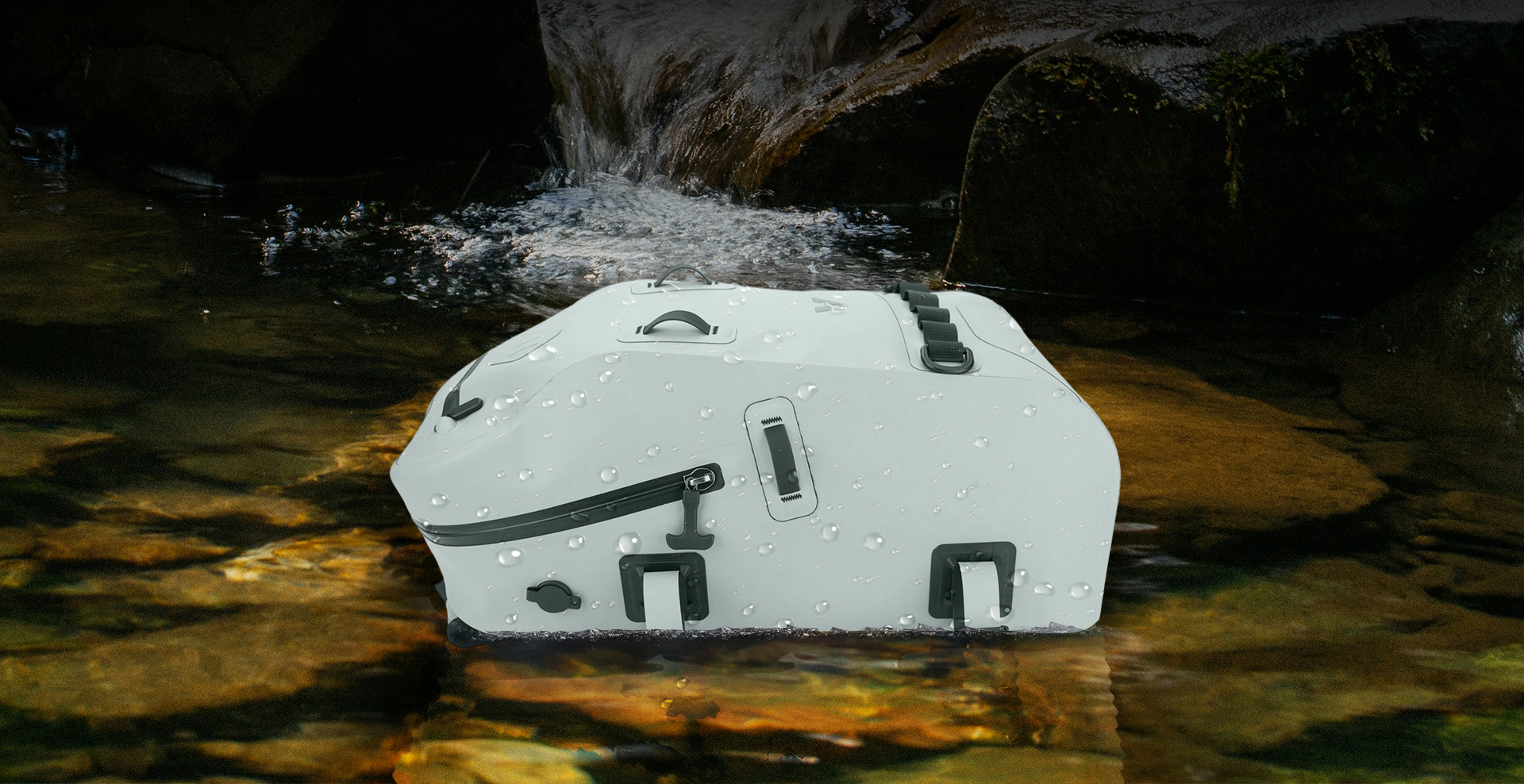
- 30L Airtight Sealed Backpack (WBS2511) – IPX7‑standard waterproof backpack with premium TPU materials for rugged outdoor protection and eco‑minded construction.
- Floatable Waterproof Backpack (WBS2512) – Fully waterproof outdoor pack with ergonomic suspension, ideal for hiking, kayaking, or expedition use.
Key Takeaway: Modular, stylish, and sustainable bags with on-trend 2026 colors are set to dominate the market, appealing to both urban professionals and outdoor enthusiasts.
Conclusion: Partner with a Leader
Navigating the 2026 outdoor market requires more than just a factory; it requires a strategic partner. With 19 years of experience, 3,000+ skilled workers, and 4 global factories, Weierken is built to handle the complexities of your 2026 supply chain.
Ready to optimize your 2026 procurement?Contact Weierken’s Sourcing Experts Today and get a free quote on your custom OEM/ODM project.