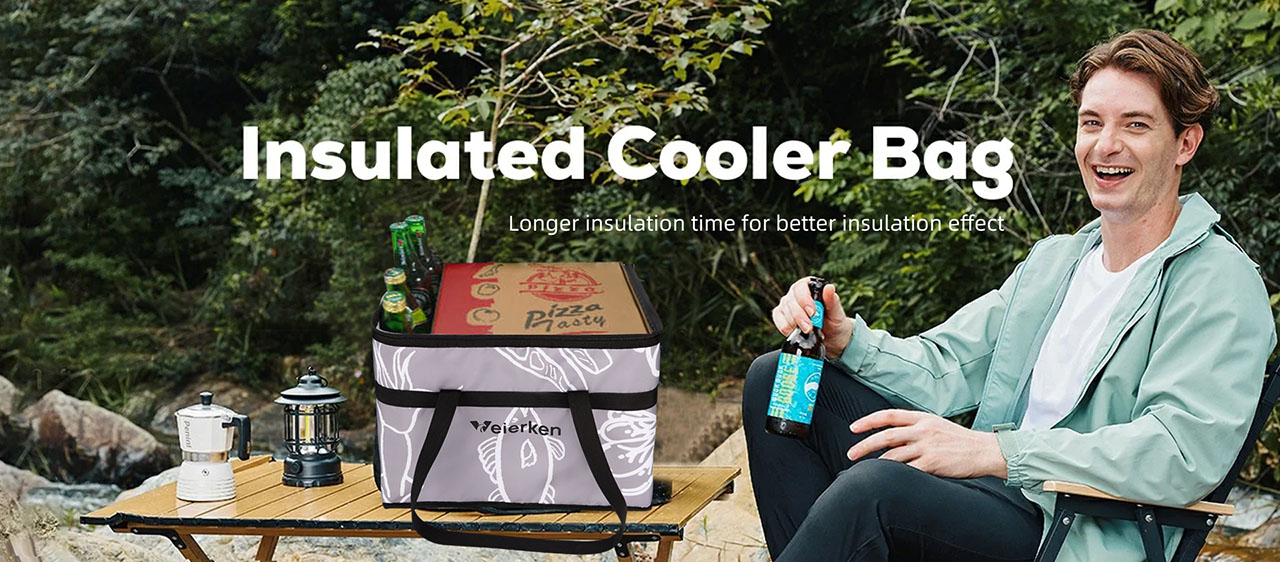
Delivering hot, crispy pizza requires much more than just a fast driver. It demands highly engineered equipment designed to battle the elements. Restaurant owners and food delivery chains constantly search for a professional pizza bag fabricator to provide reliable thermal solutions. A poorly constructed bag leads to cold food, soggy crusts, and ultimately, angry customers.
When you partner with an experienced manufacturer like weierken, you expect top-tier performance from every product. True quality does not happen by accident. It comes from rigorous factory testing and strict quality control protocols. Before a commercial insulated bag ever reaches a delivery driver, it must survive a battery of laboratory tests.
B2B buyers need to know exactly what separates a mediocre product from a premium one. A reputable pizza delivery bag manufacturer will gladly share their testing data. Let us look closely at the five critical Quality Assurance (QA) tests every premium pizza bag fabricator must pass before shipping a single unit.

Thermal Retention Test
Heat is the most critical factor in food delivery. A high-quality insulated bag must trap heat inside while allowing excess steam to escape. If the bag traps too much moisture, the pizza crust becomes soggy.
Purpose
This test verifies whether the bag can maintain a safe food temperature during simulated delivery conditions. The goal is to keep the pizza at or above 60℃. Furthermore, the test ensures the built-in ventilation system effectively preserves the crispness of the crust.
Methodology
Quality control experts recreate real-world delivery environments inside the laboratory. A professional pizza bag fabricator uses strict, repeatable processes.
- Technicians heat a simulated pizza or a standard thermal load to the specified target temperature.
- They place the heated load inside the bag and zip it completely shut.
- Testers place the sealed bag into environmental chambers set at extreme temperatures, such as 5℃, 25℃, and 35℃.
- Internal sensors record temperature changes every 10 to 15 minutes for a continuous duration of one to two hours.
Passing Criteria
The bag must meet strict thermal retention metrics to pass. After 60 minutes in the test chamber, the internal temperature must remain strictly above 55℃ to 60℃. Additionally, the temperature drop curve must perfectly match the exact specifications required by the client.
Crush Resistance & Anti-Deformation Test
Delivery drivers rarely carry just one pizza at a time. High-volume nights require drivers to stack multiple bags in their vehicles. A weak bag structure will collapse under the weight.
Purpose
This evaluation simulates the extreme physical pressure that occurs during multi-order deliveries. Testers want to see if multiple stacked bags will buckle or deform. The test ensures that the internal pizza boxes do not crush under heavy external pressure.
Methodology
A commercial custom insulated bag factory will subject their products to extreme weight tests. They simulate the worst-case scenarios found on a busy Friday night.
- Testers load the bag with heavy dummy weights, typically equating to 1.5kg per simulated pizza.
- They stack these fully loaded bags up to five layers high.
- Engineers apply sustained vertical pressure using specialized weights on top of the stack.
- After holding this pressure for a set time, technicians measure any changes in the bag’s structural height and inspect the internal boxes.
Passing Criteria
A premium bag boasts a rigid internal support system. To pass this QA test, the total height deformation of the bag must remain at or below 10%. Furthermore, the simulated pizza boxes inside must show absolutely no visible dents, creases, or structural damage.
Water/Oil Resistance & Cleanability Test
Pizza delivery is a messy business. Grease, tomato sauce, and condensation inevitably spill inside the bag. If the inner lining absorbs these liquids, the bag will quickly develop foul odors and harbor dangerous bacteria.
Purpose
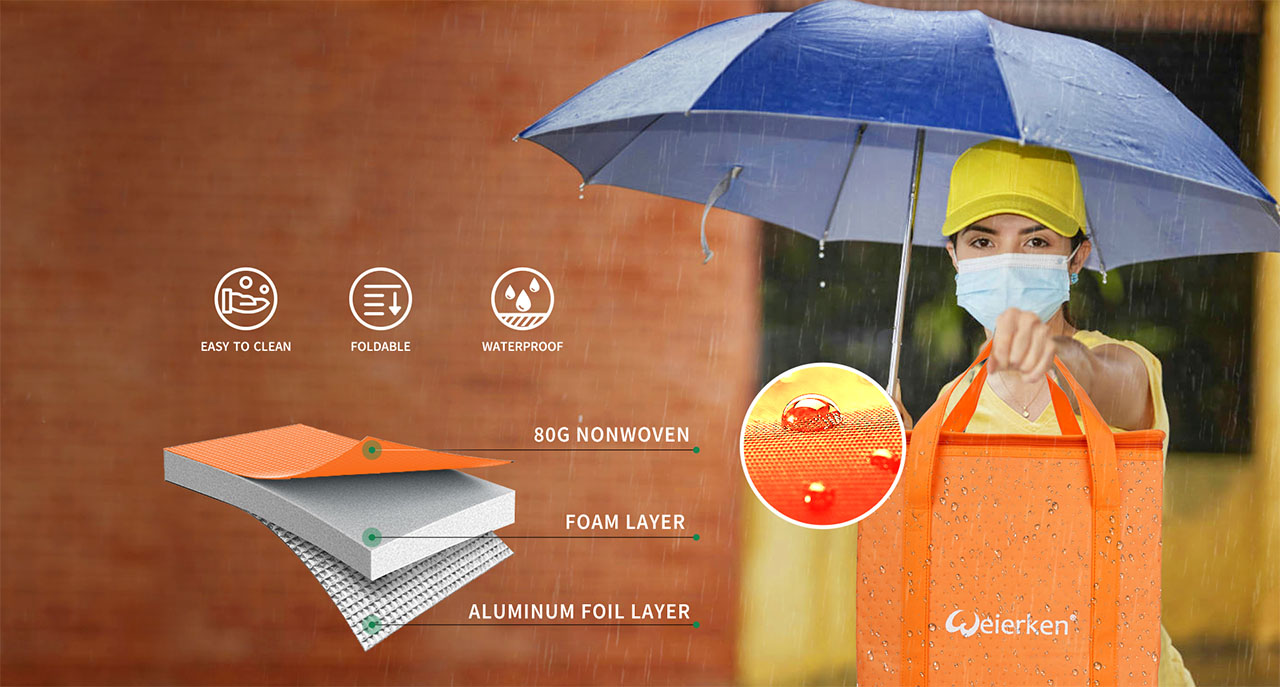
This test ensures the interior lining completely blocks the penetration of hot sauces and greasy oils. It also verifies that restaurant staff can easily wipe the bag clean at the end of a shift. A reliable pizza bag fabricator like weierken selects advanced waterproof textiles that reject stains and prevent lingering smells.
Methodology
Technicians actively try to ruin the inner lining using common restaurant liquids. They measure how well the material fights back against stubborn stains.
- Testers aggressively drip thick tomato paste and hot cooking oil directly onto the bag’s interior lining.
- They allow the mess to sit and bake into the material for a specified timeframe.
- Alternatively, testers completely submerge a section of the inner lining in a vat of oily liquid to test the barrier.
- Finally, staff use a plain white cloth to wipe the surface clean and check for microscopic residue.
Passing Criteria
The results must be flawless. Zero liquid can penetrate through the lining into the thermal insulation layer. After a basic wipe-down, the white cloth must show no visible stains or residue. The bag must also remain completely odorless.
Durability & Seam Strength Test
Restaurant equipment takes a severe beating every single day. Drivers toss bags into trunks, yank them out by a single strap, and rip zippers open in a rush. An expert commercial thermal bag supplier builds products specifically engineered for this daily abuse.
Purpose
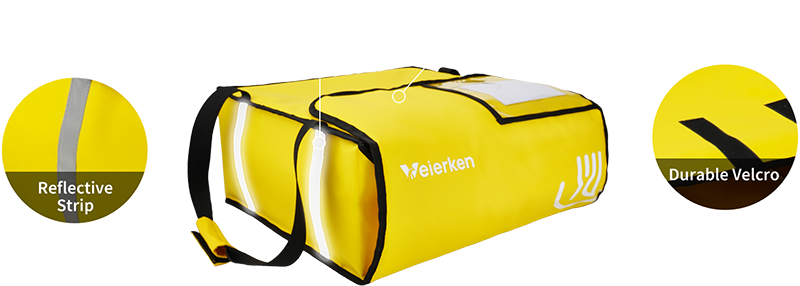
This physical test validates the mechanical strength of the most vulnerable parts of the bag. Engineers target the carrying handles, the zipper tracks, and the heavy-duty stitching along the seams to ensure they survive high-frequency commercial use.
Methodology
Machines take over this phase of testing to provide objective, mathematical data. A dedicated pizza bag fabricator applies brutal force to find the exact breaking point of the product.
- Handle Pulling Test: Machines pack the bag with 10 kilograms of dead weight. A mechanical arm violently jerks the handles up and down 500 times.
- Zipper Fatigue Test: Automated machines rapidly open and close the zipper thousands of times. Technicians monitor the track for binding and tooth wear.
- Drop Test: Testers let a fully loaded bag free-fall from a height of one meter directly onto a hard concrete surface.
Passing Criteria
The product must survive the gauntlet intact. The handles and main seams must show zero snapped threads or structural tears. The zippers must continue to glide smoothly without catching. Most importantly, the drop test must not split the seams or shatter the internal panels.

Food Safety & Environmental Compliance Test
You cannot put hot food into a bag made of toxic materials. Global health regulators enforce strict rules regarding food-contact materials. B2B buyers must source products from a pizza bag supplier who takes legal compliance seriously.
Purpose
This final phase guarantees the interior materials are completely safe for indirect or direct food contact. It also ensures the overall material composition complies with international environmental laws and sustainability mandates.
Methodology
Unlike the physical tests, this evaluation happens inside a sterile chemical laboratory. The pizza bag fabricator sends material samples to independent, third-party testing agencies for unbiased chemical analysis.
- Chemists test the lining against rigorous global standards like FDA 21 CFR, the European LFGB, and China’s GB 4806.
- They screen the materials for hazardous chemical migration, looking specifically for heavy metals, plasticizers, and formaldehyde.
- Laboratories also test the exterior fabrics to ensure they comply with REACH and RoHS environmental directives.
Passing Criteria
A premium bag leaves no room for error here. All chemical test results must register well below the strict legal limits set by government regulators. The manufacturer must then provide the B2B buyer with official, stamped test reports verifying full compliance.
Frequently Asked Questions (FAQ)
1. How long should a premium delivery bag keep a pizza hot?
A high-quality bag produced by a top-tier pizza bag fabricator should easily maintain an internal temperature of 60℃ for at least 45 to 60 minutes. Advanced models with thicker insulation can push this time even further depending on the external weather conditions.
2. What materials do manufacturers use for the inner lining?
Top manufacturers use food-grade, reflective aluminum foil or heavy-duty PVC linings. These specific materials block oil penetration, reflect heat back toward the pizza, and allow staff to wipe away greasy spills in seconds.
3. Can I wash my thermal delivery bags in a commercial washing machine?
No, you should never machine wash a structured thermal bag. The agitation will destroy the rigid internal panels and crush the thermal insulation foam. You should instead use a damp cloth and mild antibacterial soap to hand-wipe the interior and exterior.
4. Why do pizza boxes sometimes get crushed during large deliveries?
This happens when you buy cheap bags lacking a rigid internal frame. A professional pizza bag fabricator incorporates hard plastic inserts or high-density foam panels. These rigid supports bear the weight of stacked bags, protecting the cardboard boxes inside.
5. How do I choose the correct bag size for my restaurant’s specific needs?
Measure the exact dimensions of your largest pizza box. You want a bag that offers a snug fit to minimize empty air space, which causes heat loss. However, you also need enough vertical room to comfortably stack three to five boxes without forcing the zipper shut.
Partner With a Proven Manufacturer Today
Sourcing the right delivery equipment directly impacts your restaurant’s bottom line. When your drivers deliver piping hot, perfectly crispy pizzas, your customer retention rates skyrocket. You cannot afford to risk your brand reputation on cheap, untested delivery bags that fail after a few weeks of use.
You need a manufacturing partner who prioritizes rigorous QA testing, food safety, and extreme durability. As an industry-leading pizza bag fabricator, weierken tests every product design to the absolute limit. We provide fully certified, durable, and highly customizable thermal bags for major food delivery brands worldwide.
Stop settling for underperforming delivery gear. Protect your food quality and equip your drivers with the best thermal bags on the market.
Contact our sales team today to request a quote, review our testing certificates, and start your custom B2B inquiry!