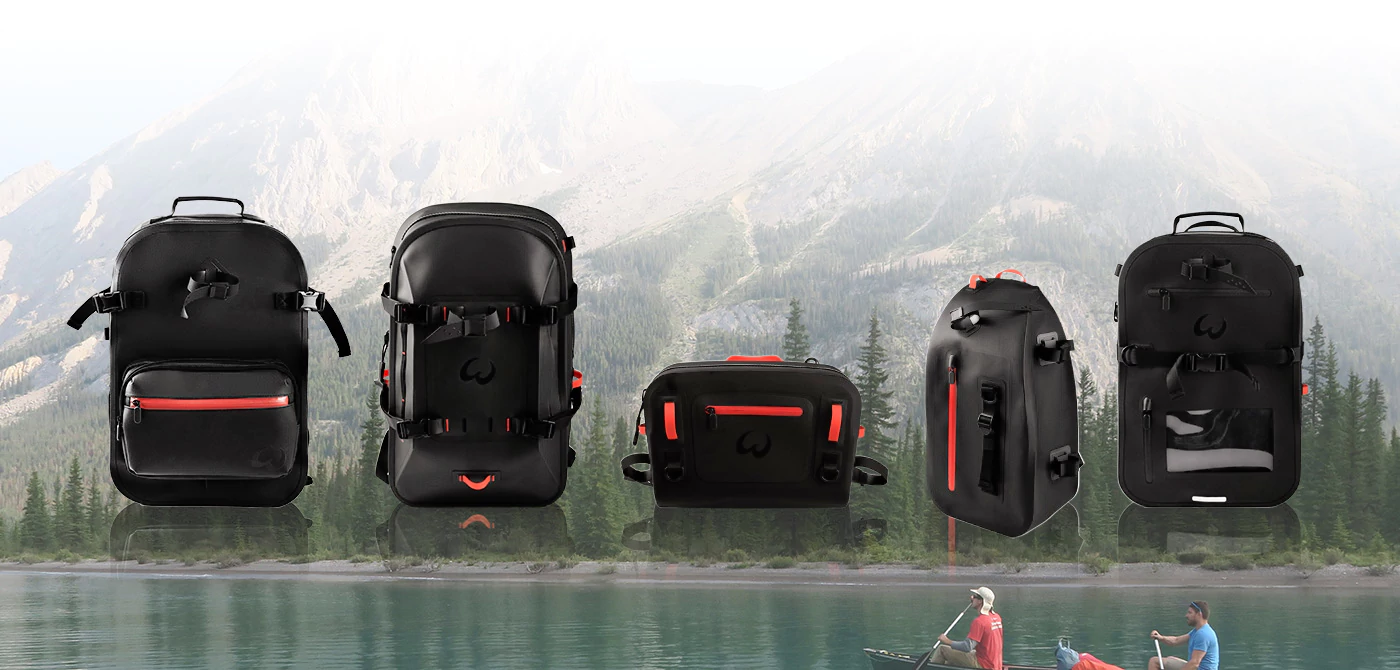
Paddleboarding places unique demands on gear. Your board, leash, wetsuit, and hydration pack add up to serious weight. Now imagine that weight shifting inside a bag during transport, pulling at seams and stressing attachment points. Shoulder strap connections, handle bases, bottom panels, and gear loops bear the brunt of this force.
Without proper reinforcement, these areas fail. Seams pop. Stitches snap. A bag that looked great in the catalog becomes unusable after a few trips.
At weierken, we build bags for real-world conditions. We understand that a paddleboarding bag fabricator must engineer for stress, not just appearance. Here are four structural reinforcement techniques we use to ensure our bags handle the load.

1. Bar Tack Reinforcement
Some stress points are predictable. Where a shoulder strap meets the bag body, tension concentrates in a small area. The same happens at handle roots and the ends of webbing loops. Ordinary straight stitching works for seams under uniform tension, but concentrated stress requires a different approach.
How bar tacks work:
A bar tack machine creates a dense zigzag stitch pattern, typically 7 to 10 millimeters wide. It sews back and forth multiple times, building up a compact block of thread. This cluster distributes force across many stitch penetrations rather than letting it rip through a single line.
Why we use them:
- They prevent stitch unraveling at seam ends
- They reinforce high-stress junctions
- They add minimal bulk while providing maximum strength
At weierken, we apply bar tacks at every critical junction. Shoulder strap connections get them. Handle attachment points get them. Anywhere a load transfers from webbing to fabric, you will find this reinforcement. It is the industry standard for a reason—it works.
Typical applications: Shoulder strap ends, handle bases, daisy chain terminations, compression strap anchors.
2. Reinforcement Patches
Sometimes the base fabric itself needs strengthening. Lightweight materials pack well and look sleek, but they lack the thickness to resist abrasion or tearing under heavy point loads. Adding a second layer changes that dynamic.
The patch approach:
We sew or heat-bond an extra piece of material over high-stress zones. This patch might be heavy nylon canvas, genuine leather, or a TPU film depending on the bag’s design and intended use. The patch distributes load across a wider area and adds a wear layer where friction occurs.
Why patches matter:
- They multiply material thickness precisely where needed
- They protect against abrasion from ground contact
- They spread stress from hardware attachments across more surface area
A thoughtful paddleboarding bag fabricator places patches strategically. We position them inside shoulder strap mounts, along bottom panels that scrape against car trunks and boat decks, and behind gear loops that see constant clipping and unclipping. The patch stays mostly invisible during normal use but works hard when it matters.
Typical applications: Bag bottoms, shoulder strap backings, hardware reinforcement zones, high-wear corners.
3. Multi-Layer Stitching
Thread selection matters. Many bags fail not because the fabric tears, but because the stitching breaks under repeated load. A single line of thread, even if strong, offers no redundancy. Once it goes, the seam opens.
Building redundancy:
We employ multi-needle stitching on primary structural seams. Double needles run parallel lines, effectively doubling the seam’s holding power. For extreme loads, we use triple rows. The total cross-sectional area of thread increases, distributing tension across multiple lines.
Thread quality counts too:
We select high-tenacity bonded nylon threads—often called bonded nylon or similar constructions. These threads resist abrasion from passing through fabric, maintain strength when wet, and withstand UV exposure better than standard options.
The safety factor:
Even if one stitch line gets damaged, the remaining lines hold. This redundancy gives your customers confidence. They can trust the bag to survive rough handling at airports, boat ramps, and remote launch points.
Typical applications: Main compartment seams, load-bearing perimeter stitching, long structural attachments.

4. Heat-Sealed and Welded Reinforcement
Paddleboarding involves water. Lots of it. Bags get splashed, rained on, and occasionally submerged. Traditional stitching creates needle holes—tiny pathways for moisture to enter. For fully waterproof designs, those holes defeat the purpose.
Welding changes the game:
High-frequency welding or hot-air welding bonds materials without piercing them. We can attach reinforcement patches to exterior surfaces using heat and pressure alone. The patch fuses with the base fabric, creating a monolithic structure with no needle holes.
Why this matters for paddle sports:
- Complete waterproof integrity at reinforcement zones
- Clean appearance without visible stitching
- Exceptional bond strength when properly executed
At weierken, we apply welded reinforcement to waterproof bags and dry bags designed for paddling. Bottom patches get welded on. Attachment points for shoulder straps receive welded backing plates. The result is a bag that keeps gear dry while handling the stresses of active use.
Typical applications: Waterproof bag bottoms, sealed attachment points, zipper field reinforcement, TPU film protection zones.
Combining Techniques for Real Results
No single technique solves every challenge. A quality paddleboarding bag fabricator combines methods based on each bag’s specific demands.
Consider a shoulder strap attachment on a waterproof paddleboarding bag. We might:
- Use a multi-layer stitch for primary strength
- Add a bar tack at the termination point
- Cover the interior with a reinforcement patch
- Weld an external patch for waterproofing
Each technique supports the others. Together, they create a system that survives years of hard use.
At weierken, we evaluate every stress point individually. We ask questions. How much load will this carry? Will it see abrasion? Does it need waterproofing? The answers guide our engineering choices.
What Buyers Should Look For
When you evaluate potential manufacturing partners, look beyond the outer fabric and overall design. Ask specific questions about stress point construction.
- Where do you apply bar tacks?
- What reinforcement patches do you use at high-wear areas?
- How many rows of stitching run along primary seams?
- Can you weld reinforcements for waterproof models?
The answers reveal a manufacturer’s commitment to durability. A vendor focused only on外观 may cut corners here. A serious paddleboarding bag fabricator like weierken welcomes these questions because we have invested in the right processes.
Built to Last
Paddleboarding enthusiasts invest in quality gear. They expect their bags to keep up. When you partner with a manufacturer who understands structural reinforcement, you deliver that confidence.
From bar tacks that lock seams in place to welded patches that maintain waterproofing, every detail contributes to a bag’s working life. These techniques cost more to execute properly. They require skilled operators and quality equipment. But they pay dividends in customer satisfaction and brand reputation.
Weierken builds bags that handle the water, the weight, and the miles. We would welcome the chance to build yours.
Ready to discuss your next project? Contact weierken today. Tell us about your paddleboarding bag concept, and let us show you how our reinforcement techniques will make it stronger.
Frequently Asked Questions
Q1: What is the most common failure point on paddleboarding bags?
Shoulder strap attachments typically fail first. The constant motion and heavy weight concentrate stress at these junctions. Bar tack reinforcement and interior patches address this vulnerability.
Q2: Can you reinforce bags without adding visible bulk?
Yes. Techniques like interior patches and multi-layer stitching add strength while remaining hidden. Exterior patches can also be designed as design features, using contrasting materials or colors.
Q3: How do I know if a paddleboarding bag fabricator uses proper reinforcement?
Ask for photos of their production process. Request samples and examine stress points yourself. Look for dense bar tacks, multiple stitch rows, and reinforced patch layers. A reputable paddleboarding bag fabricator will share this information openly.
Q4: Does weierken test reinforced seams?
Yes. We conduct pull tests on sample seams to verify strength. We also perform cycle testing on straps and handles to simulate real-world use. Test results help us validate our construction methods.
Q5: What thread types work best for wet environments?
Bonded nylon threads perform well in marine applications. They resist rot, maintain strength when wet, and withstand UV exposure. We select thread based on each bag’s specific requirements.
Q6: Can you combine welded reinforcement with traditional stitching?
Absolutely. Many bags use both techniques. Stitching provides primary structural strength while welded patches add waterproofing and abrasion protection. We choose the right combination for each product’s needs.