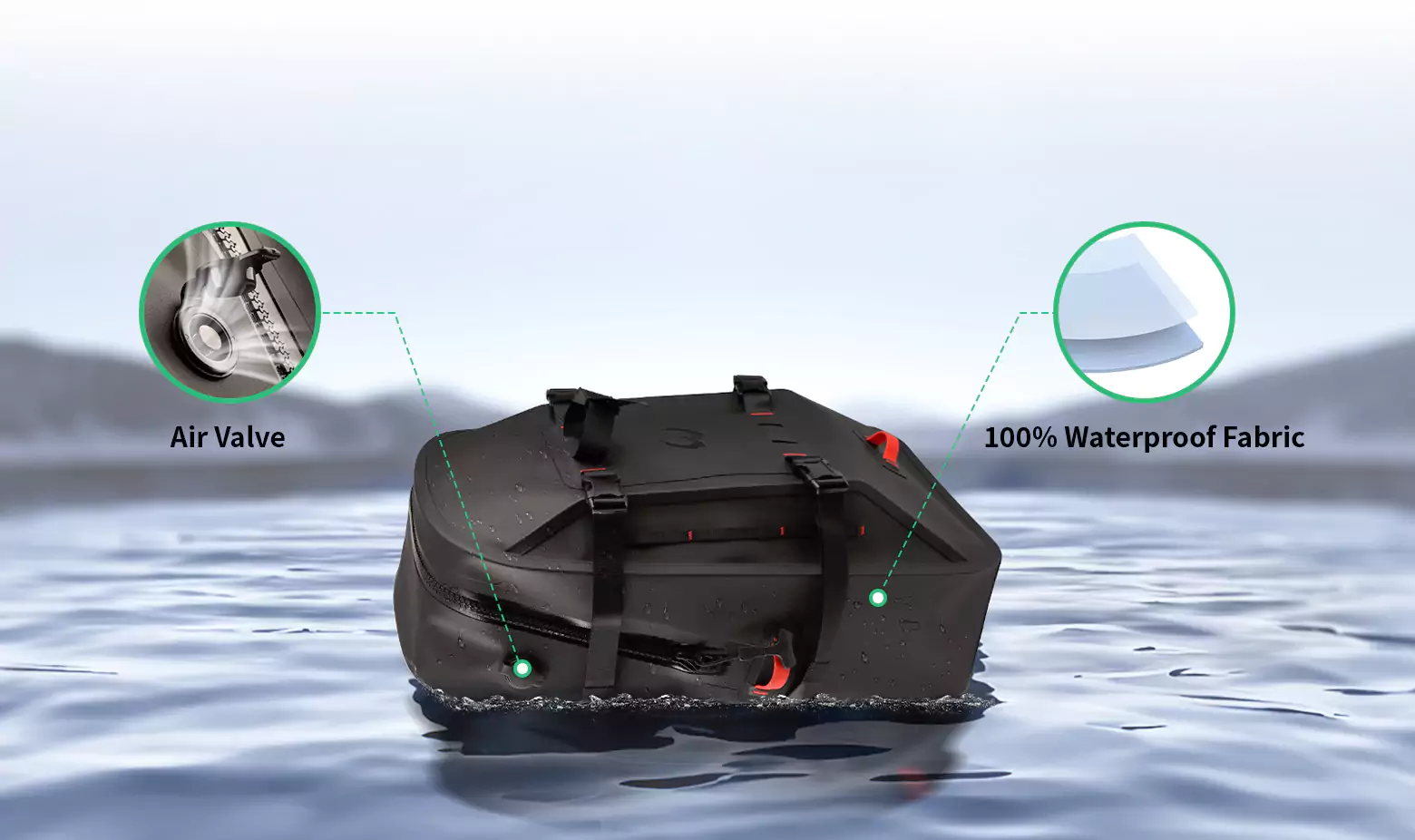
Creating professional gear for water sports, river trekking, fishing, and emergency rescue requires immense precision. The core value of a buoyancy bag lies in its ability to float reliably and keep water out completely. Choosing the right floatable backpack fabricator directly impacts your product quality, brand positioning, and user trust.
Established brands like weierken understand that finding a matched manufacturing partner takes careful evaluation and planning. You cannot afford to leave safety and performance to chance.
This guide outlines six systematic steps to help you assess, select, and partner with the most suitable floatable backpack fabricator for your specific brand requirements.

Step 1: Define Your Brand Positioning and Product
Before you contact any floatable backpack fabricator, you must clearly define what kind of product your brand needs. Manufacturers specialize in different tiers of quality and functionality.
You need to map out your target user persona. Are your customers whitewater kayaking enthusiasts, offshore anglers, scuba diving instructors, or swift-water rescue teams? Different users have drastically different requirements for buoyancy, capacity, and functionality.
Next, define the core functional requirements of your product:
- Buoyancy Rating: How many Newtons (N) of buoyancy do you need? Do you require basic flotation assistance (50N) or professional rescue-grade performance (100N+)?
- Waterproof Level: Does the bag only need splash protection (IPX4), or must it withstand temporary submersion (IPX7)?
- Capacity and Compartments: Will the backpack carry heavy scuba gear, organized fishing tackle, or simple dry clothing?
- Brand Tone: Are you positioning yourself as a hardcore professional performance brand or a fashionable leisure outdoor brand? This choice affects material selection, aesthetics, and pricing.
Compile all this information into a comprehensive “Product Requirement Document” (PRD). This document serves as your baseline for all future communications with a potential floatable backpack fabricator.
Step 2: Conduct Industry Research and Initial Screening
Once you know what you want, you must find potential manufacturers through professional channels. You can then apply basic criteria to perform an initial screening.
Start by searching through established B2B platforms and industry networks.
- Professional B2B Platforms: Search platforms like Alibaba (focus on “Verified Suppliers”) and Global Sources.
- Industry Exhibitions: Look at exhibitor lists for outdoor trade shows like ISPO, water sports expos like Boot Düsseldorf, or international fishing tackle shows.
- Certifying Bodies: Search directories of manufacturers that hold relevant certifications, such as ISO 12402 for personal flotation devices.
- Industry Networks: Ask for recommendations within LinkedIn groups dedicated to outdoor gear manufacturing.
When searching online, use a combination of precise terms. Look for a floatable backpack fabricator, buoyancy bag manufacturer, inflatable PFD backpack supplier, or whitewater gear OEM.
Apply these preliminary screening standards to filter your list:
- Do they specialize primarily in water sports gear or floating products?
- Do they have a proven track record of serving well-known outdoor or marine brands?
- Does the factory operate under an ISO 9001 quality management system?
- Do they clearly offer custom OEM/ODM services rather than just selling wholesale stock?
- Are their product technical specifications transparent and professionally presented?
Narrow down your search results to create a shortlist of 3 to 5 highly qualified candidates.
Step 3: Deep Dive into Technical Capabilities and Compliance
A floatable backpack involves critical safety features. Therefore, assessing the technical capabilities and compliance records of your chosen floatable backpack fabricator is the most crucial part of your evaluation.
Leading brands like weierken always prioritize rigorous technical audits to ensure the factory can meet international safety standards. You must verify their material sourcing and engineering expertise.
Buoyancy Technology Audit:
- Material Sourcing: Do they procure buoyancy materials (closed-cell foam, TPU airbags) from reliable suppliers? Can they provide performance data like density and compression resistance?
- Calculation Expertise: Can the floatable backpack fabricator accurately calculate the required material volume and distribution to achieve your target buoyancy (e.g., 50N or 100N)?
- Testing Reports: Do they provide third-party testing reports based on ISO 12402 (Personal Flotation Devices) or UL 1180 standards?
Waterproof Craftsmanship Audit:
- Seam Processing: Does the factory master professional waterproof construction methods like high-frequency welding or seamless tape sealing?
- Zipper Selection: Do they source submersible zippers, such as YKK AquaGuard® or equivalent diving-grade hardware?
- Verification: Can they produce authentic IPX7 submersion and airtightness test reports?
Durability and Compliance Audit:
- Fabric Choice: Do they use hydrolysis-resistant, UV-resistant, and abrasion-resistant fabrics like TPU-coated nylon?
- Reinforcement: Are stress points at the shoulder straps and handles reinforced with bartack stitching and multi-layer sewing?
- Market Compliance: Does the product meet CE, UKCA, or USCG (U.S. Coast Guard) market entry requirements?
- Environmental Directives: Do the raw materials comply with REACH, RoHS, and California Proposition 65?
Require each shortlisted floatable backpack fabricator to complete a technical capability questionnaire and submit their full suite of compliance documents.

Step 4: Rigorous Sample Testing and Field Verification
You cannot judge a manufacturer by their paperwork alone. You must conduct physical sample testing to verify if the floatable backpack fabricator can translate your concepts into a reliable product.
Request a customized sample based on your Product Requirement Document. Alternatively, ask for their closest existing off-the-shelf prototype. The sample must feature your specified fabrics, colors, logos, and core functional designs.
Execute the following core testing protocols:
- Buoyancy Testing: Submerge the loaded sample in water with attached weights. Verify if the actual flotation meets the stated value (e.g., holding 5kg of dead weight for a 50N rating).
- Waterproof Testing: Perform a static submersion test (IPX7) and a dynamic water spray test (IPX5/IPX6). Open the bag afterward to check for any internal moisture.
- Load and Suspension Testing: Fill the bag to its maximum weight capacity. Simulate real-world usage by walking and swinging the bag to evaluate the comfort and structural integrity of the harness system.
- Durability Testing: Repeatedly open and close the waterproof zippers and fold the roll-top closures. Simulate long-term wear and tear to check if the seals remain intact.
If possible, take the sample into real-world scenarios. Invite target users, such as local kayak enthusiasts or fishing guides, to test the gear in open water and collect their unvarnished feedback.
Share your test results with the floatable backpack fabricator. Ask them to propose improvements based on the data, which will verify their problem-solving skills.
Step 5: Choose Your OEM/ODM Model and Negotiate
Depending on your brand’s internal design resources, choose the most appropriate collaboration model and initiate business negotiations with the floatable backpack fabricator.
Choosing the Right Model:
- OEM (Original Equipment Manufacturer): This suits brands with mature in-house design teams. You provide the complete tech packs and blueprints, and the manufacturer handles production. Your negotiation will focus on production consistency, cost control, and lead times.
- ODM (Original Design Manufacturer): This works best for brands that want to leverage the factory’s R&D capabilities. You provide the concept, and the factory develops it from scratch. Negotiations must cover design ownership, mold rights, and exclusivity agreements.
Key Commercial Terms to Structure:
- Quotation Structure: Demand an itemized quote that breaks down costs for raw materials, labor, custom molds, sampling, packaging, and freight.
- Minimum Order Quantity (MOQ): Clarify the MOQ. Ask if they accept mixed models or colors to reach the minimum threshold.
- Payment Terms: Standard B2B terms usually involve a 30% deposit upfront and a 70% balance payment before shipment, or a Letter of Credit for larger orders.
- Intellectual Property (IP): Clearly define who owns the design drawings, custom molds, and physical samples. Always sign a strict Non-Disclosure Agreement (NDA).
- Quality Agreements: Set clear acceptance criteria, such as AQL 1.5 standards. Define the warranty period and establish a straightforward process for quality claims.
Step 6: Build a Long-Term Strategic Partnership
View your chosen floatable backpack fabricator as a strategic extension of your brand’s supply chain, rather than a mere transactional vendor.
A strong relationship guarantees better production priority during peak seasons. You must evaluate their long-term capacity planning and their ability to stock raw materials to prevent supply chain disruptions.
Engage in continuous innovation with your factory partner. Schedule regular meetings to discuss emerging industry trends, new waterproof technologies, and lighter buoyancy materials. A proactive floatable backpack fabricator will help you co-develop your next generation of products.
Establish a framework for cost optimization. As your order volumes grow over time, work with the factory to implement annual price reductions or find alternative material sourcing to improve your margins.
Finally, build a risk-sharing mechanism. Markets fluctuate, and raw material prices change. A true manufacturing partner will weather these challenges alongside your brand.
By treating the factory as an ally, brands like weierken secure stable production lines and maintain high product standards year after year. Choose wisely, communicate clearly, and build a supply chain that keeps your brand afloat.
Looking for a Reliable Manufacturing Partner?
If you are searching for a high-quality floatable backpack fabricator to bring your water sports gear to life, we are here to help. Contact our engineering team today with your design concepts, and let us provide a detailed production solution.
[Send an Inquiry Now]
Frequently Asked Questions (FAQs)
1. What makes a good floatable backpack fabricator?
A reliable floatable backpack fabricator possesses specialized equipment like high-frequency welding machines and a deep understanding of buoyancy calculations. They should hold ISO 9001 certifications, source marine-grade materials (like TPU and YKK AquaGuard zippers), and provide transparent third-party testing reports for flotation and waterproofing.
2. How much buoyancy should my water sports backpack have?
It depends entirely on the intended use. A standard dry bag backpack might offer 50N (roughly 5kg of support), which provides basic flotation assistance. For professional rescue, heavy scuba gear, or offshore activities, you may require customized bags offering 100N to 150N of positive buoyancy. Always consult with your manufacturer to calculate the correct volume.
3. What is the difference between IPX4 and IPX7 for buoyancy bags?
IPX4 protects against splashing water from any direction, making it suitable for light rain. IPX7 means the backpack can withstand accidental submersion in water up to 1 meter deep for 30 minutes. True floatable backpacks designed for water sports should aim for an IPX7 rating to guarantee that internal air stays in and water stays out.
4. Should I choose OEM or ODM for my floatable gear?
If you have a dedicated design team and precise technical drawings, choose OEM to maintain complete control over your proprietary designs. If you have a brand concept but lack the engineering expertise to calculate buoyancy and design waterproof seams, select an ODM partner who already has proven, off-the-shelf templates you can customize.
5. How do I verify the quality of a buoyancy bag factory before ordering?
Always request a custom sample and perform rigorous real-world testing. Submerge the loaded bag, test the strength of the straps, and check the seam welding. Additionally, ask the factory for their material compliance certificates (REACH, RoHS) and request a video tour or a third-party audit of their production facility.