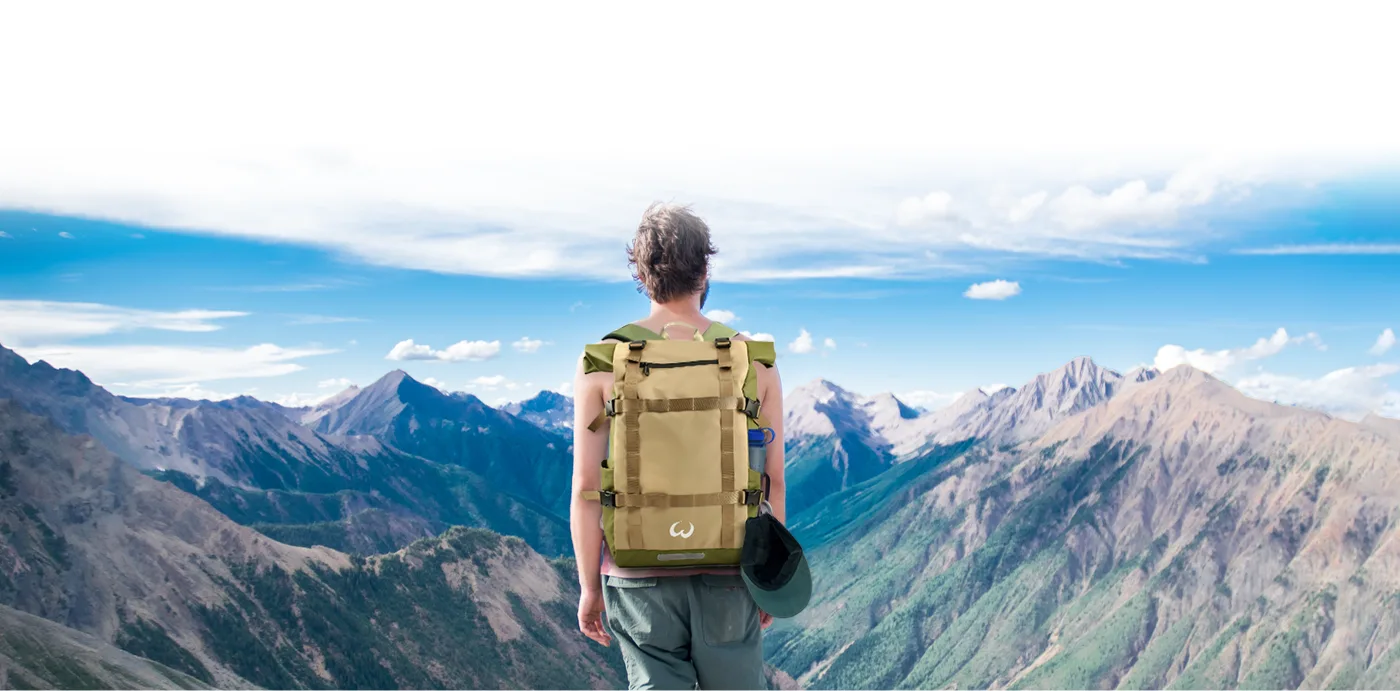
In high-altitude and remote trekking environments, a backpack is not just a storage solution — it is a critical component of outdoor safety and endurance. From persistent moisture and freezing temperatures to sudden mountain squalls and prolonged load-bearing use, a waterproof outdoor backpack must perform consistently under environmental stress.
For brands sourcing waterproof hiking backpacks or developing OEM waterproof backpacks, performance validation should go beyond surface-level waterproof claims. In real-world alpine conditions, weaknesses in seam sealing, zipper protection, buckle durability, or structural reinforcement can quickly translate into product failures, higher return rates, and long-term brand risk.
High-altitude outdoor gear faces unique challenges:
- Continuous exposure to rain, snow, and humidity
- Sub-zero temperatures affecting plastic hardware and coatings
- Extended load-bearing stress on shoulder straps and stitching
- Rapid temperature shifts that accelerate material fatigue
This is why professional waterproof outdoor backpack development increasingly relies on tested hydrostatic resistance levels, cold-resistant backpack manufacturing, reinforced load-bearing construction, and ergonomic support systems designed for prolonged use.
For procurement teams evaluating OEM waterproof backpacks or ODM waterproof backpacks, understanding how manufacturers approach cold-resistant backpack manufacturing, seam sealing integrity, and structural durability is essential to ensuring product reliability in unpredictable outdoor environments.
In performance-driven outdoor categories, waterproof design is not a feature — it is a baseline requirement.
Why High-Altitude Conditions Place Extreme Demands on Backpacks
High-altitude environments impose significant demands on backpack performance, far beyond what is encountered on standard hiking trails. For procurement teams sourcing high-altitude backpacks or evaluating OEM/ODM backpack manufacturers, understanding these environmental stressors is essential:
- Rapid and unpredictable weather shifts, including rain, snow, and ice
- Prolonged load-bearing across uneven and technical terrain
- Increased moisture exposure from snowfall or sudden downpours
- Fatigue and strain from sustained elevation gain and extended treks
Under these conditions, two core systems determine product reliability: the carrying system and waterproof integrity. Failures in either system can result in reduced user comfort, compromised equipment, or safety hazards in extreme environments.

I.Carrying Systems: Structural Balance, Comfort, and Load Efficiency
Ergonomic Load Distribution
For professional ergonomic hiking backpacks and load-bearing outdoor backpacks, the carrying system must efficiently transfer weight from the shoulders to the hips and core support areas, reducing localized stress and maintaining stability during long-duration use.
Key design considerations include:
- Structured shoulder straps with breathable padding to maintain shape under heavy load
- Adjustable sternum and hip belts to stabilize movement and minimize lateral sway
- Ventilated back panels to enhance airflow and reduce heat accumulation during extended treks
From a B2B perspective, evaluating how an OEM or ODM backpack manufacturer designs and tests these systems is critical for ensuring consistent performance and end-user satisfaction in challenging environments.
For example, Weierken’s HBS08 Lightweight Durable Hiking Bag for Jungle Adventures includes a padded back panel, airflow ventilation, and adjustable shoulder and hip straps, reducing fatigue during extended treks — even when carrying heavy gear and equipment.
2.Internal Support and Stability
For high-altitude backpacks and load-bearing outdoor backpacks, internal support is a critical factor that impacts stability, comfort, and load distribution. Performance backpacks typically feature either a rigid or semi-rigid internal frame or a well-structured ergonomic back panel to ensure stability on challenging terrain.
Key Benefits:
- Maintains stability on uneven or technical ground
- Reduces lateral sway during steep ascents or descents
- Evenly distributes weight along the spine to minimize user fatigue
From a procurement perspective, assessing how an OEM or ODM backpack supplier implements internal support is essential. Proper back panel or frame engineering ensures reliable performance when carrying heavy or bulky items such as camping gear, hydration systems, or food — even in cold, windy, or high-altitude conditions.
For example,Weierken’s HBS10 Stylish Waterproof Hiking Backpack – with up to ~20 kg load support, features a reinforced structure and ergonomic back panel that enhances internal support and balance during long treks. The model’s design helps distribute weight more evenly, improving stability on rugged trails and reducing fatigue even under heavier loads.

II. Waterproof Technology
For high-altitude and extreme trekking applications, waterproof performance should be evaluated as a core technical requirement rather than a general product feature. Procurement teams must assess whether a backpack can provide sustained protection in heavy rain, snow exposure, and prolonged wet environments.
What “Waterproof” Means in Technical Evaluation
A performance-grade high-altitude backpack relies on integrated waterproof construction systems to prevent water penetration and protect critical equipment. Key technical indicators include:
- IPX7 or higher tested water protection ratings
- TPU-coated and laminated fabrics with tear strength ≥30MPa
- Seam-sealed or high-frequency welded construction
- Waterproof or airtight zipper systems
These elements collectively determine whether the backpack maintains reliable waterproof integrity under real-world alpine conditions.
Procurement Insights
- Extreme or high-altitude conditions: Choose backpacks with IPX7 or higher to ensure internal gear stays dry during heavy rain, snow, or short-term immersion.
- General outdoor use: IPX1–IPX6 is sufficient for everyday hiking or light outdoor activities, but protection may be limited in high-altitude or prolonged wet conditions.
Waterproof Closures and Entry Points
Zippers and main openings are typically the most vulnerable areas for water ingress. High-performance waterproof backpacks or load-bearing outdoor backpacks address this with:
- Airtight or IPX7-rated zippers
- Overlap flaps covering all primary openings
- Double-track or sealed buckle closures
These features ensure that water cannot enter through the weakest points of the bag, even under heavy rainfall or snow exposure.
Integrating Cooling, Storage, and Expandable Carrying Capacity
Some outdoor missions — such as alpine expeditions, long trail runs, or wilderness base camps — require both gear transport and temperature-controlled storage. Modern high-performance backpacks integrate these capabilities with ergonomic design and modular carrying options.
Key features include:
- Temperature-controlled compartments to maintain food or hydration at desired temperatures for extended periods
- Waterproof construction for reliable protection in all weather conditions
- Expandable external attachment points such as MOLLE-style straps, side pockets, and top lash tabs, allowing additional gear, hydration packs, or trekking tools to be securely carried without compromising core storage
For example, the 30L Airtight Cooler Backpack CBS2503offers up to 48 hours of temperature-controlled storage, rugged waterproof construction, and expandable external attachment points, making it an ideal choice for procurement teams seeking reliable gear for high-altitude expeditions and multi-day outdoor missions.
Advanced Fabric Engineering and Seam Sealing
For high-altitude backpacks, fabric technology and seam sealing are critical to achieving true waterproof performance.
- Fabric Technology: Durable Water Repellent (DWR) coatings provide initial resistance to light rain, but their effectiveness can degrade over time due to wear and abrasion. To ensure reliable protection under heavy or prolonged wet conditions, high-performance backpacks use TPU-laminated fabrics with tear strength ≥30MPa, which maintain waterproof integrity even under load.
- Seam Sealing: Traditional stitched seams are common weak points for water ingress. High-frequency welded or seam-sealed construction eliminates these potential leakage points, ensuring the backpack remains fully waterproof in heavy rain, snow, or extreme alpine conditions.
For example, the IPX7 30L Airtight Sealed Backpack WBS2511 features TPU‑laminated fabrics with tear strength ≥30 MPa and high-frequency welded seams, ensuring true waterproof performance and reliable durability for high-altitude expeditions and extreme outdoor missions.
By combining advanced laminated fabrics with sealed seams, professional backpacks provide durable, long-lasting waterproof performance, even in the most challenging high-altitude and wet environments.nce, even in the most challenging high-altitude and wet environments.

Summary
For procurement teams, selecting a high-altitude outdoor backpack requires more than evaluating basic waterproof claims. Professional-grade performance depends on IPX7 or higher waterproof ratings, TPU-laminated fabrics with tear strength ≥30MPa, and sealed or high-frequency welded seams to ensure long-term waterproof integrity. In addition, ergonomic load-bearing systems, rigid or semi-rigid internal support, external attachment points, and temperature-controlled storage are essential for stability, comfort, and multi-day expedition use.
Backpacks that integrate these technical features deliver reliable performance, equipment protection, and durability in harsh, wet, and high-altitude environments — key factors for confident and sustainable procurement decisions.
Why Choose WEIERKEN as Your Global Partner?
As a professional hiking bag and waterproof bag OEM/ODM manufacturer, WEIERKEN follows strict quality control (QC) standards aligned with procurement requirements, focusing on structural reliability, material performance, and long-term durability.
With standardized inspections and batch testing, the product pass rate remains at 99.5%, demonstrating consistent manufacturing quality and production stability.
Tested in detail, not assumed Following a “test, not guess” principle, every product from our factory undergoes comprehensive evaluations, including repeated zipper operation, buckle stability under extreme cold, and overall structural reliability under heavy load. This ensures that all backpacks and customized outdoor bags maintain consistent performance in high-altitude, cold, and unpredictable outdoor environments.
Reliable capacity for global delivery With mature manufacturing systems, scalable packing lines, and efficient factory processes, WEIERKEN supports large-volume international orders while maintaining consistent quality and controlled lead times.
Backed by 3 self-owned factories, covering approximately 80,000 square meters, and a monthly production capacity of 1.3 million units, we are equipped to handle high-volume global demand with stability and efficiency.
As a trusted supplier for customization and OEM/ODM services, we provide long-term manufacturing reliability for outdoor brands worldwide.
FAQ — Outdoor Backpack Performance
Q1 — What does IPX7 waterproof mean for outdoor backpacks? A: An IPX7 backpack withstands immersion up to 1 m for 30 minutes, keeping gear dry in heavy rain, snow, or short submersion. For high-altitude or extreme conditions, choose IPX7 or higher. For everyday hiking, IPX1–IPX6 is usually sufficient, but protection may be limited in prolonged wet or harsh environments.
IPX1–IPX7 Waterproof Ratings: What They Mean for Backpacks
| IPX Rating | Protection Level | Typical Use Cases |
| IPX1 | Drip-proof: Vertical water drops do not affect the item | Light rain or water droplets on the surface; suitable for light outdoor use |
| IPX2 | Drip-proof when tilted up to 15° | Light rain or occasional splashes; suitable for urban or short-distance hiking |
| IPX3 | Spray-proof: Water sprayed at a 60° angle does not affect the item | Small rain, minor splashes; suitable for daily outdoor activities |
| IPX4 | Splash-proof from any direction | Moderate rain, light snow, or accidental splashes; suitable for general hiking or casual outdoor use |
| IPX5 | Water jet-proof from any direction | Heavy rain or near-water environments; suitable for trekking or mountain hiking |
| IPX6 | Strong water jet-proof | Heavy rain or strong water flow conditions; suitable for high-altitude trekking or professional outdoor activities |
| IPX7 | Temporary immersion: Submersion in 1 meter of water for 30 minutes without water ingress | Extreme rain, snow melt, or wet high-altitude conditions; recommended for professional-grade high-altitude backpacks |
Q2 — Are water-resistant backpacks enough for high-altitude use? A: Water-resistant backpacks may repel light rain but are not suitable for prolonged exposure. For mountaineering or alpine conditions, look for fully waterproof materials and sealed seams.
Q3 — For procurement purposes, can cooler backpacks function effectively as hiking backpacks for outdoor and expedition use? A: Yes — models like the Weierken 30L Airtight Cooler Backpack CBS2503 combine temperature control with ergonomic carrying systems, making them multi-purpose outdoor companions.
Q4 — How do carrying systems reduce fatigue? A: Good backpacks redistribute weight from the shoulders to the hips, while airflow panels reduce sweat and strain, enabling more comfortable long-distance hikes.
Q5 — Why do backpack zippers fail more easily, and how can this be prevented?
A: In high-altitude and low-temperature environments, standard zippers are more prone to jamming or failure due to material contraction and repeated stress under load. To reduce this risk, zippers can be selected and tested for durability in cold conditions, and reinforced zipper designs can improve reliability. Alternative opening styles—such as magnetic flap closures, Velcro fasteners, and roll-top designs—can also be used, allowing users to choose the most suitable option for specific outdoor applications while maintaining waterproof performance and structural durability.
Q6 — What are the core advantages of seamless welded hiking backpacks compared to stitched backpacks?
A: Seamless welded hiking backpacks use high-frequency welding instead of traditional stitching, eliminating needle-hole leakage while maintaining structural integrity under prolonged load and wet conditions, making them more waterproof, durable, and reliable for high-altitude and extreme outdoor environments.
Q7: How to Start your Backpack Customization Process?
A: To customize high-altitude outdoor backpacks, first choose a supplier that can meet key requirements: IPX7+ waterproofing, TPU-laminated fabrics, reinforced seams, ergonomic load systems, internal support, and even temperature-controlled storage.
To start smoothly, click here to submit your requirements via the Request A Quote page. You’ll be guided through R&D, prototyping, and production to ensure reliable performance in harsh, wet, and high-altitude environments.