

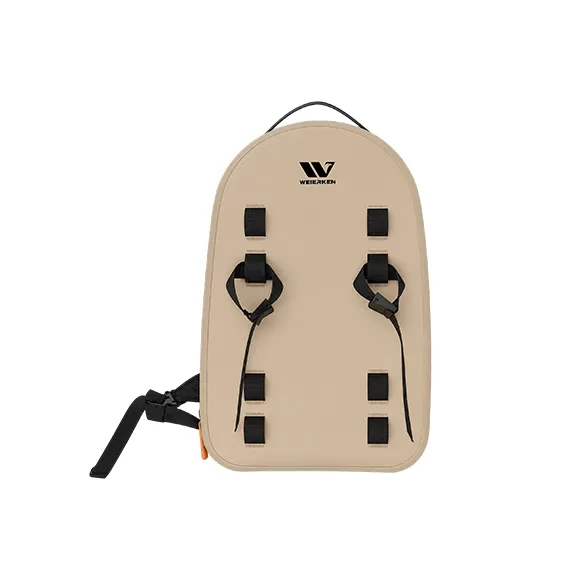
Kayak anglers venture into unforgiving environments. They navigate breaking surf, paddle through torrential downpours, and deal with constant saltwater wash over their decks. Inside their gear bags sit thousands of dollars worth of marine electronics, tackle trays, lithium batteries, and emergency radios.
In this market, a bag that merely sheds light rain is a liability. A single swamped hatch or capsized kayak can ruin an angler's equipment within seconds. When outdoor brands enter this competitive niche, their reputations ride entirely on the integrity of their gear's seams, zippers, and fabrics.
That is why partnering with the right custom kayak fishing bag manufacturer makes all the difference. At Weierken, we engineer rugged, welded waterproof storage solutions designed specifically for open-water conditions. This guide outlines the exact manufacturing benchmarks, ingress ratings, and quality control tests you should expect from a premier production partner.
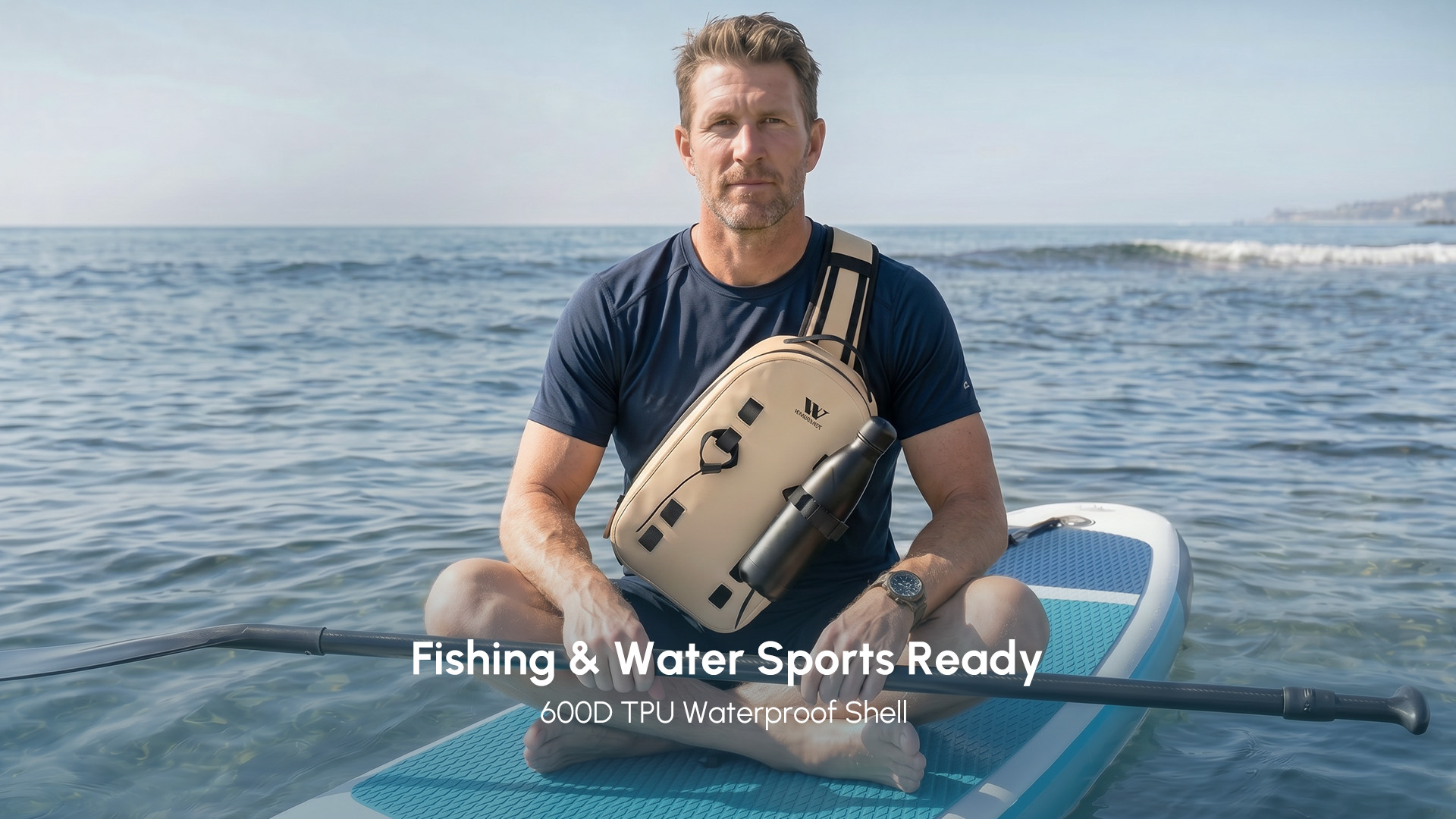
Decoding Waterproof Standards: IPX Ratings for Kayak Fishing
Many factories label bags as "waterproof" when they are merely water-resistant. For kayak fishing, confusing these two terms leads directly to customer returns and negative reviews. A seasoned OEM kayak bag supplier must build to clear Ingress Protection (IPX) ratings.
Here is how international waterproof ratings apply to on-water angling gear:
- IPX4 to IPX5 (Splash and Low-Pressure Spray): This grade handles light spray and quick rain showers. It suits outer utility pockets meant for pliers or sacrificial gear. It should never serve as the primary rating for a kayak deck or tank-well storage bag.
- IPX6 (High-Pressure Jet and Heavy Breakers): This is the bare minimum requirement for kayak deck bags. A certified IPX6 bag protects internal gear when a powerful wave crashes directly across the kayak bow.
- IPX7 (Temporary Submersion to 1 Meter for 30 Minutes): This is the benchmark for high-performance tackle bags. If an angler flips their kayak, an IPX7 bag stays completely dry inside while floating on the surface, keeping tackle and electronics safe during recovery.
- IPX8 (Continuous Deep Submersion): Reserved for mission-critical marine bags and specialized dry storage. Achieving this standard requires specialized technical materials, precision welding, and certified pressure-relief or inflation valves.
A reliable custom kayak fishing bag manufacturer will discuss these specific ratings with you early in the design phase rather than relying on vague marketing terms.
Advanced Manufacturing: Materials and Fusion Techniques
Standard stitching cannot survive the mechanical stress and water exposure of kayak fishing. Needle holes act as natural pathways for water under hydrostatic pressure. True waterproof performance demands advanced manufacturing methods.
Radio Frequency (RF) and Ultrasonic Welding
Professional waterproof kayak fishing tackle bag production relies on radio frequency (RF) or high-frequency (HF) welding. This process applies electromagnetic energy and mechanical pressure to fuse polymer-coated textiles at the molecular level.
The resulting weld forms a continuous, leak-proof seam that matches or exceeds the tensile strength of the base material. A skilled manufacturer uses custom-machined copper or aluminum dies to create clean weld lines along complex bag contours, eliminating the need for stitching on critical compartments.
Marine-Grade Fabric Selection
Saltwater, fish slime, motor fuel, and continuous UV radiation degrade inferior materials quickly. Your manufacturing partner should supply resilient composite textiles:
- Thermoplastic Polyurethane (TPU) Laminates: Double-sided 420D to 840D nylon coated with TPU is the gold standard for premium kayak bags. TPU remains flexible in near-freezing water, resists UV degradation, and contains no harmful plasticizers.
- Heavy-Duty Marine PVC Tarpaulin: 500D to 1000D PVC provides puncture resistance and abrasion defense against sharp hooks and rough kayak hulls, making it a reliable, cost-effective choice for utility gear.
- Reinforced Hypalon: Used along bag bases, mounting points, and tackle holster points where heavy friction against deck tracks occurs.
Airtight and Watertight Zipper Systems
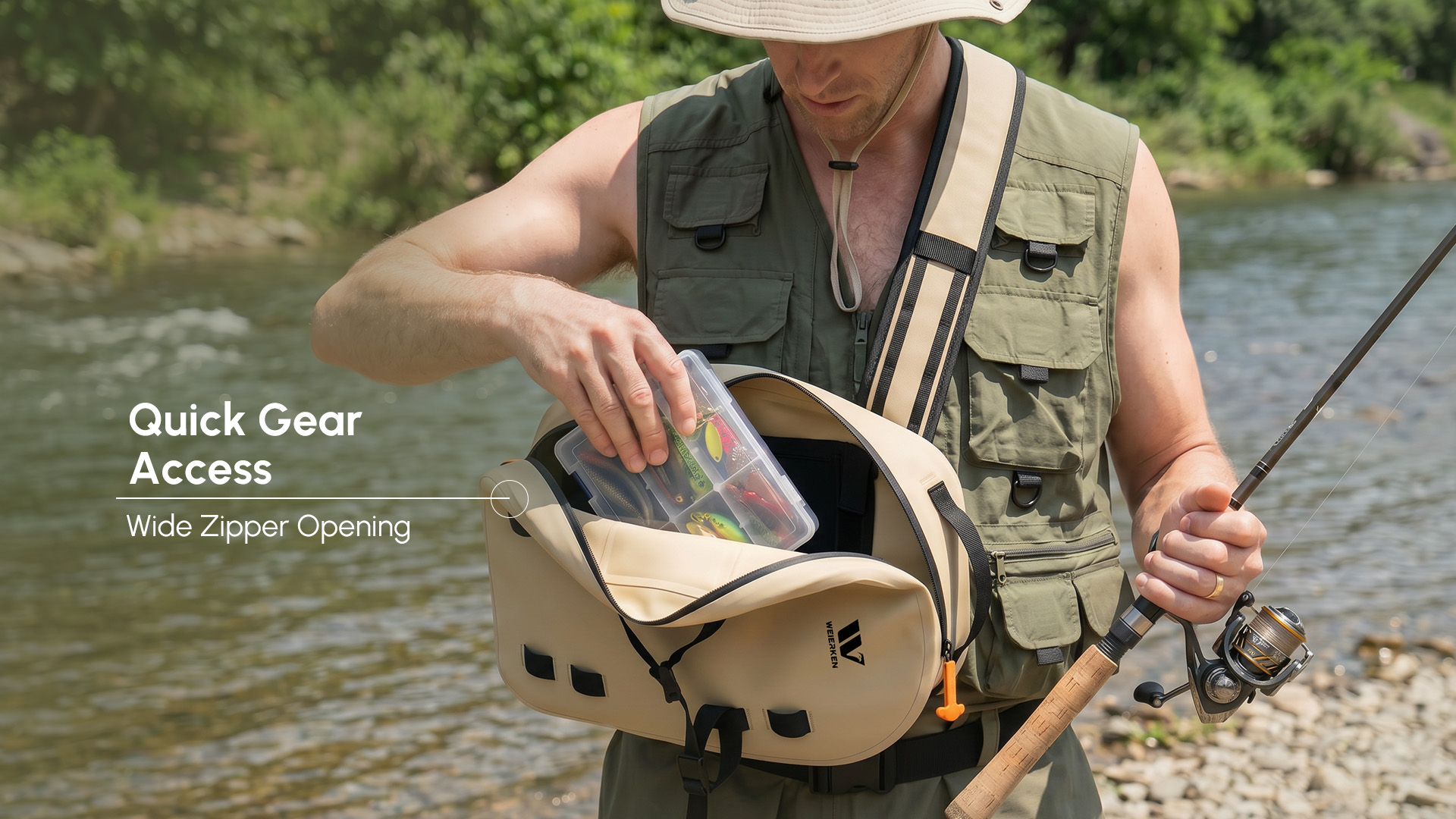
Zippers represent the most vulnerable point on any gear bag. While roll-top closures offer dependable protection, anglers often prefer quick zipper access when handling a thrashing fish.
A capable custom kayak fishing bag manufacturer integrates pressure-rated airtight zippers (such as TIZIP or specialized YKK ProSeal systems). These zippers feature vulcanized rubber lips or interlocked polyurethane teeth that seal out water under continuous submersion. The factory must secure these zippers using dedicated heat-welding fixtures rather than standard sewing threads.
Kayak-Specific Customization Capabilities
Kayak fishing involves tight spaces and specialized rigging. A general-purpose dry bag will frustrate experienced anglers. A marine grade fishing gear manufacturer must understand the sport's unique ergonomics and gear configurations.
Look for suppliers capable of engineering these purpose-built features:
- Deck and Track Anchoring Systems: Custom-welded tie-down patches equipped with marine-grade 316 stainless steel or heavy-duty acetal D-rings. These anchors secure the bag to kayak accessory tracks and bungee tie-downs during heavy chop.
- Dimensioned Tackle Tray Dividers: Internal storage compartments designed specifically around standard tackle box formats (such as 3600 and 3700 tackle trays), preventing loose lures from sliding in heavy surf.
- Rigid Non-Slip Bases: Molded EVA or heavy textured TPU bottom panels that keep the bag steady on wet, sloping kayak deck surfaces without shifting or sliding.
- Exterior Tool Holsters: Welded lash tabs, sheath sleeves, and tether eyelets for lip grippers, scissors, and line cutters, allowing anglers to grab tools one-handed.
At Weierken, our sample development team uses practical angling feedback to build structural reinforcements into high-stress contact zones, keeping external attachments secure and waterproof.
Quality Control and Factory Laboratory Testing
Never rely on visual inspections alone when sourcing waterproof gear. A top-tier custom kayak fishing bag manufacturer maintains an on-site laboratory to test both raw materials and finished products before palletizing shipments.
1. Air Pressure Decay and Bubble Testing
To verify seal integrity, technicians inflate completed bags to a specified internal pressure (typically 1.5 to 3.0 PSI). The bag is submerged in a clear water testing tank to check for escaping micro-bubbles along welded joints, fabric faces, and zipper terminals. This pressure decay test identifies pinholes before goods leave the factory floor.
2. Hydrostatic Head Testing
This test measures the water pressure a fabric can endure before water permeates through the weave or coating. For marine environments, premium TPU composites should comfortably exceed a 10,000mm to 20,000mm water column threshold.
3. ASTM B117 Salt Fog Chamber Testing
Salt spray accelerates corrosion on buckles, zipper pulls, and strap adjusters. Leading manufacturers place hardware through continuous 48- to 96-hour neutral salt-spray tests to ensure metal components will not pit, seize, or rust when exposed to ocean spray.
4. Seam Peel and Shear Strength Testing
A specialized tensile testing machine pulls apart welded test coupons to measure mechanical weld strength. The weld must exhibit a "material failure" (where the fabric tears before the weld lets go), proving the molecular bond is sound.
Checklist for Auditing an OEM Kayak Bag Supplier
Before issuing a purchase order or paying for tooling dies, audit your prospective manufacturing partner against these operational requirements:
| Audit Category | Standard Bag Factory | Top Custom Kayak Bag Manufacturer |
|---|---|---|
| Welding Equipment | Basic sewing machines; outsourced tape-sealing | In-house high-frequency (RF) and ultrasonic welding machinery |
| Zipper Integration | Standard reverse coil zippers (water-resistant only) | Specialized airtight and watertight RF-welded zippers |
| Corrosion Resistance | Standard zinc alloy or low-grade metal snaps | 316 stainless steel, heavy-duty acetal, or salt-tested coatings |
| Testing Capabilities | Manual visual checks on outer surfaces | In-house submersion tanks, pressure decay, and salt-fog chambers |
| Tooling & Mold Control | Shared tooling, loose intellectual property controls | Dedicated client-owned dies, formal NDAs, private custom molds |
Why Brands Partner with Weierken
Manufacturing dependable marine luggage requires experienced engineering, purpose-built machinery, and reliable quality control. Sourcing teams cannot afford supply chain disruptions, weak welds, or material degradation in the field.
Weierken provides turnkey OEM and ODM production for technical outdoor and marine brands worldwide. We operate precision RF welding machinery, run continuous in-house IPX submersion inspections, and maintain stable raw material channels for certified TPU and eco-conscious technical fabrics.
Our technical team reviews your early design sketches, produces quick-turn prototypes, and guides your products through every stage of production, ensuring every bag withstands heavy surf and long days on the water.
Frequently Asked Questions (FAQ)
Q1: What is the difference between a water-resistant zipper and an airtight waterproof zipper?
A1: A water-resistant zipper uses tightly woven coil teeth with a polyurethane-coated tape to deflect splashing water. An airtight waterproof zipper uses molded rubber-like teeth or continuous polymer gaskets that interlock under pressure. It seals completely against air and water, allowing full submersion without leaking.
Q2: Can a custom kayak fishing bag manufacturer accommodate low minimum order quantities (MOQ)?
A2: Yes, depending on material availability. For designs using factory-stock colors of TPU or PVC, production runs can often begin at 300 to 500 units per style. Highly customized colorways, custom fabric weaves, or unique injection-molded components usually require minimums of 1,000 units or more.
Q3: What makes TPU superior to PVC for marine fishing gear?
A3: TPU offers higher tensile and tear strength per millimeter of thickness, which reduces overall bag weight. It stays pliable in cold weather down to -40°C, resists UV cracking, and contains no phthalate plasticizers, making it easier to comply with international regulations like EU REACH and California Proposition 65.
Q4: How long does the prototype development process take for custom welded bags?
A4: Creating a functional welded prototype typically takes 14 to 21 business days. This timeframe covers making temporary RF welding dies, programming CNC cutting files, assembling internal dividers, and testing the finished sample in submersion tanks.
Q5: How do manufacturers secure external rod holders and pockets without creating leak paths?
A5: Qualified suppliers weld external mounting plates directly to the exterior surface of the bag using RF tooling before joining the main panels. Any structural sewing or riveting happens on these external patches, leaving the interior waterproof membrane completely unpunctured.
Start Your Custom Project with an Industry Specialist
Building high-performance kayak fishing luggage demands precision engineering, durable materials, and reliable sealing techniques. When you work with a specialized custom kayak fishing bag manufacturer, you safeguard your brand with products that keep gear dry in any conditions.
The Weierken technical engineering team is ready to review your tech pack, provide structural recommendations, and produce prototypes built for the water.
Contact our product team today to discuss your specifications, explore material swatches, and request a detailed OEM/ODM manufacturing quote.