


The moment a delivery driver hands over a package, or a client opens a corporate gift, a silent conversation happens. Before they taste the food, check the medication, or use the product, they judge the container. In that split second, the quality of the packaging defines the perceived value of the brand. For too long, companies have viewed thermal packaging as a mere operational expense—a throwaway commodity. This mindset is a missed opportunity.
In the competitive landscapes of food delivery, pharmaceutical cold chains, and high-end retail, the vessel is part of the product. B2B brands are increasingly realizing that their relationship with an insulated bag distributor needs to evolve. It is no longer about browsing a catalog of generic stock items. It is about leveraging Original Equipment Manufacturer (OEM) services to turn a functional necessity into a powerful brand asset.
Top-tier manufacturers like weierken have shifted their focus to meet this demand, transforming from simple factories into comprehensive solution providers. They understand that a bag is not just about keeping things cold; it is about keeping a brand promise. This article outlines a strategic framework for decision-makers to maximize the value of their distributor relationships through deep OEM collaboration.
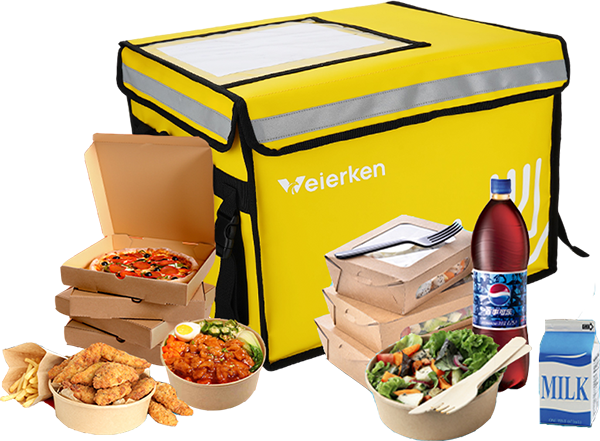
Redefining the Role: From Supplier to Strategic Brand Partner
To unlock real value, procurement leaders must change how they view the supply chain. A qualified insulated bag distributor should be treated as an extension of your marketing and product development teams. When you engage in OEM services, you are not just buying nylon and foam; you are buying brand architecture.
Beyond Simple Procurement
The traditional procurement model focuses on price per unit, lead time, and basic functionality. While these remain critical, they are the baseline, not the ceiling. A distributor with strong OEM capabilities brings engineering expertise to the table. They understand the physics of thermal retention, the durability of different stitching methods, and the tactile psychology of fabric choices.
When you collaborate with a partner like weierken, you gain access to a production ecosystem. This allows you to move away from “good enough” generic bags that dilute your brand identity. Instead, you create a proprietary product that competitors cannot easily replicate. This shift turns a cost center into a value generator, where the packaging itself contributes to customer retention.
Creating Tangible Value Points
Customized thermal bags act as a physical touchpoint in an increasingly digital world. For e-commerce grocery brands, the bag is often the only physical interaction a customer has with the company besides the food itself.
A custom OEM solution enhances the unboxing experience. A sturdy, well-designed bag signals professionalism and care. It tells the customer that the cold chain integrity was maintained, alleviating anxiety about food safety or pharmaceutical efficacy. Furthermore, high-quality custom bags are rarely thrown away. They are reused for picnics, grocery runs, and road trips.
This transforms your packaging into a sustainable, walking billboard. Every time a customer reuses your branded bag, they are endorsing your company in public spaces. This is long-tail marketing impact that standard procurement simply cannot achieve.
Critical Dimensions for Evaluating a Distributor’s OEM Capabilities
Not every insulated bag distributor is equipped to handle complex OEM requirements. Many are simply trading companies with limited control over production lines. To ensure a successful partnership, you must evaluate them based on three specific dimensions: design realization, material versatility, and project management.
Engineering Support and Design Realization
The first test of a distributor is their ability to interpret a brand’s Visual Identity (VI). It is not enough to just slap a logo on a square bag. True OEM capability involves integrating brand elements into the structure of the product.
Does the distributor have an in-house design team or industrial engineers? Can they suggest a zipper pull shape that mimics your logo? Can they dye the webbing of the handles to match your exact Pantone color?
You need a partner who can take a rough concept and apply “Design for Manufacturing” (DFM) principles. They should be able to tell you, “If we move this seam here, the bag becomes stronger and cheaper to produce, without losing the aesthetic appeal.” Weierken, for example, emphasizes this consultative approach, ensuring that the design on the screen translates perfectly to the factory floor.
The Breadth of the Material and Craftsmanship Library
A robust OEM partner acts as a curator of materials. The “Material Library” is where the magic happens. You need options that align with your brand positioning and budget.
- Fabric: Can they source 1680D ballistic nylon for premium durability, or Tyvek for a trendy, paper-like look? Do they offer RPET (recycled plastic) fabrics for ESG-focused brands?
- Insulation: It’s not just about aluminum foil. Do they offer high-density EPE foam, PEVA linings for leak-proof performance, or advanced non-woven thermal layers?
- Printing: A good distributor offers a spectrum of customization, from silk screening and heat transfer for complex graphics to embroidery and rubber patches for a luxury feel.
If a distributor tries to force you into a “one-size-fits-all” material choice, they lack the OEM depth required for true customization.
End-to-End Project Management
The most common failure point in OEM projects is communication. A professional insulated bag distributor must have a standardized workflow. This includes a clear path from concept to delivery.
You should look for a partner that assigns a dedicated project manager. This person bridges the gap between your marketing team and the factory floor. They should provide Gantt charts for production, handle quality control (QC) inspections, and manage logistics. The ability to provide real-time updates on prototyping and production milestones is what separates a professional partner from a risky vendor.
The Strategic “Four-Step” Path to OEM Success
Once you have selected a capable insulated bag distributor, the execution phase begins. To minimize risk and maximize output quality, follow this four-step pathway.
Step 1: Defining the Brief and Objectives
Before contacting the supplier, clarify your internal goals. Are you creating a promotional giveaway, a retail product, or a functional delivery vessel?
Create a comprehensive “Requirement Brief.” This document should include:
- Target Audience: Who is carrying this bag? A corporate executive or a grocery delivery driver?
- Usage Scenario: How long must the ice retention last? 2 hours or 12 hours? Does it need to be collapsible?
- Brand Guidelines: Vector logos, Pantone codes, and “mood board” images of styles you like.
- Budget & Quantity: Be transparent about your target price (FOB) and your estimated annual volume.
This clarity allows the distributor to provide accurate feasibility assessments immediately.
Step 2: Collaborative Design and Development
This is the co-creation phase. Engage in a deep-dive workshop with the distributor’s R&D team. This is where you lean on their expertise.
If you are a food delivery brand, the distributor might suggest a specific inner lining that is easier to wipe clean, reducing bacterial growth. If you are a fashion retailer, they might suggest a matte finish exterior that feels more premium.
During this stage, discuss the “Cost Structure.” Ask the distributor how different design choices impact the unit price. Sometimes, a small change in bag dimension can maximize fabric yield and significantly lower costs.
Step 3: Rigorous Sampling and Validation
Never proceed to mass production without a “Golden Sample.” This is the physical prototype that serves as the contract standard.
When you receive the sample from your insulated bag distributor, test it aggressively:
- Thermal Testing: Load it with ice packs and measure temperature changes over time.
- Load Testing: Fill it with weights exceeding your normal load and test handle strength.
- Visual Check: Is the logo aligned? Is the stitching straight? Does the zipper glide smoothly?
This is the time for critique. Partners like weierken expect feedback at this stage to ensure the final run is flawless.
Step 4: Scale Production and Brand Storytelling
Once the Golden Sample is signed off, mass production begins. But the collaboration shouldn’t stop there. Work with the distributor to gather technical data for your marketing.
Ask for certifications (like FDA approval for linings or GRS for recycled materials). Use this data to tell a story on your website or packaging. “This bag is made from 10 recycled plastic bottles” is a powerful message that adds value to the product.
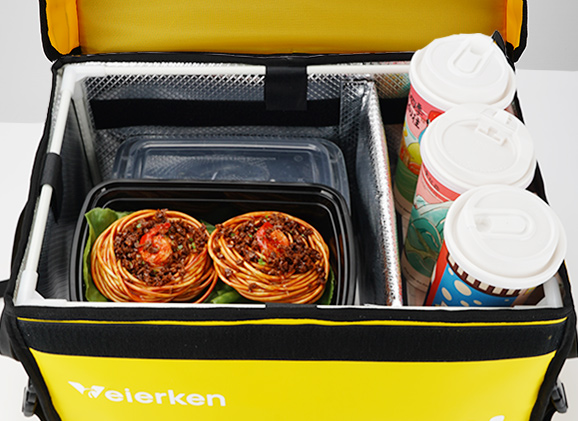
Quantifying ROI: The Business Case for OEM Customization
Investing in OEM requires capital and time. However, the Return on Investment (ROI) is measurable and significant when calculated correctly.
Direct Costs vs. Perceived Value
It is easy to compare the price of a custom bag against a stock bag and see the custom option as more expensive. However, you must factor in the “Post-Processing” costs of stock items (buying generic bags, then paying a third party to screen print them, or applying stickers).
More importantly, calculate the “Brand Premium.” A high-quality custom cooler bag can often be sold as a retail item or used to justify a higher tier of service. For example, a meal prep company offering a “Premium Starter Kit” with a high-end custom bag can charge significantly more than the cost of the bag itself.
Indirect Value and Long-Term Gains
The indirect ROI comes from marketing and ESG alignment.
- Marketing Efficiency: A durable branded bag generates thousands of impressions over its lifespan. The Cost Per Impression (CPM) of a reusable bag is often lower than digital ads or billboards.
- ESG Scoring: Using an OEM partner to source certified sustainable materials contributes to your company’s Environmental, Social, and Governance goals. This is increasingly important for attracting investors and corporate clients.
- Customer Loyalty: High-quality “swag” builds reciprocity. Customers feel valued, which increases retention rates (LTV).
The shift from buying generic thermal bags to developing a custom OEM solution is a strategic leap. It requires viewing your insulated bag distributor not as a vendor, but as a brand architect. By leveraging their engineering capabilities, material libraries, and project management skills, you transform a simple carrier into a sophisticated marketing tool.
The market is crowded. Brands that invest in the details—the tactile feel of a handle, the thermal performance of a liner, the sharpness of a logo—are the ones that stand out. Whether you are scaling a grocery delivery giant or launching a boutique cold-brew coffee brand, the right partner makes all the difference.
Companies like weierken have spent years refining the art of OEM manufacturing to help brands achieve exactly this differentiation. The potential to elevate your brand is sitting in your supply chain, waiting to be unlocked.
Ready to transform your packaging strategy?
If you are looking for a partner who understands the nuance of brand identity and the science of thermal insulation, we are here to help.
[Contact Us Today for a Custom OEM Inquiry]
Frequently Asked Questions (FAQ)
Q1: What is the typical Minimum Order Quantity (MOQ) when working with an insulated bag distributor for a fully custom OEM project?
A1: MOQs for fully custom OEM projects generally start around 500 to 1,000 units. This allows the distributor to source specific fabrics and set up custom printing molds cost-effectively. However, some distributors may offer lower tiers (e.g., 300 units) for simpler customizations, though this usually comes with a higher per-unit cost.
Q2: How long does the development process take from design concept to final delivery?
A2: A standard timeline is usually 30 to 45 days. This breaks down into: 5-7 days for design and prototyping, 3-5 days for sample shipping and approval, and 20-30 days for mass production. Shipping times vary based on whether you choose air freight (fast) or ocean freight (economical).
Q3: Can an insulated bag distributor help us source sustainable or eco-friendly materials?
A3: Yes, reputable distributors are increasingly focused on sustainability. They can source Recycled PET (rPET) made from plastic bottles, biodegradable non-woven fabrics, or natural fibers like jute and cotton. Always ask for GRS (Global Recycled Standard) certification to verify the authenticity of the materials.
Q4: We have a logo, but we don’t have a technical bag design. Can the distributor help?
A4: Absolutely. A professional distributor typically has an in-house design team. You can provide your logo and a general idea (e.g., “a 6-can lunch cooler”), and they will create digital mockups and technical drawings for your approval before any physical sampling begins.
Q5: How do I ensure the insulation quality meets my cold chain requirements?
A5: You should specify your thermal retention needs in your initial brief (e.g., “keep frozen for 4 hours”). The distributor will then recommend the appropriate foam thickness (e.g., 5mm vs. 10mm EPE) and lining material. Always request a physical sample to perform your own temperature retention tests under real-world conditions before placing a bulk order.


