

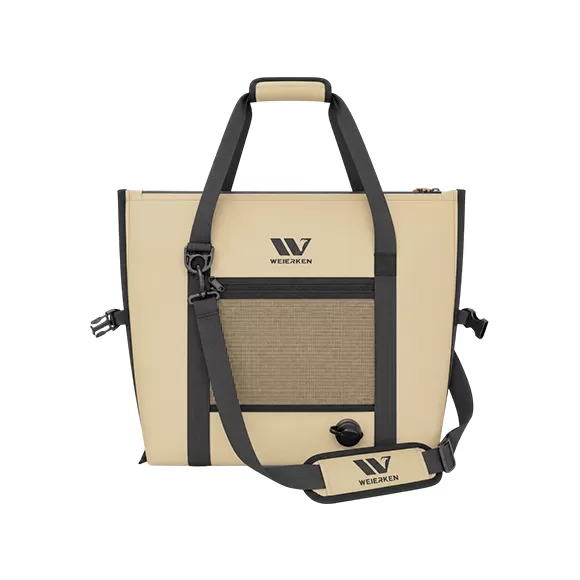
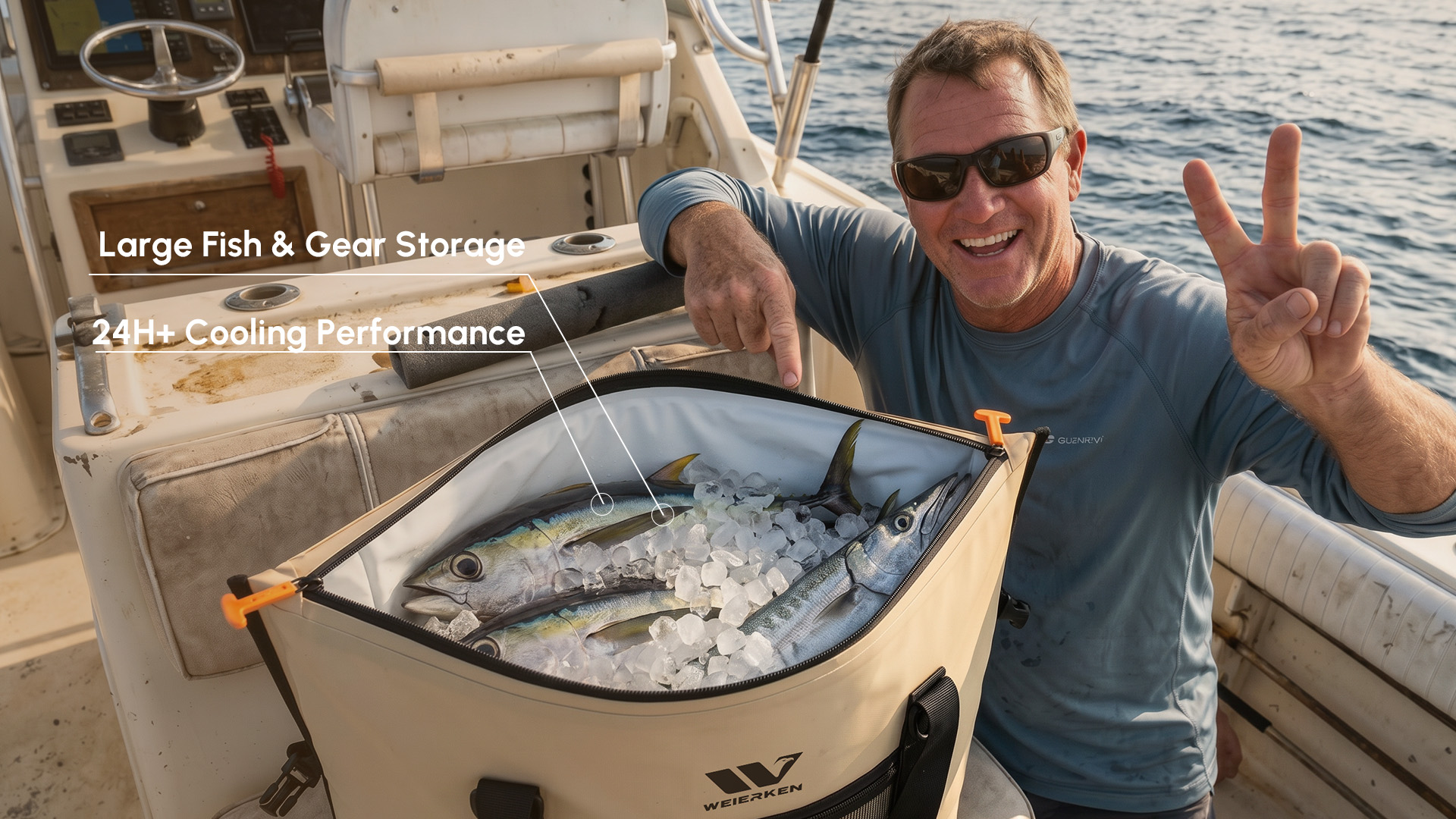
The offshore angling and kayak fishing sectors are booming worldwide. Anglers are ditching rigid, space-consuming ice chests for heavy-duty marine kill bags that fold flat when empty and expand to hold trophy-sized catches. This surge creates a lucrative opportunity for outdoor equipment brands, tackle distributors, and private-label sellers.
However, manufacturing a dependable marine-grade fish bag is vastly different from producing a standard picnic cooler. Sourcing from an unqualified vendor often leads to catastrophic failures: leaking bloody water across a luxury boat deck, dorsal fins puncturing weak liners, handles ripping off under a hundred-pound load, and ice melting within hours under a blistering sun. Furthermore, unexpected customs duties can quickly wipe out profit margins.
To protect your brand reputation and bottom line, you must vet potential suppliers using strict industrial benchmarks. Companies like Weierken have set high benchmarks in this space by combining marine engineering with precision manufacturing. Here are the seven non-negotiable manufacturing standards every buyer must demand from a custom fish cooler bag OEM.
The 7 Pro Manufacturing Standards for Custom Fish Cooler Bag OEMs
1. High-Frequency RF Welding for 100% Leak-Proof Seams
Traditional sewn seams rely on thousands of needle punctures. In an offshore cooler bag, these tiny holes quickly become failure points. Fish blood, salt water, and melting ice will seep through stitching, creating foul odors and staining boat gelcoats.
A premier RF welded cooler bag factory does not rely on simple needles and thread for the containment tub. Instead, the factory uses Radio Frequency (RF) or High-Frequency (HF) welding equipment. This process applies electromagnetic energy and targeted pressure to fuse PVC or TPU molecules at the atomic level.
When auditing an insulated fish bag OEM/ODM, verify whether they build custom RF molds for complex geometries. Flat seams are simple. The real test lies in welding circular ends, 3D wedge bottoms for kayaks, and gusseted corners without thinning the material or leaving micro-creases where leaks can hide.
2. High-Density Closed-Cell Insulation for 48–72 Hour Ice Retention
Cheap Bolsas térmicas often cut corners by utilizing standard open-cell polyurethane sponge. This is a fatal flaw for marine applications. Open-cell foam acts like a sponge; it absorbs melted ice and foul blood, holds bacterial growth, and loses its insulating ability once compressed.
Professional offshore kill bags demand closed-cell foam—specifically high-density NBR, EVA, or cross-linked PE foam. Closed-cell structures contain billions of sealed micro-bubbles that resist moisture absorption even under heavy pressure.
- Thickness benchmark: Aim for 0.5-inch (12.7mm) walls for day-trip kayak bags and 0.75-inch to 1-inch (25mm) walls for offshore canyon fish bags.
- Verified cold retention: Insist on seeing third-party thermal imaging and ice-melt test data proving the bag holds ice for at least 48 to 72 hours in ambient temperatures exceeding 90°F (32°C).
3. Commercial-Grade, UV-Treated, and Puncture-Proof Fabrics
A pelagic fish like a wahoo, tuna, or striped bass features razor-sharp dorsal spines, gill plates, and teeth. Standard vinyl skins tear on the first trip out. At the same time, marine deck environments subject gear to direct UV exposure, salt brine, and fuel residues.
A reputable heavy-duty offshore cooler bag supplier builds bags using dual-sided, knife-coated PVC tarpaulin ranging from 500D to 1000D, or heavy-duty thermoplastic polyurethane (TPU). Key raw material specifications should include:
- Puncture and tear resistance: Minimum tensile strength exceeding 2500N/5cm to eliminate puncture risks from spines.
- Marine environmental stabilization: Anti-UV inhibitors (Grade 4.5+ after 1,000 hours UV exposure) and anti-fungal/anti-mildew additives.
- Certified food-grade liner: The interior fabric must comply with FDA, REACH, or RoHS food contact standards to keep fish meat pristine for consumption.
4. Wraparound Webbing Harness and Dynamic Load-Bearing Engineering
A large 60-inch offshore kill bag filled with three yellowfin tunas, crushed ice, and brine can easily weigh upwards of 150 to 200 pounds (70–100 kg). If a factory merely sews handle webbing into the top seam allowance, the seams will rip open the moment two deckhands lift the bag.
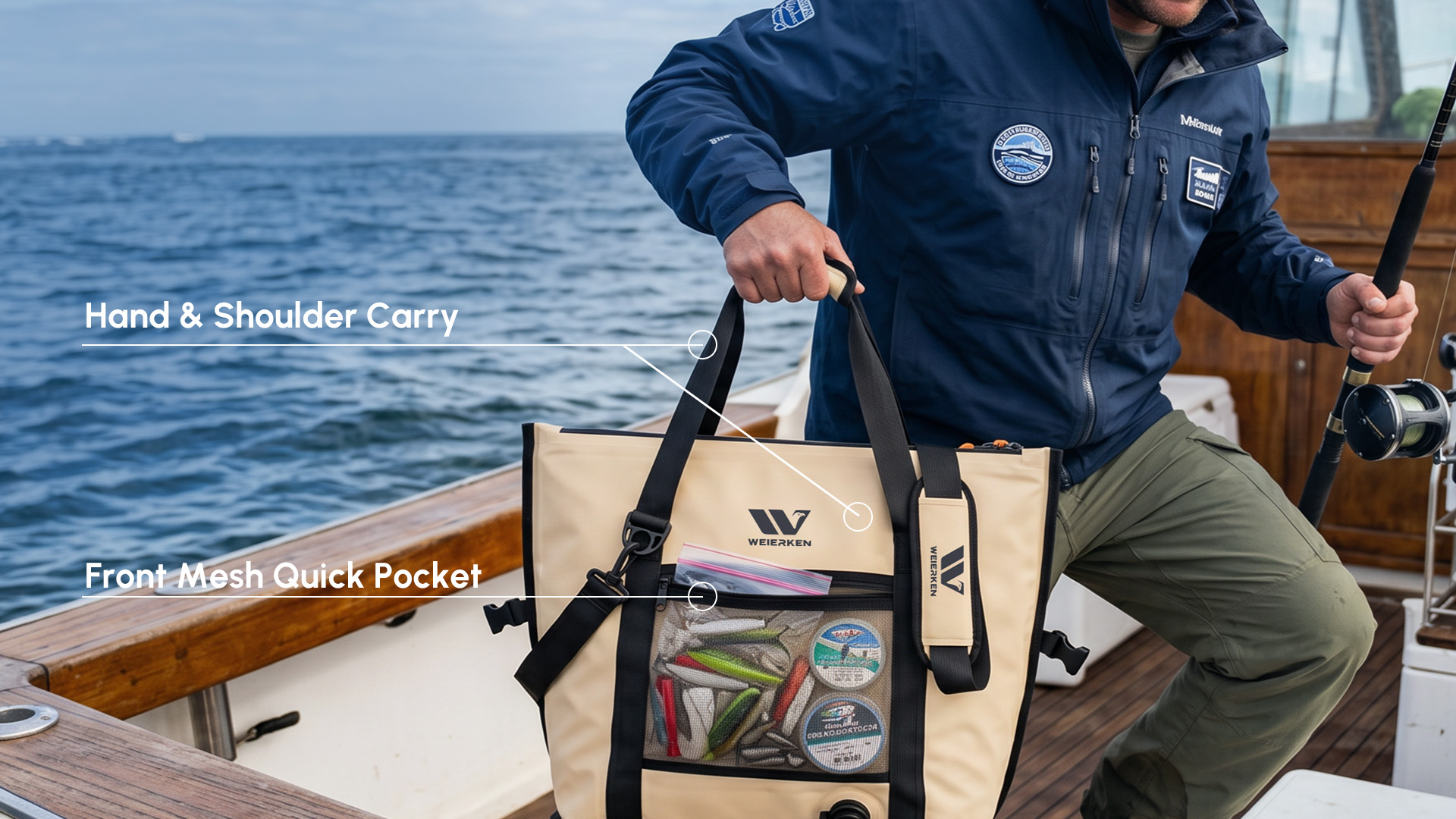
Look for an engineering setup that uses a continuous wraparound harness. Heavy-duty, military-grade polypropylene or polyester webbing must cradle the underside of the bag completely, transferring the physical load from the seams directly to the webbing loop.
Every critical junction requires reinforced internal backing plates, heavy Box-X stitching using bonded marine thread, and supplementary RF-welded structural patches. Ask your factory for dynamic tensile test reports demonstrating that lift handles can endure double their maximum rated payload without thread breakage.
5. Saltwater-Resistant Hardware and Leak-Proof Drain Outlets
Salt spray destroys low-grade metal sliders within weeks. Salt crystals jam lightweight zippers, rendering an otherwise solid cooler bag useless. Even worse, poorly engineered drain plugs leak blood onto boat decks during transport.
Examine the supplier's hardware specifications closely:
- Zipper systems: The OEM must supply corrosion-free #10 or #12 oversized marine nylon zippers with molded teeth, or 100% airtight/watertight sliding tooth zippers (comparable to drysuit closures).
- Salt spray testing: All metal parts (such as D-rings, slider bodies, and clips) must pass an ASTM B117 salt spray test for at least 72 hours without pitting or red rust.
- Heavy-duty drain plugs: Reliable marine bags incorporate a threaded, low-profile screw drain plug with an integrated rubber O-ring seal, allowing rapid washouts without uncontrolled dripping.
6. Rapid R&D Turnaround and Custom Ergonomic Prototyping
Modern fishing is specialized. A kayak fisherman targeting kingfish needs a tapered, low-profile bow bag that stays secure in choppy surf. A center-console owner wants a slim, vertical transom bag that leaves clear deck space.
Choose a custom marine kill bag manufacturer equipped with an internal R&D sample room and dedicated CAD pattern makers. Your partner should turn technical design sheets or 3D CAD files into functional physical prototypes within 14 to 21 business days. Fabricante Experimentados will also optimize dimensions to cut material waste during automated laser cutting, passing the unit savings back to you.
Versatile original equipment manufacturers, including Weierken, actively suggest structural tweaks during sampling to streamline assembly and enhance durability.
7. Dual-Facility Footprint and Defect-Free Quality Assurance
Global supply chain disruptions and geopolitical trade tariffs can decimate an importer's balance sheet overnight. Sourcing strictly from regions subjected to heavy import tariffs erodes your wholesale margins.
Evaluate whether your supplier runs a dual-hub production strategy (such as manufacturing plants in China paired with automated production lines in Southeast Asian hubs like Cambodia ). This gives you the flexibility to route orders to avoid trade friction and lower landed tariff costs.
Furthermore, inspect their production floor quality control processes. A trustworthy factory maintains an AQL (Acceptable Quality Limit) standard of 1.5 or better, with documented stations for:
- 100% fabric hydrostatic head pressure testing.
- Positive air pressure decay testing to confirm airtight zipper and seam integrity.
- Handle pull-testing up to simulated dynamic failure limits.
Red Flags to Avoid When Selecting a Fish Cooler Bag Supplier
Spotting a poor manufacturing partner early saves months of delays and thousands of dollars in lost inventory. Steer clear of suppliers displaying these warning signs:
- Concealed stitched seams: The supplier calls the product "watertight," but uses needle stitching hidden under glued seam tape inside the wet zone. Tape eventually peels in hot, salty environments.
- Absence of testing equipment: The factory cannot show you an in-house tensile tester, fabric hydrostatic machine, or salt-fog chamber.
- No outdoor marine portfolio: They primarily produce promotional canvas totes or basic nylon schoolbags and treat insulated marine gear as a side project. They do not understand the abuse gear takes on an offshore boat.
- Vague foam specifications: They list the insulation simply
as "sponge" or "standard foam" without providing density ratings (kg/m³), cell
type, or thermal conductivity metrics.
Checklists for Requesting a Quote (RFQ) from a Custom Fish Cooler Bag OEM
To receive an accurate and competitive quotation from an OEM factory, provide a thorough Request for Quotation (RFQ) packet. Include the following details:
1. Dimensional & Form Factor Data
- Overall external and internal dimensions (Length x Width x Height).
- Configuration shape: Standard rectangular, wedge (kayak bow), round bottom, or flat envelope style.
- Internal capacity targets (gallons or liters).
2. Material & Construction Breakdown
- Outer Shell: Fabric base (e.g., 840D TPU vs. 1000D PVC Tarpaulin), coating weight, matte or gloss finish, UV resistance level.
- Insulation: Foam chemistry (EVA/NBR/PE), closed-cell certification, density, and thickness (e.g., 20mm walls).
- Inner Liner: Puncture resistance target, color (white helps spot cleanliness; silver reflects radiant heat), food-grade certification.
- Seam construction: High-frequency RF welded seams vs. taped mechanical seams.
3. Hardware & Accessories
- Elección de cremallera: Airtight waterproof zipper vs. heavy-duty #10 marine nylon coil zipper with splash flap.
- Drainage: Threaded twist-drain valve location and thread size.
- Webbing & Handles: Tensile load specifications, padded neoprene carry wraps, and tie-down D-ring positions.
4. Compliance, Volume, and Logistics
- Target production volumes (initial trial run MOQ vs. projected annual volume).
- Testing certifications needed (REACH, RoHS, Prop 65, FDA).
- Desired shipping terms: FOB, CIF, or full DDP (Delivered Duty Paid) to your distribution facility.
Frequently Asked Questions (FAQ)
Q1: What is the typical MOQ for a custom fish cooler bag project?
A: Because technical PVC tarpaulin and closed-cell foam require minimum production runs from raw material mills, custom colorways usually start at an MOQ of 300 to 500 units per size. If you choose a factory's stock material colors (typically white, marine blue, or military gray), entry MOQs can drop to 100–200 units for your initial order.
Q2: Why is RF welding mandatory over conventional sewing for marine kill bags?
A: Sewing punches thousands of needle holes through your fabric layers. Fish blood, melted ice, and salt water inevitably leak through these tiny holes onto your deck, creating an unhygienic environment. RF welding uses high-frequency energy to melt and join the synthetic layers together, creating a continuous, seamless seal that is completely leak-proof.
Q3: How do you balance insulation thickness with bag portability?
A: Bag balance depends on the end-use scenario. For wholesale kayak fish cooler bag lines, storage space is tight; 0.5-inch (12.7mm) high-density closed-cell foam provides the right mix of flexibility and 24-to-36-hour cooling. For offshore big-game canyon bags, where tuna remain on ice for days, specify 0.75-inch to 1-inch foam combined with heavy-duty exterior tarpaulin.
Q4: What certifications should I require from an insulated fish bag OEM/ODM?
A: Look for ISO 9001 certification for quality control systems, BSCI or SMETA audits for ethical manufacturing, and material-level compliance certificates including REACH, RoHS, California Proposition 65, and FDA standards for food-contact safety on internal liners.
Q5: Can an OEM help reduce import tariffs on fish bags into North America or Europe?
A: Yes. Tier-one manufacturers often operate dual-hub production footprints. By maintaining production facilities in both mainland China and tariff-exempt Southeast Asian countries such as Cambodia, suppliers can legally optimize certificates of origin, substantially reducing landed import duties for Western brand owners.
Conclusion & Call to Action
Selecting the right custom fish cooler bag OEM is not about hunting down the absolute lowest unit cost. It is about locating an engineering-focused manufacturing partner with genuine marine expertise, advanced RF welding capabilities, and a dependable international supply chain.
When you demand high-density closed-cell insulation, puncture-resistant commercial fabrics, wraparound structural webbing, and rigorous leak testing, you deliver a marine kill bag that stands up to the harshest offshore conditions—protecting your customers' catch and your brand's standing in the market.
Are you developing a brand-new marine cooler line or looking to upgrade your current production quality? Alcance out to the technical team at Weierken today. We can review your specifications, deliver precision CAD revisions, dispatch physical material sample rings, or generate a competitive DDP quotation tailored directly to your brand's growth goals.