


A single degree of temperature deviation can ruin a fresh food shipment. In the meal kit sector, broken cold chains lead to bacterial growth, soggy packaging, and immediate customer cancellations. If an insulated liner leaks melted ice gel onto raw ingredients, the brand pays the price in food safety liabilities.
Sourcing teams often face a major hurdle: the "Golden Sample" paradox. A supplier sends a flawless, hand-crafted prototype, but the actual production run fails. Foams arrive half as dense as specified, seams separate under load, and stitched liners leak fluid inside delivery vans.
You cannot verify manufacturing integrity from a showroom or a website. You must audit the production line directly. This guide details the five factory stations and operational standards required to manufacture reliable insulated bags for meal kit delivery, highlighting operational benchmarks used by vetted manufacturers like Weierken.
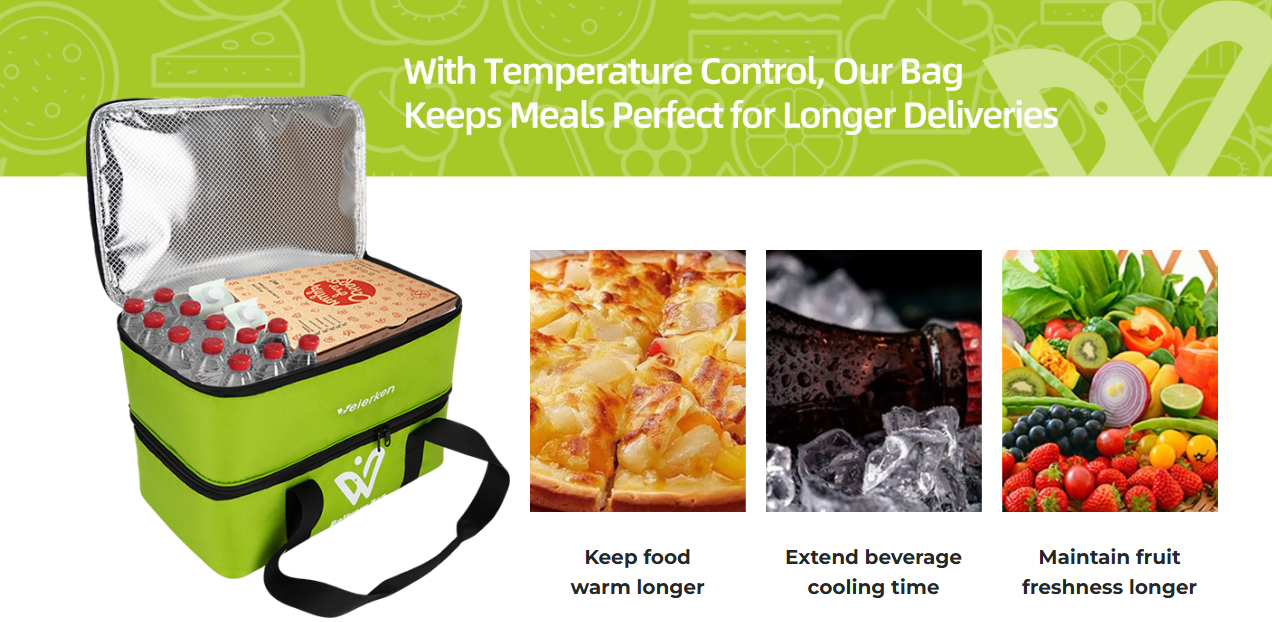
Section 1: The 5-Station Factory Audit Checklist
When auditing an OEM insulated delivery bag manufacturer, walk the floor in sequence. Track how materials move from raw receiving to final packing. Pay special attention to these five distinct processing stations.
Station 1: IQC & Raw Material Verification
Thermal performance starts with raw material integrity. Cheap insulation collapses under transit pressure, destroying the air pockets needed to stop conductive heat transfer.
Insulation Core Inspection: Verify the density and closed-cell structure of the expanded polyethylene (EPE), expanded polypropylene (EPP), or EVA foam. The factory must use thickness gauges and density scales on every incoming batch.
Radiant Barrier Quality: Inspect the aluminum foil or metallized polyester film (MPET). Bend the foil repeatedly by hand; poor-quality laminates crack, delaminate from the substrate, and lose their reflective properties.
Shell Durability: Check the outer fabric—typically 600D, 900D, or 1680D Oxford polyester. Confirm that it carries a uniform water-resistant polyurethane (PU) or thermoplastic polyurethane (TPU) backing to repel rain and road grime.
Food Contact Safety: Demand certified FDA or REACH compliance sheets for all interior lining materials. Liners must be free from toxic plasticizers, lead, and recycled industrial plastic scrap that can off-gas into grocery items.
Station 2: High-Frequency Heat-Welding & Leakproof Testing
Sewn liners are unacceptable for liquid-tight cold transport. Traditional needle holes allow melted gel packs or condensation to seep into the insulation core, turning the bag into a breeding ground for black mold.
A capable commercial food cooler bag supplier relies on high-frequency (Radio Frequency / RF) or ultrasonic welding machines for interior liners made of PEVA or TPU. RF welding fuses plastic sheets at the molecular level without thread or adhesive.
Field Test on the Line: Pull a welded liner directly from the machine before outer assembly. Fill it with five liters of water, seal or support the edges, and apply a static 10-kilogram weight for ten minutes. If moisture shows at the corner seams, reject the batch. The heat-weld dwell time, pressure, or radio frequency needs calibration.
Station 3: Stitching & Structural Reinforcement
Entrega personnel do not handle parcels gently. They lift bags by a single handle, throw them into cargo vans, and pull them across pavements. Mechanical stress concentrates on handle anchor points, zippers, and base seams.
Box-X Stitching: Ensure all webbed handles attach to the body fabric using complete Box-X stitch patterns rather than simple linear seams.
Bar-Tack Reinforcement: Look for automated bar-tacking machines at every zipper stop, handle termination, and shoulder strap joint. Bar-tacking groups dense stitches tightly together to halt seam tear-out under dynamic shock loads.
Thread Selection: Check the thread inventory. Quality operations use bonded nylon or high-tenacity polyester threads treated with anti-wicking and anti-mildew agents. Low-cost cotton-blend threads rot quickly inside refrigerated distribution centers.
Station 4: In-House Thermal & Stress Testing Laboratories
A true manufacturer does not guess thermal retention—they measure it scientifically. Look for dedicated, climate-controlled testing facilities directly on the factory premises.
The facility must house an environmental test chamber capable of maintaining an ambient 35°C to 40°C to simulate extreme summer conditions. Inside the chamber, the team should place insulated bags for meal kit delivery loaded with actual Phase Change Materials (PCMs) or water ice packs. Calibrated thermocouple data loggers should track interior temperatures, proving the bag keeps contents between 2°C and 8°C for 24, 48, or 72 hours.
Look for mechanical testing rigs alongside thermal chambers. Reliable plants use automated zipper fatigue testers running 5,000 continuous cycles, drop-test platforms for fully loaded bags, and tensile pull-testers that measure strap tear strength.
Station 5: Dedicated Prototyping & Rapid Iteration Unit
Custom packaging requirements change rapidly. When you modify meal box dimensions or switch to a new ice-pack geometry, the factory must adapt quickly without halting mass production lines.
Verify that the vendor runs an autonomous sample room staffed by dedicated pattern makers and sample-line machinists. Weierken maintains an independent engineering pattern shop that delivers fully functional, custom-dimensioned prototypes within 3 to 7 days, complete with material spec sheets for real-world route testing.
Section 2: Auditing Factory Quality Systems & Management
Clean workstations mean nothing if the quality assurance framework lacks teeth. Evaluate how the management team monitors errors and enforces standard operating procedures (SOPs).
First-Pass Yield (FPY) Realities
Ask the plant manager for their rolling 12-month First-Pass Yield logs on the production lines. A low-tier workshop operates around an 85% to 90% FPY, relying on heavy post-assembly rework to fix defects before packing. Reworked bags often have double needle holes, damaged coatings, and weak seams.
Tier-one factories maintain a minimum 98% to 99% FPY through rigorous three-tier controls: Incoming Quality Control (IQC), In-Process Quality Control (IPQC), and Final Quality Control (FQC). By inspecting pieces at every assembly station, Weierken delivers a verified 99.5% first-pass yield, ensuring high consistency across wholesale production runs.
Needle Detection and Foreign Object Control
Broken sewing needles pose a major threat to food delivery packaging. A needle fragment lodged in an interior pocket can puncture meal trays or injure end consumers unpacking their dinner.
Your audit must verify two non-negotiable metal control steps:
Needle Exchange Logs: Operators who break a machine needle must recover all broken pieces, match them against a diagram on an index card, and submit them to the supervisor before receiving a replacement needle.
Tunnel Metal Detectors: Every finished insulated meal kit bag must pass through an automated, calibrated tunnel metal detector directly before polybagging and carton packing. Check the calibration logs to verify the sensitivity picks up ferrous particles down to 1.0mm.
Section 3: Social Compliance, ESG & Sustainability Audits
Subscription meal platforms face strong consumer scrutiny regarding environmental impacts and labor ethics. Sourcing managers cannot risk supply contracts with operations that violate labor laws or misrepresent green claims.
Ethical Labor Accreditations
Audit the factory's third-party social compliance reports. Valid, up-to-date BSCI (Business Social Compliance Initiative) or SEDEX (SMETA) audit documents prove that the factory adheres to fair wage structures, limits working hours, maintains clean fire egress routes, and avoids forced or underage labor.
Recycled Material Traceability (GRS Certification)
Many meal delivery enterprises require shells made of recycled polyethylene terephthalate (rPET), derived from post-consumer plastic bottles. However, greenwashing is common across international textile markets.
Review the factory's Global Recycled Standard (GRS) certification. Confirm that they provide legitimate Transaction Certificates (TCs) for every raw fabric lot. A genuine GRS-certified bag factory traces the chain of custody from the certified yarn re-cycler straight through weaving, dyeing, cutting, and export assembly.
Calidad Process Control (ISO 9001)
Check the factory's ISO 9001 registration. Review corrective action records from internal audits. A system that truly complies with ISO standards shows documented root-cause investigations, engineering corrections, and staff retraining rather than simple cleanup logs.
Section 4: Supply Chain De-risking: Production Redundancy & Logistics
Peak delivery seasons—such as the winter holidays or New Year marketing pushes—can strain unprepared suppliers. If your manufacturer operates at peak capacity year-round, sudden demand spikes cause late shipments, missed cutoffs, and empty distribution hubs.
Dual-Hub Manufacturing Strategy
Relying on a single manufacturing location leaves buyers vulnerable to trade disputes, regional lockdowns, and sudden tariff increases. Leading supply chain operators favor dual-manufacturing strategies that balance technical development with cost efficiency.
Weierken provides an integrated China and Cambodia dual-facility footprint. Technical prototyping, material engineering, complex tooling, and fast-turn runs take place at the China facility. Once patterns are finalized, large-volume, price-sensitive production shifts to the Cambodia plant.
This dual-hub approach offers distinct financial and operational benefits:
Tariff Optimization: Goods imported from Cambodia into key Western markets often qualify for preferential tariff treatments, lowering Total Cost of Ownership (TCO) compared to standard shipments.
Capacity Balancing: If one facility faces localized raw material backlogs or labor shortages, orders transfer smoothly without disrupting delivery schedules.
End-to-End Delivery Duty Paid (DDP) Fulfillment
Evaluate the factory's export logistics experience. Managing freight forwarders, customs clearances, marine insurance, and inland drayage diverts focus from your core delivery operations.
An audit should confirm that the supplier can execute complete DDP terms. Verify that their logistics team maintains direct contracts with major ocean carriers, handles single-invoice customs declarations, and schedules direct deliveries into regional fulfillment centers without surprise port fees or documentation holds.
Section 5: Step-by-Step Remote Factory Audit Checklist
When travel constraints prevent on-site visits, execute a thorough remote audit using real-time video, live inspection workflows, and document checks.
| Audit Dimension | Inspection Action | Acceptance Criteria |
|---|---|---|
| Live Video Line Walk | Conduct an unannounced, live video walk through the sewing and RF welding lines. | Clean workspaces, no finished products on bare concrete floors, operational calibration tags on machines. |
| Material Inspection | Review Certificates of Analysis (COAs) for current production fabric and foam lots. | Verified densities match product design files; no substitution of open-cell polyurethane foam. |
| Liner Leak Testing | Instruct the line supervisor to pick two random welded liners, fill them with water, and compress them live on camera. | Zero droplet seepage at RF weld seams under 10kg load for 10 consecutive minutes. |
| Seguridad & Metal Screening | Watch the needle detection station run three finished bags with a test wand card. | Detector alarm triggers and belt halts upon spotting the 1.0mm ferrous test piece. |
| Credentials Check | Verify audit certificate IDs directly in the BSCI, SEDEX, and GRS supplier databases. | Certificate numbers match company registration details; zero major non-conformances on record. |
Frequently Asked Questions
Q1: What are the biggest red flags when auditing an insulated Entrega bag factory?
A1: The three most critical warning signs are:
Sewing instead of RF welding interior liners, which leads to leaks.
Lacking calibrated thermal testing chambers, indicating they do not verify cold chain retention specs.
Missing automated needle detection machinery, creating food-safety and injury risks.
Q2: How do you verify the leak-proof capability of an insulated bag liner?
A2: Perform a static hydrostatic test. Take an assembled leakproof meal Entrega bag or welded liner, pour in room-temperature water mixed with a trace dye to a depth of roughly 10 cm, and place a 5-to-10 kg weight over it. Inspect the corners and heat seals after 15 minutes; no colored liquid should penetrate the seams.
Q3: Does Weierken accommodate third-party audits like SGS, QIMA, or Intertek?
A3: Yes. Weierken regularly hosts accredited inspection firms at its production facilities. Auditors have full access to raw material testing records, IQC/IPQC tracking, social compliance documentation, and finished-goods inspection stations.
Q4: How does a dual-factory setup protect meal kit brands against disruptions?
A4: Operating plants in both China and Cambodia provides manufacturing redundancy. It shields buyers from regional supply disruptions, eases tariff exposure via generalized system of preference routes, and lets buyers balance quick-turn sampling with cost-effective mass production runs.
Q5: What thickness of insulation is standard for meal kit delivery bags?
A5: Most commercial food cooler bag projects use between 6mm and 10mm of closed-cell EPE or high-density foam for standard 24-hour urban delivery routes. For extreme warm climates or 48-hour transit profiles, designs incorporate 12mm to 15mm foam cores paired with reflective radiant barrier foils.
Secure Your Cold Chain Supply Line
Using subpar insulated bags for meal kit delivery damages your bottom line through spoiled product, lost customer subscriptions, and brand erosion. Inspecting factories on the floor ensures your cold packaging holds up through every delivery run.
Weierken builds insulated bags for meal kit delivery that protect your products and brand reputation. With high-frequency heat-welded liners, reliable 99.5% First-Pass Yields, and dual-facility capacity in China and Cambodia, we provide dependable, audit-ready supply chains for major meal kit platforms worldwide.
Need to upgrade your cold chain packaging? Contact the engineering team at Weierken today to discuss design specifications, review compliance documentation, or request a custom-engineered prototype for fleet testing.