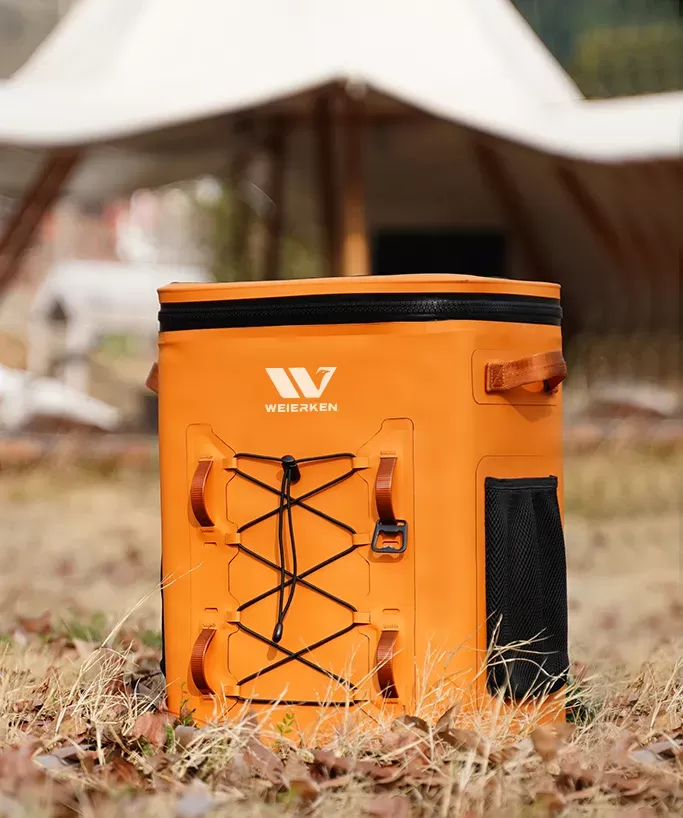

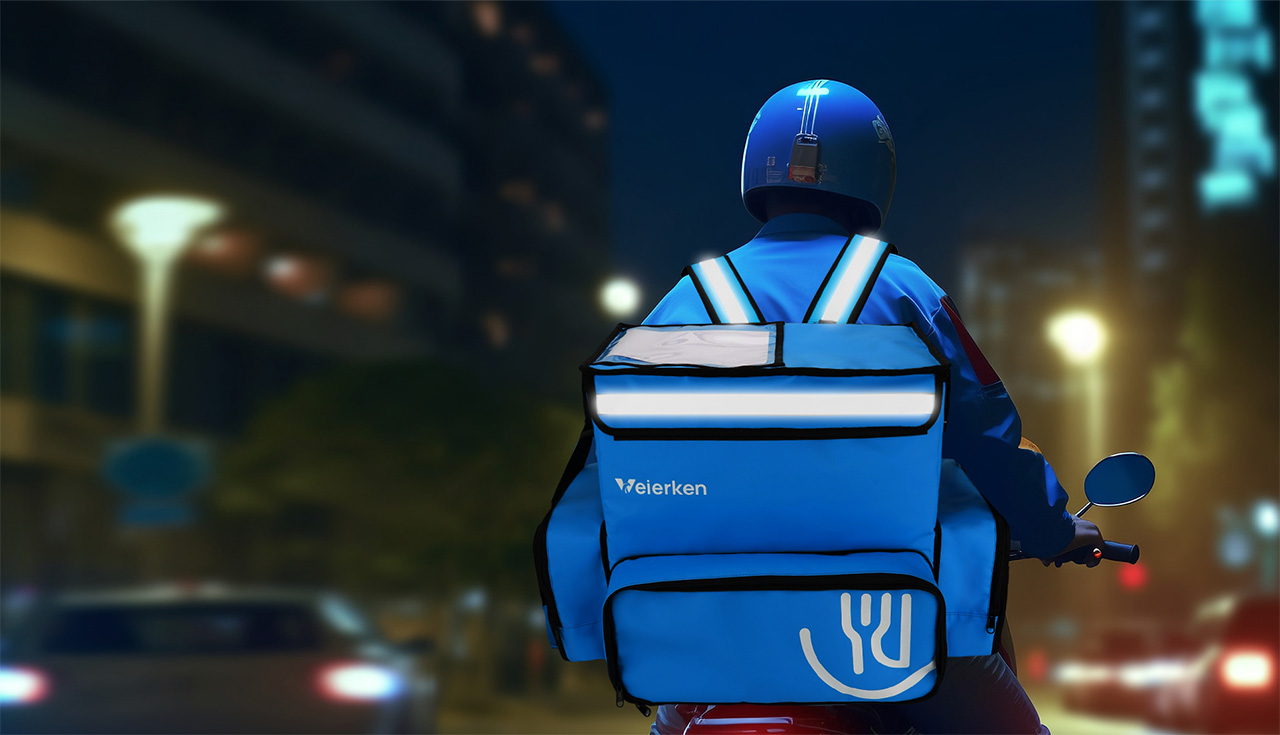
Ready-to-eat (RTE) meal logistics leave no room for error. When a customer unpacks a prepared dish, they expect the crisp texture, deep flavor, and exact temperature of a freshly plated meal. Lukewarm broth or wilted greens destroy customer retention instantly. More importantly, poor temperature stability exposes food enterprises to immense liability.
Microbiologists classify the range between 4°C and 60°C (40°F to 140°F) as the bacterial "Danger Zone." In this band, pathogens such as Salmonella, Listeria, and E. coli multiply at geometric rates. A 20-minute traffic delay can compromise an entire route of delicate chilled food or steaming entrees. Off-the-shelf delivery packaging rarely handles these real-world transit spikes.
Growing meal brands, corporate catering providers, and ghost kitchens require dedicated thermal control. Reliable packaging manufacturers like Weierken engineer commercial-grade transport gear to solve this exact vulnerability. Purpose-built thermal bags for ready-to-eat meal delivery function as active micro-cold-chain units, shielding your culinary quality and guarding your bottom line.
The Anatomy of Commercial-Grade Thermal Bags: Material Science
Standard retail cooler bags use cheap materials that tear at the seams and lose temperature within thirty minutes. Industrial cold chain last-mile packaging, by contrast, relies on a three-tier composite architecture designed to block conduction, convection, and radiation.
1. The Outer Shell: Abrasion Resistance and Weatherproofing
The exterior layer takes constant abuse from vehicle floors, motorcycle racks, rain, and street grit. High-volume delivery operations require dense textiles that resist abrasion while staying easy to sanitize.
600D to 1680D Polyester Oxford: Oxford fabrics balance weight, cost, and tear strength. A polyurethane (PU) backing on 900D or 1680D polyester blocks water penetration during wet-weather dispatch.
RPET (Recycled Polyethylene Terephthalate): Sourced from post-consumer plastic bottles, RPET provides equivalent tensile strength to virgin polyester while meeting strict corporate sustainability goals.
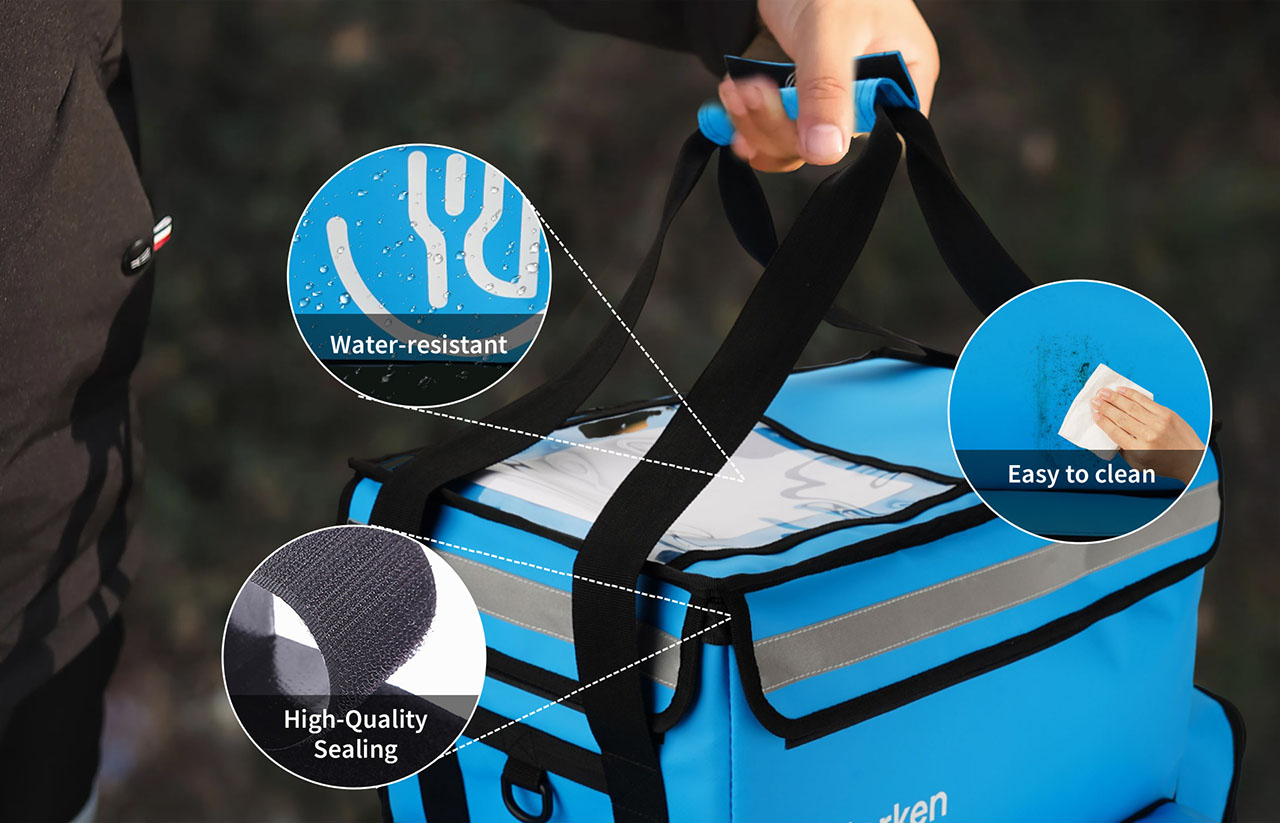
Thermoplastic Polyurethane (TPU) Laminated Tarpaulin: For heavy-duty commercial meal prep delivery bags, smooth TPU surfaces wipe clean with basic hospital-grade sanitizers in seconds, preventing grease and grime buildup.
2. The Insulation Core: Thermal Barrier Performance
The middle layer determines how long the bag can resist ambient temperature transfer. Thickness and material density dictate performance:
Expanded Polyethylene (EPE) Pearl Cotton (4mm to 10mm): A flexible, closed-cell foam that offers basic thermal retention. Best suited for short intra-city routes lasting under 45 minutes.
High-Density EVA (Ethylene-Vinyl Acetate) Foam: EVA provides higher structural firmness and lower thermal conductivity than standard EPE. It prevents the bag from collapsing under stacking loads.
Silica Aerogel Blankets: Used in advanced cold-chain applications, thin aerogel composites offer extreme insulation ratings with minimal bulk, making them ideal for high-end ready-to-eat meal subscriptions.
3. The Inner Lining: Food-Grade Sanitation and Leakproofing
Spills inside a delivery bag are inevitable. If liquid penetrates the insulation foam, bacteria and sour odors will render the bag unusable within days.
Food-Grade PEVA with Seamless High-Frequency Heat-Sealing: Traditional stitched linings leave needle holes that leak liquid. High-frequency ultrasonic welding bonds PEVA sheets into a single, seamless tub. This creates 100% food-grade leakproof delivery bags that contain accidental broth spills and rinse out effortlessly.
Reinforced Aluminum Foil Laminates: Aluminum reflects radiant heat back toward hot food containers. When bonded to woven mesh, it resists punctures from sharp container corners and hard cutlery packets.
Thermal Performance Benchmarks
Commercial thermal bags for ready-to-eat meal delivery must meet verifiable performance baselines before deployment:
Hot Chain Retention: Maintains food above 60°C (140°F) for 2 to 4 hours in an ambient environment of 20°C.
Cold Chain Retention: When paired with phase change materials (PCMs) or frozen gel packs, maintains raw proteins and chilled ready-to-eat salads below 4°C (40°F) for 24 to 48 hours.
B2B Customization: Balancing Logistics Functionality with Brand ROI
Every food service business operates with unique logistics constraints. A corporate lunch drop-off requires different bag geometries than a direct-to-consumer chilled meal box. Designing custom insulated delivery bags allows brands to tailor physical functionality to their exact operational model.
Internal Partitioning and Structural Stability
One of the biggest pain points in ready-to-eat delivery is container migration. When drivers accelerate or brake, unanchored meals tip, leak, and ruin presentation.
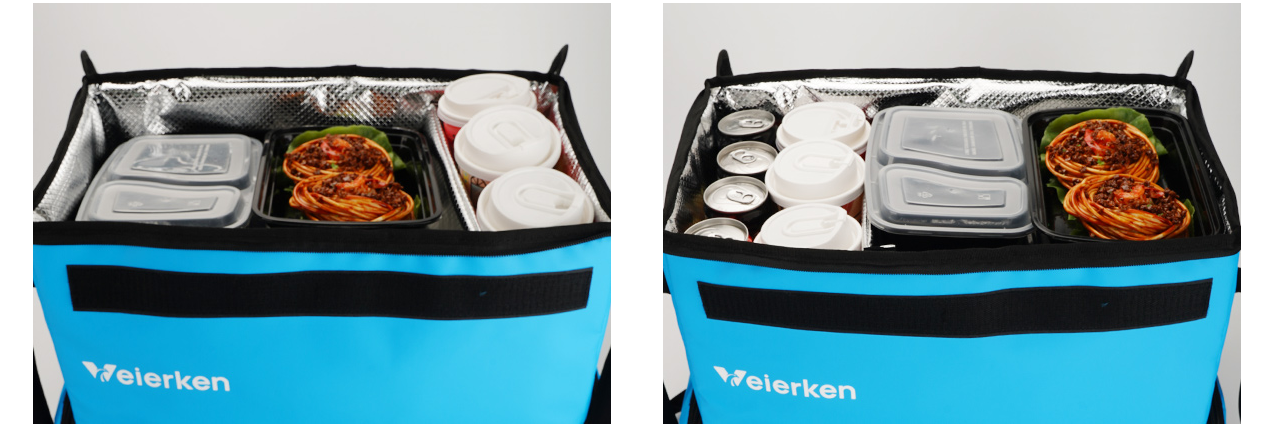
Dual Hot and Cold Compartments: Movable, insulated divider walls allow couriers to carry steaming curries and crisp cold desserts in the same bag without thermal cross-contamination.
Rigid Base and Wall Inserts: Removable polypropylene (PP) hollow boards or lightweight honeycomb composite sheets keep the bag square. This structural integrity stops bottom sagging and keeps meal trays flat.
Elastic Webbing and Cup Racks: Integrated interior sleeves hold dressings, drinks, and delicate sides firmly against the perimeter.
Courier Ergonomics and Transit Safety
Driver fatigue directly impacts delivery speed and accident rates. Industrial designers at Weierken engineer carrying systems based on real-world transit methods:
Backpack Configurations: Ergonomic, padded shoulder straps with sternum fasteners distribute 15kg to 20kg loads across the courier's torso for bicycle and scooter fleets.
Vehicle Lashing Points: Reinforced D-rings, heavy-duty side webbing, and bottom-mounted buckles lock bags onto motorcycle luggage plates.
Industrial Hardware: We utilize marine-grade SBS or YKK waterproof zippers with oversized pull tabs, allowing drivers to open and seal compartments smoothly even while wearing motorcycle gloves.
Turning Delivery Fleets into Brand Billboards
Every delivery person walking through a residential building or office lobby is an advertising impression. High-visibility branding turns functional logistics gear into client acquisition tools:
Precision Printing: High-definition silkscreen printing, thermal transfer, and molded rubber badges maintain brand clarity despite heavy weather exposure.
Safety Reflective Strips: 3M retro-reflective tape around perimeter seams keeps riders visible during night deliveries, satisfying fleet safety standards.
Transparent Order Windows: External clear PVC slip pockets hold routing receipts, digital scanner waybills, and order tickets so drivers verify contents without opening the bag and dumping precious thermal air.
ESG Compliance and the Shift to Circular Logistics
Corporate clients and modern consumers reject wasteful single-use packaging. Bulky expanded polystyrene (EPS) foam coolers and single-use bubble mailers clog customer recycling bins and harm your corporate sustainability record.
Food Safety Regulatory Compliance
Any packaging component operating near food must meet international chemical and contact safety thresholds. Enterprise procurement teams should verify four critical certifications:
FDA 21 CFR 177.1520: Confirms plastic components contacting food or condensation do not leach harmful plasticizers.
LFGB (Lebensmittel-, Bedarfsgegenstände- und Futtermittelgesetzbuch): The European standard, requiring even stricter migration tests than the FDA framework.
REACH & RoHS: Restricts heavy metals, phthalates, and hazardous chemical compounds in all textile dyes, coatings, and zipper pulls.
The Economics of Reusable Delivery Packaging
Switching to reusable thermal food bags wholesale transforms packaging from an operational expense into a depreciable fleet asset. Consider the financial trajectory over a 12-month delivery cycle:
A single-use corrugated box paired with insulated metallized bubble wrap and cold packs costs roughly $2.20 to $3.50 per shipment. That money disappears the moment the customer discards the packaging.
A commercial-grade reusable bag costs significantly more upfront ($15.00 to $28.00 depending on customization and order volume). However, industrial fabric constructions withstand 80 to 120 wash-and-reuse cycles. The math changes dramatically:
Cost across 100 delivery cycles (Single-Use): $220.00 to $350.00
Cost across 100 delivery cycles (Reusable Bag amortized): ~$0.20 to $0.35 per drop
Even after factoring in retrieval logistics and sanitation protocols, enterprise meal providers cut packaging spend by over 60% while eliminating tons of landfill waste.
Procurement and Supplier Evaluation Checklist for B2B Buyers
Selecting the right production partner protects you from costly supply chain delays, poor manufacturing tolerances, and catastrophic seam blowouts during peak operating hours. Use this checklist during vendor reviews:
1. Structural Stress and Durability Testing
Demand documented lab tests or perform independent checks on sample batches:
Handle Tensile Pull Test: Reinforced box-stitching (cross-stitch patterns) on carry handles should comfortably support 25kg to 30kg of static suspension without thread elongation.
Zipper Cycle Testing: Closures must withstand 10,000 continuous opening and closing motions under lateral tension.
Drop Impact Tests: Loaded bags dropped from a height of 1.2 meters onto concrete should protect internal meal trays from bursting.
2. Tiered MOQs and Production Scalability
A capable factory supports your brand through every growth stage. Startups testing new urban zones might require smaller initial trial runs (300 to 500 units), while national meal aggregators negotiate rolling containerload agreements (5,000 to 20,000+ units).
3. Sampling and Mass Production Lead Times
Reliable original equipment manufacturers (OEMs) operate transparent timelines:
Custom CAD & Physical Prototyping: 3 to 7 business days.
Lab Approvals & Pre-Production Samples: 7 to 10 days.
Full Mass Production Runs: 25 to 35 days, with clear freight booking support for air, sea (FCL/LCL), or rail transit.
Frequently Asked Questions (FAQ)
Q1: How long can thermal bags for ready-to-eat meal delivery keep
food hot without active electrical elements?
A: A commercial bag
constructed with 8mm+ high-density EVA/EPE foam and heat-sealed reflective
interiors retains safe temperatures above 60°C (140°F) for 2 to 3 hours.
Pre-heating the bag interior with a thermal gel brick can extend that retention
window up to 4 hours in moderate ambient climates.
Q2: How do seamless heat-sealed linings compare to traditional
stitched linings?
A: Traditional stitching uses needles that punch
thousands of tiny micro-holes through the fabric. Condensation, grease, and soup
spillages seep through these holes into the foam core, causing internal mold
growth that cannot be cleaned. High-frequency heat-sealed PEVA creates a
continuous, watertight internal tub that eliminates leakage entirely.
Q3: Can one bag carry both hot entrees and cold salads at the same
time?
A: Yes, provided the bag includes an insulated vertical or
horizontal modular divider. These dividers use closed-cell foam cores wrapped in
reflective foils that hook into heavy-duty Velcro tracks along the bag's
interior walls. This effectively splits the bag into two distinct
micro-climates.
Q4: What printing method holds up best to daily commercial
scrubbing?
A: Screen printing with high-durability epoxy-based inks
or heat transfer graphics protected by a clear polyurethane laminate works best.
For tarpaulin bags subjected to heavy outdoor sun and pressure washing,
high-resolution silk-screening resists peeling, UV fading, and scratching far
better than standard digital transfers.
Q5: What are the best cleaning procedures for industrial reusable
delivery bags?
A: The interior PEVA or TPU liner should be wiped
down daily using a quaternary ammonium or mild chlorine-based sanitizing
solution, followed by air drying while fully unzipped. Avoid placing rigid-frame
thermal bags in commercial washing machines, as machine agitation destroys the
internal foam cell structure and warps reinforcement boards.
Secure Your Cold Chain with Weierken
In the ready-to-eat meal delivery sector, packaging performance directly defines your customer experience, brand reputation, and food safety record. Off-the-shelf options create operational liabilities that erode delivery margins and introduce transit hazards.
Weierken designs and manufactures rugged, high-performance thermal bags for ready-to-eat meal delivery tailored to enterprise specifications. Whether you operate a regional subscription meal prep company, a hospital dietary network, or a high-velocity ghost kitchen fleet, our engineering team delivers the exact thermal retention, hardware durability, and brand finish your business demands.
Contact the thermal packaging engineers at Weierken today to discuss your project requirements, request a physical sample, and receive a factory-direct wholesale quote.