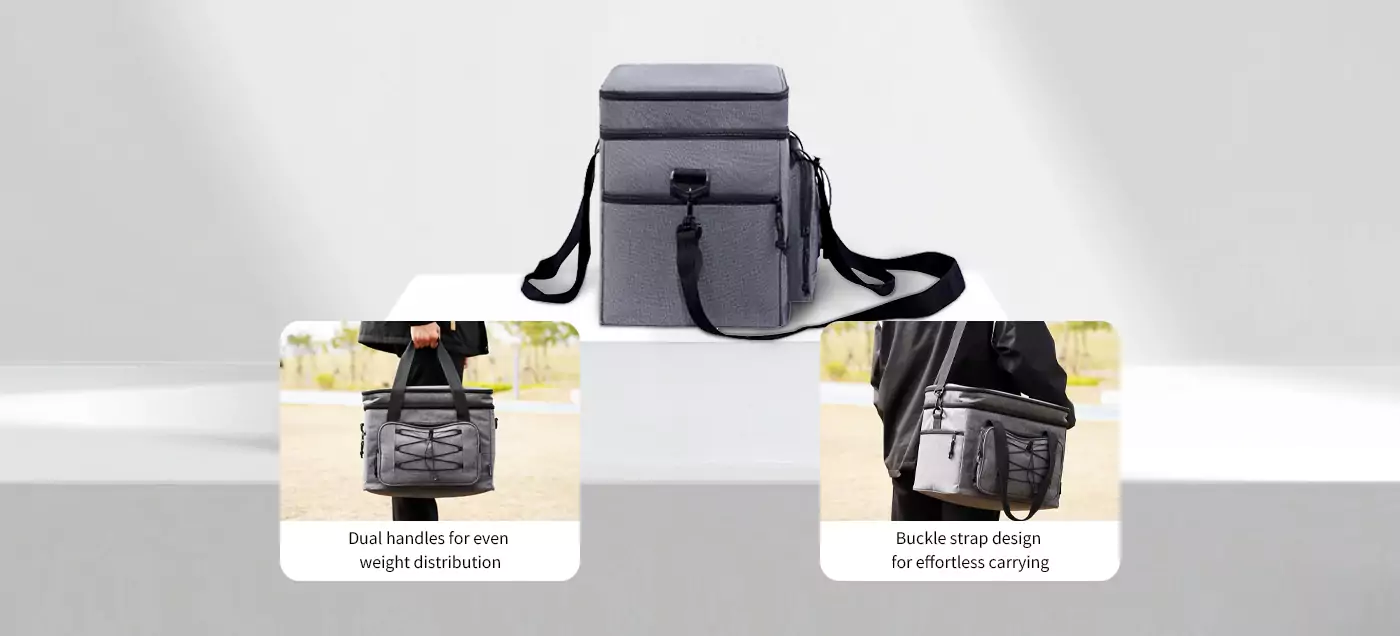
When you run a meal delivery service, your equipment is your reputation. If food arrives cold or leaks through the bag, the customer blames you, not the lunch delivery bag fabricator. The bag is the frontline defender of food quality.
Selecting the right manufacturing partner is a strategic decision. It directly impacts your operating costs, customer satisfaction, and brand image. You need a supplier that builds for the real world—where bags are dropped, stacked, wiped down, and used daily. A professional manufacturer like weierken focuses on engineering durability from the inside out.
Here are the five critical factors you must evaluate to ensure you get a product that lasts.
1. Insulation Materials: The Core of Thermal Performance
The primary job of a delivery bag is temperature retention. You need to keep hot food above 60°C or cold items below 5°C until they reach the door. This depends entirely on the materials inside the walls.
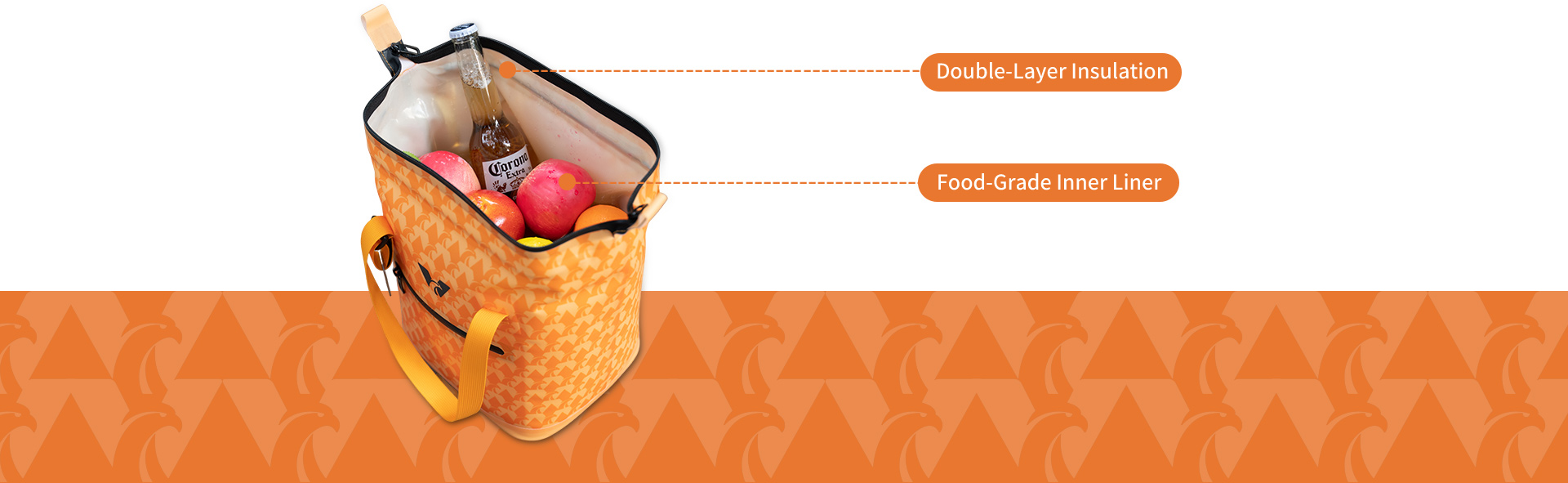
Manufacturers use different types of insulation. Common options include PE cotton, EVA foam, and VIP (Vacuum Insulation Panels). Each offers different levels of thermal resistance. Thickness and density matter just as much as the material type. A quality lunch delivery bag fabricator uses a multi-layer composite structure. This usually combines an outer layer, the insulation core, a reflective aluminum foil layer, and an inner liner. This layering maximizes the “thermos effect.”
Key Evaluation Points:
- Demand proof: Ask for third-party thermal insulation test reports based on standards like ASTM D3103. You need to see how long the bag maintains target temperatures at specific ambient conditions (like 25°C or 30°C).
- Understand the build: Ask exactly what type of insulation is used. What is its thickness and density? Does it include a reflective aluminum layer?
- ODM capabilities: For custom projects, confirm if the fabricator, such as weierken, can customize the insulation structure for your specific delivery window (30 minutes vs. 2 hours).
2. Structural Design and Sealing: Where Heat Escapes
You can have the best foam in the world, but if the bag has a poor design, the heat will leak out. Stitching creates tiny needle holes that let air pass through. This defeats the purpose of insulation. Professional manufacturers avoid this by using specific construction techniques.
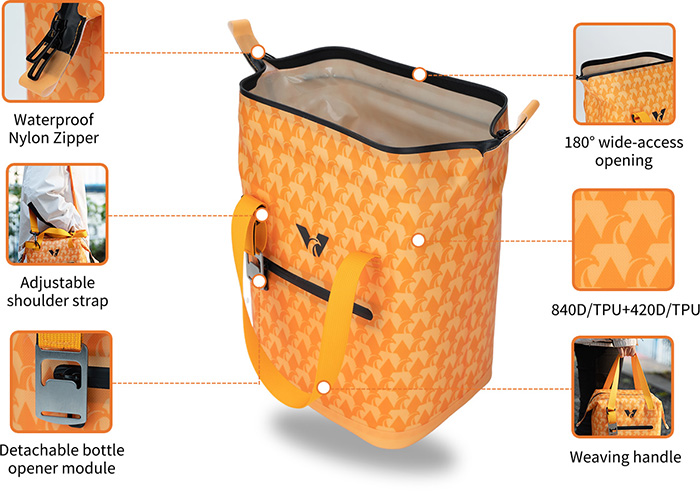
They focus on creating a continuous thermal barrier. Look for bags that use high-frequency welding or seamless seam taping. These methods join materials without piercing them. The opening is another weak point. A good design includes wide Velcro closures, waterproof zippers, or roll-top seals to prevent the “cold bridge” effect where cold air seeps in.
Key Evaluation Points:
- Inspect the seams: Ask for close-up photos or samples of the seam technology. Are they stitched or welded?
- Check the closure: Is the zipper waterproof? Is there a protective flap over it?
- Request test data: See if the lunch delivery bag fabricator can provide air tightness or thermal imaging test reports. This proves the whole structure works, not just the materials.
3. Inner Liner Safety and Durability
The inside of the bag takes the most abuse. It rubs against takeout containers, absorbs condensation, and gets splashed with sauce. This liner must be safe. It cannot allow chemicals to leach into the food packaging.
Material safety is non-negotiable. The liner must comply with food contact standards like FDA, LFGB, or GB 4806. Beyond safety, it needs to be practical. It should be waterproof, grease-resistant, and easy to wipe clean. A liner that absorbs smells or stains will look dirty quickly and may need replacement sooner.
Key Evaluation Points:
- Review certifications: Always ask for third-party food-grade test reports for the liner material.
- Ask about material: Is the liner made from TPU coating, PEVA composite, or food-grade PVC?
- Test it yourself: Get a sample. Pour a little oil on it. See how easily it wipes clean. Check if it feels tough enough for daily scrubbing.
4. Outer Fabric: Built for the Road
The outside of the bag faces the elements. It gets dragged across car floors, stacked under other bags, and maybe caught in the rain. The outer fabric needs to handle this abuse without tearing or letting moisture through.
High-denier nylon or polyester Oxford cloth is the standard. But you need to look deeper. Does it have a DWR (Durable Water Repellent) coating? Is the fabric treated to resist UV rays? Constant sun exposure can weaken some materials over time, causing them to crack.
Key Evaluation Points:
- Demand data: Ask for third-party test reports on tear strength (ISO 13937), abrasion resistance (ASTM D4966), and water resistance (ISO 811).
- Check UV stability: Look for ISO 4892 reports to ensure the fabric won’t degrade in sunlight.
- Feel the sample: A reputable lunch delivery bag fabricator, like weierken, will provide samples that let you assess the fabric’s thickness and coating quality firsthand.
5. Overall Durability and Quality Control
The little details determine how long a bag lasts. The stitching at stress points is where failures usually start. A bag might look good new, but after a month of heavy loads, the handles can rip out if not properly attached.
Professional construction includes reinforcement. Look for “bar-tack” stitching at handle and strap connection points. The bottom of the bag should have extra layers or reinforced binding to handle the constant weight. All of this relies on a solid quality control system. You need a partner who checks materials when they arrive (IQC), inspects during production (IPQC), and tests the final product (FQC).
Key Evaluation Points:
- Ask for mechanical tests: Request reports on weight-bearing pull tests and drop tests. How much weight can the handles hold?
- Understand their QC process: Ask for samples of their inspection records.
- Visit or video call: A factory tour, even a virtual one, lets you see the production line. You can observe if they actually perform the checks they claim.
Summary
Choosing a lunch delivery bag fabricator is about more than just price. It is about finding a partner who understands the science of insulation and the reality of daily use. By verifying materials, construction techniques, and quality control, you protect your business from failed deliveries and unhappy customers.
Frequently Asked Questions
Q1: What is the best insulation material for a lunch delivery bag?
There is no single “best” material—it depends on your needs. PE foam is cost-effective for short trips. EVA offers more flexibility and insulation. For maximum performance, some manufacturers use VIP (Vacuum Insulation Panels) or multi-layer composite materials that combine foam with aluminum reflectors. A good lunch delivery bag fabricator like weierken can advise you based on your target delivery time.
Q2: How can I verify if a bag is truly food-safe?
You cannot tell just by looking. You need to request documentation. Ask the lunch delivery bag fabricator for third-party test reports confirming the inner liner material meets standards like FDA (US) or LFGB (EU). These reports test for harmful chemical migration.
Q3: What does ASTM D3103 mean for my business?
ASTM D3103 is a standard test method for thermal insulation performance of shipping containers. When a fabricator provides a report based on this standard, it gives you objective data. It shows you how long the bag can keep contents at a specific temperature in a controlled environment. This helps you match the bag to your actual delivery routes and times.
Q4: Can I get custom sizes and logos on my delivery bags?
Yes, most professional manufacturers offer ODM and OEM services. You can specify dimensions, colors, and print your logo. The key is to discuss this early. The customization might affect the insulation design. A fabricator with strong R&D, such as weierken, can adjust the structure to ensure your custom bag still performs thermally.
Q5: How do I know if the handles will last?
Look at the reinforcement. Ask the lunch delivery bag fabricator about their “bar-tack” stitching or “X-box” stitching at the anchor points. Request their weight-bearing test report. This report shows the bag was filled with a specific weight and lifted repeatedly to test the strength of the handles and seams.
Q6: What is the minimum order quantity (MOQ) for custom bags?
MOQs vary widely between suppliers. Some factories have high MOQs for full production runs. Others are more flexible for small businesses or startups. When you contact a lunch delivery bag fabricator, be clear about your volume needs. They can tell you their standard MOQs or discuss options for pilot runs.
Ready to Source Reliable Lunch Delivery Bags?
Don’t leave your food quality to chance. You need a partner who builds durability and performance into every stitch. Contact weierken today to discuss your specific requirements, request samples, and get a quote for bags that will protect your brand.