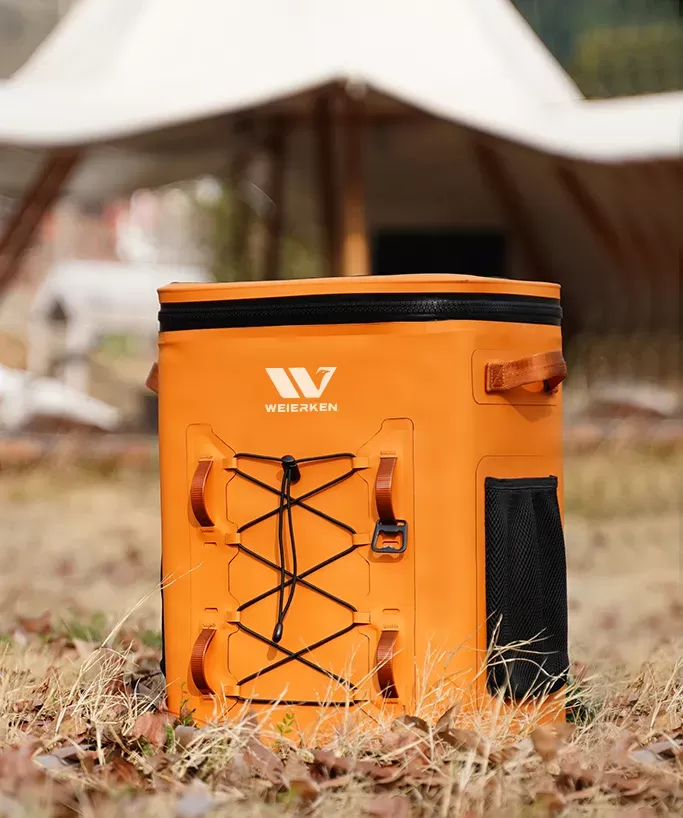

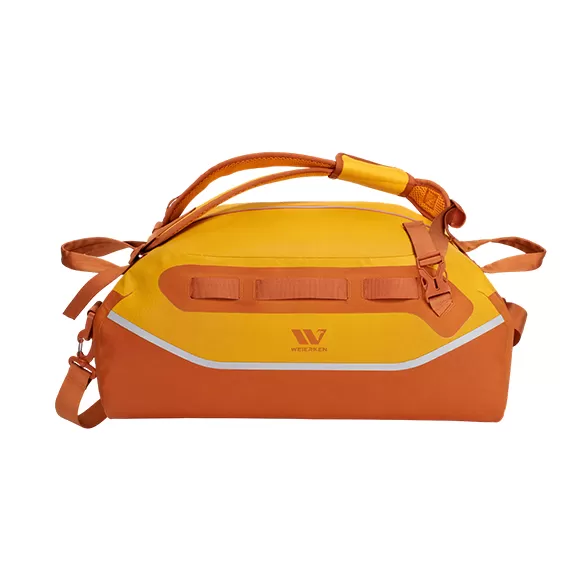
Hunting travel exposes luggage to brutal conditions. Bags sit exposed in open pickup beds through freezing rain. They get strapped to floatplanes, dragged across jagged shale, and tossed into muddy riverbanks. When gear gets soaked hundreds of miles from civilization, the hunt is compromised.
Many outdoor gear brands fall into a common sourcing trap. A factory promises a "waterproof" travel duffel, but in the field, the product is merely water-resistant. Seams leak under driving rain, zippers let moisture seep through, and the brand suffers expensive warranty claims. Sourcing hunting gear is not about hunting for the lowest FOB price. It is about hedging brand risk.
Finding a true technical partner requires asking the right questions. Manufacturers like Weierken focus on high-performance manufacturing standards that protect gear in hostile environments. Here are eight insider secrets procurement teams must use to evaluate any waterproof hunting travel bag supplier.
1. Differentiate True RF Welding from Basic Seam-Sealing
The term "waterproof" means different things to different factories. Many standard bag factories use conventional sewing machines, punch thousands of needle holes through coated fabric, and apply hot-melt seam tape over the interior seams. While taped seams withstand light showers, they degrade over time and leak under standing water pressure.
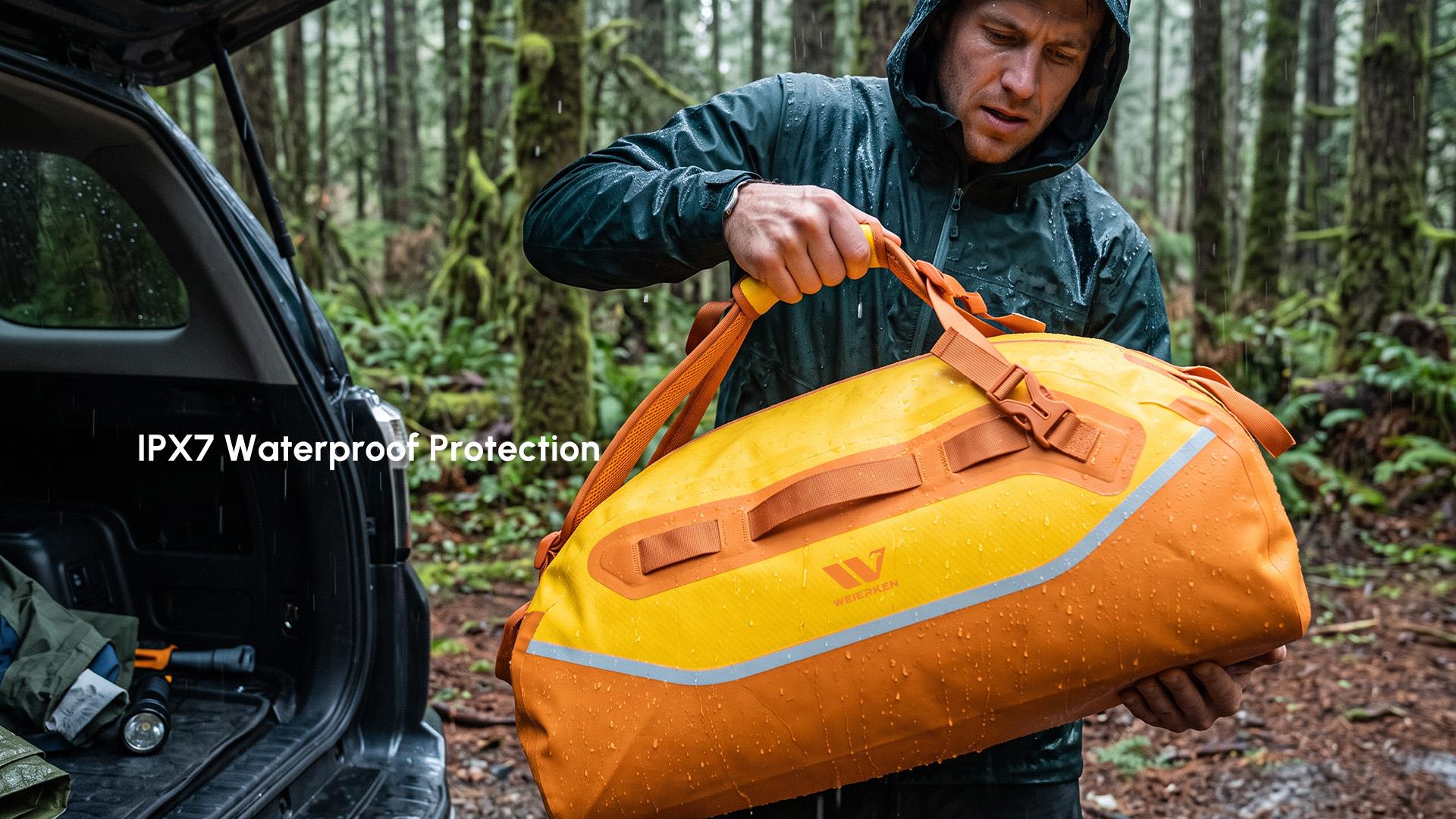
A specialized waterproof hunting travel bag supplier relies on Radio Frequency (RF) or High-Frequency (HF) welding instead of stitching. Here is why the distinction matters:
Molecular Fusion: RF welding uses electromagnetic energy to agitate molecules in thermoplastic materials. The fabrics fuse together into a single, continuous sheet. There are no needle perforations, eliminating the possibility of seam failure.
Submersion Protection: Stitched and taped bags generally achieve an IPX4 or IPX5 rating at best. Properly RF-welded bags deliver IPX7 or IPX8 performance, meaning the bag survives full underwater submersion without taking on a single drop.
In-House Machine Verification: When auditing an RF welded waterproof bags facility, confirm they own automated high-frequency machines. Factories that subcontract welding to outside processing shops introduce extreme lead-time volatility and uneven quality control.
2. Demand Low-Temperature TPU Composites Over Cheap PVC
Polyvinyl Chloride (PVC) tarpaulin is cheap, waterproof, and widely available. Generic luggage makers prefer it because it welds easily at low costs. However, hunting destinations like Alaska, Montana, and Northern Canada frequently drop well below freezing.
Cheap PVC stiffens rapidly at 32°F (0°C) and turns brittle as glass around 5°F (-15°C). A single drop onto frozen ground will crack the bag's shell. A qualified hunting travel gear manufacturer builds bags using double-sided Thermoplastic Polyurethane (TPU) laminated over high-tenacity nylon or polyester scrim.
Demand the following material standards from your supplier:
Cold-Crack Resistance: The TPU composite must pass ASTM D2136 cold-bend testing down to -40°F (-40°C) without surface cracking or delamination.
Abrasion and Tear Resistance: The base scrim should feature 420D to 840D high-density nylon to endure rough handling and contact with broadheads or knife sheaths.
Silent Surface Lamination: Hunters require stealth. Ask whether the supplier can bond brushed silent tricot or micro-fleece to the exterior TPU face without introducing noisy, stiff adhesives that rustle in cold air.
3. Inspect the Zipper System: The Most Critical Point of Failure
Roughly 90% of water ingress issues occur at the closure system. A bag can feature flawless RF-welded seams, but if the zipper cannot withstand hydrostatic pressure, the contents inside will soak through.
Review the supplier's Bill of Materials (BOM) carefully to identify which zipper class they specify:
Water-Repellent Coil Zippers: Standard reverse-coil zippers with polyurethane (PU) coatings (such as standard water-resistant zippers) only repel surface splash. Under continuous rain or puddle immersion, water bleeds through the teeth.
True Airtight/Watertight Zippers: Premium expedition bags use pressure-tested, airtight zippers such as YKK® ProSeal or German TIZIP® closures. These feature rubber lips that compress together under slider pressure, forming an impermeable seal against water and air.
Unbranded Counterfeits: Beware of generic, unbranded "watertight" zippers. Low-grade sealing films on cheap zippers delaminate from the tape when exposed to sub-zero temperatures or repeated flexing.
4. Validate Camouflage Licensing and Precision Pattern Welding
Camouflage aesthetics matter to hunters, but working with specialized patterns presents legal and technical obstacles. Sourcing managers must evaluate both intellectual property access and production precision.
A qualified private label outdoor bag supplier must have direct access to licensed camouflage print mills, including Realtree®, Mossy Oak®, and Kryptek®. Sourcing unauthorized knockoff prints exposes your brand to border seizures, import bans, and copyright infringement lawsuits. Require documentation confirming legitimate royalty reporting channels.
Technically, printing camo onto TPU-coated textiles requires tight thermal control. High-frequency welding generates heat that can distort printed camouflage patterns, causing visible stretching, faded streaks, or white burn marks along seam lines. An experienced IPX7 hunting luggage factory uses precision-tooled copper electrodes and fine-tuned dwell times to keep camouflage graphics aligned and sharp along every seam.
5. Audit Custom Tooling and Rigid Chassis Capabilities
Hunting travel bags differ fundamentally from soft gym duffels. They must carry dense, shifting, and sharp loads, including meat quarters, butchering saws, heavy boots, and target ammunition. A soft-bottomed bag sags, tears, and wears down quickly.
Look for a custom hunting travel bag supplier with in-house compression molding and tooling capabilities:
Compression-Molded EVA Tubs: Rigid, high-density EVA bottom bases shield the bag against sharp rocks and gravel while giving the duffel structural stability to stand upright during packing.
Puncture-Resistant Skid Plates: Molded plastic runners or heavy-gauge TPU skid plates prevent friction wear when the duffel is dragged across truck tailgates or gravel runways.
Tooling Cost Structure: Evaluate how the supplier charges for base mold development. Professional suppliers provide clear mold engineering drawings and offer mold fee amortization plans where tooling costs are refunded after reaching agreed order volumes.
6. Demand Independent In-House Laboratory Test Reports
Never rely on verbal quality promises or polished catalog photos. A dependable waterproof hunting travel bag supplier maintains a dedicated quality assurance laboratory equipped with industrial testing machinery. Before approving production runs, demand physical test documentation covering three key benchmarks.
First, ask for Hydrostatic Head Test reports. True expedition hunting gear should achieve at least 15,000mm to 20,000mm water column resistance without droplet formation on inner surfaces.
Second, request Submersion and Airtight Pressure Chamber reports. The factory should inflate the bag to 2.5 to 3.0 PSI, submerge it in a clear water tank for 30 minutes, and monitor for escaping air bubbles. If air escapes, water can enter.
Third, verify Cyclic Drop and Handle Tensile tests. The duffel should be loaded with 50 to 70 pounds of deadweight and subjected to a 1.2-meter drop test on each corner, followed by 5,000 continuous upward jerks on the webbing handles to prove seam anchor integrity.
At Weierken, in-house laboratory testing is integrated directly into daily production runs to verify that every batch meets agreed tensile and airtight parameters before packaging.
7. Confirm Tier-2 Supply Chain Control and Traceability
A classic sourcing pitfall occurs when a golden sample arrives with flawless performance, but bulk production suffers from bubbling coatings and seam delamination. This failure points to poor control over Tier-2 raw material vendors.
Inquire how the supplier manages Incoming Quality Control (IQC). Top-tier suppliers inspect every single roll of incoming TPU fabric before cutting. They test peel adhesion strength (measuring the bond between the TPU membrane and the base textile) and check coating thickness uniformity across the bolt.
Furthermore, the supplier should maintain batch-level material traceability. If a seam fails during warehouse inspection, your manufacturing partner should be able to trace that specific unit back to the exact fabric roll, operator shift, and welding machine setting used during assembly.
8. Balance Production Scalability with Pilot Run Flexibility
RF welding requires expensive brass or aluminum tooling dies for every unique seam geometry. Because tooling changes and machine calibration require extensive setup time, conventional factories set minimum order quantities (MOQs) at 1,000 to 2,000 units per colorway.
High minimums place heavy cash-flow burdens on growing brands testing new camouflage lines or launching niche gear bags. A reliable waterproof hunting travel bag supplier balances mass-production capacity with flexible initial batch runs.
Look for a partner capable of executing pilot runs of 300 to 500 units for initial market release, with the automated capacity to scale smoothly to 20,000+ units as retail demand grows. This flexibility allows your team to test regional camouflage preferences and gather field feedback before overextending capital.
Vendor Evaluation Checklist for Hunting Brands
Use this practical scorecard when auditing potential manufacturing partners for technical hunting travel bags:
Welding Technology: In-house RF/HF welding machinery present (Yes/No)
Base Polymer: 100% low-temp polyether TPU specified instead of standard PVC (Yes/No)
Cold-Crack Threshold: Certified to -40°F / -40°C (Yes/No)
Closure Rating: Pressure-tested IPX7 submersible airtight zipper option available (Yes/No)
IP Licensing: Direct channels for licensed camo patterns (Realtree, Mossy Oak) (Yes/No)
Chassis Development: In-house EVA mold engineering and tool making (Yes/No)
Lab Equipment: Hydrostatic pressure rig and submerged bubble leak tank on-site (Yes/No)
Quality Standard: AQL 2.5 major / 4.0 minor inspection standard enforced (Yes/No)
Frequently Asked Questions (FAQ)
Q1: What is the practical difference between IPX6 and IPX7 for hunting travel gear?
A1: An IPX6 rating means the bag withstands high-pressure water jets and heavy downpours from any direction without leaking. However, if an IPX6 bag is dropped into a river or submerged in the bottom of a flooded boat, water can eventually breach the zipper. An IPX7 rating guarantees the bag can be fully submerged in up to 1 meter of water for 30 minutes without a single drop entering the main compartment.
Q2: Why is RF welding superior to hot-air seam taping for extreme-cold hunting bags?
A2: Hot-air seam tape relies on chemical adhesives that dry out, oxidize, and lose flexibility in freezing environments. Sub-zero thermal contraction causes the tape to separate from the fabric. RF welding does not use glue; it melts the thermoplastic layers together into an indivisible bond that cannot peel off, regardless of temperature fluctuations.
Q3: Why is TPU composite significantly more expensive than PVC tarpaulin?
A3: TPU resin is chemically complex, offering superior tensile resilience, abrasion resistance, and cold flexibility without phthalate plasticizers. PVC uses chemical plasticizers that leach out over time, making the material brittle and pungent. TPU remains stable across extreme temperature swings, lasts longer, and has zero chemical odor that could spook sensitive big-game animals.
Q4: How much does custom tooling cost for a molded EVA duffel base?
A4: Depending on base dimensions and surface contour complexity, compression molds for an EVA bottom tub generally range from $1,500 to $3,500. Most professional suppliers will credit this tooling fee back to the brand once cumulative order volume reaches a contracted threshold, typically around 3,000 to 5,000 units.
Q5: How can our brand confirm our camouflage fabric is legally compliant?
A5: Legitimate camouflage suppliers will supply an official royalty license verification certificate or an authorized mill release document tied to your brand's purchase order. Never accept verbal claims from an OEM hunting gear supplier that they have generic "access" to patterns without verifiable licensing documentation.
Q6: What is the typical development timeline for an OEM waterproof hunting duffel?
A6: Developing a new technical duffel from design drawings to final production usually requires 12 to 16 weeks. Pattern drafting, 3D prototyping, and RF welding mold fabrication take 3 to 5 weeks. Lab testing and sample adjustments take another 2 to 3 weeks, followed by 45 to 60 days for raw material procurement and mass assembly.
Secure Your Supply Chain with an Experienced Manufacturing Partner
Sourcing technical hunting travel gear leaves no room for manufacturing compromises. In the backcountry, gear failures ruin hunts and permanently damage customer trust. Choosing an experienced waterproof hunting travel bag supplier protects your brand equity and ensures every bag performs when tested by extreme weather.
Weierken engineers advanced, fully waterproof outdoor bags, sub-zero hunting luggage, and custom-welded tactical carriers for industry-leading brands worldwide. From precision RF welding to certified laboratory testing, our facilities provide end-to-end manufacturing reliability.
Are you developing your next generation of indestructible hunting travel gear? Contact our technical engineering team today to review your tech pack, request material swatches, or initiate a custom sample build.