
I have spent over two decades managing industrial bag assembly lines. Over those years, I have seen hundreds of procurement managers get burned by the same trap: purchasing bulk delivery gear based on a pristine golden sample, only to watch the production run disintegrate in field operations within ninety days.
When you buy insulated pizza delivery bags wholesale, a five-dollar discount per unit on your initial invoice almost always means the factory shaved costs off critical structural points. The zipper teeth shear off. Grease seeps into cheap foam. Steam turns your client's thin-crust pizza into damp dough.
At Weierken, our engineers run tear tests, thermal probes, and cycle tests daily. We build commercial gear that survives thousands of motorcycle delivery runs. This guide cuts through marketing jargon and lays out the factory-floor technical standards you need to secure high-performing commercial pizza delivery bags bulk buyers can stake their reputations on.
1. Anatomizing the Bag: 3 Material Secrets Factories Keep to Themselves
Every commercial delivery bag consists of three layers: the exterior barrier, the core insulation layer, and the inner lining. If your supplier cuts corners on any one of these, the entire system fails.
Outer Shell: Denier Counts and Real Tear Resistance
Wholesale catalogs love to throw around the phrase "heavy-duty Oxford fabric." In the factory, that claim means very little without exact numbers.
Many low-cost factories use 420D or 600D polyester backed with cheap, recycled PVC. Recycled PVC coating stiffens in winter conditions. Once temperatures drop below zero, the shell cracks along stress folds, allowing rain to penetrate the insulation.
For true commercial endurance, demand the following exterior specifications:
Fabric Grade: Minimum 900D to 1680D high-density Oxford polyester or commercial matte 500D PVC tarpaulin.
Backing: Thermoplastic Polyurethane (TPU) or cold-crack-resistant virgin PVC backing tested down to -20°C.
Hydrophobic Finish: A durable water-repellent (DWR) surface spray rated to withstand at least 30 commercial wash cycles.
Insulation Core: Why Foam Density Trumps Pure Thickness
One of the most widespread myths in food delivery equipment procurement is that thicker insulation always means better heat retention. Factories exploit this belief by packing bags with ultra-low-density expanded polyethylene (EPE) foam.
This cheap foam feels thick and springy out of the shipping carton because it is filled with large air pockets. Within four months of carrying heavy pizza boxes, the foam cells collapse under the weight. Once crushed, the foam loses its thermal barrier properties entirely.
Commercial-grade thermal preservation requires dense, closed-cell materials:
High-Density Closed-Cell EPE or Polyurethane (PU): Look for densities between 30kg/m³ and 45kg/m³. This material rebounds under pressure and maintains its shape over thousands of deliveries.
Thermal Conductivity (K-value): Ensure your manufacturer tests for a low thermal conductivity rate, ideally under 0.035 W/m·K.
Multi-Layer Thermal Sandwich: Premium bags sandwich dense foam between a reflective radiation foil layer and an inner air-gap mesh.
Inner Lining: Ultrasonic Heat-Sealing vs. Stitched Foil Liners
Inspect the seams of your sample bag's interior lining immediately. If you see needle holes where the inner lining was stitched together with thread, you are looking at a hygiene hazard.
Pizza grease, steam condensate, and loose cheese inevitably settle into the bottom of a delivery bag. Needle holes allow liquids to leak straight into the raw insulation foam. Over time, bacteria and mold breed inside the core, generating sour odors that no amount of surface spraying can remove.
Commercial food safety demands high-frequency ultrasonic heat-sealed seams using food-grade aluminum foil or heavy-gauge antibacterial TPU. Heat-sealed seams create a 100% leakproof tub that allows delivery hubs to wipe down, sanitize, and pressure-wash bag interiors without contaminating the internal insulation core.
2. Engineering Failure Points: 3 Details That Dictate Bulk Scrap Rates
Industrial performance comes down to micro-engineering details. When ordering custom insulated pizza bag manufacturer solutions, specify how your factory manages moisture, closures, and mechanical weight transfer.
Moisture Control: The Soggy Crust Dilemma
A completely airtight pizza bag destroys product crispness. Freshly baked pizzas release hot water vapor. If that steam cannot escape, it collects on the interior lid, turns into droplets, and rains back down onto the cardboard boxes.
The result is a soggy crust, soaked packaging, and unhappy customers. Your technical drawings must incorporate controlled ventilation:
Directional Brass or Stainless-Steel Grommets: Two to four moisture exhaust grommets positioned along the upper side panels let water vapor exit while keeping heat inside.
Internal Moisture-Wicking Flaps: Specialized interior fabrics absorb condensation without lowering ambient air temperature within the chamber.
Zippers: The #1 Point of Field Failure
Delivery couriers open and yank shut a commercial delivery bag dozens of times every shift. Ordinary resin or coil zippers simply will not survive this level of mechanical stress.
Roughly 80% of warranty claims and scrap rates in this product category trace back to broken zipper teeth, split tracks, or detached pullers.
When drafting your bill of materials (BOM), mandate commercial-grade hardware:
Zipper Gauge: Never accept anything smaller than a #8 or #10 heavy-duty zipper.
Track Construction: Specify reverse-tape waterproof zippers or self-healing nylon spiral coils from verified manufacturers like SBS or YKK.
Hook-and-Loop Alternatives: For ultra-fast turnover, opt for industrial-grade, wide-strip hook-and-loop closures (minimum 50mm width) rated for 10,000 peel cycles, reinforced with box-X perimeter stitching.
Load-Bearing Integrity: Box-X Stitching & Internal PE Reinforcement
Four loaded 18-inch pizza boxes weigh a significant amount. When a courier grabs a bag by its top handles or swings it over a shoulder, that mass exerts sudden downward force on the seam lines.
Budget factories stitch the webbing straps directly to the thin exterior fabric. The outer shell eventually tears around the seam holes. Quality production relies on rigid internal Polyethylene (PE) stiffener boards. The structural webbing passes through the outer fabric and anchors directly into the internal frame with heavy-duty Box-X stitch patterns and reinforced bar-tacks.
3. The Landed Cost Formula: How to Protect Your Margins
Sourcing insulated pizza delivery bags wholesale is not just about the unit price on an invoice. It is about your total landed cost per unit, which accounts for freight volume, damage rates, and tariffs.
Optimizing CBM: High-Tonnage Vacuum Compression
Delivery bags are voluminous, lightweight products. When you ship them internationally, you pay for empty air. Freight forwarders bill based on volumetric weight rather than actual physical weight.
Smart factories solve this challenge through hydraulic vacuum packaging:
Using multi-ton industrial hydraulic presses, the manufacturer flattens the bags, evacuates the air, and seals them inside heavy-gauge polybags.
Vacuum compression shrinks total cubic meters (CBM) by 30% to 45%.
In a standard 40-foot High Cube (40HQ) container, this packaging method lets you pack hundreds of additional units, driving down your sea freight cost per bag.
Supply Chain Flexibility: Navigating Duties and Regional Logistics
Geopolitical tariffs can drastically impact wholesale margins. Relying on a single manufacturing footprint can leave your supply chain vulnerable to sudden trade duty hikes.
Companies like Weierken help buyers balance these pressures by managing flexible production setups. By maintaining advanced tooling, standardized material tracking, and secondary manufacturing footprints, we ensure your bulk orders clear customs with clean documentation, optimal tariff classifications, and dependable lead times.
DDP vs. Port Demurrage Traps
If you are a growing food service distributor or restaurant chain, avoid FOB terms unless you have an in-house logistics team managing local port clearance. Customs delays can quickly run up storage and demurrage fees that wipe out any factory-direct savings.
Whenever possible, negotiate Delivered Duty Paid (DDP) terms with your manufacturer. A reliable industrial supplier can package customs clearance, bonded transport, maritime insurance, and final warehouse trucking into one fixed, predictable invoice cost.
4. The B2B Sourcing Specification Checklist (OEM / ODM RFQ Guide)
Before submitting a Request for Quotation (RFQ) to any industrial bag manufacturer, provide precise engineering parameters to ensure accurate pricing and tight production tolerances:
Internal Dimensions: Base your sizing on standard pizza box footprints (e.g., 16-inch, 18-inch, or 20-inch boxes), factoring in a 1-inch internal perimeter buffer for effortless loading and unloading.
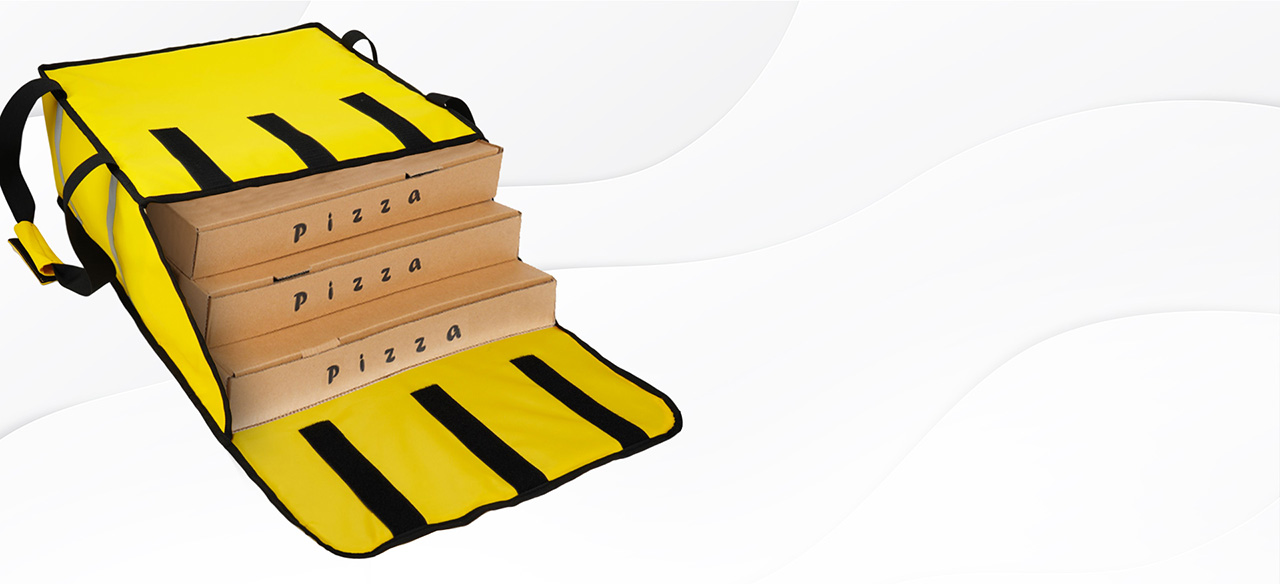
Capacity Targets: Specify box capacities (e.g., 3-box, 4-box, or 6-box setups) and define whether you require adjustable, fold-down internal shelf dividers.
Thermal Retention Specs: State explicit temperature boundaries. For example: "Must keep core food temperature above 60°C (140°F) for 45 minutes at an external ambient temperature of 0°C."
Active Heating Integration: Clarify if your order requires internal 12V vehicle-powered heating elements, induction heat-pad pockets, or portable USB power-bank hubs.
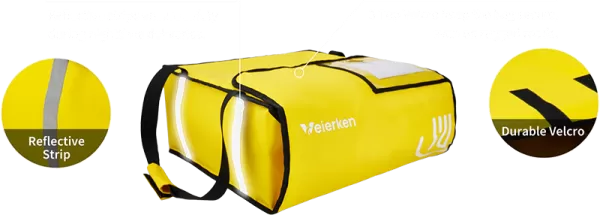
Branding and Visibility: Require industrial silk-screen printing with oil-resistant inks, heat-transfer vinyl rated for commercial washing, and EN 20471-certified high-visibility reflective bands for night-shift road safety.
Regulatory Compliance: Demand written documentation for REACH compliance (heavy metals and phthalates), food-contact surface testing, and factory audit credentials such as BSCI or ISO 9001.
5. Frequently Asked Questions (FAQ)
Q1: What is the typical Minimum Order Quantity (MOQ) for insulated
pizza delivery bags wholesale orders?
A1: For standard catalog
models using in-stock raw fabrics, wholesale MOQs typically start between 100
and 200 units. For fully customized OEM orders involving custom-dyed fabric
colors, unique sizing, specialized heating components, or private-label hardware
pulls, professional manufacturing lines usually require an MOQ of 500 to 1,000
units.
Q2: How do commercial buyers conduct an in-house thermal retention
test on pre-production samples?
A2: Place two freshly prepared
pizzas (or an equivalent thermal mass heated to 85°C / 185°F) inside the bag.
Insert a calibrated digital thermocouple probe into the core of the pizza, seal
the bag, and set it in a temperature-controlled cold room (around 4°C to 10°C).
Log temperature readings at 15, 30, 45, and 60 minutes. An industrial-grade
delivery bag must maintain the core temperature above the food-safety danger
threshold of 60°C (140°F) for at least 45 minutes.
Q3: Why do low-cost bulk delivery bags develop a sharp chemical smell
after being loaded with hot food?
A3: That harsh smell is caused by
off-gassing from toxic PVC glues and low-grade recycled plasticizers breaking
down under heat. When exposed to hot steam from fresh pizzas, those chemicals
turn into volatile organic compounds (VOCs) that can settle onto the food
packaging. Professional manufacturers avoid this issue by using solvent-free
water-based adhesives, virgin food-safe TPU coatings, and certified odorless EPE
foam cores.
Q4: What is the expected service lifespan of an industrial-grade
pizza bag under continuous fleet use?
A4: Commercial bags
manufactured with 900D+ Oxford shells, reinforced Box-X stitching, #10 closures,
and high-density foam typically deliver a lifespan of 12 to 18 months under
heavy rotation (15 to 25 daily trips). Lower-grade alternatives bought purely on
price usually fail at the seams or zippers within 60 to 90 days of continuous
operation.
Q5: Can bulk manufacturing orders combine mixed interior divider
layouts within a single production run?
A5: Yes, provided the base
exterior frame and fabric remain consistent. Factories can easily produce
interchangeable, hook-and-loop interior shelf inserts to support varying
configurations—such as separating hot pizzas from cold beverages—within the same
production run, without triggering separate exterior tooling costs.
6. Secure Your Fleet’s Delivery Chain: Partner with Weierken
In commercial food delivery, your insulated bag is not an accessory. It is the final link in your food prep and customer retention pipeline. Buying fragile gear to shave a few pennies off your acquisition cost will cost you far more in spilled orders, compromised food safety, and customer attrition.
Work directly with the technical specialists at Weierken to build equipment that holds up to daily commercial use. Our manufacturing engineers are ready to review your technical packs, fine-tune your material specifications, and deliver reliable thermal performance at true factory scale.
Ready to upgrade your delivery performance and protect your margins? Contact our B2B procurement team today to discuss your project, request custom pre-production samples, and receive a competitive tiered quote on your next bulk wholesale run.