


Cakes play a unique role in the food delivery industry. They require delicate handling, strict temperature control, and perfect presentation. A high-quality cake cooler bag acts as both a functional tool and a brand ambassador. It protects the physical integrity of the dessert while showing your customers that you care about their experience.
For B2B buyers, finding a reliable cake insulated bag fabricator determines the success of your delivery operations. You need a partner who understands thermal performance, food safety, and structural protection. As an experienced brand in the packaging industry, weierken knows exactly what goes into creating a high-performing transport solution.
We have summarized a practical, 7-step guide from an industry insider’s perspective. Follow these steps to find a manufacturing partner who can turn your product vision into a reality.

Step 1: Define Usage Scenarios and Insulation Metrics
Before you contact a cake insulated bag fabricator, you must define your exact product requirements. A vague inquiry often leads to mismatched samples and wasted time. You need to map out the complete journey of your cake delivery.
Different distribution methods require completely different bag structures. Ask your team the following questions:
- Delivery Scenarios: Will customers pick up the bags in-store? Do you use third-party food delivery apps? Are you running bulk transit or cold chain transfers?
- Thermal Duration: Do you need the bag to maintain an internal temperature of 0-4℃ for 4-6 hours in a 25℃ environment?
- Cake Specifications: Must the bag fit standard 6-inch, 8-inch, and 10-inch boxes, or do you sell custom, irregular-shaped cakes?
- Structure Types: Do you prefer soft bags, semi-hard shells, or fully rigid hard shells?
Once you answer these questions, translate your needs into a formal Product Specification Sheet. A professional custom cake cooler bag manufacturer will use this sheet to recommend the right insulation layer. They might suggest polyurethane (PU) foam, aluminum foil thermal layers, or advanced aerogel materials. The manufacturer will also design the appropriate sealing structures and shape-retention features based on your metrics.
Step 2: Verify Food-Grade Materials and Cleaning Convenience
Cake transport bags come into direct or close contact with food packaging. Therefore, you cannot compromise on material safety. A cheap, low-quality interior lining can ruin an expensive dessert.
You must ensure that your chosen cake insulated bag fabricator sources safe, compliant materials. Pay close attention to the inner lining, as it faces the highest risk of contamination.
- Safety Standards: The inner materials must comply with strict food contact standards, such as FDA, LFGB, or GB 4806.
- Surface Properties: The lining must resist water and oil. It should feature an easy-to-wipe surface. Popular options include aluminum foil laminated with PEVA or food-grade PVC. You might also consider removable inner liners for easier washing.
- Hygiene: The materials must emit no odors, release no harmful substances, and resist bacterial growth.
Always ask the insulated bakery bag supplier to provide material testing reports or third-party certifications. Make these documents a mandatory attachment to your purchasing contract. This legal protection ensures that your manufacturer does not quietly switch to cheaper, non-compliant materials during mass production.
Step 3: Evaluate Structural Protection and Cake Integrity
Cakes are extremely sensitive to vibrations, bumps, and compression. Even a minor squeeze can ruin delicate frosting. The structural design of your bag directly impacts your delivery success rate.
Your cake insulated bag fabricator must understand physical reinforcement. A standard grocery cooler bag will not work for multi-tiered cakes. Discuss the following structural elements with your supplier:
- Opening Mechanisms: Choose a fully open zipper design or a hard top cover. This allows delivery drivers to place the cake inside and remove it without tilting the box.
- Internal Securing: Ask for adjustable dividers, anti-slip bottom pads, or internal strap systems. These features prevent the cake box from sliding around during transport.
- Carrying and Straps: The bag needs reinforced stitching at stress points. Include anti-slip grip handles and optional shoulder straps to suit different delivery vehicles.
- Rigid Support: Request hard bottom boards and rigid support strips along the four sides. This prevents the bag body from collapsing and crushing the cake.
Step 4: Assess the Manufacturer’s Professional Experience and Equipment
Not every bag factory can make a good thermal bag. You should prioritize a cake insulated bag fabricator that has proven, mature experience in the food delivery or baking accessory sector.
A specialized factory understands the nuances of temperature control. They also invest in the right machinery. During your factory audit or initial meetings, verify their production capabilities:
- Material Processing: Do they have the technical capability to process and laminate complex insulation materials?
- Specialized Equipment: Check if their sewing machines and heat-sealing equipment match the specific properties of thermal fabrics. Seamless heat sealing prevents cold air from leaking through stitch holes.
- Past Projects: Ask them to share case studies or samples from other bakery brands they have worked with.
A seasoned thermal cake bag factory will anticipate design flaws before production begins. They will tell you if a specific zipper choice will cause thermal leaks. This proactive advice saves you from costly recalls.
Step 5: Review Brand Customization and Craftsmanship Details
The success of your brand customization depends entirely on the manufacturer’s ability to reproduce your visual identity. Your bag serves as a moving billboard on the street.
A capable cake insulated bag fabricator like weierken offers diverse customization options. They manage the fine details that make your brand look premium. Review their capabilities in these specific areas:
- Outer Fabrics: Do they offer a variety of choices like durable polyester, classic canvas, PU leather, or eco-friendly recycled fabrics?
- Logo Techniques: Can they execute screen printing, heat transfer, embroidery, embossing, silicone badges, and woven labels?
- Color Accuracy: Test their ability to reproduce exact Pantone color codes without muddy or faded finishes.
- Supporting Packaging: Can they handle the production of custom hangtags, exterior packaging bags, or premium gift boxes?
Always confirm the Minimum Order Quantity (MOQ) and the sampling lead time early in the negotiation. We highly recommend finalizing every single custom detail during the sample phase. This strict approval process prevents issues like color discrepancies, warped logos, or misaligned prints during mass production.
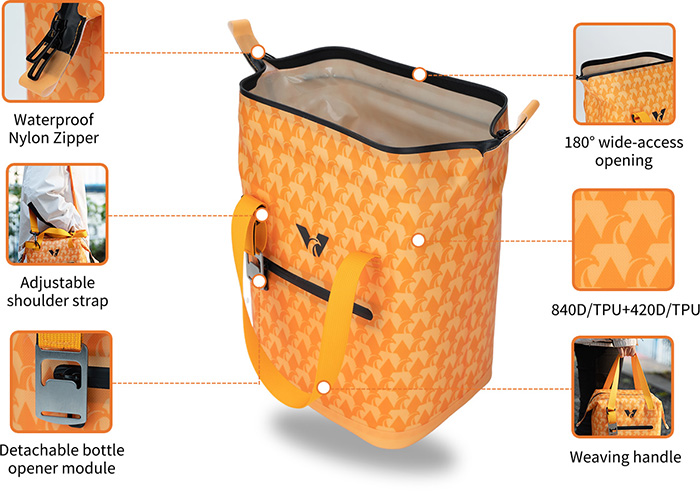
Step 6: Establish a Sample Testing and Function Validation Mechanism
The sampling phase acts as your core risk-control checkpoint. You should never approve mass production without putting the prototype through rigorous, real-world trials.
Work with your cake delivery bag maker to establish a testing protocol. Conduct the following tests before signing off on the sample:
- Thermal Performance Test: Map the actual temperature curve inside the bag. Simulate your longest delivery route under realistic weather conditions.
- Structural Strength Test: Perform a load-bearing test on the handles. Conduct drop tests and stacking tests to ensure the internal framework holds up.
- Cleaning Test: Smear frosting or cooking oil on the inner liner. Verify its stain resistance and test how easily your staff can wipe it clean.
- Hardware Lifespan Test: Repeatedly open and close the zippers, buckles, and velcro straps to check for early wear and tear.
- Customization Durability Test: Bend, rub, and wash the logo area. Ensure the print does not peel, crack, or fade.
Both you and the cake insulated bag fabricator must agree on the testing standards and acceptance criteria. Use the passed sample as the absolute benchmark for the final bulk delivery.
Step 7: Clarify Cooperation Models and Long-term Synergy
Different bakery brands require different levels of control over their product development. Before you sign a contract, clearly define the cooperation model with your chosen manufacturer.
You generally have two main paths when working with a cake insulated bag fabricator:
- OEM (Original Equipment Manufacturing): Your brand provides complete design blueprints, material specs, and craftsmanship requirements. The factory simply executes your vision. This model suits brands with an experienced in-house design team.
- ODM (Original Design Manufacturing): The manufacturer steps in to help. They optimize the structure, propose new materials, and handle sample development based on your rough concept. This model works best for brands wanting to shorten their development cycle.
Before production starts, clarify ownership of the design rights. Establish a clear revision mechanism and agree on how to split mold costs. Set strict standards for acceptable defect rates and outline clear after-sales service terms. Treat your manufacturer as a strategic supply chain partner rather than a simple contractor. A strong relationship encourages them to share new materials and innovative designs with you first.
Frequently Asked Questions (FAQs)
1. What MOQ should I expect from a professional cake insulated bag fabricator?
Most B2B manufacturers set their Minimum Order Quantity (MOQ) based on material sourcing requirements. For standard materials, the MOQ usually ranges from 500 to 1,000 pieces. If you require custom Pantone-dyed fabrics or specialized aerogel insulation, the MOQ might jump to 3,000 pieces. Always discuss your volume capabilities early to ensure the factory aligns with your purchasing scale.
2. How do fabricators test the thermal performance of cake delivery bags?
A reputable thermal cake bag factory uses environmental testing chambers. They place the bag in a controlled room set to a specific temperature (e.g., 25℃ or 30℃). They insert a cold source and a digital temperature data logger inside the bag. The logger records the internal temperature every few minutes over a 4 to 8-hour period. They share this data curve with you to prove the insulation efficiency.
3. Can a cake insulated bag fabricator create bags for tall, tiered wedding cakes?
Yes. An experienced manufacturer can design bags specifically for tall or multi-tiered cakes. These bags typically feature a heavy-duty semi-rigid or rigid internal frame to prevent collapsing. They also utilize a front-loading zipper system rather than a top-loading one. This allows the delivery team to slide a heavy, tall cake straight in without lifting it over high edges.
4. Are the inner linings used by an insulated bakery bag supplier completely waterproof?
High-quality inner linings, such as PEVA or heavy-duty PVC, offer excellent waterproof properties. However, water can still leak through standard stitching holes. If you require a 100% leak-proof interior, you must ask the manufacturer to use high-frequency heat sealing instead of traditional sewing for the inner seams.
5. How long does the sample development process take for a custom cake bag?
If you choose a standard design and only customize the logo and color, a cake insulated bag fabricator can usually produce a sample in 5 to 7 days. If your project requires a completely new structural design, custom molds for hard components, or newly developed thermal layers, the sampling process can take 15 to 25 days.
Sourcing the right delivery packaging goes far beyond picking a good-looking design. You need a product that performs flawlessly under pressure. By following these 7 steps, you can confidently evaluate any cake insulated bag fabricator. You will know exactly how to assess their materials, test their structural designs, and verify their production equipment.
Brands like weierken understand that your success relies on consistent, high-quality manufacturing. Building a strong, transparent partnership with your supplier guarantees that your cakes arrive fresh, cold, and beautiful every single time.
Ready to upgrade your bakery’s delivery experience?
Contact our expert manufacturing team today for a B2B inquiry. Let us help you design, test, and produce the perfect custom cake cooler bag for your business. Reach out now to request a detailed quote and standard samples!


