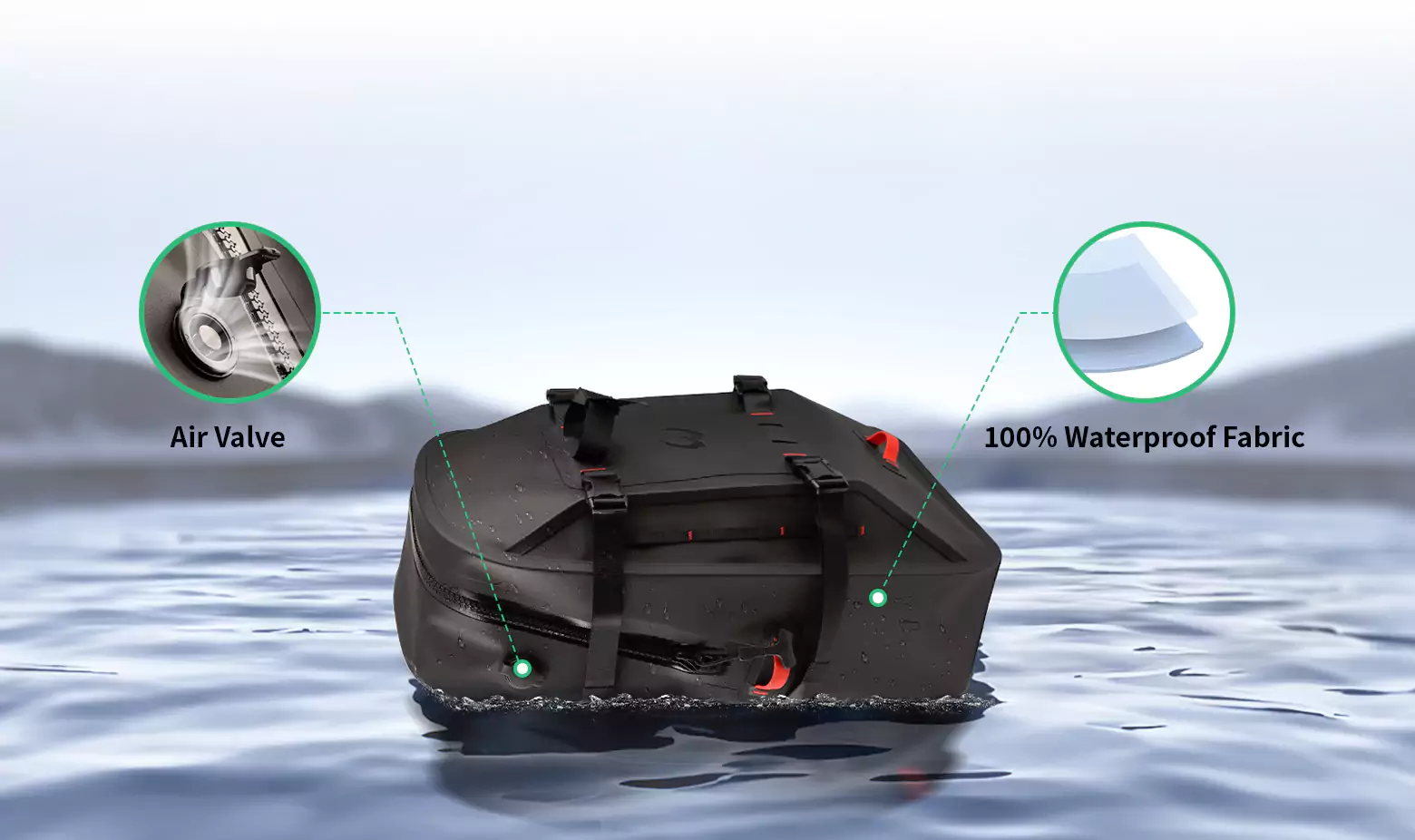
Picture this scenario: A logistics truck pulls up to a high-end restaurant or a pharmaceutical clinic. The driver unloads a pallet of insulated bags. But instead of a clean hand-off, there is a problem. The cardboard box underneath the pallet is soggy. A mystery fluid is pooling on the warehouse floor.
In the world of cold chain logistics, this isn’t just a mess—it is a catastrophic failure. It means lost revenue, damaged reputation, and potential safety hazards.
For a procurement manager, preventing this nightmare starts long before the truck is loaded. It starts with selecting the right partner. A professional cold shipping bag distributor understands that “leak-proof” is not a marketing slogan; it is a measurable, engineered standard. At weierken, we have seen how a single seam failure can ruin a shipment, which is why we adhere to strict manufacturing and testing protocols.
This guide will walk you through exactly what you should expect—and demand—regarding leak-proof guarantees from your distribution partner.

Core Design Technologies a Cold Shipping Bag Distributor Uses
When you browse a catalog, every bag looks secure. However, the difference between a bag that leaks and one that holds tight often lies in the invisible details of the manufacturing process. A reputable cold shipping bag distributor should be able to articulate exactly how their bags are constructed to prevent fluid escape.
High-Frequency Welding (HF) vs. Stitching
The first guarantee involves the seams. Traditional needle-and-thread stitching creates thousands of tiny holes in the fabric. Even with seam tape, these are potential failure points under pressure.
We guarantee that for high-performance leak-proof requirements, we utilize High-Frequency (HF) Welding or Ultrasonic Welding. This process uses electromagnetic energy to fuse the molecular structure of the thermoplastic materials together.
Essentially, the two pieces of fabric become one. There are no needle holes, and therefore, no physical path for liquid to escape. This creates a hermetic seal that is as strong as the material itself.
The Seamless Liner Architecture
The second guarantee revolves on the internal geometry. The best defense against leaks is to remove the seams entirely from the areas most likely to hold liquid.
We advocate for an integrated, one-piece liner structure (often referred to as a “bucket” liner). By using a molded or deep-drawn liner, the bottom and sides are continuous.
This means that even if the outer shell is compromised, or if the bag is dropped, the internal liquid containment remains intact because there are no bottom seams to burst.
Waterproof Zipper Systems
If the bag requires a zipper, it is often the weakest link. Standard coil zippers allow water to pass right through the teeth.
A professional distributor guarantees the use of specialized waterproof zippers (similar to AquaGuard® technology). These zippers feature a polyurethane coating that covers the teeth when closed.
Furthermore, the design must include a “zipper garage” or a tight docking point at the end of the track to ensure no tiny gap remains where the slider sits. For extreme requirements, we may recommend roll-top closures which eliminate the zipper entirely, relying on folding and buckling to create a seal.
Material Resilience and Certified Guarantees
A seal is only as good as the material it holds together. If the fabric cracks when frozen or degrades when exposed to oils, the welding technique doesn’t matter. As a cold shipping bag distributor, we focus heavily on material science.
Integrity of Liner Materials
The inner lining faces the harshest conditions. It must hold ice packs, withstand condensation, and resist the chemical nature of the cargo.
We guarantee the use of high-grade, food-safe materials such as PEVA (Polyethylene Vinyl Acetate), TPU (Thermoplastic Polyurethane), or PVC.
Crucially, these materials are tested for “Cold Crack” resistance. Cheap plastics become brittle and shatter like glass at -20°C. Our guarantees ensure the liner remains flexible and rubbery even in deep-freeze environments.
Additionally, the material must be resistant to fats, oils, and fruit acids. If a food container breaks inside the bag, the spilled lasagna sauce or orange juice should not eat through the liner.
Certification Support
Trust is good, but documentation is better. A qualified distributor does not just say “it’s waterproof”; they prove it.
We provide access to material testing reports based on international standards. The most common is the AATCC 127 Hydrostatic Pressure Test or ISO 811.
This test measures how much water pressure the fabric can withstand before droplets penetrate the surface. We guarantee that our leak-proof materials meet specific psi (pounds per square inch) or mm/H2O thresholds, ensuring they can handle the weight of melting ice without sweating through.
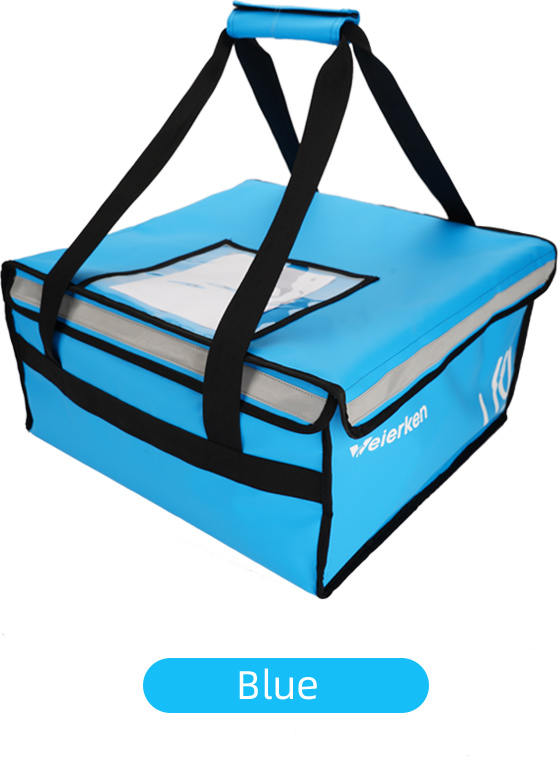
Testing Protocols Demanded from a Cold Shipping Bag Distributor
How do we know the design and materials work together? We test them. A distributor who does not offer standardized testing data is selling hope, not reliability. At weierken, we employ a three-tier testing strategy.
Static Pressure Testing
This is the baseline. We guarantee that random samples from production lots undergo a static hold test.
The bag is filled with a specific volume of water (e.g., 10cm depth) and suspended or placed on dry paper for a set period, typically 24 hours.
The guarantee is simple: zero wet spots on the exterior. This verifies that the welding machine settings were correct and the raw material had no microscopic pinholes.
Dynamic Transportation Simulation
Shipping is violent. Bags bounce, tip over, and get crushed. A bag that holds water while sitting on a table might leak when thrown into a delivery van.
We utilize dynamic simulation standards, such as those outlined by ISTA (International Safe Transit Association) Series 1A.
We guarantee that the bag can withstand vibration and shock while loaded with liquid or gel packs. This ensures that the seams have enough tensile strength to handle the “water hammer” effect—the surge of pressure that happens when liquid slams against the wall of the bag during a sudden stop.
Extreme Temperature Cycling
Seals expand in heat and contract in cold. This movement can cause delamination over time.
Our guarantee covers performance through temperature cycles. We test bags by moving them from deep freeze (-20°C) to ambient warehouse heat (+30°C).
The guarantee is that the HF welds will not peel or crack due to thermal expansion/contraction. This is critical for reusable bags that go through the cold chain loop hundreds of times.
Usage Scenarios and Liability Boundaries
To maintain a transparent relationship, a cold shipping bag distributor must also define the parameters of the guarantee. Leak-proof performance is relative to intended use.
Defining Scope of Use
Our guarantees clearly state the intended contents.
- Approved: Gel packs, dry ice (with specific venting), pre-chilled food containers, sealed medical vials.
- Direct Liquid: Some bags are designed to be “coolers,” not “buckets.” Unless specifically rated for “loose ice” or “direct liquid containment,” we generally recommend using ice packs.
We also specify weight limits. Overloading a bag stretches the fabric beyond its tensile yield, which can compromise the waterproof coating. The guarantee stands only when the bag is loaded within its rated capacity.
Lifespan and Wear and Tear
No soft material lasts forever. We distinguish between manufacturing defects and normal wear.
The leak-proof guarantee typically covers the structural integrity of welds and fabrics for a set period (e.g., 1 year of daily rotation).
However, it does not cover puncture wounds from sharp objects (like broken glass or crab claws) or damage to the waterproof zipper coating caused by forced operation. Clear communication here prevents disputes later.
Quality Control and Batch Traceability
What happens if a leak actually occurs? This is where the operational maturity of weierken comes into play. A guarantee is legally and operationally binding.
The Leaking Issue Protocol
If a client reports a leak, we have a standardized flowchart.
- Verification: We request photos or the return of the defective unit.
- Root Cause Analysis: Was it a weld failure? A material defect? Or a puncture?
- Compensation: If it is a manufacturing defect, our guarantee mandates immediate replacement or credit for the defective units.
Batch Traceability
We guarantee full traceability. Every production run is assigned a Batch Number or Lot Code.
If a bag leaks, we can trace that specific unit back to the exact roll of TPU fabric and the specific welding machine operator.
This allows us to check the quality records for that day. If we find a systemic issue with that batch of raw material, we can proactively recall or quarantine the rest of the lot before it reaches other customers. This protects your supply chain from widespread failure.
Custom OEM/ODM Guarantees from Your Cold Shipping Bag Distributor
Many B2B clients require custom sizes or branding. Customization introduces new variables to the leak-proof equation.
Design Feasibility Responsibility
When you bring a design to us, we guarantee a feasibility review. If a client requests a complex shape with sharp corners or multiple zippers meeting at a point, we will flag the “leak risk.”
We guarantee that our engineering team will modify the seam layout to ensure the HF welding process is viable. We will not accept a design for production if the geometry prevents a secure seal.
Pre-Production Sample Validation
For OEM orders, we guarantee that the “Golden Sample” (the final approved prototype) passes the same rigorous testing as our standard products.
You will receive a custom test report for your specific design before we cut fabric for the mass order. This ensures that the custom logo placement or extra pocket didn’t compromise the waterproof integrity of the main compartment.
The cost of a high-quality cold shipping bag is a fraction of the value of the goods inside it. Whether you are transporting vaccines, fresh salmon, or meal kits, the bag is the final line of defense.
Selecting a partner isn’t just about finding the lowest price; it is about finding a cold shipping bag distributor who offers a watertight guarantee—literally. From High-Frequency welding technology and ISTA testing to batch traceability and honest usage guidelines, these standards are what separate professional logistics solutions from risky gambles.
At weierken, we pride ourselves on holding water so you don’t have to hold your breath every time a shipment leaves your dock.
Are you ready to upgrade your cold chain security?
Don’t wait for a spill to realize your current bags aren’t up to the task.
[Click here to Inquiry] and let our engineering team validate the perfect leak-proof solution for your business today.
Frequently Asked Questions
Q1: As a cold shipping bag distributor, do you recommend TPU or PEVA for the best leak-proof performance?
A1: Both are excellent, but they serve different needs. TPU (Thermoplastic Polyurethane) is stronger, more abrasion-resistant, and more elastic, making it ideal for heavy-duty, reusable bags. PEVA is a cost-effective, food-safe option that is great for lighter loads or semi-disposable applications. For absolute best durability against leaks over time, TPU is the superior choice.
Q2: Can a leak-proof bag also hold Dry Ice?
A2: This is a tricky area. While the materials (like TPU) can withstand the cold, “leak-proof” often means “air-tight.” Dry ice sublimates into CO2 gas. If you put dry ice in a fully sealed, air-tight bag, it will expand and explode. We supply specific bags for dry ice that feature a gas release valve or breathable membrane that lets gas escape while keeping liquids inside.
Q3: What is the difference between “Water Resistant” and “Leak-Proof”?
A3: “Water resistant” usually means the fabric sheds water (like rain) but will leak if submerged or pressurized. “Leak-proof” means the seams are welded (not stitched) and the zippers are sealed, allowing the bag to hold liquid without dripping, even when turned upside down or compressed.
Q4: How do I clean the interior of a leak-proof bag without damaging the seals?
A4: Because the interior is non-porous and welded, it is very easy to clean. We recommend using mild soap and warm water with a soft cloth. Avoid harsh solvents or abrasive scrubbers that could micro-scratch the coating. Because the liner is seamless, you can rinse it out like a bucket and hang it upside down to dry.
Q5: What are the standard lead times for a custom leak-proof bag order?
A5: For custom OEM orders, the process typically takes 35 to 50 days. This includes 7-10 days for prototyping and testing the leak-proof design, followed by 30-40 days for mass production (material sourcing, cutting, HF welding, and QC testing). Complex custom molds may add time to the initial phase.