

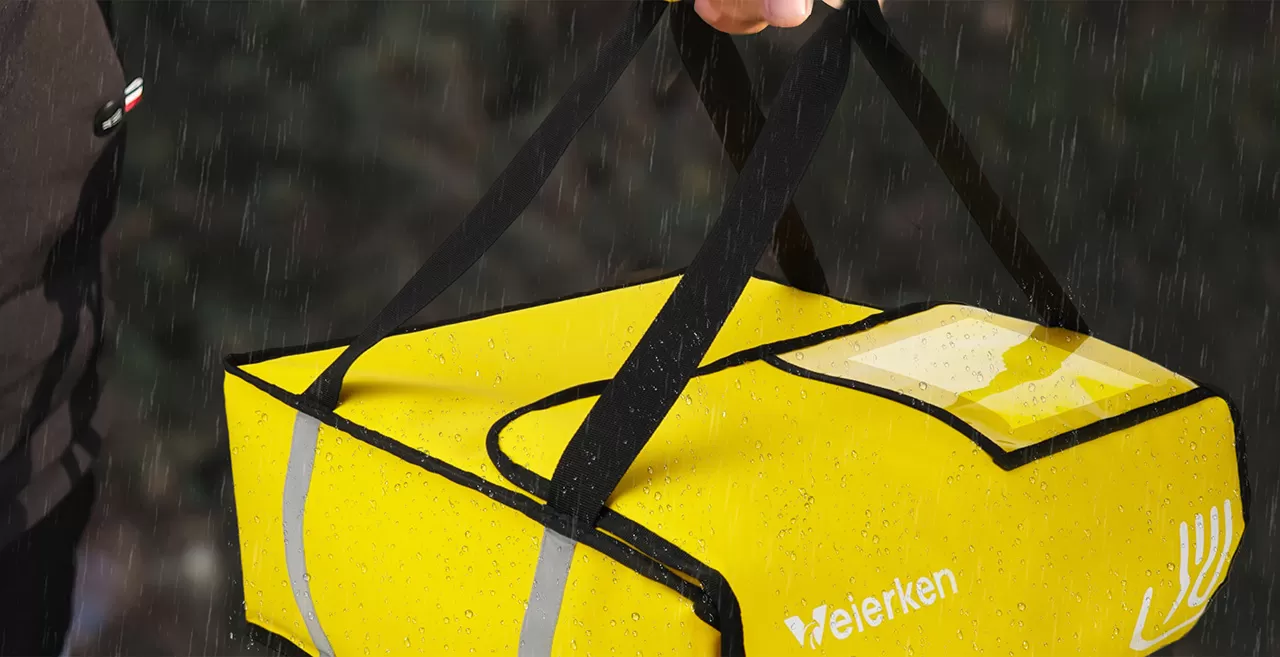
A hot pizza delivered to a customer's doorstep is the ultimate promise of any pizzeria. However, maintaining that oven-fresh quality during transit requires more than just speed. It requires high-performance gear. Choosing the right pizza thermal tote factory is a strategic move that can define your brand’s reputation in a competitive market.
At Weierken, we understand that an OEM partner should do more than just sew fabric together. We focus on creating a mobile billboard for your business while ensuring the crust stays crisp and the cheese stays melted. This article explores how professional OEM services can help you scale your delivery operations effectively.
1. Integrating Brand Vision and Product Functionality
Many businesses make the mistake of choosing a generic bag and slapping a logo on it at the last minute. A professional Food Delivery Bag Manufacturer takes a different approach. We integrate your brand identity into the actual structural design of the tote from the very beginning.
Visual appeal matters just as much as thermal retention. Large-area heat transfer or silk-screen printing ensures your brand colors and logo remain vibrant despite heat and friction. High-quality inks prevent the branding from peeling off after a few weeks of heavy use in rainy or sunny conditions.
Consider these branding details for your next order:
Color Matching: Use custom-colored zippers, handles, or edge binding that echo your brand’s primary palette.
Storytelling Elements: Add your brand story or a unique slogan on the inner lid or side pockets to surprise customers when they open the bag.
Premium Hardware: Custom-engraved zipper pulls or rubber patches can give your Insulated Pizza Delivery Bags a high-end feel.
2. Customizing Structure for Specific Delivery Scenarios
The size of your pizza and the distance of your delivery route dictate the necessary bag structure. An 18-inch party pizza requires a different support system than a 9-inch personal pan. A pizza thermal tote factory with engineering expertise will provide 3D drawings to ensure the fit is perfect.
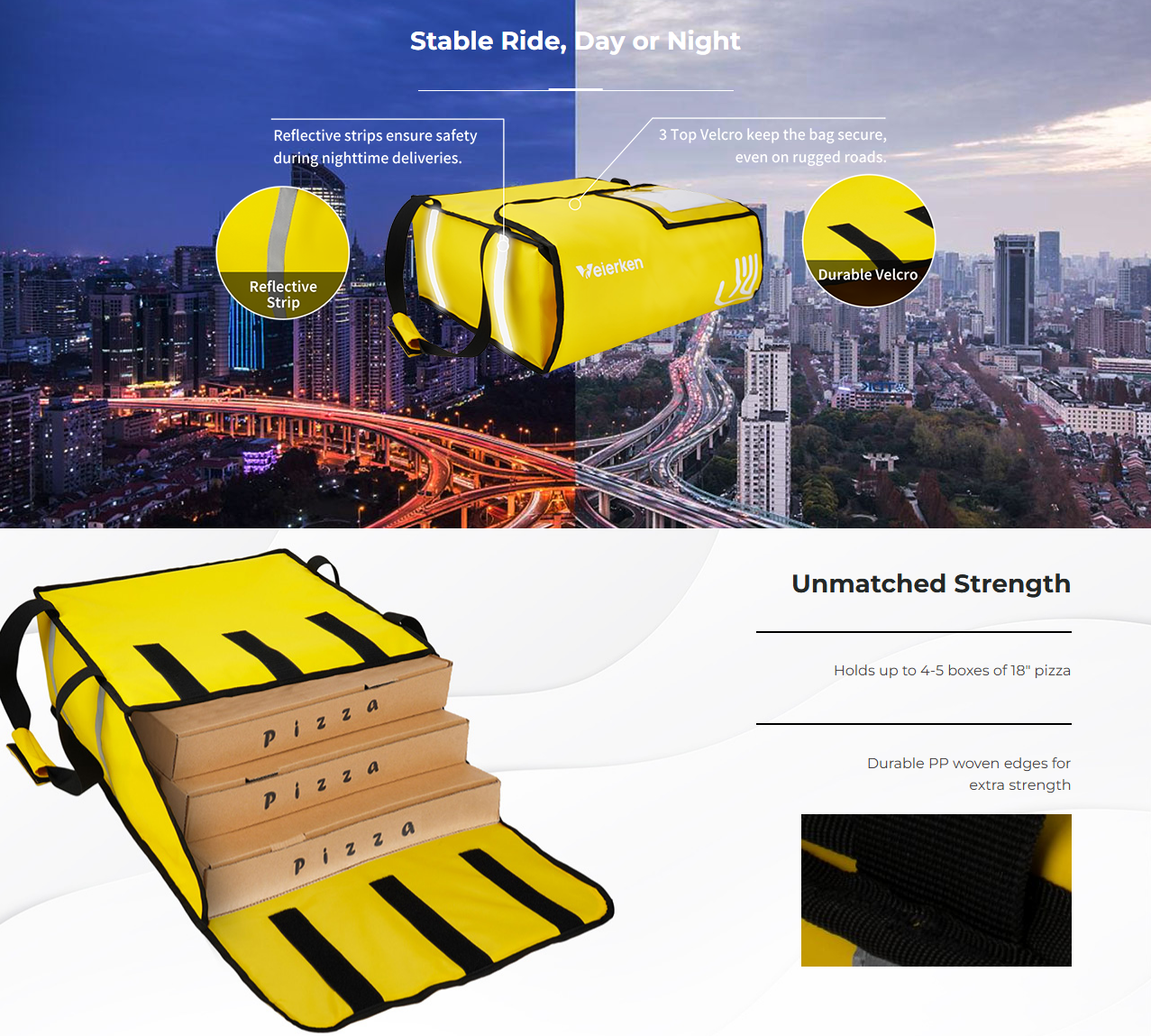
For short-distance urban deliveries, we often recommend a hard-bottom design combined with a soft, easy-access lid. This allows drivers to grab and go with one hand. We can also add anti-slip interior linings to prevent the boxes from sliding around during sharp turns or sudden stops.
Long-distance or group catering requires a different strategy:
Heightened Stackable Bags: Custom height allows you to carry 5 to 10 pizzas at once with internal dividers.
Side Accessory Compartments: Built-in mesh or insulated pockets for dipping sauces, napkins, and soda bottles.
Foldable Designs: Space-saving bags that collapse when empty, reducing the bulk for couriers returning to the shop.
3. Matching Thermal Performance with Material Grades
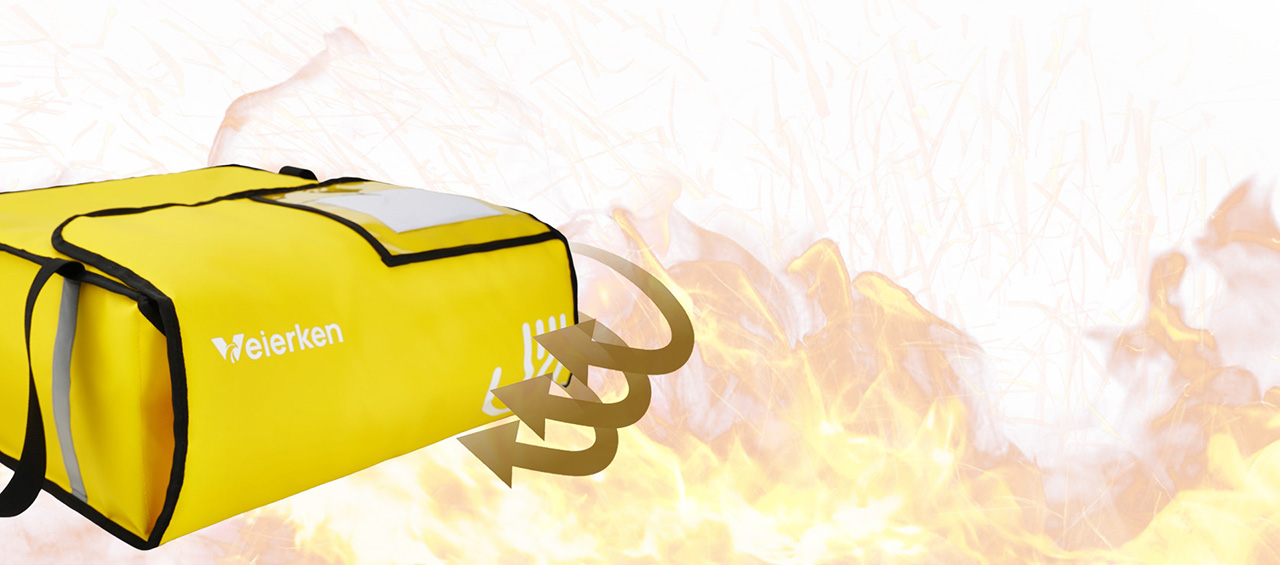
Not all insulation is created equal. Depending on your needs, a Commercial Pizza Carrier can be built to hold heat for 30 minutes or up to 4 hours. Professional factories help you match the material grade to your specific delivery window to optimize costs.
The outer shell usually consists of 600D or higher density Oxford cloth. We apply a waterproof coating to protect the contents from rain. The insulation layer typically uses Expanded Polyethylene (EPE) foam or aluminum foil composite pearl cotton. For bags that need extra rigidity, we can insert EVA support layers.
Food safety is the most critical part of the interior. At Weierken, we use food-contact grade PEVA or aluminum foil linings. We provide third-party test reports, such as FDA or LFGB, to prove that our materials are safe and non-toxic when in contact with high-temperature food packaging.
4. MOQ and Cost Optimization Strategies
Managing the budget is vital for growing franchises. If your initial order is small—perhaps 500 to 1,000 units—a modular design strategy is best. You can use a universal bag body and achieve brand differentiation through custom printing and specific color accents. This avoids high mold costs associated with completely unique shapes.
For brands with stable annual demand, we recommend negotiating tiered pricing. By planning your orders during the factory’s off-peak season, you can secure better rates and avoid the rush. This ensures you always have stock ready for the busy holiday periods.
Always ask your pizza thermal tote factory for a Bill of Materials (BOM) breakdown. A transparent factory will show you the cost of fabric, insulation, and labor. This transparency prevents hidden costs from creeping in and helps you understand exactly where your money is going.
5. Quality Acceptance and After-Sales Assurance
Reliable OEM services must include a strict quality check (QC) protocol. We recommend a three-step sample comparison: the pre-production sample, the confirmation sample, and the final mass-production sample. This ensures the 5,000th bag is just as good as the first one you approved.
Thermal testing is the gold standard of acceptance. We perform real-world tests: place a pizza at 65°C inside the bag and measure the temperature every 30 minutes. If the data doesn't meet the contract specs, the batch is not ready for shipment. This data-driven approach gives you peace of mind.
Your contract should also include clear after-sales terms:
Warranty for Components: Protection against zipper failure or strap breakage within the first 6-12 months.
Replacement Policy: Procedures for replacing bags that arrive with manufacturing defects.
Repair Kits: Provision of spare buckles or fabric patches for minor field repairs.
6. Technical Support and Production Transparency
A professional pizza thermal tote factory operates with total transparency. We don't view production as a "black box." Instead, we involve the client in the technical review phase. Our engineers will discuss seam allowances and how heat-pressing temperatures might affect the foam insulation.
Modern factories provide online production boards. You should be able to see the production schedule or receive real-time photos of the sewing and heat-sealing stages. This level of visibility allows you to coordinate your marketing launches with the actual arrival of the goods.
Traceability is another hallmark of a top-tier manufacturer. Every shipment should come with records tracing the raw materials back to their original suppliers. If a specific fabric batch has an issue, we can identify it within 48 hours. This protects your brand from large-scale failures and ensures long-term reliability.
At Weierken, we maintain an internal defect rate of less than 1.5%. Anything exceeding this limit is caught during our FQC (Final Quality Control) and replaced at our own cost. We believe that being an OEM partner means taking responsibility for every stitch.
Frequently Asked Questions (FAQ)
1. What is the standard MOQ for custom pizza thermal totes?
Most professional factories set a minimum order quantity (MOQ) between 500 and 1,000 units. This allows us to source custom-colored fabrics and specialized insulation materials at wholesale prices, passing the savings on to you.
2. How do you ensure the pizza doesn't get soggy inside the bag?
Soggy crusts are caused by trapped steam. We can design your Insulated Pizza Delivery Bags with small ventilation grommets or use breathable moisture-wicking linings. This allows steam to escape while the insulation keeps the heat locked in.
3. Can the bags be cleaned in a commercial dishwasher?
We do not recommend dishwashers as the high heat can damage the insulation foam. However, we use high-grade PEVA linings that are easy to wipe down with sanitizer. For the exterior, a damp cloth and mild detergent are usually sufficient to maintain a clean appearance.
4. Do you offer 3D mockups before physical sampling?
Yes. As a leading Food Delivery Bag Manufacturer, we provide 3D structural drawings. This helps you visualize the bag's dimensions and branding placement before we spend time and resources on a physical prototype.
5. What is the best way to test the thermal retention of a new bag?
The most accurate method is a "probe test." Place a fresh pizza inside, insert a digital thermometer, and seal the bag. Record the temperature drop every 15 minutes in an environment that mimics your local weather conditions (cold winters or hot summers).
6. How long does the OEM process take from start to finish?
Usually, the design and sampling phase takes about 7-10 days. Once the sample is approved, mass production typically takes 30-45 days, depending on the complexity and order volume. We always provide a clear timeline before we start.
Contact Us
Are you looking for a pizza thermal tote factory that prioritizes your brand’s growth? Weierken combines technical engineering with high-volume manufacturing to deliver the best delivery solutions in the industry. Let us help you keep your pizzas hot and your customers coming back for more.
Email: service@weierkenbag.com
WhatsApp: +1 (929) 944-7393
Office Address: [SCHUYLER DR, JERICHO, NY 11753]
Request a quote today and discover the difference that professional OEM services can make for your business.