

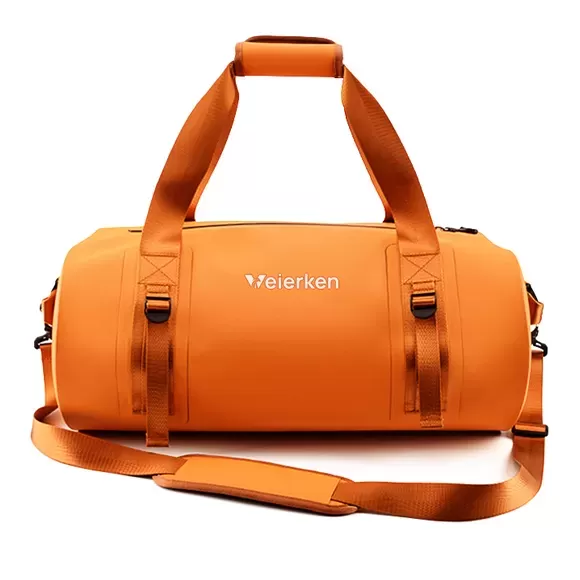
Most water sports brands fall into the catalog trap. They open an export directory, pick an existing 500D PVC roll-top bag, print their logo on the side, and launch. Six months later, they find themselves trapped in a price war on Amazon or fighting for shelf space at discount retailers with margins below 20%.
Paddlers know the difference between a cheap promotional dry pouch and real expedition gear. When sea kayakers, whitewater paddlers, or touring anglers face open crossings and heavy chop, they do not trust their satellite communicators, cameras, and warm layers to a flimsy bag.
High-end outdoor brands do not sell generic bags. They engineer technical gear. By focusing on precision manufacturing, advanced composite fabrics, and rugged hardware, these brands command retail prices between $80 and $220. Building high-margin private label kayak gear bags requires moving past simple cosmetics and understanding factory-floor engineering.
Working alongside experienced technical manufacturers like Weierken, modern paddle brands apply five specific production strategies to establish market authority and protect their margins.
Secret 1: Build for Hermetic Submersion, Not Surface Splash
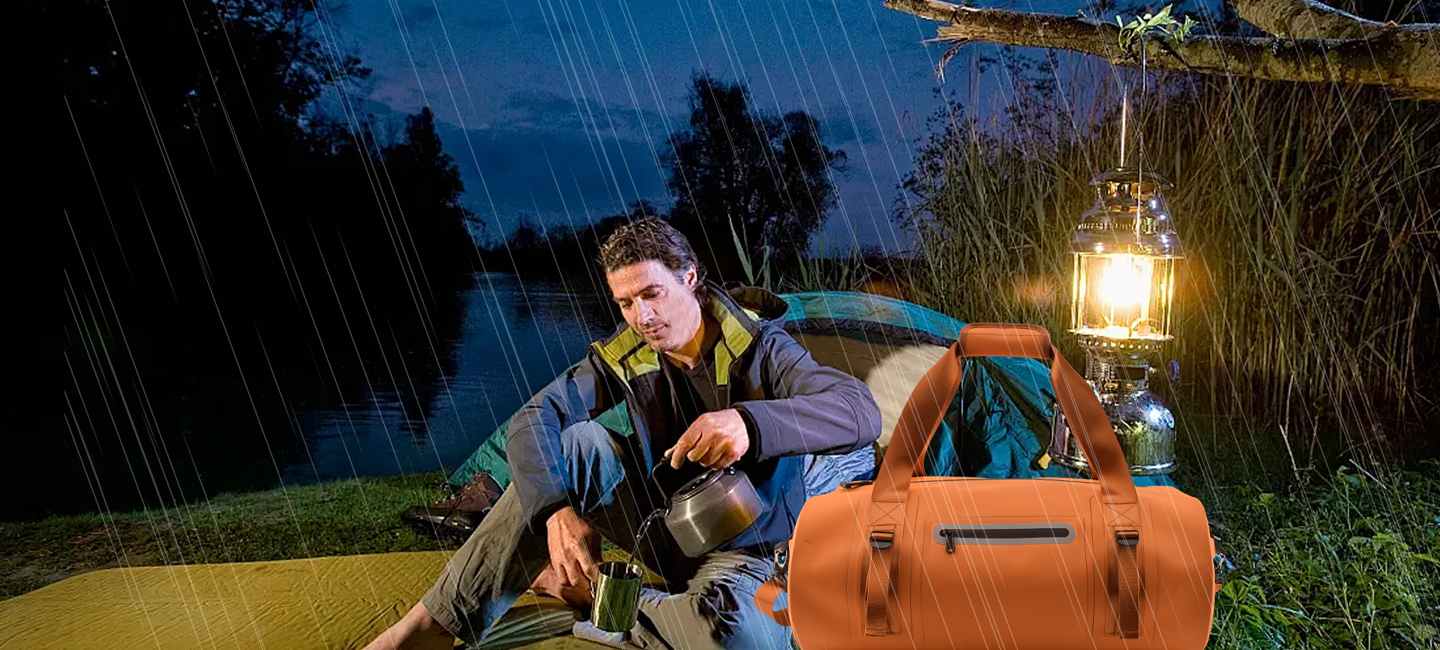
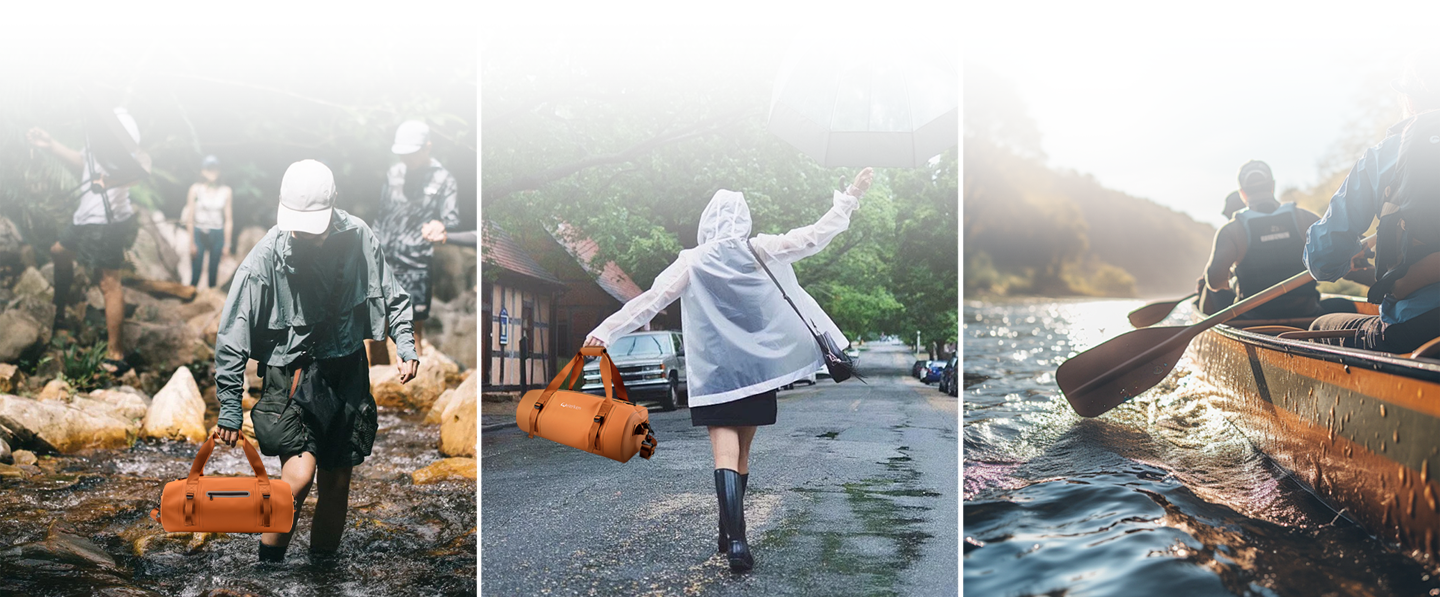
The first line of separation between budget gear and premium products is waterproof reliability. Standard entry-level bags carry an IPX4 or IPX5 rating. They handle rain and incidental spray, but fail the moment a kayak capsizes or a deck pack takes a direct hit from a breaking wave.
Premium private label kayak gear bags require true immersion protection rated at IPX7 or IPX8. Achieving this standard requires specific structural choices on the factory floor:
- Radio-Frequency (RF) Dielectric Welding: Stitching creates
thousands of needle holes that stretch under load. An expert OEM
waterproof gear bag factory uses high-frequency RF welding or hot-air
vulcanization to fuse polyurethane coatings at the molecular level, creating
permanent, seamless bonds.
- Mechanical Airtight Zippers: Roll-tops are reliable, but
bulky. High-end deck packs and dry duffels rely on pressure-tested, toothless,
or tooth-locked airtight zippers. These closures withstand up to 50 kPa of
internal pressure without leaking.
- Integrated Purge and Inflation Valves: Expedition packs
benefit from two-way purge valves. Paddlers can squeeze excess air out to
compress sleeping bags into tight kayak hatches, or blow air in to turn a fully
loaded gear hauler into a floating safety pontoon.
Secret 2: Use Material Narratives to Justify Premium Retail Prices
Sophisticated kayakers immediately notice how a fabric looks, feels, and smells. Sourcing basic PVC tarpaulin instantly signals a low-cost product. High-end buyers avoid PVC because it is heavy, emits chemical plasticizers, and turns rock-hard in cold weather.
To establish a premium reputation, develop your private label kayak gear bags using advanced engineering textiles:
- Technical TPU Laminates: Specify 420D or 840D high-tenacity
ripstop nylon coated on both sides with polyether Thermoplastic Polyurethane
(TPU). This material weighs 40% less than PVC, offers superior puncture
resistance, and stays flexible down to -30°C.
- Clean Chemical Compliance: Premium outdoor brands must
comply with EU REACH, RoHS, and California Proposition 65. TPU contains no
phthalates or heavy metal stabilizers, keeping your business clear of border
audits and toxic warning labels.
- Certified Circular Feedstocks: Modern consumers favor
sustainable choices. Partnering with an eco-friendly kayak dry bag
supplier allows you to source GRS-certified (Global Recycled Standard)
rPET fabrics made from reclaimed ocean-bound plastics. Backing your products
with documented supply chain audits gives you a clear story at retail.
Secret 3: Design a Modular Mounting Ecosystem
A high-end gear bag should never feel like an afterthought resting on a deck. It must function as an integrated component of the boat. Off-the-shelf bags rely on weak, injection-molded plastic clips that snap under tension or degrade in saltwater. Custom outdoor brands build dedicated mounting hardware systems.
When working with a custom kayak bag manufacturer, focus on functional touchpoints:
- Laser-Cut Hypalon Anchor Points: Reinforce critical
attachment points with Hypalon or chlorosulfonated polyethylene (CSPE) patches.
These lash tabs distribute sheer loads across broad surface areas without
tearing the base fabric.
- Custom Anodized Aluminum Hardware: Replace generic plastic
side-release buckles with custom-branded, CNC-machined aluminum G-hooks or
tension-lock buckles. Marine-grade anodized finishes prevent saltwater corrosion
while delivering a rugged, mechanical feel.
- Multi-Craft Deck Compatibility: Design low-profile anchor
pathways that connect directly to kayak deck bungees, perimeter safety lines,
and inflatable SUP D-rings. Adding a molded, closed-cell EVA foam harness turns
a specialized deck pack into a comfortable daypack for portages.
Secret 4: Build Supply Chain Resilience and Zero-Defect Quality Control
Quality issues destroy consumer brands faster than any marketing campaign can rescue them. If a seam fails during an expedition and ruins a customer's phone or satellite beacon, your brand will face public criticism, product returns, and lost dealer accounts.
Securing a premium market share requires strict manufacturing controls and proactive supply chain planning:
- 99.5% First-Pass Yield (FPY): Partner with factories that
mandate automated pressure-decay tests and hydro-tank submersion testing on
every production lot. Catching micro-leaks before packing keeps your warranty
claim rate below 0.5%.
- Dual-Country Manufacturing: Mitigate geopolitical risks and
tariff shocks by choosing a manufacturer with cross-border infrastructure. Using
an R&D center in China for material engineering, combined with large-scale
assembly in Cambodia, lowers import duties for US and European brands.
- Turnkey DDP Fulfillment: Working with a supplier that
manages complete Delivered Duty Paid logistics eliminates freight-forwarder
markups, customs broker delays, and surprise port fees. Your finished inventory
arrives directly at your distribution center on schedule.
Secret 5: Choose a Co-Engineering Partner, Not a Stitching Shop
Most commercial sewing factories simply execute instructions. If your technical drawing contains a structural flaw, they will build it anyway. When that product fails under real-world tension, the brand carries the financial burden.
Building a successful line of private label kayak gear bags requires collaborating with an engineering-focused OEM/ODM partner. Manufacturers like Weierken bring decades of specialized RF welding and outdoor gear design to the table, helping you solve practical issues before spending money on tooling:
- In-House Tooling and Rapid Prototyping: Sourcing teams
should never wait three months for an initial sample. An experienced development
center can translate 3D CAD models into physical, pressure-tested prototypes
within 12 to 30 days.
- Stress Concentration Engineering: Experienced structural
engineers know how to distribute stress points along a bag's corners. Adding
internal bar-tacks and reinforcement gussets prevents seam delamination when
paddlers lift a fully loaded premium dry duffel for kayak
brands by its grab handles.
- Direct Technical Communication: Eliminate miscommunications
by working with bilingual project managers who understand structural specs,
fabric weights, and coating chemistry. Direct communication saves weeks during
product revisions.
Specification Comparison: Generic White-Label vs. High-End Private Label
Before planning your next seasonal launch, review how component specifications affect performance and market positioning:
| Feature | Generic White-Label Bag | High-End Private Label Bag |
|---|---|---|
| Waterproof Rating | IPX4 to IPX5 (Resists light rain) | IPX7 to IPX8 (Handles continuous submersion) |
| Seam Construction | Stitched with taped seams | Continuous high-frequency RF welded seams |
| Primary Fabric | 500D PVC tarpaulin (Heavy, stiff when cold) | 420D/840D ripstop nylon with polyether TPU |
| Main Closure | Standard 3-roll clip closure | Airtight, toothless mechanical waterproof zipper |
| Mounting Hardware | Generic polyacetal plastic buckles | Anodized marine aluminum hardware and Hypalon tabs |
| Environmental Standards | Risks non-compliance (Phthalate issues) | Certified REACH, RoHS, PFAS-free, GRS rPET |
| Target Retail Price | $19.99 – $34.99 | $89.00 – $189.00+ |
Frequently Asked Questions (FAQ)
Q1: What is the typical Minimum Order Quantity (MOQ) for custom
private label kayak gear bags?
A1: Technical welded bags usually
require an MOQ of 500 to 1,000 units per colorway. This minimum covers custom
fabric extrusion, specialized coating colors, and setting up radio-frequency
welding tooling. Some suppliers support lower volumes for initial market
validation if you choose standard fabric colors.
Q2: How does a dual China-Cambodia manufacturing network benefit my
brand?
A2: A dual-facility setup combines technical precision with
trade advantages. Pre-production testing, custom tooling, and pilot runs occur
in an advanced engineering center in China. Once designs are validated, volume
production shifts to Cambodia. This allows US and EU brands to leverage lower
import duties, significantly improving overall profit margins.
Q3: How do factories verify airtight and watertight performance
during assembly?
A3: Professional factories test products through
positive air-pressure testing and water immersion tanks. Completed bags are
inflated to a specific pressure (typically 15 to 30 kPa) and monitored with
precision digital pressure gauges over a set duration. Any pressure drop
indicates a microscopic leak, allowing operators to fix issues immediately.
Q4: Why is TPU better than PVC for technical watersports
bags?
A4: TPU provides much higher tensile strength and abrasion
resistance while weighing 30% to 50% less than equivalent PVC. It contains no
volatile plasticizers, ensuring it will not crack in freezing temperatures,
become sticky in summer heat, or fail REACH and Prop 65 chemical compliance
testing.
Q5: How long does the OEM/ODM development process take from sketch to
final production?
A5: Developing a technical bag generally takes 60
to 90 days before mass production begins. Initial concept review, CAD
adjustments, and functional prototyping take 12 to 30 days. After you approve
the final prototype, tooling fabrication, material extrusion, and mass
production take an additional 45 to 60 days.
Build Your Premium Gear Line
Generic, low-cost gear leaves your brand vulnerable to price wars and shifting algorithms. Long-term brand value comes from building reliable, professional-grade equipment that paddlers depend on season after season.
Whether you want to upgrade an existing collection of dry bags or design a brand-new line of private label kayak gear bags, choosing an experienced manufacturing partner is the critical first step.
Weierken delivers the engineering expertise, advanced RF welding technology, and dual-facility supply chain needed to launch high-performance gear. Contact the Weierken engineering team today to discuss your tech pack, review material swatches, and request a detailed OEM/ODM production proposal.