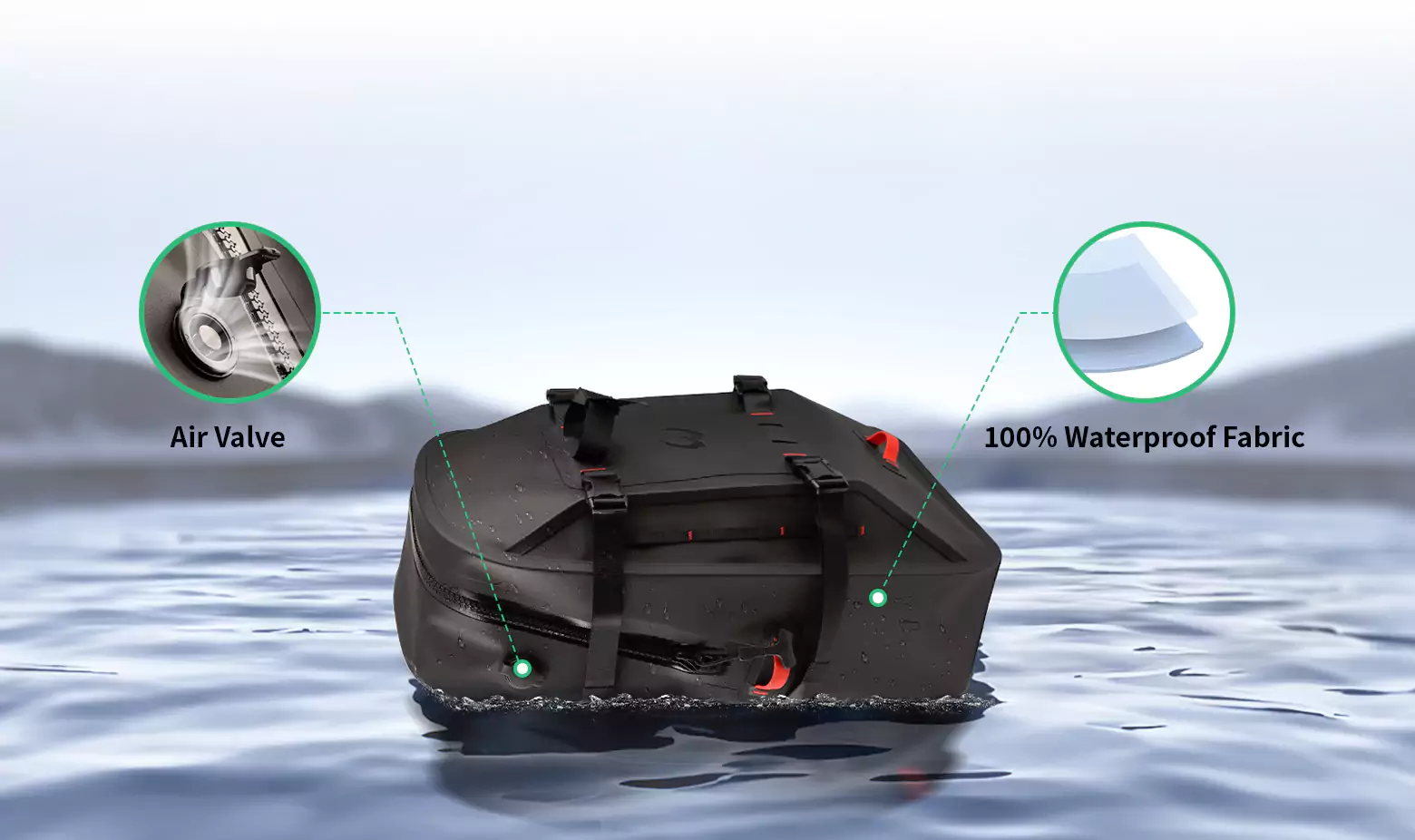
When a hiker gets caught in a torrential downpour, or a kayaker flips their boat, the gear inside their pack must remain dry. There is no margin for error. For a professional waterproof backpack fabricator, trust is built on a foundation of obsessive quality control. It is not enough to simply sew fabric together; the process requires precision engineering, chemical bonding, and rigorous testing.
At weierken, we understand that a waterproof claim is a promise. If that promise is broken, a brand’s reputation can be washed away instantly. Manufacturing these complex products requires a systematic approach that governs every step of production.
Below is the comprehensive quality control checklist that distinguishes a high-end waterproof backpack fabricator from a standard bag factory.
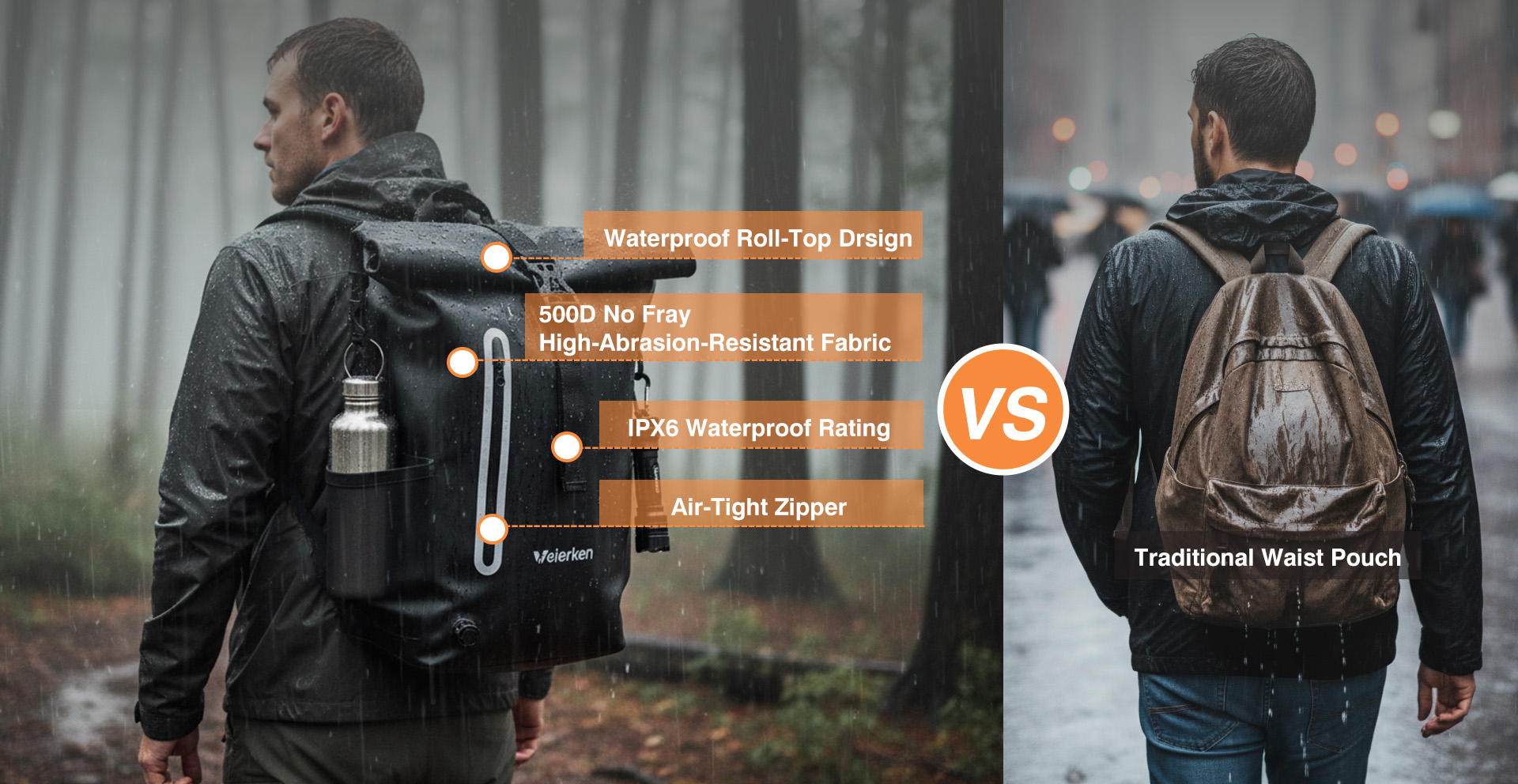
1. Inbound Material Inspection: The First Line of Defense
Quality begins before the first cut is made. If the raw materials are flawed, the finished product will fail, regardless of how good the assembly is. A reliable waterproof backpack fabricator treats the warehouse as a laboratory.
Fabric Verification
The core integrity of any dry bag lies in its skin. We do not rely solely on supplier data sheets.
- Coating Inspection: We verify the thickness of the TPU or PVC coating. The surface must be uniform without pinholes or thin spots.
- Hydrostatic Testing: We subject fabric samples to a hydrostatic head test. The material must withstand pressures of at least 5000mm.
- Compliance: We check environmental certifications (like REACH or RoHS) to ensure the materials are safe and compliant with global standards.
Zipper Functionality
A waterproof zipper is often the most expensive component.
- Smoothness Check: We test watertight zippers, such as AquaGuard®, for sliding resistance. They must be tight enough to seal but smooth enough to operate with one hand.
- Sealing Verification: Samples undergo a spray test or partial submersion to ensure the teeth and slider create a true seal.
Webbing and Hardware
Straps and buckles take the brunt of the physical load.
- Tensile Strength: We perform pull tests on webbing and buckles. The standard usually requires a breaking point above 200kgf.
- UV Resistance: We review UV aging reports to ensure black plastic buckles do not become brittle after months of sun exposure.
Thread Selection
Even welded bags often use stitching for internal reinforcement.
- Material Check: We confirm the use of bonded nylon or waterproof polyester threads.
- Compatibility: We test the thread against the fabric to ensure colorfastness and that the thread tension does not cut through the coating.
2. Precision in Cutting and Printing Processes
Once materials pass the initial check, they move to the production floor. A skilled waterproof backpack fabricator knows that high-frequency welding requires perfect edges.
Cutting Accuracy
The tolerance for waterproof gear is tighter than standard sewing.
- Die-Cutting precision: We check cut pieces against the master pattern.
- Edge Quality: For high-frequency welding, edges must be free of burrs. If the material is laser cut, we inspect for scorching that could prevent a solid weld.
Logo and Printing Durability
Branding is vital for our clients. A logo peeling off a dry bag looks cheap and unprofessional.
- Clarity: The print edges must be sharp, even on textured waterproof fabrics.
- Adhesion Test: We perform a standard 3M tape peel test. Tape is applied over the logo and ripped off; the ink must stay on the bag.
- Friction Test: We simulate wear and tear to ensure the logo won’t rub off against a user’s back.

3. Sewing, Assembly, and Sealing Controls
This phase is where a waterproof backpack fabricator truly proves their worth. The transition from flat fabric to a 3D waterproof vessel involves complex chemistry and physics.
Seam Construction
Water usually enters through needle holes. Therefore, how we handle seams is critical.
- Reinforcement: Stress points are reinforced with double-needle or three-stitch patterns before sealing.
- RF Welding & Taping: This is the most critical step. For sewn seams, we apply hot air seam tape. We inspect the tape width, ensuring it is centered.
- Visual Check: We look for bubbles or wrinkles in the tape. A single air bubble is a pathway for water.
Zipper Installation
Installing a waterproof zipper requires precision.
- Gasket Check: We ensure there is a waterproof adhesive strip or glue application between the zipper tape and the bag fabric.
- End Sealing: The ends of the zipper are often the weak points. We check for proper “garages” or sealant caps that prevent leaks at the slider dock.
Accessory Attachment
External lash points allow users to attach gear, but they cannot compromise the bag’s integrity.
- Bar Tacking: All load-bearing points must be bar-tacked.
- Back-Stitching: We mandate a minimum of three back-stitches to lock the thread in place.
- Weierken Standard: At weierken, we ensure that no external sewing penetrates the inner waterproof membrane unless it is immediately sealed behind.
4. Finished Product Waterproof Testing
You cannot call yourself a waterproof backpack fabricator without getting wet. We employ a mix of 100% inspection and rigorous batch testing.
The Air Submersion Test
This is the industry standard for identifying leaks immediately.
- Method: We seal the bag with air inside and push it underwater.
- The Pass Criteria: We watch for a stream of bubbles. No bubbles mean the seams and zippers are airtight. This validates the RF welding and zipper integrity.
Rain Chamber Simulation
We simulate the worst weather conditions.
- Spray Testing: Bags are placed in a chamber and blasted with water jets from multiple angles for a set duration.
- Inspection: The interior is checked with moisture-sensitive paper. It must remain bone dry.
Dynamic Load Waterproofing
Static testing is good, but users move.
- Method: We load the bag with weights and agitate it while it is sprayed or partially submerged.
- Goal: This checks if the seams open up or distort under the stress of a heavy load, letting water in.
5. Structural Integrity and Durability
A bag that stays dry but falls apart is useless. As a dedicated waterproof backpack fabricator, we test for long-term abuse.
Load and Lift Testing
We simulate a rushed traveler grabbing their heavy bag.
- The Jerk Test: The bag is loaded to max capacity and lifted rapidly by the handle and straps thousands of times.
- Connection Points: We inspect where the shoulder straps meet the body. This is a high-failure zone that we reinforce heavily.
Zipper Fatigue
Zippers fail when they get dirty or tired.
- Cycle Testing: Machines open and close the zipper thousands of times.
- Failure Analysis: We check for teeth separation or slider failure. The zipper must remain smooth.
Aesthetic and Craftsmanship
Visual appeal matters for premium brands.
- Cleanliness: We trim all loose threads.
- Symmetry: Pockets and straps must be aligned.
- Adhesion: We check that velcro and reflective strips are bonded securely and are not peeling at the corners.

6. Final Cleaning, Packaging, and Outbound Audit
The manufacturing process ends, but our responsibility as a waterproof backpack fabricator continues until the product ships.
Final Presentation
- Debris Removal: We use high-pressure air and suction to ensure the inside of the bag is free of thread clippings or dust.
- Surface Cleaning: The outer shell is wiped down to remove any oil or fingerprints from the production line.
Packaging Verification
- Completeness: We check that the correct hangtags, user manuals, and spare parts (like silicone lubricant for zippers) are included.
- Protection: The dust bag or polybag must be correct to prevent shipping damage.
AQL Final Inspection
Before the shipment leaves the weierken facility, we conduct a final random inspection based on Acceptable Quality Limits (AQL).
- Sampling: We pull a random percentage of the total order.
- The Standard: If the defects exceed the allowed threshold, the entire batch is rejected and reworked. This guarantees that our clients receive exactly what they specified in the tech pack.
Frequently Asked Questions
Q1: What is the difference between a water-resistant and a waterproof backpack fabricator?
A: A water-resistant manufacturer uses fabric that sheds water but has sewn seams that will eventually leak. A waterproof backpack fabricator uses specialized technology like High-Frequency (RF) welding or heat-taped seams to create an airtight, watertight seal that can withstand submersion or heavy continuous rain.
Q2: What materials do you recommend for heavy-duty waterproof bags?
A: We typically recommend 840D or 1680D Nylon with a thick TPU (Thermoplastic Polyurethane) coating. TPU is superior to PVC as it is more environmentally friendly, flexible in cold weather, and resistant to abrasion. As a premium waterproof backpack fabricator, we can source various densities based on your budget and durability needs.
Q3: Can you customize the hydrostatic pressure rating for my order?
A: Yes. While our standard starts at 5000mm, we can source fabrics that withstand 10,000mm or higher for extreme conditions. We adjust our testing protocols to match the specific requirements of your project.
Q4: How do you ensure the waterproof zipper doesn’t break over time?
A: We source from top-tier suppliers like YKK or TiZip. Furthermore, we conduct fatigue testing where the zipper is cycled thousands of times. We also advise clients on proper maintenance design, such as adding zipper garages to protect the slider mechanism.
Q5: What is your Minimum Order Quantity (MOQ) for a custom waterproof project?
A: MOQs can vary depending on the complexity of the design and materials required. However, as a flexible waterproof backpack fabricator, we generally start at 300 to 500 pieces per color for custom designs. This allows us to maintain high-quality standards while making production cost-effective for you.
Ready to build gear that survives the storm?
Finding a partner who understands the technical nuances of waterproofing is difficult. At weierken, we combine advanced welding technology with strict quality control to deliver products that protect your brand’s reputation.
Contact us today to discuss your project and request a quote. Let’s create something truly waterproof together.
[Inquiry Now]