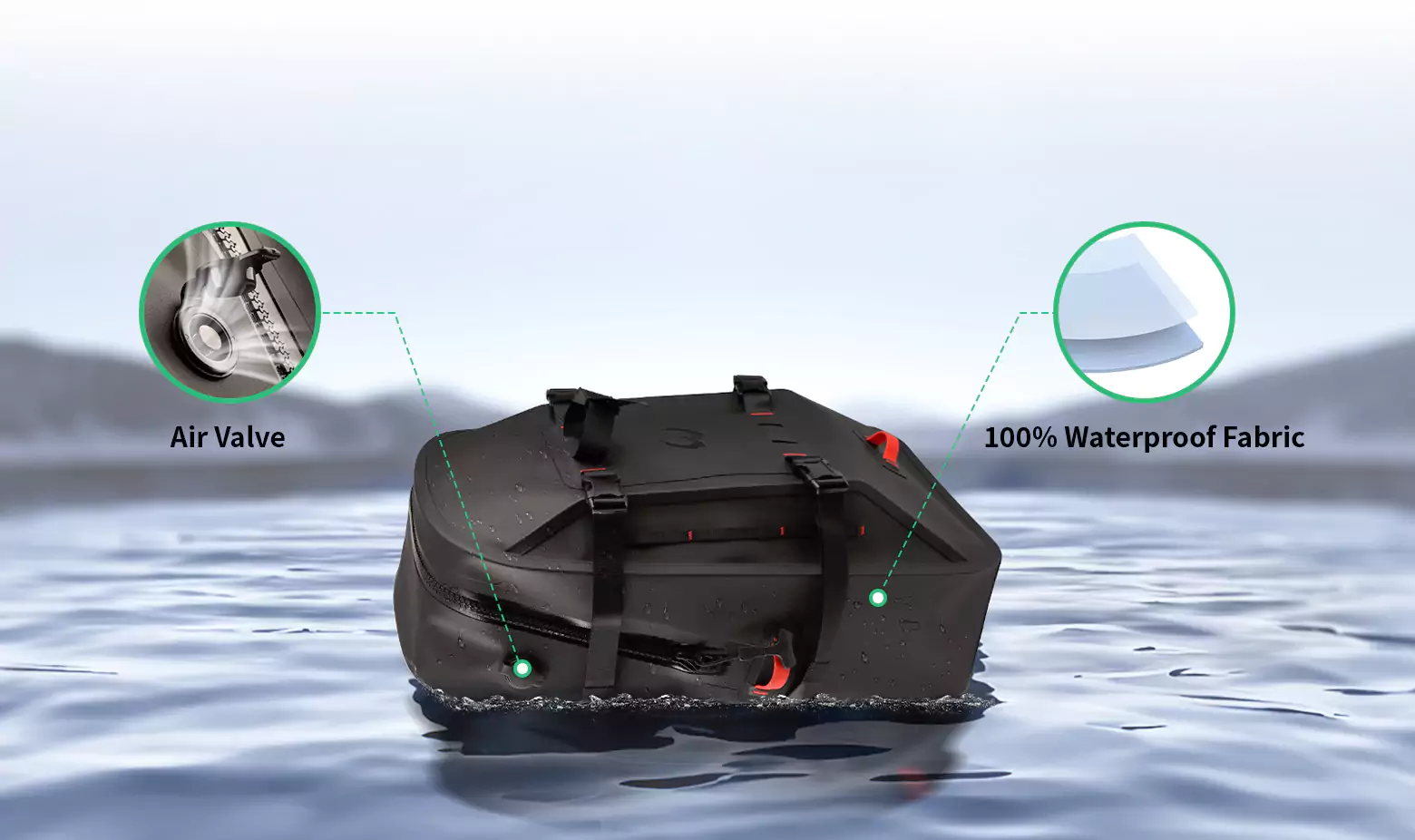
Sourcing outdoor gear is a high-stakes game. When your end-customer is navigating class IV rapids, the equipment they rely on isn’t just an accessory; it’s a safety necessity. For retailers and brands, a product failure isn’t just a return; it’s a reputation killer. This is why vetting your rafting bag distributor is the single most important step in your supply chain strategy.
Many buyers look at the price tag first, but experienced sourcing managers know that the real cost lies in defect rates and return logistics. If you are currently in talks with a supplier, you need to look beyond the catalog photos. You need to understand their quality control (QC) ecosystem.
At Weierken, we have spent years refining our production lines to meet global standards. We know that transparency is the bedrock of trust. Whether you choose us or another partner, asking the right technical questions will save you thousands of dollars in the long run.
Here is a comprehensive guide on what to ask your potential partner to ensure you are getting the quality your brand deserves.
1. Material Specifications and Craftsmanship Standards
The first question you must ask a rafting bag distributor concerns the raw materials. Not all waterproof fabrics are created equal, and the difference usually reveals itself after six months of UV exposure.
Ask About Specific Fabric Properties
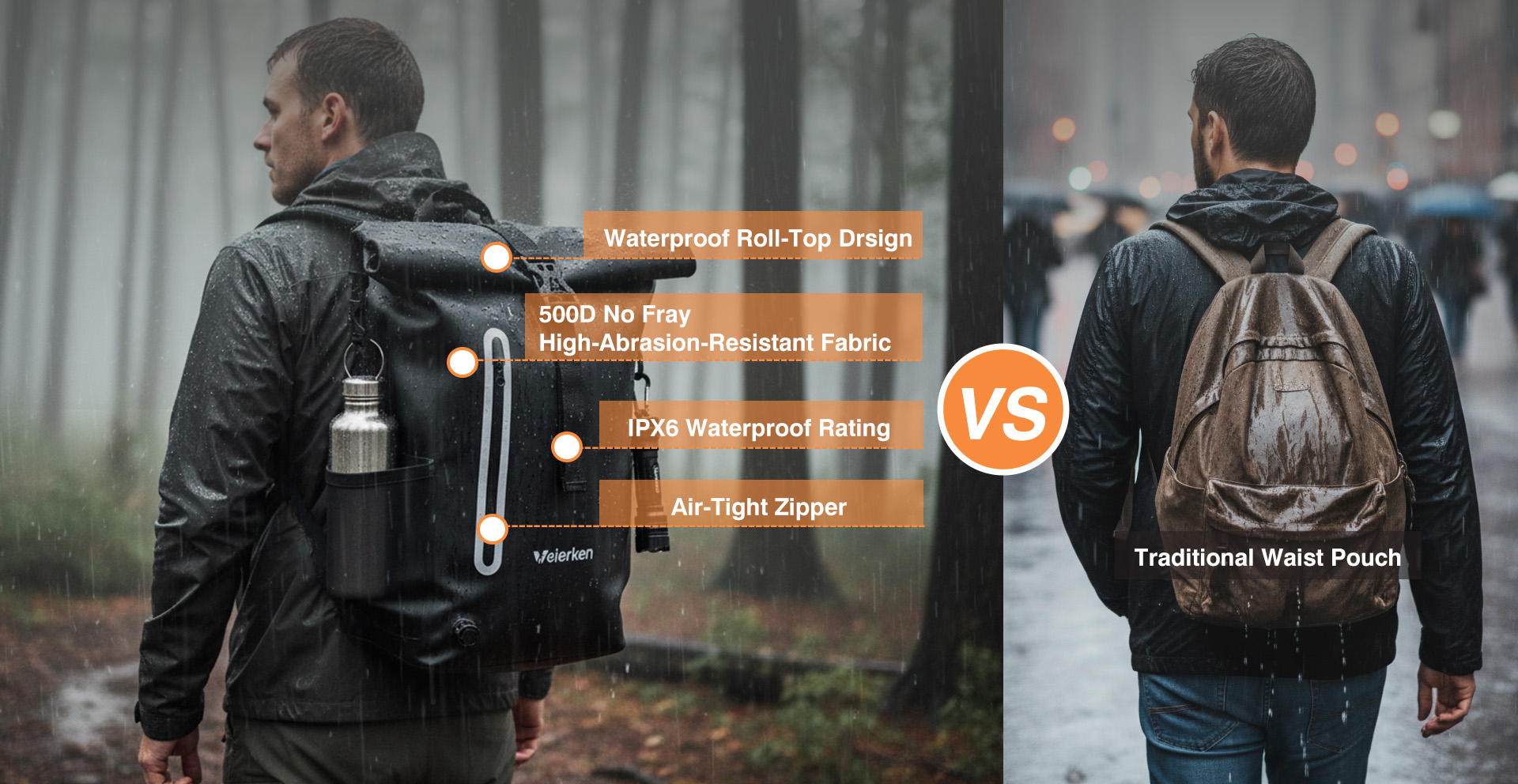
Don’t settle for “it’s waterproof.” You need to ask for the data sheet. Are they using 500D PVC Tarpaulin or 840D TPU? While PVC is cost-effective and durable for heavy duty rafting bags, TPU (Thermoplastic Polyurethane) offers better elasticity and eco-friendliness.
Ask for test reports regarding:
- Hydrostatic Head Test: How much water pressure can the fabric withstand before leaking?
- Tear Strength: If the bag scrapes against a jagged rock, will it rip open?
- UV Resistance: Will the color fade or will the material become brittle after a summer in the sun?
The Welding Technology
The weak point of any waterproof bag is the seam. As a professional waterproof dry bag manufacturer, we know that traditional stitching is a recipe for disaster unless meticulously taped.
Ask your distributor if they utilize High-Frequency (RF) Welding. This process uses electromagnetic energy to fuse the materials at the molecular level, essentially turning two pieces of fabric into one. If they mention “glue” or “sewn seams” for a submersible bag, that is an immediate red flag.
Checklist for this section:
- Can you provide the specific denier and coating thickness of the material?
- Do you use RF welding for the main seams?
- Have the materials passed anti-hydrolysis testing?
2. Production Process and Factory Compliance
A reliable rafting bag distributor is usually backed by a factory with rigorous discipline. You are not just buying a product; you are buying into their process. If the factory floor is chaotic, your product quality will be inconsistent.
Standardization and Maintenance
Ask the distributor about their equipment maintenance schedule. High-frequency welding machines require precise calibration. If the voltage fluctuates or the mold is dirty, the weld will look fine visually but fail under pressure.
At Weierken, we emphasize regular machine calibration to ensure every weld is identical. You should ask if the factory keeps maintenance logs and if the workers operating these machines receive regular technical training.
International Certifications
In the wholesale outdoor gear market, compliance is key. You need to ensure the products meet the regulations of your target market.
- ISO 9001: Does the factory have a quality management system in place?
- REACH / Prop 65: If you are selling in Europe or California, the materials must be free from harmful phthalates and heavy metals.
- BSCI/Sedex: While not a physical quality standard, social compliance audits often correlate with better management and lower turnover, leading to better product consistency.
Checklist for this section:
- Can I see your ISO 9001 certificate?
- Are your materials compliant with REACH or CA Prop 65?
- How often are your welding machines calibrated?
3. Quality Control (QC) Protocols and Testing Methods
This is the most critical section. Any rafting bag distributor can promise quality, but you need to know how they verify it. A “visual inspection” is not enough for waterproof gear.
The Inflation Test (The Gold Standard)
Every reputable waterproof dry bag manufacturer should perform an inflation test. This involves inflating the bag with air, sealing it, and leaving it for a set period (usually 24 hours). If the bag loses pressure, there is a microscopic leak that water will eventually find.
Ask your supplier: “What percentage of the production run undergoes the inflation test?” ideally, for high-end gear, this should be 100%. For lower-cost promotional items, a statistically significant AQL (Acceptable Quality Limit) might be used.
Destructive and Simulation Testing
Beyond the production line, ask about their lab testing.
- Load Bearing Test: How much weight can the handle and straps take before snapping?
- Abrasion Test: Do they simulate the bag rubbing against the floor of a raft?
- Submersion Test: Do they actually weigh the bag down underwater to test the roll-top closure?
In-Process QC
Quality control shouldn’t happen only at the end. It needs to happen when raw materials arrive (IQC), during the cutting and welding process (IPQC), and before packing (FQC). Ask to see their standard QC checklist.
Checklist for this section:
- Do you perform a 24-hour air inflation test on finished goods?
- What is your AQL standard (e.g., 2.5/4.0)?
- How do you handle the rejected products? Are they destroyed or reworked?
4. Customization and Consistency Control
Most B2B buyers are looking for OEM or ODM solutions. You want your logo on the bag, and you want it to look exactly the same in every shipment. This is where many relationships with arafting bag distributor fall apart.
The “Golden Sample” Rule
Before mass production begins, there must be a signed-off “Golden Sample.” This sample serves as the undeniable standard for color, texture, and printing quality.
Ask your distributor about their protocol for matching this sample.
- Color Matching: Do they use Pantone codes? How do they check color accuracy under different light sources?
- Logo Printing: For heavy duty rafting bags, the logo is often screen printed or UV printed. Ask about the ink’s adhesion. Will it peel off after getting wet?
Handling Variations
In mass production, slight variations occur. You need to establish the “tolerance range.” For example, is a 5mm size difference acceptable? Is a 3% color shade variance okay? Defining these parameters upfront prevents arguments later.
Weierken understands the importance of branding. We ensure that the logo placement and color vibrancy on the 1,000th bag are identical to the first.
Checklist for this section:
- What is your process for approving the pre-production sample?
- How do you test ink adhesion on waterproof coatings?
- What are your tolerance ranges for dimensions and weight?
5. After-Sales Service and Quality Traceability
Even with the best QC, issues can arise. How a rafting bag distributor handles these problems defines their integrity.
Traceability Systems
Ask if they use batch numbers or production dates codes on their products. If a customer reports a handle failure, you need to know which production batch it came from. This allows the factory to isolate the problem (e.g., “It was the batch from last Tuesday when Machine B was misaligned”).
Without traceability, a single defect might force you to recall your entire inventory because you can’t identify the safe products.
Warranty and RMAs
Clear terms are essential.
- What is the defect rate threshold for a refund?
- Who pays for shipping if the goods need to be returned or replaced?
- What is the response time for a quality complaint?
A supplier that stands behind their wholesale outdoor gear will offer a clear, written warranty policy.
Checklist for this section:
- Do you print batch numbers on the products or packaging?
- What is your standard procedure for replacing defective goods?
- Can you provide a case study of how you resolved a past quality issue?
Conclusion
Selecting a rafting bag distributor is not just about comparing price lists. It is about digging deep into the technical capabilities and quality management systems of the supplier. By asking detailed questions about material specs, welding technology, inflation testing, and traceability, you protect your brand from the disaster of product failure.
High-quality gear builds brand loyalty. Whether you are selling to professional rafting guides or weekend warriors, they expect their gear to stay dry.
At Weierken, we welcome these tough questions. We believe that an educated buyer is our best customer. If you are ready to discuss your next line of waterproof gear with a partner who prioritizes quality control, reach out to our team today. Let’s build products that survive the roughest waters.
Frequently Asked Questions (FAQs)
Q1: How can I verify if a rafting bag distributor owns their factory or is just a trading company?
A1: Ask for specific evidence. Request a virtual or in-person factory tour, ask to see production records with the factory’s letterhead, and require certifications (like ISO 9001) issued directly to the manufacturing facility. A genuine factory owner will provide detailed production knowledge and is usually more capable of tight quality control.
Q2: What is a typical minimum order quantity (MOQ) for custom rafting bags from a distributor, and is it negotiable?
A2: MOQs vary greatly, from 500 to 3000 pieces per model/color, depending on the distributor’s scale and your customization complexity. It is often negotiable. Factors like using existing fabric stocks, simpler logo prints, or agreeing to a slightly higher unit price can sometimes reduce the MOQ.
Q3: What is a reasonable lead time to expect from order confirmation to shipment for rafting bags?
A3: For standard models, expect 30-45 days. For customized products involving new material sourcing, sampling, and production, lead times of 60-90 days are standard. Always confirm each phase (sampling, production, shipping) timeline with your distributor and build buffer time into your planning.
Q4: Why are international certifications like ISO 9001 important when my market doesn’t legally require them?
A4: These certifications are not just for market access; they are a proxy for reliability. An ISO 9001-certified factory has documented processes for quality control, corrective action, and continuous improvement. This significantly lowers your risk of receiving defective or inconsistent products, protecting your brand regardless of local laws.
Q5: How should a reliable rafting bag distributor handle a situation where a quality defect is found in a batch after delivery?
A5: A professional distributor will have a clear protocol. They should immediately acknowledge the report, request evidence (photos, batch numbers), and initiate an investigation using their traceability system. The solution should involve a timely replacement of defective units, credit for the faulty products, or a negotiated compensation, along with a root-cause analysis report to prevent recurrence.