Imagine standing in a warehouse. On one side, you have pallets stacked high with rigid, boxy containers that take up significant square footage. On the other, you have shelves neatly packed with folded, lightweight parcels. Both products serve the same fundamental purpose: keeping things cold. Yet, for a procurement manager or a brand strategist, the difference between these two products is night and day.
It is not just about temperature retention; it is about logistics, shelf appeal, user experience, and ultimately, profit margins. As a professional compact cooler bag distributor, we see clients wrestle with this decision constantly. Should you invest in the rugged invincibility of a hard shell, or bank on the versatility and volume-efficiency of a soft shell?
At weierken, we believe the answer lies in understanding the specific nuances of your target market. There is no “best” cooler, only the right tool for the specific job. This guide dives deep into the trade-offs, helping you make an informed decision for your next bulk order.

Insulation Performance: Insights from a Compact Cooler Bag Distributor
When buyers approach a compact cooler bag distributor, the first question is almost always about ice retention. This is the core function of the product, and physics dictates the winner here, though the gap is narrowing.
Hard Shell Coolers: The Fortresses of Cold
Hard shell coolers generally dominate in raw thermal performance. They are typically constructed using injection molding or, in high-end cases, rotomolding technology.
The walls of a hard cooler are thick and rigid, allowing for the injection of high-density Polyurethane (PU) foam. This creates a continuous thermal barrier with very few weak points.
For scenarios requiring 24 to 72 hours of cold retention—such as transporting medical reagents, vaccines, or camping trips in remote locations—the hard shell is undeniable. The structure prevents the “bellows effect” (air moving in and out as a bag flexes), which helps maintain internal temperatures.
Soft Shell Coolers: The Efficient Contenders
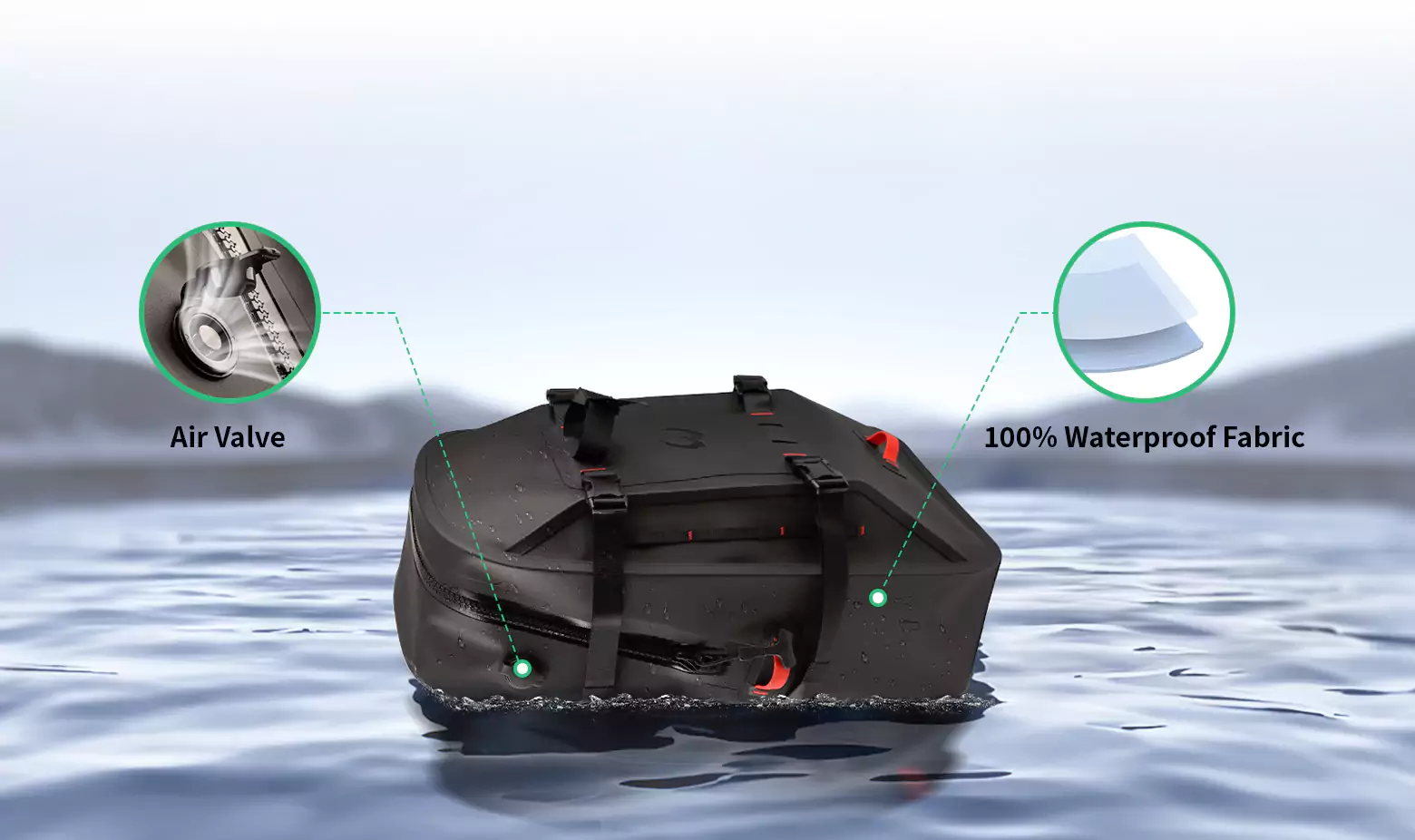
Soft coolers have evolved significantly. While early models were merely lunch bags, modern versions use multi-layer composite fabrics. A typical setup involves an outer layer of heavy-duty Oxford cloth or TPU, a middle layer of high-density insulation cotton or closed-cell foam, and an inner lining of heat-sealed aluminum film or PEVA.
For daily use—think 4 to 8 hours—soft shells are perfectly adequate. They excel in the “lunch to dinner” window.
However, as a distributor, we advise clients that soft shells are more susceptible to ambient heat transfer if the bag is constantly opened or compressed. They are ideal for picnics, commuting, or short-distance food delivery, but less so for multi-day storage.
Portability and Scene Adaptation for the Compact Cooler Bag Distributor
The “best” cooler is the one the customer actually wants to carry. This is where the form factor becomes a critical selling point.
Hard Shell: The Base Station
Hard coolers are heavy. Even “compact” hard coolers have a fixed footprint that cannot be altered. They take up the same amount of space in a trunk whether they are full or empty.
They are best suited for “stationary” mobile scenarios. This includes car camping, boating, or serving as a fixed cold storage box on a construction site.
However, they are awkward to carry over long distances. While they have handles, the rigid shape bangs against the hip, making them poor companions for hiking or walking through a crowded city.
Soft Shell: The Agile Companion
This is where soft coolers win on versatility. As a compact cooler bag distributor, we see a massive uptick in demand for soft coolers in urban environments.
They are lightweight. When empty, they collapse. This feature alone makes them a favorite for end-users who live in apartments or have limited storage space.
For active scenarios—hiking, cycling, or working as a delivery rider on an e-bike—the soft cooler conforms to the body. It can be stuffed into a larger backpack or strapped to a bike rack without the bulk of a plastic box.
Longevity and Wear: A Compact Cooler Bag Distributor Perspective
Durability is subjective. It depends on whether you are worried about the cooler breaking, or the cooler breaking something else.
Hard Shell: Impact Resistance
Hard shells are built to take a beating. They are crush-proof. You can sit on them. You can stack heavy boxes on top of them in a delivery truck.
They are resistant to punctures and tears. However, they are not invincible. The hinges and latches are mechanical failure points. Furthermore, the surface of a shiny plastic cooler can get scratched and scuffed easily, looking “old” faster than a fabric bag might.
Soft Shell: Fabric Fatigue
The lifespan of a soft cooler depends entirely on the manufacturing quality. Low-end options often fail at the zipper or the stitching seams.
However, high-quality soft coolers using TPU-laminated nylon and waterproof zippers can rival hard coolers in longevity. The flexibility of the material absorbs impact rather than cracking.
From a distribution standpoint, we often see fewer “damage in transit” claims for soft coolers because they don’t crack if dropped during shipping.

Cost Analysis and Supply Chain Flexibility for the Compact Cooler Bag Distributor
For B2B buyers, the unit cost is only part of the equation. You must consider the Total Landed Cost. This is where the advice of a compact cooler bag distributor becomes invaluable.
Hard Shell: The Logistics Heavyweight
Hard coolers are expensive to manufacture due to high mold costs. Opening a new mold for a custom shape can cost tens of thousands of dollars.
More importantly, they are expensive to ship. You are essentially shipping air. A 40-foot shipping container can only hold a limited number of rigid boxes. This drives up the per-unit freight cost significantly.
Storage is also expensive. They consume massive amounts of warehouse racking space.
Soft Shell: The Supply Chain Sweet Spot
Soft coolers offer incredible supply chain efficiency. They can be folded or flattened. You might fit 5 to 10 times as many soft coolers in the same shipping container compared to hard coolers.
This drastically reduces freight costs and warehousing fees.
Production is also more flexible. Changing a design usually just requires a new pattern for the fabric cutter, not a new steel mold. This allows for faster “speed to market” when testing new trends.
Branding Opportunities: What a Compact Cooler Bag Distributor Suggests
If your goal is brand visibility, the substrate dictates the method.
Hard Shell: Limited Canvas
Branding on hard shells is typically done via screen printing, pad printing, or stickers. For large orders, you can have the logo embossed into the mold, but that is a permanent decision.
The shape is rigid, meaning you cannot easily add “features” like extra pockets without changing the mold.
Soft Shell: The Creative Playground
Soft bags offer a massive array of customization options. We can utilize digital printing for full-color, edge-to-edge designs. We can add rubber patches, woven labels, or embroidery.
Functionality is also customizable. Want a zippered pocket for keys? A mesh side pocket for a tumbler? A bottle opener attached to the strap?
With soft shells, brands can create a truly unique product that serves specific user habits. This level of detail helps brands differentiate themselves in a crowded market.

The Final Recommendation from Your Compact Cooler Bag Distributor
So, which one should you choose?
A professional compact cooler bag distributor will rarely tell you one is objectively “better.” Instead, we look at your constraints.
Choose Hard Shell If:
- You are targeting the high-end outdoor market (fishing, hunting).
- You need medical-grade cold retention (24h+).
- Your product needs to double as a seat or table.
- Budget is less of a concern than absolute performance.
Choose Soft Shell If:
- You are targeting the promotional market, daily commuters, or casual picnickers.
- Shipping and warehousing costs are a major concern.
- You need a high degree of visual customization.
- You want a product with a lower barrier to entry (lower MOQ and cost).
At weierken, we have noticed a trend toward “hybrid” purchasing. Many of our retail clients stock a core line of high-volume soft coolers for the mass market, while keeping a smaller inventory of premium hard coolers for specialized customers.
This balanced approach mitigates risk. It ensures you have a low-cost, high-turnover item (soft) and a high-ticket, high-margin item (hard).
Ultimately, the choice comes down to knowing your customer’s journey. Are they walking a mile to the beach, or driving their truck onto the sand?
We hope this comparison helps clarify the architectural and logistical differences between these two popular categories. By weighing insulation against portability and cost against durability, you can build an inventory that moves.
Frequently Asked Questions
Q1: As a compact cooler bag distributor, what is the typical Minimum Order Quantity (MOQ) for custom soft vs. hard coolers?
A1: Generally, soft cooler bags have a much lower flexible MOQ, often starting around 500 to 1,000 units depending on the complexity of the fabric and printing. Hard coolers, due to the manufacturing process and mold requirements, often have higher MOQs or significantly higher unit costs for small batches, usually starting at 1,000+ units for custom colors, though off-the-shelf colors can sometimes be purchased in smaller quantities.
Q2: Can I get a sample of a custom-designed cooler bag before committing to a bulk order?
A2: Yes, reputable distributors will always provide a prototyping service. For soft bags, this is relatively quick and inexpensive (typically 7-14 days). For hard coolers, if you are using an existing mold, sampling is fast. However, if you require a custom shape hard cooler, you must first invest in the mold creation, which takes significantly longer and requires a deposit.
Q3: How does shipping cost differ between the two types of coolers?
A3: Shipping is the biggest hidden cost in this industry. Soft coolers can often be compressed or folded, maximizing container space and reducing the per-unit shipping cost drastically. Hard coolers cannot be compressed; you are paying to ship the empty volume inside the cooler, making the freight cost per unit much higher.
Q4: Are there eco-friendly material options available for compact cooler bags?
A4: Absolutely. For soft coolers, we are seeing a surge in RPET (Recycled Polyethylene Terephthalate) fabrics made from recycled plastic bottles. For hard coolers, some manufacturers are experimenting with recycled plastics or biodegradable insulation foams, though these options are currently more niche and expensive than standard PU foam.
Q5: What is the lead time for production for a standard order?
A5: Once the sample is approved, soft cooler production typically takes 30-45 days depending on the season and order volume. Hard coolers may take slightly longer, around 45-60 days, especially if the factory line is busy, as the injection/rotomolding process is slower per unit than cutting and sewing fabric.
Ready to build your cooler inventory?
Whether you need the rugged durability of a hard shell or the flexible convenience of a soft bag, finding the right partner is key.
[Contact Weierken Today] to discuss your project. Let us help you navigate the options and deliver the perfect cooling solution to your customers.