


Creating a high-quality bag requires precision, teamwork, and strict attention to detail. Every reliable polyester bag fabricator follows a systematic approach to turn raw materials into finished, market-ready products. Brands rely on this structured workflow to ensure consistency across large production runs.
At weierken, we understand that transparency in manufacturing builds trust. Buyers need to know exactly how their products come to life on the factory floor. We focus on efficiency and quality control at every single stage of assembly.
This article breaks down the standard manufacturing journey. We will look closely at the eight critical steps a professional bag manufacturer takes to produce durable, functional, and visually appealing polyester bags for global clients.

Step 1: Design and Sampling
The manufacturing journey begins in the design room. A custom bag factory evaluates the client’s OEM or ODM requirements to plan the bag’s structure, style, and functional features. Designers translate ideas into actionable blueprints.
Pattern makers then create the first draft sample. The factory shares this prototype with the client, making necessary adjustments based on feedback. This revision process continues until the client approves the final golden sample.
Clear communication during this stage prevents expensive mistakes later. The factory team establishes the technical foundation for mass production.
- Confirm critical details: Verify exact dimensions, preferred materials, and specific craftsmanship requirements.
- Build technical files: Create the Bill of Materials (BOM) to list every required component.
- Draft instructions: Develop Standard Operating Procedures (SOP) to guide the sewing operators.
Step 2: Material Sourcing and Incoming Inspection
Once the client signs off on the final sample, the purchasing department steps in. A dedicated polyester bag fabricator uses the BOM to order raw materials. This includes primary fabrics like polyester oxford or ripstop, inner linings, and essential hardware.
Quality begins with the raw materials. When the fabric and accessories arrive at the warehouse, the quality control team conducts a thorough incoming material inspection. They reject any batch that fails to meet the agreed-upon specifications.
Testing ensures the final product will survive daily wear and tear. A trusted textile bag supplier never skips this validation phase.
- Fabric testing: Inspect the polyester for correct colorfastness, fabric weight (GSM), and consistent roll width.
- Accessory checks: Test the tensile strength of webbings and the smoothness of zipper tracks.
- Environmental compliance: Ensure all materials strictly meet global safety standards like REACH and OEKO-TEX.
Step 3: Pattern Layout and Cutting
Cutting transforms flat rolls of polyester into the individual pieces that will eventually form the bag. The factory utilizes advanced CAD (Computer-Aided Design) software to optimize the cutting layout. This digital planning maximizes fabric usage and minimizes waste.
Workers load the fabric onto large tables. Depending on the material thickness and order volume, they use either automated laser cutting beds or manual vertical cutting machines. The blades slice through multiple layers of polyester simultaneously following the exact paper patterns.
Precision here is mandatory. Even a small deviation during the cutting phase will cause alignment issues during assembly.
- Check cutting accuracy: Ensure all fabric panels match the exact dimensions of the paper patterns.
- Examine edges: Verify that the cut edges have no fraying and no skewed angles.
- Filter defects: Identify any panels with fabric flaws, mark them clearly, and remove them from the production line.
Step 4: Printing, Heat Transfer, and Embroidery
If the client requests branding, the cut panels move to the decoration department before sewing begins. A skilled polyester bag fabricator applies logos and custom artwork using various techniques. These include traditional silkscreen printing, modern heat transfer, or classic embroidery.
Applying the logo to flat panels is much easier and more precise than applying it to a fully assembled bag. The operators carefully align the screens or embroidery hoops to ensure perfect placement.
The factory conducts immediate tests to guarantee the logo will not fade, peel, or unravel after purchase.
- Verify alignment: Double-check the logo color against Pantone codes and confirm its exact placement.
- Test print durability: Perform the standard 3M tape test to ensure the printed ink strongly adheres to the polyester.
- Inspect embroidery: Check that the stitching density is even and free of any skipped or loose threads.
Step 5: Sewing and Assembly
The sewing floor is the beating heart of the factory. Here, skilled operators take the decorated panels and stitch them together following the process sequence. A high-capacity polyester bag fabricator organizes the floor into specialized assembly lines.
Different workers handle specific tasks, such as joining panels, binding edges, attaching zippers, constructing inner pockets, and securing shoulder straps. As a leading manufacturer, weierken ensures every operator follows the technical instructions strictly to maintain uniformity.
The sewing stage dictates the structural integrity of the final product. Strong seams keep the bag from tearing under heavy loads.
- Control needle gauge: Maintain a consistent stitch density, usually requiring 3 to 5 stitches per centimeter.
- Reinforce stress points: Apply bar-tack stitching at high-tension areas like handles and shoulder strap attachments.
- Maintain appearance: Keep all thread lines straight, neat, and uniform across the entire production batch.
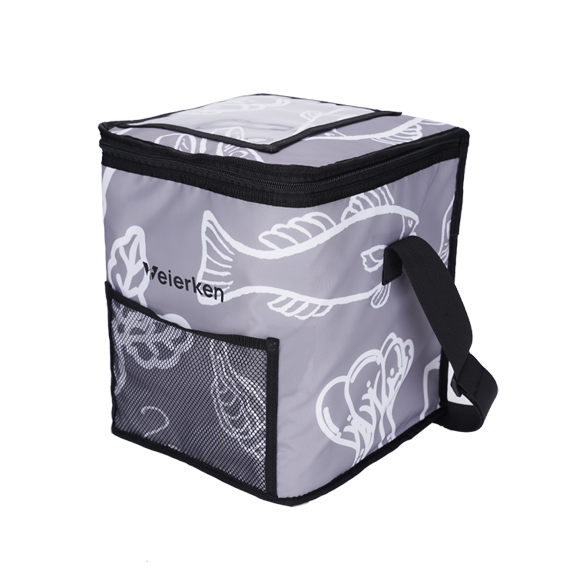
Step 6: Hardware and Accessories Installation
After the main body takes shape, the bag moves to the hardware station. Workers attach the functional components that make the bag usable. This includes installing plastic release buckles, metal D-rings, strap adjusters, and bottom foot studs.
A reliable bag manufacturing facility uses specialized pneumatic presses and hand tools to secure these pieces. The hardware must sit flush against the fabric without warping the polyester material.
Functional checks happen immediately after installation to ensure user satisfaction.
- Secure attachment: Ensure every piece of hardware fastens tightly to the fabric and faces the correct direction.
- Test functionality: Snap buckles open and closed multiple times to guarantee a smooth, reliable action.
- Check adjusters: Slide webbing through tension locks to ensure users can easily adjust strap lengths.
Step 7: Quality Control (QC)
Before any item leaves the factory floor, it must pass through a rigorous final inspection. The Quality Control (QC) team examines the finished products based on strict client requirements. A premier polyester bag fabricator never compromises on this step.
Inspectors look at the bag from the consumer’s perspective. They check for symmetry, cleanliness, and overall presentation. They also conduct random physical tests to simulate daily use, such as hanging weighted bags to test strap strength.
Products that fail inspection are pulled from the line to maintain high factory standards.
- Conduct visual checks: Look for uncut loose threads, fabric stains, and asymmetrical panel alignments.
- Perform functional tests: Zip and unzip all compartments smoothly and verify that straps adjust properly.
- Apply AQL standards: Use Acceptable Quality Limit guidelines to determine the batch pass rate. Identify defectives for immediate rework or scrap.
Step 8: Cleaning, Packaging, and Shipping
The final step transforms the approved bags into retail-ready merchandise. Workers carefully trim away any remaining stray threads. They clean off minor dust marks and, if necessary, lightly iron the polyester to restore its intended shape.
Next, the packing team places the bags into individual protective covers. These are usually dust bags or clear OPP plastic bags. They attach specific hangtags, insert care instruction manuals, and pack the items into sturdy corrugated export cartons.
An experienced wholesale bag supplier pays close attention to shipping logistics, ensuring the goods arrive safely at the buyer’s warehouse.
- Verify packaging: Cross-reference the packing materials and quantities against the official packing list.
- Label accurately: Apply clear, correct shipping marks and barcodes to the outside of every export carton.
- Facilitate final review: Arrange the cartons neatly for a final pre-shipment inspection, often conducted by a third-party agency.
Frequently Asked Questions
1. What makes polyester a good material for custom bags?
Polyester is an incredibly durable, lightweight, and cost-effective synthetic fabric. It resists shrinking, stretching, and wrinkling, making it ideal for daily use. Furthermore, an experienced polyester bag fabricator can easily apply water-resistant coatings to polyester, providing excellent weather protection for backpacks and travel bags.
2. Can a factory customize the bag design according to my brand?
Yes, professional factories specialize in OEM (Original Equipment Manufacturer) and ODM (Original Design Manufacturer) services. You can customize the size, fabric color, pocket layout, hardware, and brand logos. The factory will create a physical sample based on your tech pack before starting mass production.
3. How do you ensure the durability of the stitching during mass production?
Durability relies on strict sewing standards. Factories enforce a specific needle gauge, typically 3 to 5 stitches per centimeter, to keep seams tight. Additionally, a top-tier polyester bag fabricator applies bar-tack stitching (heavy, concentrated stitches) at all major stress points, such as shoulder straps and carry handles, to prevent tearing.
4. What eco-friendly certifications do your raw materials pass?
Reputable factories source materials that comply with international environmental and safety standards. Common certifications include REACH (which restricts harmful chemicals in the EU market) and OEKO-TEX Standard 100 (which tests textiles for toxic substances). You can specify these requirements during the material sourcing phase.
5. What happens if a batch of bags fails the final quality control inspection?
If a product fails the QC check based on the agreed AQL standard, it receives a defect tag. The factory sends minor issues, like loose threads or slight misalignments, back to the sewing line for immediate rework. The factory completely scraps bags with major, unfixable defects to ensure only perfect items reach the buyer.
Ready to Start Your Custom Bag Production?
Finding the right manufacturing partner makes all the difference. At weierken, we combine strict quality control with efficient production processes to deliver outstanding products on time. If you need a reliable polyester bag fabricator for your next project, our team is ready to help.
Send us an inquiry today to discuss your design, request a sample, or get a detailed B2B manufacturing quote!


