

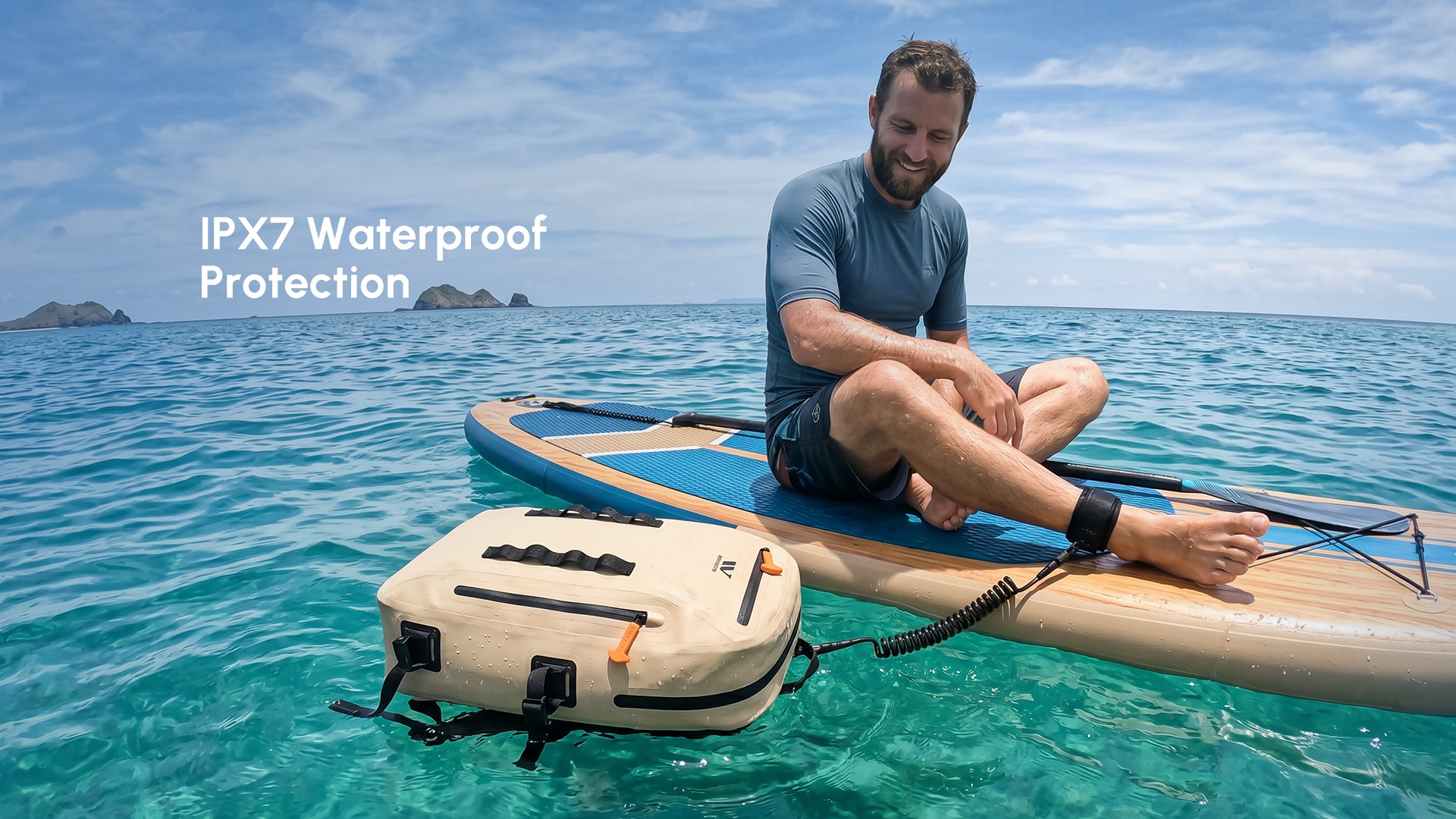
I got a call from a brand owner in Colorado two winters ago. He was furious. His latest batch of dry bags had just hit the shelves, and within three weeks, he had already processed four returns—all for the same reason: water seeped through the roll-top seam after a single day on the river. The kicker? One customer lost a $1,500 DSLR camera inside that bag, and the resulting social media post cost him a lot more than the refund.
We traced the problem back to the material. He had chosen PVC to keep costs low, but his market was cold-water rafting in the Rocky Mountains. At near-freezing temperatures, that PVC stiffened, the folds cracked, and the welded seams failed under pressure. It wasn't a factory defect; it was a mismatch between material and environment.
Over the years, I've seen this pattern repeat across dozens of brands. Procurement teams often fixate on unit price and overlook the total cost of ownership—returns, chargebacks, and brand damage. Industry data suggests that waterproofing failures contribute to roughly 12% to 18% of all returns in the paddling accessories segment. That's not a trivial number.
So here's the core dilemma: PVC gives you a clear cost advantage upfront. TPU delivers superior performance in almost every other metric. How do you decide? At Weierken, we've worked with over 2,000 global brands over 18 years, and we've learned that there's no one-size-fits-all answer. But there is a structured way to think about it. This guide walks you through the real-world trade-offs, so you can make a decision that protects both your margins and your reputation.
PVC vs TPU: A Deep-Dive Comparison for Procurement Professionals
2.1 Material Basics – What Every Buyer Should Know
| Dimension | PVC (Polyvinyl Chloride) | TPU (Thermoplastic Polyurethane) |
|---|---|---|
| Nature | Plastic-based material; requires plasticizers | Elastomer; no plasticizers needed |
| Flexibility | Stiffer, becomes brittle in cold | Remains flexible across a wide temperature range |
| Base Cost | Lower (roughly 1/2 to 1/3 of TPU cost) | Higher (about 2–3x PVC) |
These basic differences matter. But the real story unfolds when you examine how each material performs in real-world rafting conditions.
2.2 Six Critical Dimensions – The Buyer's Checklist
① Durability and Puncture Resistance
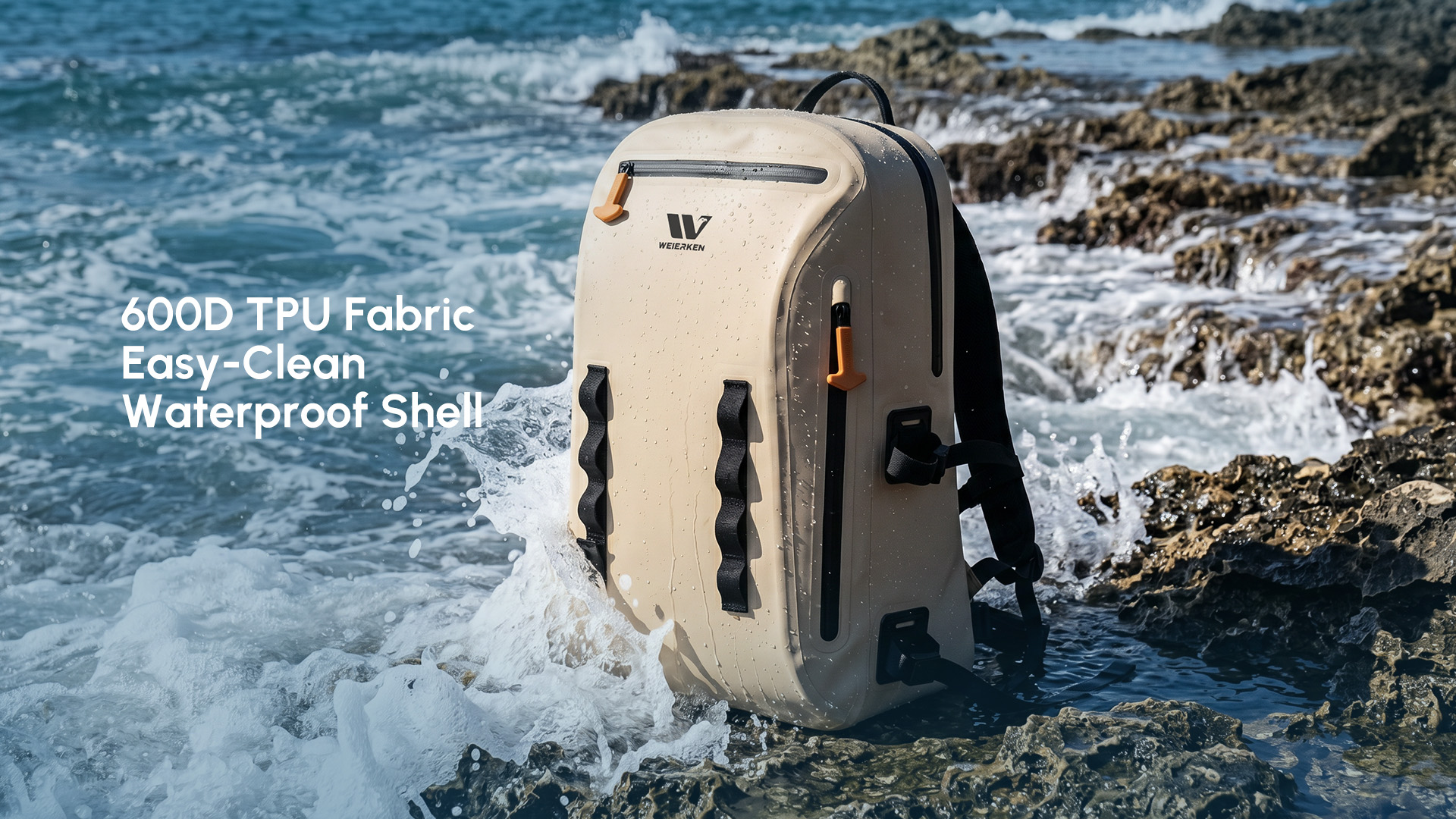
PVC offers moderate puncture resistance. Over time, however, plasticizers migrate to the surface. The material becomes stiff and prone to cracking—especially along fold lines where the bag creases repeatedly.
TPU stands up to abrasion significantly better, delivering roughly 30% to 50% higher wear resistance. Its tear strength also outperforms PVC in lab tests. For a rafting bag that rubs against sharp rocks or gets stuffed into tight kayak hatches, TPU provides a clear edge.
② Flexibility and Cold-Weather Performance
Below -10°C, PVC hardens noticeably. Fold the bag a few times in freezing conditions and you'll see micro-cracks forming at the creases. Those cracks become leak points.
TPU stays supple down to -40°C. For brands exporting to Canada, Scandinavia, or northern US states, TPU is the safer choice. Your customers will appreciate a bag that rolls easily even on a frigid morning.
③ Environmental Compliance – A Growing B2B Decision Factor
PVC disposal releases dioxins when incinerated. Certain plasticizers—such as DEHP—face strict restrictions under EU REACH and RoHS directives. If you sell into Europe, your compliance burden increases with PVC.
TPU contains no harmful plasticizers and is fully recyclable. Major retailers like REI and Patagonia have already phased out PVC in many accessories. This shift reflects a broader market trend: sustainable materials are no longer optional—they're a procurement requirement.
④ High-Frequency Welding Process Compatibility
PVC welds consistently using RF (radio frequency) welding. The process is mature, yields are high, and production costs remain predictable. For simple, high-volume orders, PVC is a workhorse.
TPU requires more precise heat-sealing or ultrasonic welding. Not every factory has the right equipment or technical expertise. Poorly controlled TPU welding leads to seam leaks and higher rejection rates.
Supplier selection is critical here. Weierken operates dedicated TPU production lines and has refined its welding processes over 18 years. The result: industry-leading yield rates on TPU products, even for complex designs.
⑤ Hydrolysis Resistance and Weathering
PVC resists water well, but in hot, humid environments, plasticizers leach out faster. The material degrades from the inside out.
Polyether-based TPU offers excellent hydrolysis resistance. For rafting in tropical rain forests or subtropical climates, specifying polyether TPU extends product life significantly.
⑥ Print Quality and Brand Presentation
PVC has low surface energy, so screen printing and heat transfer logos often require special pre-treatment. Even then, adhesion can be inconsistent.
TPU accepts inks and heat transfers more readily. Your logo stays crisp and visible after repeated use and washing. For a brand that relies on social media exposure, a clean, durable logo is worth the material upgrade.
A Decision Framework – How to Choose the Right Material for Your Brand
Use this four-step decision tree to map your product requirements against material options.
Step 1: Evaluate Your Target Market
North America / Northern Europe / Canada (cold climates) → TPU strongly recommended
Tropical / Subtropical (hot and humid) → Polyether TPU
Temperate / Entry-level markets → PVC may be acceptable
Step 2: Define Your Product Positioning
Premium / Professional series → TPU
Mid-range / Value line → PVC or mixed material approach
Promotional giveaways → PVC
Step 3: Review Budget and Minimum Order Quantities
Flexible MOQ with adequate budget → TPU
Cost-sensitive with low MOQ → PVC
Step 4: Check Regulatory Requirements
EU exports → Confirm REACH compliance
California market → Meet Proposition 65 standards
Large retailer listings → Verify their sustainable sourcing policies
Quick Reference Table for Procurement Managers
| Scenario | Recommended Material | Key Reason |
|---|---|---|
| Polar expeditions / Extreme cold | TPU (Polyether) | No brittle cracking at low temperatures |
| Rainforest / High humidity | TPU (Polyether) | Superior hydrolysis resistance |
| Professional whitewater rafting | TPU | Puncture and abrasion resistance |
| Leisure lakes / Moderate use | PVC | Cost-effective for low-stress use |
| EU market sales | TPU (preferred) | Streamlined REACH compliance |
| Brand flagship line | TPU | Quality perception and sustainability image |
| Promotions / Single-use items | PVC | Lowest unit cost |
This framework simplifies your selection process. But even with the right material, you still need a manufacturing partner who can execute consistently.
Choosing a Supplier – It's Not Just About Materials, It's About Partnership
Selecting the right material is half the battle. The other half? Finding a custom rafting dry bag supplier who can deliver quality, on time, every time. Here's a six-point evaluation checklist for procurement teams.
Six Core Supplier Evaluation Metrics
1. Factory Scale and Ownership
Does the supplier own their factory, or are they a trading agent? Owned facilities give you better quality control and production transparency. Weierken operates three self-owned plants in China and Cambodia, totaling over 80,000 square meters with a 3,000+ workforce.
2. Material Traceability
Can the supplier provide certificates of origin for raw materials? Do they source TPU from reputable suppliers like Lubrizol or BASF? Traceability matters for both quality and regulatory audits. Weierken maintains a complete material chain of custody.
3. Quality Control System
Does the factory have an independent QC team? What percentage of finished goods undergo final inspection? Weierken applies 100% full inspection protocols and maintains a CPK value above 1.33—industry standard for process capability.
4. ODM and OEM Capabilities
Can the supplier handle everything from initial concept to production? An in-house R&D team reduces lead times and improves design accuracy. Weierken's R&D unit launches over 200 new SKUs annually, supporting both custom and semi-custom projects.
5. Delivery Reliability
Ask about peak-season capacity and contingency planning. Suppliers with multi-location production—like Weierken's Cambodia and China facilities—can rebalance loads to maintain on-time delivery even during demand spikes.
6. Social and Environmental Certifications
Check for BSCI, SEDEX, ISO 14001, or similar credentials. These certifications reduce your compliance risk and align with retailer expectations. Weierken holds BSCI and ISO 9001 certifications, among others.
Weierken – Your Trusted Custom Rafting Dry Bag Manufacturer
When you work with Weierken, you gain more than a production partner. You gain 18 years of focused experience in waterproof and insulated bags. We don't claim to make everything—we specialize in waterproof and thermal bags, and we've refined our craft serving over 2,000 global brands.
Our dual-location manufacturing base in China and Cambodia offers you flexibility. Cambodia facilities provide tariff advantages for EU and US markets, helping you optimize landed costs without sacrificing quality.
Our Customization Capabilities
Material Choices: PVC, polyester TPU, polyether TPU, and eco-friendly fabric options
Size Range: 5L to 40L, plus custom dimensions for unique use cases
Closure Systems: Roll-top, zipper, and airtight sealing mechanisms
Printing Methods: Screen printing, heat transfer, and high-frequency embossed logos
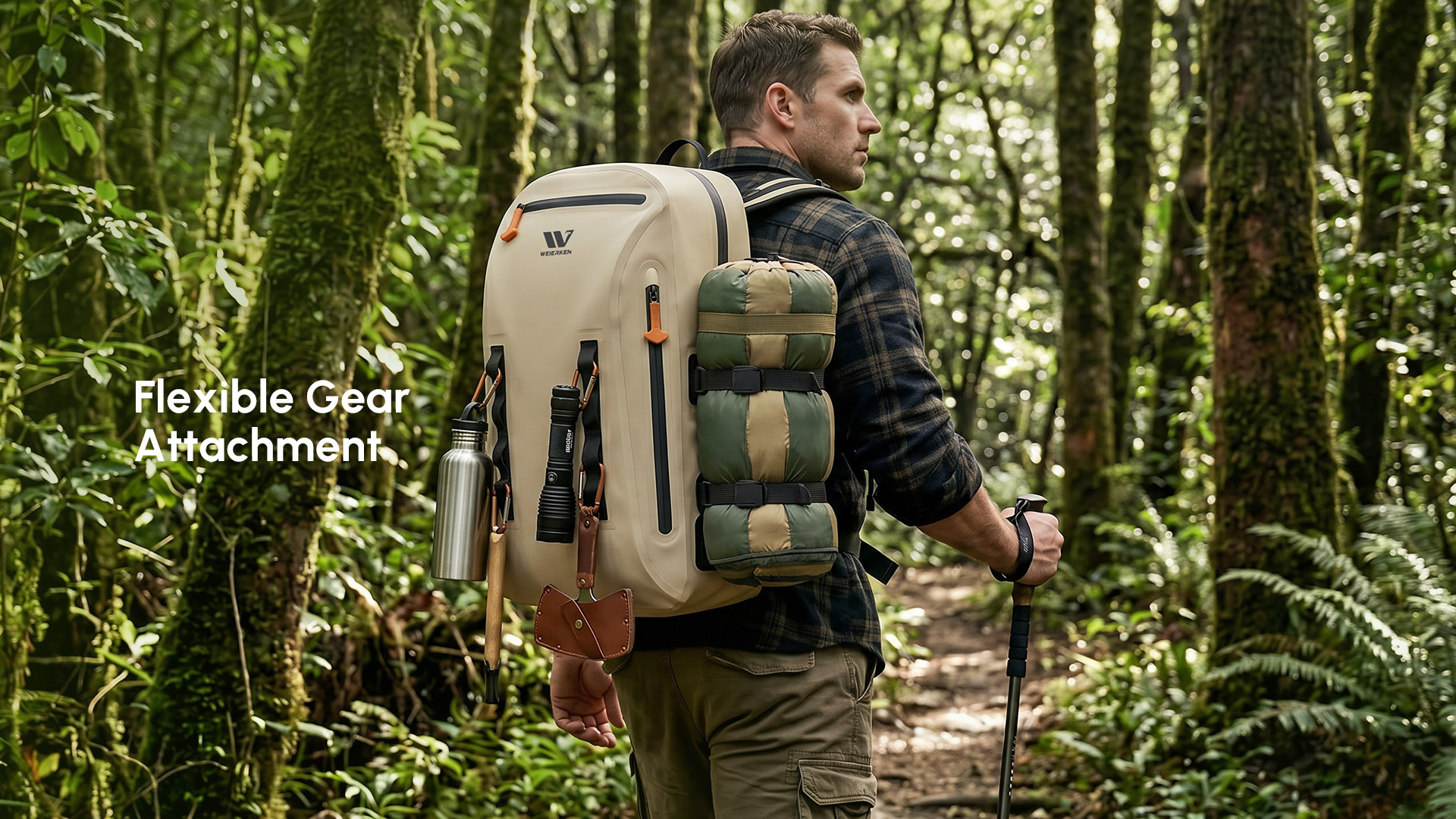
Accessory Add-ons: D-rings, shoulder straps, air valves, and transparent windows
Our Service Process
Requirement Discussion: We clarify your technical and commercial needs.
Quoting and Sampling: You receive transparent pricing and sample prototypes.
Sample Approval: We refine until you're 100% satisfied.
Mass Production: Our team executes with strict quality controls.
Inspection and Delivery: Full inspection before shipment, with clear documentation.
After-sales Support: We stand behind every order with responsive service.
Weierken isn't just a supplier—we're a partner who understands that your brand reputation depends on every seam and every weld.
Conclusion – Make the Right Call for Your Brand
There's no universal "best" material. There's only the material that best fits your target market, product positioning, and budget. PVC works for entry-level or promotional items. TPU delivers long-term durability and brand value for premium lines.
The key is working with a custom rafting dry bag supplier that brings technical expertise to the table. Weierken combines material science knowledge with production scale to help you find the optimal balance between cost and performance.
We offer free material consultation and sample comparison kits. You can see and feel the difference between PVC and TPU firsthand.
Frequently Asked Questions (FAQ)
Q1: Is TPU always better than PVC for rafting dry bags?
Not always. TPU outperforms PVC in durability, cold flexibility, and environmental compliance. However, for short-life products, promotional items, or very price-sensitive markets, PVC remains a viable option. The choice depends on your specific use case and quality expectations.
Q2: How do I verify if a supplier uses genuine TPU and not a blend?
Ask for material certificates and traceability documents. Reputable suppliers like Weierken can provide mill test reports and source declarations from raw material manufacturers such as Lubrizol or BASF. You can also request third-party lab testing for added assurance.
Q3: What is the typical MOQ for custom TPU rafting dry bags?
Minimum order quantities vary by supplier and design complexity. Many suppliers, including Weierken, offer flexible MOQs for TPU products, especially if you choose standard sizes and colors. Custom prints or unique dimensions may require higher quantities to offset tooling costs.
Q4: Can PVC dry bags meet REACH or Proposition 65 requirements?
Some PVC formulations can comply, but it requires careful selection of plasticizers and stabilizers. The cost of compliant PVC often approaches that of entry-level TPU. For EU or California sales, TPU simplifies compliance and reduces your regulatory risk.
Q5: How long do TPU rafting bags typically last compared to PVC?
With proper care, a TPU dry bag can last 3 to 5 years of regular use, while PVC bags often show signs of aging within 1 to 2 seasons—especially in high-UV or fluctuating-temperature environments. The longer lifespan of TPU often justifies its higher upfront cost for professional or frequent-use scenarios.
Q6: What welding method does Weierken use for TPU dry bags?
Weierken uses a combination of heat-sealing and ultrasonic welding specifically calibrated for TPU. Our dedicated TPU production lines feature advanced temperature and pressure controls to ensure consistent seam strength across every batch.
Q7: Can I request a sample comparing PVC and TPU before placing a bulk order?
Yes. Weierken offers sample kits that include both PVC and TPU bags in the same size and design. You can test flexibility, weld strength, and print adhesion in your own environment before making a final decision.
Ready to Partner with a Trusted Custom Rafting Dry Bag Supplier?
Stop guessing about materials. Start working with a partner who brings 18 years of waterproof bag expertise to your brand. Whether you choose PVC, TPU, or a combination, Weierken can guide you toward the right decision.
Contact us today to:
Get a free material selection consultation
Request a PVC vs TPU sample comparison pack
Schedule a factory tour (in-person or virtual)
Receive a custom quote for your next project
Send us your inquiry now. Let's build a dry bag that keeps your customers' gear safe and your brand reputation strong.
Click here to email our sales team or use the contact form on our website. We respond to all inquiries within 24 hours.