Imagine this scenario: It is three weeks before the peak summer season. Your retail inventory is dangerously low, and customer pre-orders are piling up. You reach out to your supplier, only to be met with radio silence or, worse, a vague email about “unexpected production delays.” For any procurement manager or business owner, this is the ultimate nightmare.
The difference between a profitable season and a reputational disaster often comes down to one decision: who you choose as your partner. Sourcing waterproof gear isn’t just about finding a factory; it is about finding a strategic ally. A professional floatable bag distributor does more than just move boxes from point A to point B. They act as the backbone of your supply chain, ensuring that when the market demands product, you are ready to sell.
In an industry flooded with generic options, finding a partner that truly understands the nuances of waterproof technology is rare. Whether you are a startup looking for low MOQs or an established enterprise needing global logistics, the criteria remain the same. Brands like weierken have set a benchmark in this space by combining manufacturing prowess with service reliability. But what exactly should you be looking for? Here are the top five non-negotiable features every high-quality distributor must offer.

1. Stable Supply Chain and Reliable Delivery Capabilities of a Floatable Bag Distributor
The most brilliant product design in the world is useless if it sits in a shipping container when it should be on a shelf. For B2B clients, stability is the currency of trust. A competent floatable bag distributor must demonstrate a supply chain that is not just functional, but resilient.
The Power of Inventory Depth
Supply chain disruptions are no longer anomalies; they are the new normal. From raw material shortages to port congestion, risks are everywhere. A distributor worth their salt maintains significant “inventory depth.” This means they don’t just produce to order; they hold strategic buffer stock of popular models and raw materials. When a sudden spike in demand occurs—perhaps due to a viral social media trend or a sudden heatwave—they can tap into this reserve rather than making you wait for a fresh production cycle.
Rapid Response and Peak Season Strategy
The water sports industry is heavily seasonal. A distributor needs a specific strategy for the “high season.” Ask potential partners about their surge capacity. Do they have backup manufacturing lines? Do they work with multiple logistics providers to avoid bottlenecks? A reliable partner will have a “Peak Season Protocol” in place, ensuring that your urgent replenishment orders in July are treated with the same priority and speed as pre-season orders placed in January.
Logistics Transparency
Gone are the days when “it’s on the way” was an acceptable status update. Modern B2B buyers need visibility. You should expect real-time tracking, proactive alerts regarding customs delays, and accurate estimated times of arrival (ETA). This data allows you to manage your own customer expectations and plan your marketing campaigns without the fear of stockouts.
2. Product Quality Certification and Safety Compliance Support
When dealing with floatable bags, dry bags, and water safety gear, quality is not merely a cosmetic concern—it is a safety issue. These products protect expensive electronics, emergency gear, and personal belongings in harsh environments. Therefore, a top-tier floatable bag distributor must be an expert in quality assurance and compliance.
Documentation Over Promises
Anyone can claim their bags are “100% waterproof.” A professional distributor proves it. You should expect instant access to third-party testing reports. Look for certifications like CE (Conformité Européenne) for the European market, which indicates conformity with health, safety, and environmental protection standards. Furthermore, ISO certifications (such as ISO 9001 for quality management) show that the distributor operates under a standardized, internationally recognized system.
Understanding IPX Ratings
Waterproof ratings can be confusing. A knowledgeable distributor helps you navigate the technical jargon. They should clearly distinguish between IPX6 (protection against high-pressure water jets) and IPX7 or IPX8 (protection against temporary or continuous submersion). If a distributor cannot explain the specific welding techniques—such as High-Frequency (HF) welding versus RF welding—used to achieve these ratings, they may not be the specialist you need.
Assisting with Local Market Entry
Every market has its own red tape. Selling in California? You need to know about Proposition 65 regulations regarding chemical safety. Selling in the EU? You need to ensure the materials are REACH compliant. A proactive distributor doesn’t just sell you the product; they provide the compliance dossier you need to clear customs and sell legally in your target region. This support saves you thousands of dollars in legal fees and testing costs.
3. Competitive Pricing and Flexible Payment Terms for a Floatable Bag Distributor
Price wars are a race to the bottom, but cost efficiency is a strategic advantage. In B2B cooperation, the “cheapest” price often comes with hidden costs like high defect rates or delayed shipping. A sophisticated floatable bag distributor offers a pricing structure that balances competitiveness with sustainability.
Tiered and Transparent Pricing
Ambiguity in pricing leads to mistrust. You should look for a distributor that offers clear, tiered quotation sheets. The cost per unit for 500 pieces, 2,000 pieces, and 10,000 pieces should be explicitly defined. This transparency allows you to calculate your margins accurately and plan your scaling strategy. If you are a long-term partner, the distributor should offer “lock-in” pricing to protect you from sudden fluctuations in raw material costs (like TPU or PVC price spikes).
The OEM/ODM Advantage
True value often comes from customization. A distributor with strong factory ties—or one that owns their manufacturing capabilities like weierken—can offer significant cost savings on OEM (Original Equipment Manufacturer) and ODM (Original Design Manufacturer) projects. By optimizing the design for manufacturing (DFM) early in the process, they can reduce material waste and labor hours, passing those savings on to you.
Financial Flexibility to Ease Cash Flow
Cash flow is the lifeblood of any business. Rigorous payment terms (like 100% upfront) can cripple a buyer’s ability to operate. Experienced distributors understand this. They should offer a variety of settlement methods tailored to the relationship’s maturity.
- Letters of Credit (LC): essential for large, international transactions to ensure security for both parties.
- Telegraphic Transfer (T/T): usually with a reasonable deposit (e.g., 30%) and the balance upon shipment.
- Credit Terms: For trusted, long-term partners, distributors may offer OA (Open Account) terms, allowing you to pay 30 or 60 days after delivery. This financial breathing room allows you to sell the stock before you pay for it.
4. Comprehensive Technical Support and After-Sales Service
The relationship shouldn’t end when the invoice is paid. In fact, that is when the real work begins. Technical support and after-sales service are what separate a “vendor” from a “partner.”
Education and Training
Do you know the best way to store TPU bags to prevent yellowing? Do your sales staff know how to demonstrate the proper roll-top closure method to customers? A great distributor provides educational resources. This could include user manuals, video tutorials, or care instructions that you can rebrand and pass on to your end consumers. Empowering your team with product knowledge leads to higher sell-through rates.
A Clear Path for Claims
Mistakes happen. A weld might fail; a zipper might jam. The test of a distributor is how they handle these failures. You need a clearly defined Return Merchandise Authorization (RMA) policy.
- Is there a warranty period? (e.g., 12 or 24 months).
- What is the process for reporting defects? (Photos, videos, or returning samples).
- What is the compensation model? (Replacements in the next shipment, credit notes, or immediate refunds).
A messy claims process kills relationships. A structured one builds confidence.
Brand-Specific Support
Companies like weierken have built a reputation by standing behind their quality. When a distributor is confident in their product, they offer robust warranties. They understand that if your customer is unhappy, you are unhappy. Therefore, they act as your technical back-office, helping you troubleshoot issues and even analyzing defect samples to prevent future occurrences.

5. Market Insights and Collaborative Product Innovation
Finally, the modern B2B buyer needs a floatable bag distributor who is an innovator, not just an order taker. The outdoor market evolves rapidly. Trends shift from bright neon colors to earth tones; materials shift from heavy PVC to eco-friendly, biodegradable TPU.
Proactive Trend Sharing
Your distributor sits upstream in the supply chain; they see the trends before they hit the retail shelves. A valuable partner shares this intelligence. They should send you quarterly updates on:
- Emerging Materials: New fabrics that are lighter, stronger, or more sustainable.
- Design Trends: What shapes and features are becoming popular in other regions (e.g., phone pouches with floating airbags vs. standard dry bags).
- Regulatory Changes: Upcoming bans on certain plastics or chemical coatings.
By leveraging their insights, you can adjust your procurement strategy to stay ahead of the curve.
Co-Development and R&D
The highest level of partnership is collaborative development. Instead of picking a product off a catalog, you work with the distributor’s R&D team to create something unique. Maybe you need a floatable bag with a specific MOLLE system for tactical use, or a cooler bag hybrid for kayaking.
A distributor with strong R&D capabilities will help you prototype, test, and refine these ideas. They become an extension of your product team, allowing you to launch exclusive items that your competitors cannot easily copy.
Selecting the right floatable bag distributor is a strategic decision that impacts every facet of your business, from cash flow to brand reputation. You need more than a catalog; you need a partner who guarantees supply stability, navigates the complex world of certifications, offers financial flexibility, stands behind their product with solid after-sales support, and helps you innovate for the future.
In a market where reliability is scarce, brands that embody these five features stand out. Whether you are looking at industry leaders or specialized manufacturers like weierken, ensure they tick these boxes before you sign the contract. A floatable bag is designed to keep things safe above water; your distributor should do the same for your business.
Ready to secure a supply chain that actually works for you? Do not settle for uncertainty.
[Contact Us Today for a Quote and Catalog] – Let’s build a partnership that keeps your business floating high.
FAQ: Common Questions About Floatable Bag Distributors
Q1: What is the standard MOQ (Minimum Order Quantity) when working with a floatable bag distributor?
A1: MOQs vary depending on whether you are ordering stock items or custom designs. Generally, for in-stock generic items, a distributor might accept orders as low as 100-500 pieces. However, for OEM (custom logo/color) orders, the industry standard usually starts around 500 to 1,000 pieces per color/model to cover the setup costs of manufacturing.
Q2: How does a floatable bag distributor ensure the products are actually waterproof?
A2: Professional distributors use rigorous testing protocols. This typically involves air inflation testing (inflating the bag and letting it sit for 24 hours to check for leaks) and water submersion testing. They should be able to provide IPX rating reports (e.g., IPX6 or IPX7) verifying the level of waterproof protection.
Q3: Can a distributor help with custom branding (OEM) on floatable bags?
A3: Yes, most established distributors offer OEM services. They can apply your logo using various methods such as silk screen printing (for simple colors) or UV printing (for complex gradients). They can also customize packaging, hang tags, and user manuals to fully align with your brand identity.
Q4: What creates the “floatable” feature in these bags?
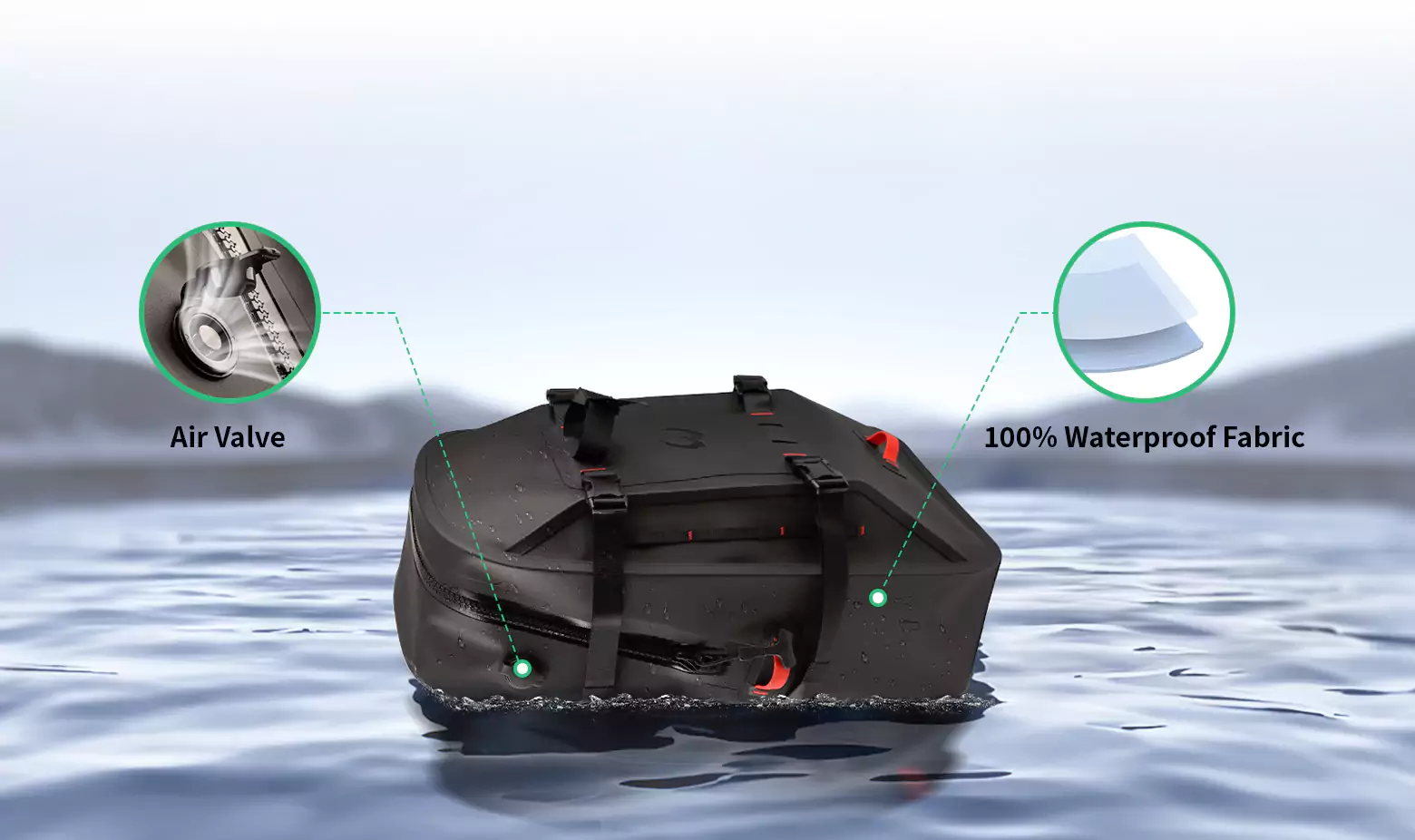
A4: The floatability is usually achieved through two methods: trapping air inside the main compartment when the roll-top is sealed, or incorporating specific buoyancy foam layers within the bag’s structure. A knowledgeable distributor can advise on which method is best for your specific application (e.g., casual boating vs. heavy rescue gear).
Q5: How long does shipping take from an international floatable bag distributor?
A5: Shipping times depend on the method. Sea freight is the most cost-effective for bulk orders but takes 25-40 days depending on the destination. Air freight is faster (5-10 days) but significantly more expensive. A good distributor will offer a mix, perhaps shipping a small portion by air for immediate launch and the rest by sea to save costs.