


Imagine the scenario: Your brand has just launched a premium line of waterproof gear. The marketing campaign was flawless, the pre-orders were strong, and the inventory hit the shelves right before the peak outdoor season. Then, the emails start trickling in. Then the calls. Customers are reporting that their “waterproof” bags leaked during a simple kayaking trip, ruining expensive electronics.
In the B2B world, a product failure isn’t just a refund; it’s a reputation crisis.
For procurement managers sourcing outdoor gear, industrial tool kits, or emergency medical packs, the reliability of the product is non-negotiable. This is where your choice of supply chain partner becomes critical. A generic supplier sells you a product; a qualified IPX7 bag distributor secures your brand’s future.
Whether you are looking for heavy-duty industrial protection or consumer-grade watersports equipment, distinguishing between a middleman and a strategic partner is vital. Companies like weierken have set a benchmark in this industry by moving beyond simple transaction models to become integral parts of their clients’ quality assurance strategies.
Here are the five specific features you must demand when evaluating your next IPX7 bag distributor.
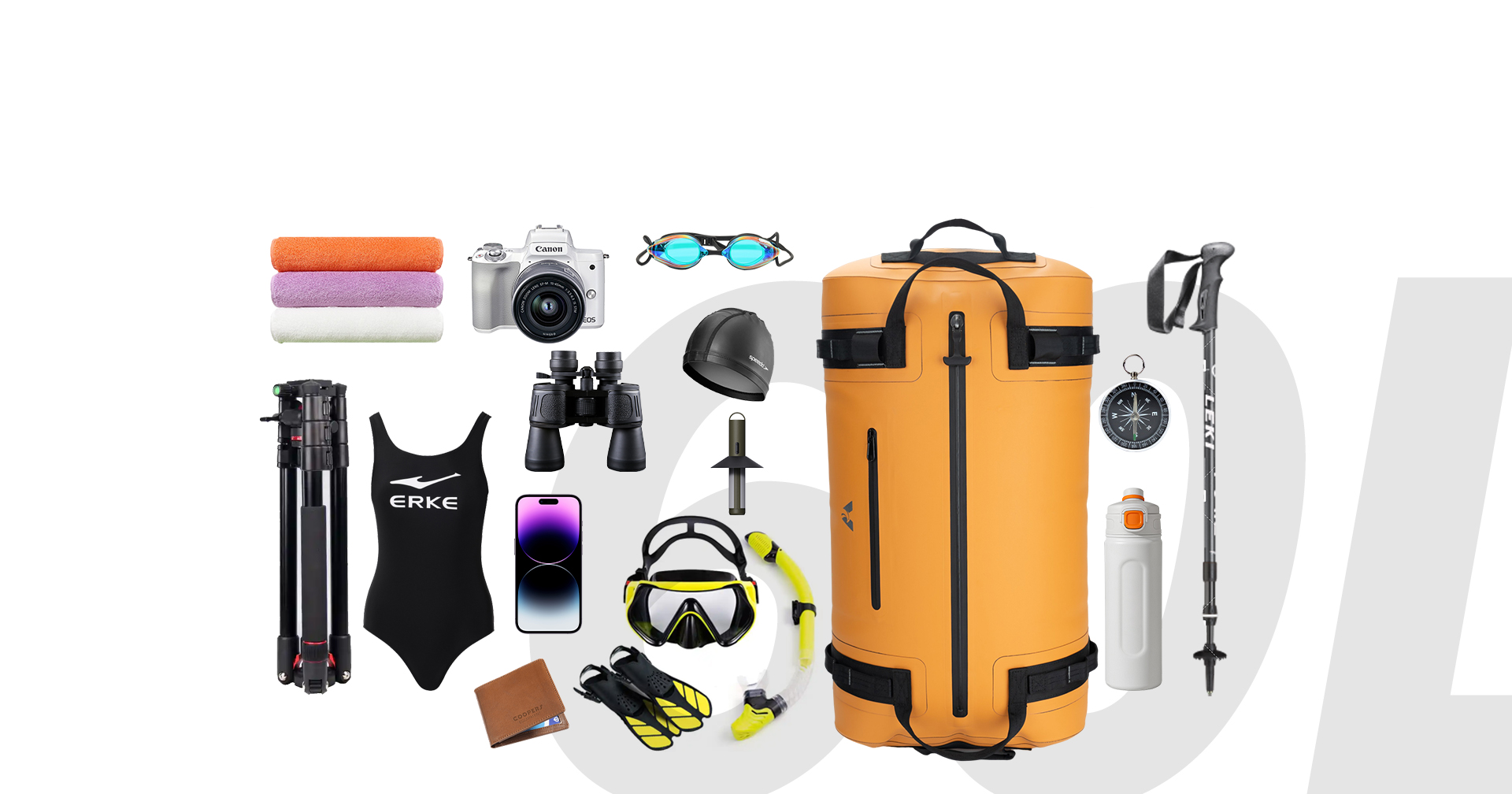
1. Deep Technical Certification & Verifiable Quality Control Systems
The acronym “IPX7” is thrown around loosely in the manufacturing world. Technically, it defines a product’s ability to withstand immersion in water up to 1 meter deep for 30 minutes. However, printing “IPX7” on a packaging box and actually achieving that rating consistently across 10,000 units are two very different things.
The “Paper Tiger” vs. The Real Deal
A top-tier IPX7 bag distributor does not ask you to take their word for it. They provide proof. This goes beyond a factory-generated certificate. You need to look for distributors who work with third-party, internationally recognized laboratories such as SGS, BV (Bureau Veritas), or Intertek.
These reports should be recent and specific to the model you are purchasing. If a distributor offers a certification from three years ago for a different bag shape, consider that a red flag.
The Hidden Value of Process Control
Certifications prove the design works, but quality control (QC) proves the production is stable. An elite distributor manages a QC process that starts long before the bag is assembled.
- Raw Material Inspection: Checking the TPU or PVC coating thickness and the integrity of the base fabric.
- Component Testing: Verifying that waterproof zippers and RF (Radio Frequency) welded seams meet tension requirements.
- In-Line Testing: Conducting air-inflation testing on the production line. This is faster than water testing and catches leaks immediately during the welding process.
- Final Batch Sampling: Randomly selecting finished goods for the full water immersion test.
Value to the Buyer:
This rigorous approach transforms waterproof performance from a “probability” to a “certainty.” It drastically reduces the risk of batch-wide defects that lead to recalls. It acts as your first firewall in risk management, protecting your profit margins from the erosion of returns and warranty claims.
2. Professional Product Line Depth & Scenario-Based Solutions
A generalist trading company might offer one standard “dry bag”—usually a cylindrical tube with a roll-top closure. While this is a classic design, it is not a one-size-fits-all solution for modern B2B buyers.
Beyond the Basic Dry Bag
A sophisticated IPX7 bag distributor understands that a bag designed for white-water rafting has different requirements than a bag designed for protecting sensitive industrial sensors on an oil rig.
Look for a distributor with a diverse matrix of products:
- Form Factors: Backpacks, duffels, waist packs, phone/tablet cases, and equipment pouches.
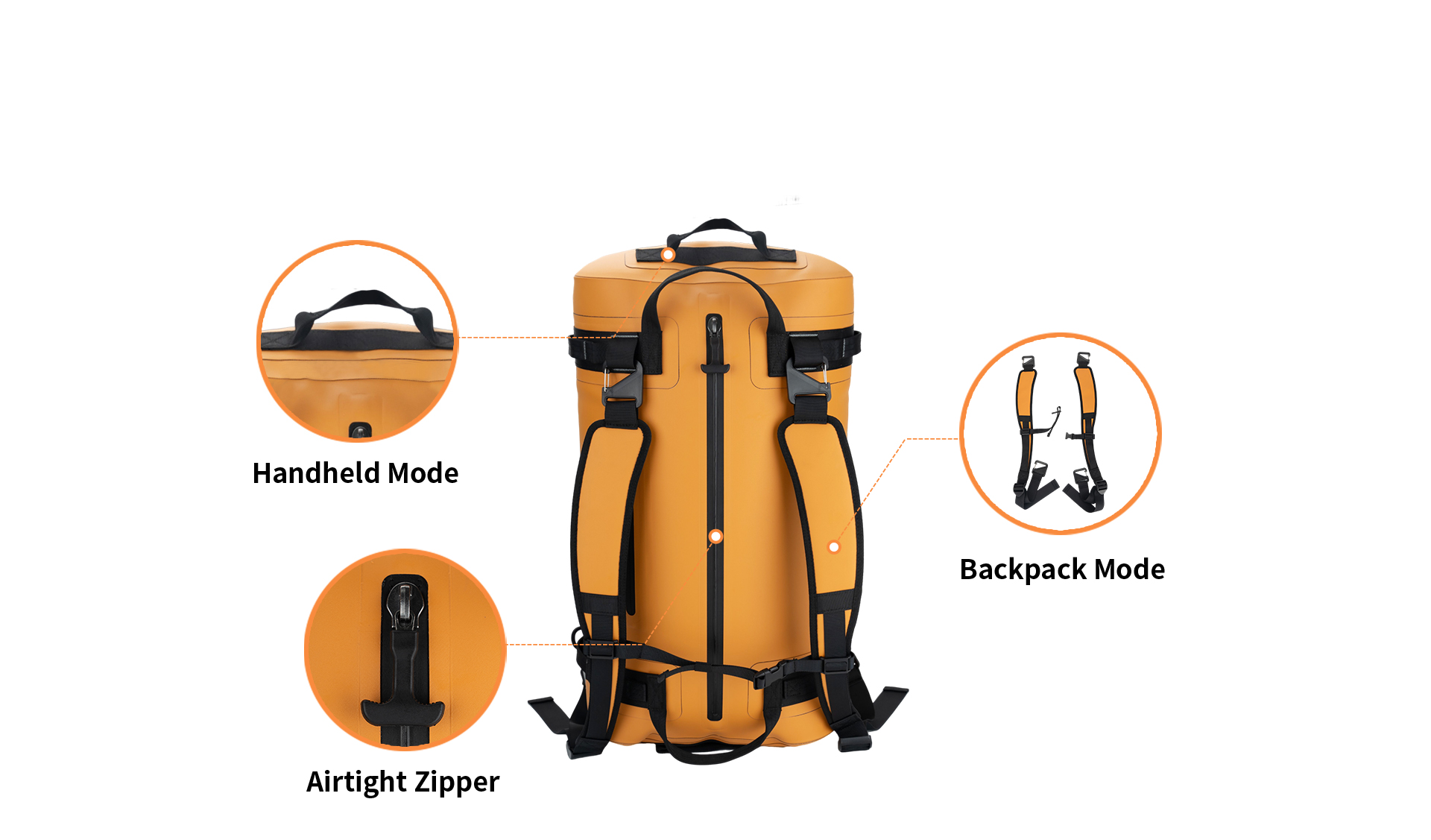
- Closure Systems: Traditional roll-tops (reliable, cost-effective) vs. airtight waterproof zippers (submersible, easier access).
- Materials: Understanding when to recommend heavy-duty 500D PVC tarpaulin for abrasion resistance versus lightweight TPU for hiking and weight-sensitive applications.
The Consultant Approach
The best distributors act as consultants. If you approach them looking for a generic bag for an electronics kit, they should ask about static protection, shock absorption needs, and the specific environments the kit will face.
Value to the Buyer:
This expertise allows you to curate a product catalog that fits your specific market niche perfectly. Instead of selling a generic commodity, you are selling a tailored solution. This deep understanding of product architecture helps you avoid costly design mismatches and ensures your end-users get gear that actually works for their specific lifestyle or work environment.
3. Mature OEM/ODM Services & Flexible Supply Chain Response
In a saturated market, differentiation is key. You don’t want to sell the exact same bag as your competitor, just with a different logo slapped on it. This is where the distributor’s engineering capability comes into play.
From Concept to Prototype
Leading distributors, including industry players like weierken, offer comprehensive Original Design Manufacturing (ODM) services. This isn’t just about silk-screening your logo. It involves:
- Structural Customization: Adding internal dividers, laptop sleeves, or external lash points for carabiners.
- Feature Integration: incorporating transparent windows for inventory visibility, air-purge valves to compress bulk, or bluetooth-welded compartments.
- Rapid Prototyping: The ability to take a sketch to a physical sample quickly, allowing your team to test and iterate before committing to mass production.
Supply Chain Elasticity
The modern market is volatile. You might have a sudden spike in demand due to a viral social media post, or you might need a small trial batch to test a new colorway.
A rigid factory will demand massive Minimum Order Quantities (MOQs) and refuse to budge on lead times. A strategic IPX7 bag distributor builds flexibility into their supply chain. They can handle the high-volume pressure of holiday seasons while accommodating smaller, strategic trial orders to help you test new markets without tying up massive amounts of capital in inventory.
Value to the Buyer:
This flexibility bridges the gap between “purchasing a product” and “developing a brand.” It allows you to respond to market trends in real-time, optimize your inventory turnover, and scale your business sustainably.
4. Transparent Cost Structure & Strategic Total Cost of Ownership (TCO)
Price negotiation is a standard part of procurement, but the fixation on the “lowest unit price” is often a trap. A cheap bag that arrives late or leaks is infinitely more expensive than a moderately priced bag that arrives on time and performs perfectly.
The Anatomy of Price
A trustworthy distributor provides a transparent breakdown of costs. They should be able to explain how material choices impact price (e.g., why a tizip zipper costs more than a standard water-resistant zipper) and how different testing protocols influence the final quote.
The TCO Perspective
When evaluating an IPX7 bag distributor, you must look at the Total Cost of Ownership.
- Logistics: Do they have efficient freight forwarding partners?
- Packaging: Is the packaging optimized to save container space and reduce shipping costs?
- Defect Rate: A 2% lower unit price is erased immediately if the defect rate is 5% higher.
Reliable partners focus on stabilizing your supply chain. They might not always have the rock-bottom lowest price on the market, but their pricing ensures consistent material quality and ethical labor practices, which safeguards your brand from supply chain scandals and quality disruptions.
Value to the Buyer:
Shift your focus from “price per unit” to “profit per unit sold.” By reducing returns, administrative overhead dealing with defects, and potential air-freight costs to replace bad stock, a quality-focused distributor actually lowers your overall operational costs.
5. Professional Customer Support & End-to-End Collaboration
The final, and often most underrated, feature is the human element. Sourcing from overseas or distant suppliers can be fraught with communication barriers, time zone delays, and cultural misunderstandings.
The Dedicated Account Manager
You shouldn’t be speaking to a different person every time you email. A top-tier distributor assigns a dedicated account manager who knows your brand history, your quality preferences, and your shipping requirements.
This professional should be technically literate—capable of discussing RF welding temperatures and fabric denier—not just a salesperson reading from a script.
Workflow Excellence
Professionalism is found in the details:
- Clear Contracts: No ambiguity regarding incoterms or payment structures.
- Documentation: Timely provision of commercial invoices, packing lists, and Certificates of Origin.
- After-Sales Support: If a problem does arise, how is it handled? A strategic partner has a clear protocol for dispute resolution and warranty claims, focusing on solving the problem rather than assigning blame.
Value to the Buyer:
Seamless communication significantly lowers your administrative burden. It allows your procurement team to focus on strategy rather than chasing emails. A partner like weierken understands that their job is to make your job easier, fostering a long-term relationship built on trust and efficiency.
Selecting the right IPX7 bag distributor is a strategic decision that ripples through your entire business. It impacts your product reviews, your inventory cash flow, and ultimately, your brand’s reputation in the market.
By prioritizing verifiable technical certifications, demanding deep scenario-based product solutions, ensuring supply chain flexibility, analyzing total ownership costs, and insisting on professional support, you position your business for growth.
Don’t settle for a supplier who simply moves boxes. Look for a partner who understands the science of waterproofing and the art of business. Whether you are scaling up an existing line or launching a new brand, companies like weierken stand ready to deliver not just bags, but the reliability and expertise your business deserves.
If you are ready to secure your supply chain with high-performance waterproof solutions, it is time to start the conversation.
[Contact Us Today for a Quote and Technical Consultation]
Frequently Asked Questions (FAQ)
Q1: What is the main difference between an IPX7 bag distributor and a general bag supplier?
A1: An IPX7 specialist focuses specifically on waterproof technologies. Unlike general suppliers who sew bags, an IPX7 bag distributor utilizes high-frequency (RF) welding or heat-taping technologies to create airtight seams. They also have specialized testing equipment (hydrostatic pressure testers, air-leakage tanks) to verify the IPX7 rating (immersion at 1 meter for 30 minutes), whereas general suppliers often lack the machinery and expertise to guarantee waterproof integrity.
Q2: Can I customize the shape and features of an IPX7 bag, or am I limited to stock models?
A2: Most professional distributors offer both OEM and ODM services. While they have “open mold” stock models that are cheaper and faster to produce, capable distributors can help you design entirely new shapes, create custom molds for hardware, and add specific features like viewing windows or internal organization. However, fully custom shapes (ODM) usually require a higher MOQ and tooling fees compared to simply adding a logo to a stock model.
Q3: How do you verify that the bags are actually IPX7 waterproof before shipment?
A3: A reliable distributor should have a multi-step QC process. This typically involves an “inflation test” where bags are filled with air and left for a set period to check for pressure loss (which indicates a leak). Additionally, they should perform random sampling for actual underwater immersion tests. You can and should request a QC report or a video of the testing process for your specific batch before the goods leave the factory.
Q4: What is the typical Minimum Order Quantity (MOQ) for custom IPX7 bags?
A4: MOQs vary by material and customization level. For stock colors and standard models with a simple logo print, MOQs can sometimes be as low as 300-500 pieces. However, for custom fabric colors (which require the fabric mill to dye a specific batch) or completely new structural designs, MOQs often start at 1,000 to 2,000 pieces to cover the setup and tooling costs efficiently.
Q5: Why are RF welded seams better than sewn seams for IPX7 bags?
A5: Sewn seams create thousands of tiny needle holes in the fabric, which allows water to penetrate. While seam tape can help, it is rarely durable enough for IPX7 standards. RF (Radio Frequency) welding uses electromagnetic energy to fuse the TPU or PVC coating of the fabric pieces together on a molecular level. This creates a single, continuous piece of material with no needle holes, offering a bond that is airtight, watertight, and incredibly durable.


