

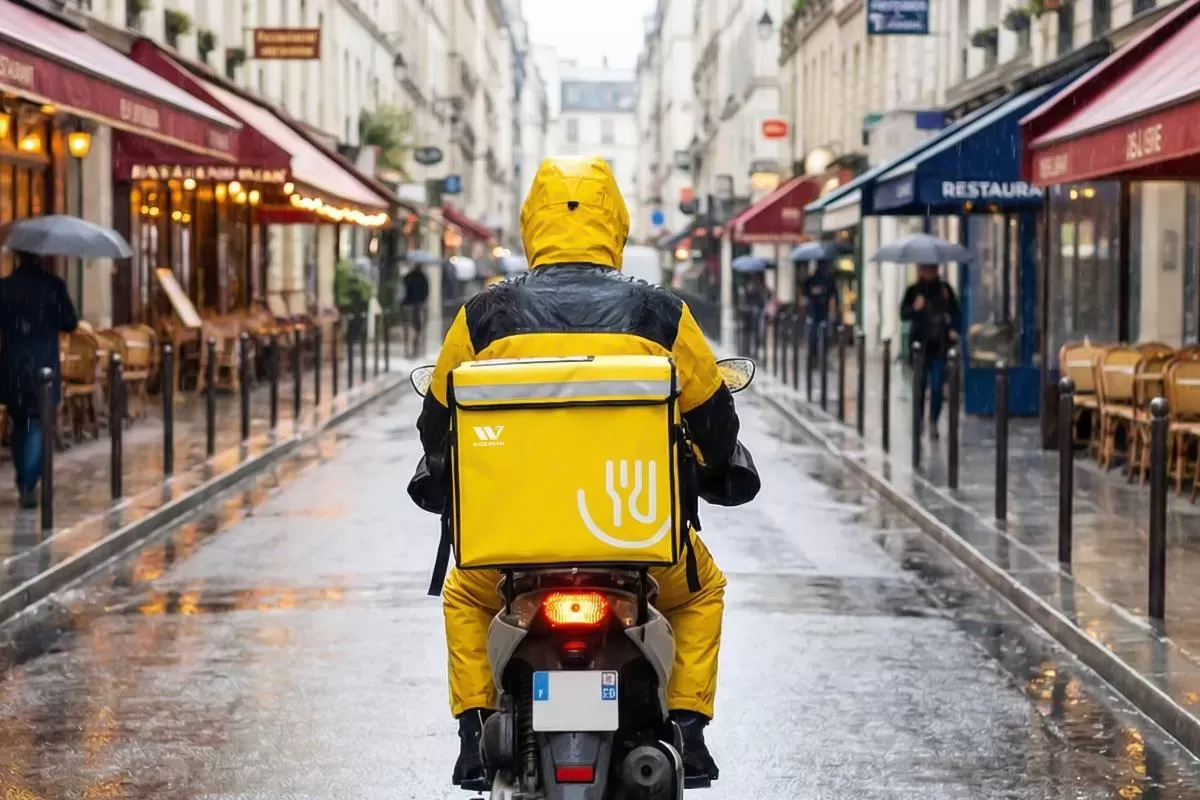
Last-mile food and grocery delivery operates on razor-thin margins. Fleet operators often treat delivery backpacks as disposable consumables, buying cheap gear and replacing it every three months.
That procurement model is broken. Poor thermal performance causes ruined orders, driver complaints rise from poor ergonomics, and spilled soup turns bags into biological hazards. Leading manufacturers like Weierken are re-engineering delivery gear from simple containers into technical fleet assets.
Investing in advanced insulated rider bags for delivery fleets directly cuts your Total Cost of Ownership (TCO). Here are the top six fabric and hardware technologies setting new benchmarks for commercial delivery fleets this year.
1. Aerogel Composite and Phase Change Materials (PCM) for Thin-Wall Thermal Control
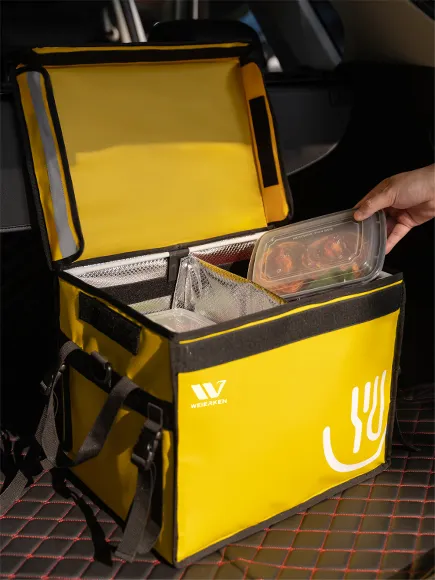
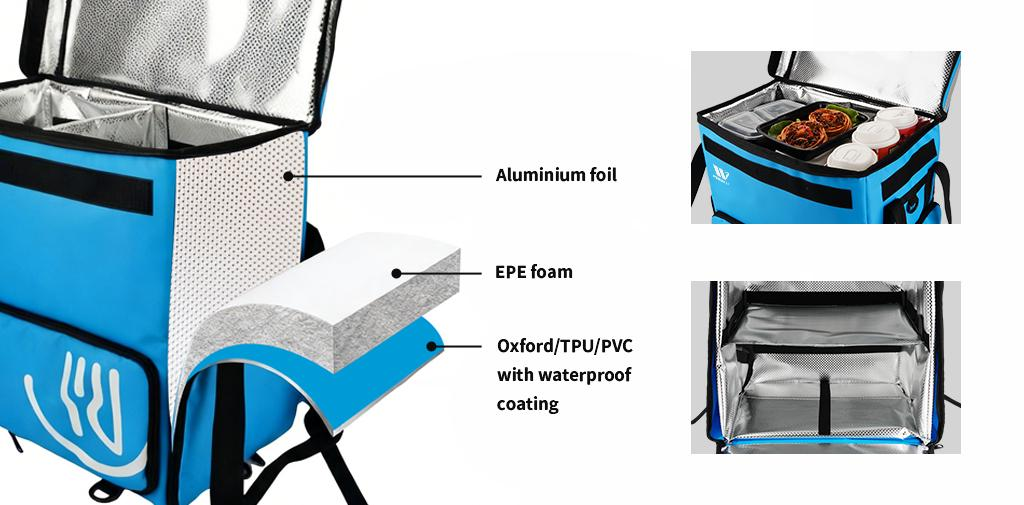
Standard delivery gear relies on expanded polyethylene (EPE) foam. While inexpensive, EPE foam is bulky, traps moisture, and breaks down after a few months of daily compression.
Modern fleets are switching to hybrid insulation combining silica aerogel blankets with micro-encapsulated Phase Change Materials (PCM). Aerogels provide the lowest thermal conductivity of any solid material on earth, allowing manufacturers to cut insulation thickness by 50% without losing thermal resistance.
Extended Holding Time: Food maintains safe hot (above 65°C) or cold (below 4°C) temperatures for up to 4 to 6 hours.
Increased Payload Volume: Thinner walls create 15% to 20% more usable cargo space within the same external dimensions.
Dual-Zone Efficiency: PCM inserts absorb and release latent heat at specific target temperatures, allowing cold beverages and hot meals to travel in partitioned compartments within the same bag.
This thermal stability extends your effective delivery radius. Drivers can accept multi-drop routes across wider zones without risking food quality complaints or health code violations.
2. High-Frequency Welded TPU Fabrics with Anti-Microbial Liners
Traditional 600D Oxford polyester absorbs spilled liquids through needle holes and zipper seams. Over time, bacteria multiply inside the seams, producing foul odors that no wipe-down can fix.
The solution is heavy-duty Thermoplastic Polyurethane (TPU) assembled via High-Frequency (HF) radio-frequency welding. HF welding fuses fabric layers at the molecular level, eliminating needle puncture holes entirely.
100% Leakproof Basins: Soup, sauce, and condensation remain contained in the bottom compartment, protecting internal insulation from saturation.
Silver-Ion Surface Treatment: Anti-microbial additives embedded directly into the inner liner destroy 99.9% of surface bacteria and stop mold growth.
Fast Turnaround Cleaning: Riders can spray down the interior with industrial degreasers and pressure washers, returning the pack to service in minutes.
TPU-coated fabrics resist abrasion from asphalt drops, curb scuffs, and motorcycle racks far better than standard PVC. While the initial unit cost is higher, TPU packs typically last over 24 months in continuous fleet service, cutting annualized replacement spend significantly.
3. Integrated IoT Temperature Telematics and RFID Asset Tracking
Customer refunds for lukewarm food are a silent margin killer. Fleet managers rarely know whether a cold delivery stemmed from restaurant delays, traffic jams, or inadequate thermal insulation.
Forward-thinking supply chain teams now deploy insulated rider bags for delivery fleets equipped with low-power sensor nodes. Embedded inside the internal structural lining, these Bluetooth Low Energy (BLE) sensors log temperature and humidity data every 30 seconds.
Proof of Cold Chain Compliance: Telematics data syncs with your driver dispatch app, providing timestamped proof of temperature integrity if a customer requests a refund.
Automated Check-In/Check-Out: Integrated UHF RFID tags allow depot scanners to register dozens of bags instantly as riders enter or leave the hub.
Theft and Loss Prevention: Passive tracking prevents bag hoarding and helps recovery teams locate lost equipment across multi-hub city operations.
Companies like Weierken work closely with commercial logistics platforms to embed sensor-ready pockets and cabling channels directly into OEM bag builds, streamlining IoT rollouts across thousands of couriers.
4. Post-Consumer Recycled Ocean Plastics (rPET) with PFC-Free DWR
Enterprise delivery platforms face aggressive ESG mandates from institutional shareholders and regional regulators. Sourcing petroleum-heavy virgin synthetic gear conflicts directly with corporate net-zero targets.
Procurement teams are shifting toward high-tenacity rPET (recycled polyethylene terephthalate) outer shells sourced from recovered coastal plastics. Spinners weave these post-consumer bottles into high-denier ripstop textiles that match the tensile and burst strength of virgin nylon.
Measurable Scope 3 Reductions: Every 10,000 rPET delivery packs divert hundreds of thousands of plastic bottles from waterways, creating verifiable data for corporate sustainability disclosures.
Fluorocarbon-Free Chemistry: Next-generation durable water repellent (PFC-free DWR) finishes block torrential rain without releasing hazardous per- and polyfluoroalkyl substances into municipal runoff.
Dope-Dye Coloring: Solution-dyeing yarns before weaving cuts factory water consumption by 80% while dramatically improving UV fade resistance under intense summer sun.
Choosing rPET equips delivery fleets with gear that meets strict corporate social responsibility guidelines without sacrificing field durability.
5. Ergonomic Carbon-Fiber Frames and Dynamic Load Distribution
Courier fatigue and repetitive strain injuries drive high driver turnover. When a delivery backpack weighs 15 to 20 kilograms fully loaded, resting all that weight directly on a rider's shoulders causes fatigue, slower drop rates, and worker compensation claims.
Commercial gear designers now adapt mountaineering load-carriage tech for two-wheeled couriers. Lightweight carbon-fiber composite internal stays and pre-curved aluminum alloy rods transfer load directly off the cervical spine and onto the pelvic girdle.
70/30 Load Redistribution: An ergonomic wrap-around hip belt transfers up to 70% of total pack weight to the courier's hips and legs, leaving the upper body agile.
Suspended Air-Mesh Back Panels: High-tension mesh creates a two-inch ventilation gap between the bag and the courier's back, reducing perspiration build-up during long summer shifts.
Modular Motorcycle Anchors: Quick-release strap systems let couriers convert a backpack into a stable rack-mounted box in under five seconds, giving riders flexibility based on order size.
Equipment that protects courier comfort directly lifts daily drops per shift and boosts driver retention rates, lowering ongoing recruitment and onboarding costs.
6. Active Electroluminescent (EL) Systems and Microprismatic Retroreflection
Rider safety is a legal and financial liability for 3PL fleets. Deliveries peak during evening dinner rushes and poor weather, when road visibility is lowest. Passive reflective piping helps, but it only works when hit directly by vehicle headlights.
The newest insulated rider bags for delivery fleets integrate active illumination directly into the exterior shell architecture. Flexible electroluminescent (EL) light strips and low-draw LED light guides run along perimeter seams, powered by the rider's standard USB power bank or motorcycle electrical system.
360-Degree Active Visibility: Couriers remain visible from up to 400 meters away in pitch-black conditions, dense fog, or heavy downpours.
Microprismatic Retroreflective Accents: Wide-angle prismatic sheeting returns light with three times the brilliance of standard glass-bead tapes, even at sharp entrance angles.
Safety Interlocks: Integrated accelerometers in advanced packs can detect rapid deceleration and flash the active lighting to alert drivers behind the courier.
Lowering nighttime collision rates directly reduces vehicle down-time, equipment destruction, and commercial liability insurance premiums for fleet operations.
How Fleet Managers Calculate True Equipment ROI
Evaluating commercial delivery bags purely on purchase price is a costly mistake. Fleet procurement teams must look at Total Cost of Ownership through a multi-factor lens:
TCO = (Initial Unit Cost + Sanitization Labor + Cold Chain Loss Claims + Insurance Premiums) ÷ Usable Service Months
A bargain-bin $25 polyester bag that degrades within three months costs at least $100 per rider annually in unit costs alone. Add leaked sauces that spoil subsequent orders, bacterial odors that prompt driver resistance, and lost thermal retention, and the true cost multiplies.
In contrast, a $75 bag built with welded TPU, aerogel insulation, and carbon support frames lasts over 24 months of heavy daily use. That cuts direct gear depreciation costs in half while protecting food safety and company reputation on every single drop.
Frequently Asked Questions (FAQs)
Q1: How do modern insulated rider bags for delivery fleets reduce Total Cost of Ownership (TCO)?
A1: High-performance bags cut TCO by extending product lifespan from 3 months to over 24 months through abrasion-resistant TPU fabrics and reinforced seams. They also reduce food refund claims via superior aerogel thermal retention, lower rider turnover through ergonomic frame designs, and protect brand equity by preventing bacterial buildup and liquid leaks.
Q2: What is the primary advantage of high-frequency welded TPU over traditional 600D Oxford fabric?
A2: High-frequency welded TPU creates completely seamless, 100% waterproof construction without needle stitching holes. Unlike porous Oxford cloth, TPU will not absorb oils, sauces, or rainwater, preventing odor and bacterial growth. Fleets can sanitize TPU packs daily with commercial disinfectants without degrading the structural fabric or waterproof barriers.
Q3: Can these delivery backpacks support both hot and cold items in a single trip?
A3: Yes. By using adjustable, insulated dividers loaded with Phase Change Materials (PCM), couriers can maintain two distinct thermal micro-climates. The hot zone holds temperatures above 65°C using sensible heat retention, while the cold compartment uses low-temp PCM packs to prevent frozen desserts and chilled beverages from melting below safe food safety thresholds.
Q4: How do RFID and IoT-enabled delivery backpacks integrate with existing fleet management software?
A4: Temperature sensors use open-standard Bluetooth Low Energy (BLE) APIs to broadcast real-time metrics to the driver's delivery app, which transmits thermal records to central dispatch platforms. Passive UHF RFID chips integrate directly with warehouse scanning gates, logging inventory automatically during morning dispatch and evening returns without manual barcode scans.
Q5: Are sustainable rPET fabrics durable enough for high-volume commercial food delivery?
A5: Yes. Commercial-grade rPET uses continuous-filament yarns woven into high-denier ripstop configurations. When bonded to a thermal laminate or TPU face, rPET matches virgin nylon in tensile strength, tear resistance, and puncture thresholds, fully meeting the physical demands of high-volume delivery operations.
Q6: How does active illumination impact delivery fleet insurance claims and liability?
A6: Active electroluminescent and LED systems provide 360-degree visibility regardless of ambient headlamp angles, cutting nighttime rear-end and intersection collisions. Documented accident reductions provide fleet operators with leverage to negotiate lower commercial liability and worker compensation insurance premiums with underwriters.
Partner with Weierken for Your Fleet Gear Deployment
Every delivery fleet faces distinct operating hurdles. City courier fleets need lightweight agility and rapid bike mounts, while long-range suburban delivery requires thick aerogel barriers and maximum load space. Off-the-shelf consumer bags simply cannot handle this level of daily operational stress.
Weierken designs and manufactures custom commercial-grade insulated rider bags for delivery fleets worldwide. Working directly with tier-one delivery platforms, 3PL logistics networks, and commercial kitchens, Weierken engineers bespoke thermal gear optimized for your routes, dispatch tech, and climate profiles.
Stop wasting operating capital on disposable bags that fail your riders and customers. Contact the Weierken engineering and fleet team today to discuss your technical specifications, review factory test reports, or request customized production samples for field testing.