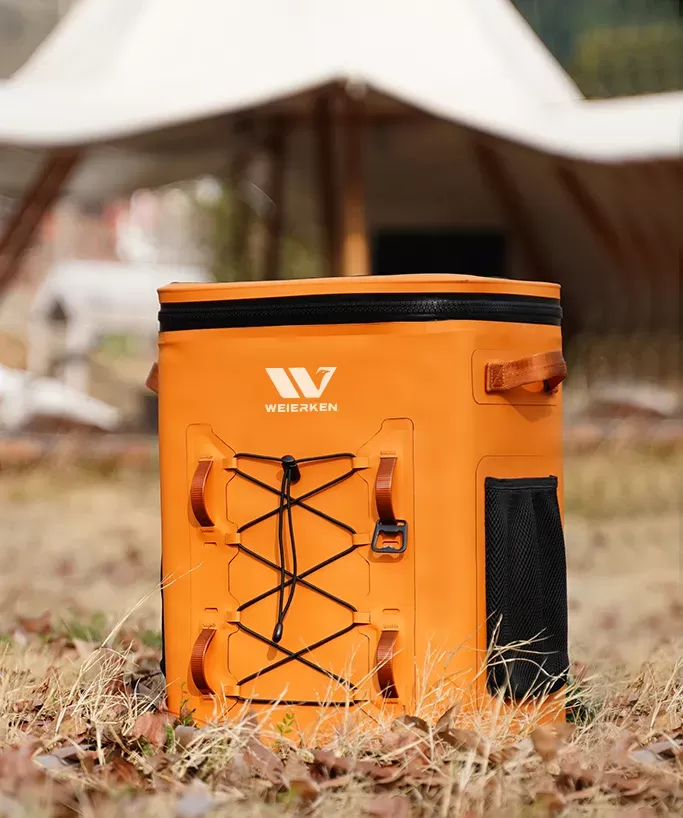

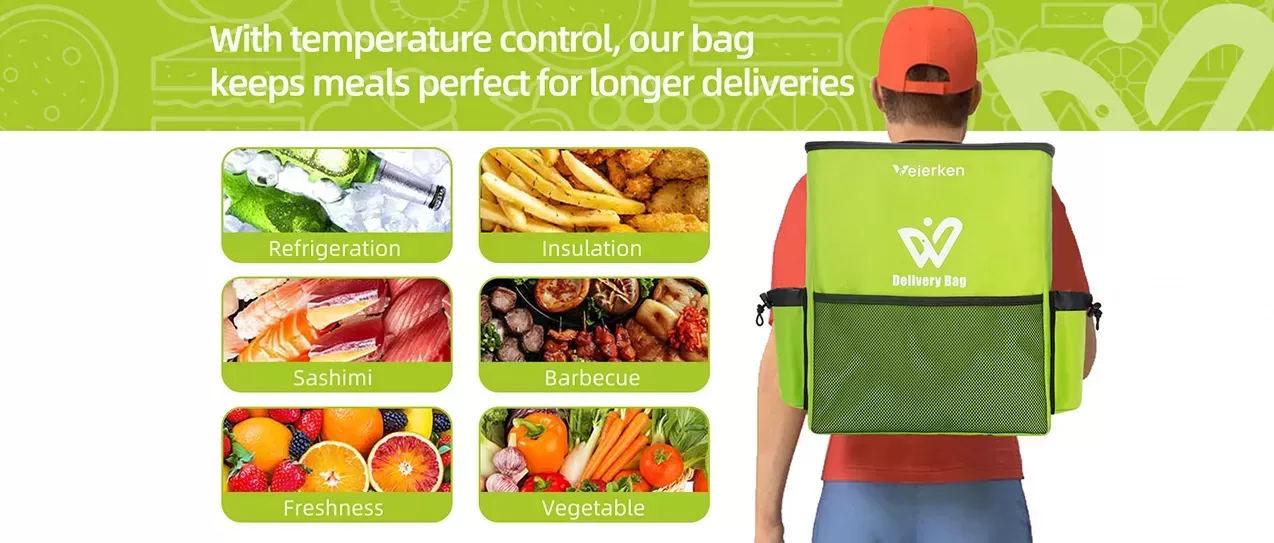
Fulfillment economics in the direct-to-consumer fresh food sector have reached a turning point. For years, meal kit subscription services and prepared food brands relied on single-use corrugated paper boxes, bubble foil liners, and massive gel ice packs to keep perishable ingredients cold. Rising paper pulp prices, disposal taxes, and corporate sustainability mandates have made that model commercially unsustainable.
Procurement teams and cold chain directors are abandoning single-use transit packaging. They are building closed-loop reverse logistics models built around heavy-duty, multi-cycle thermal packaging. Sourcing the right product requires partnering with a qualified custom meal kit delivery bag manufacturer that understands industrial textiles, heat transfer physics, and tariff-free international production networks. Industry veterans such as Weierken have demonstrated that migrating to commercial reusable systems can lower per-drop fulfillment costs by up to 60% over an operational year.
This technical guide evaluates structural engineering standards, factory audit protocols, ESG compliance requirements, and manufacturing resilience to help you select an original equipment manufacturer (OEM) for 2026 and beyond.
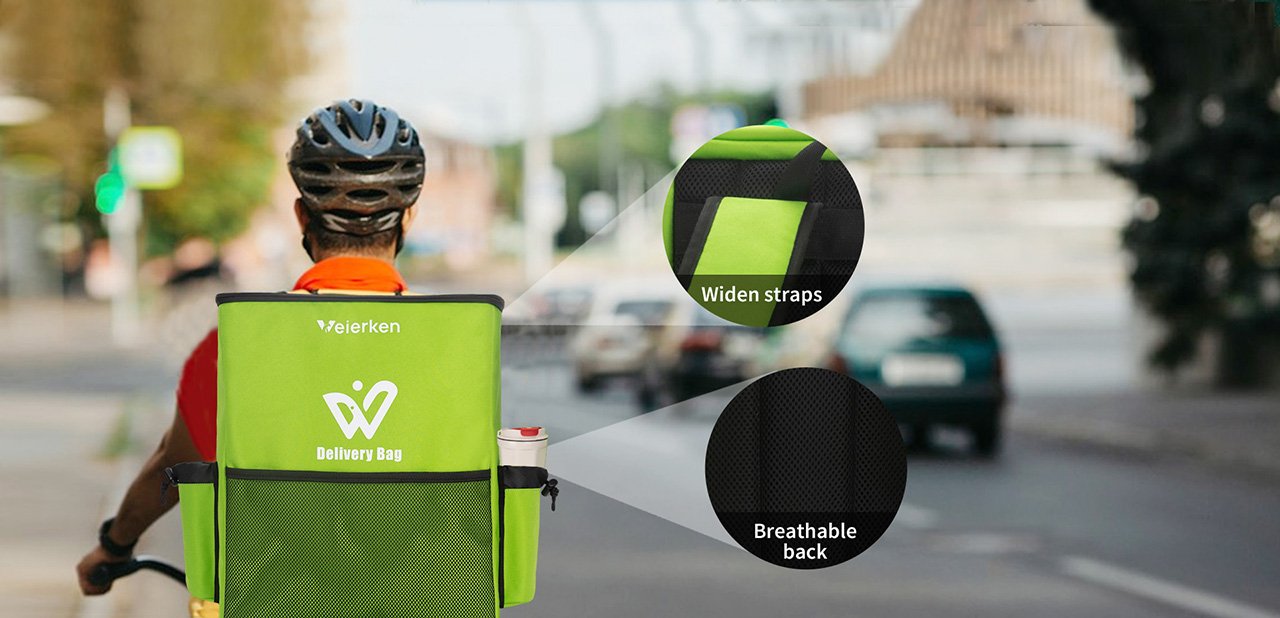
1. Core Engineering Benchmarks for 2026 Meal Kit Delivery Bags
A residential consumer tote bag is not built for commercial food logistics. Commercial food distribution bags undergo continuous mechanical stress. Delivery couriers drag them across concrete docks, shove them into tight van racks, and subject them to repeated industrial washing cycles. Your contract manufacturer must design around three core performance pillars.
Multi-Layer Thermal Physics & Temperature Holding
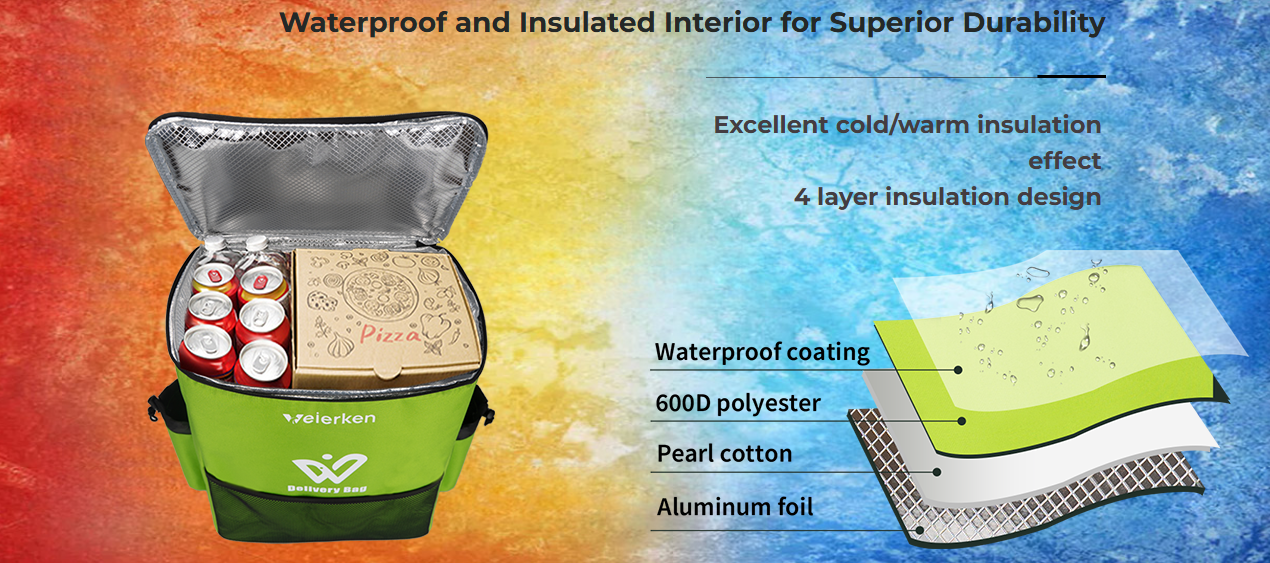
Meeting food safety standards means maintaining internal temperatures between 0°C and 4°C for proteins and produce, or below -18°C for frozen meals, across a 24- to 48-hour delivery window without relying on active refrigeration vehicles. A commercial cold chain delivery bag supplier must build a calibrated composite wall:
Outer Shell: High-density 600D to 1200D woven polyester or ballistic nylon, laminated with a thermoplastic polyurethane (TPU) backing to block external moisture and wind-driven ambient heat.
Thermal Core: Expanded Polyethylene (EPE) or closed-cell Expanded Polypropylene (EPP) foam, ranging from 8mm to 20mm in thickness. Closed-cell structures prevent water absorption, maintaining their insulation value even if the internal cavity gets wet.
Radiant Barrier: A vacuum-metallized aluminum foil or food-grade metalized film that reflects up to 97% of thermal radiation away from the payload cavity.
Airtight Perimeter Sealing: Thermal insulation fails if hot air enters through the seams. High-performance bags use water-resistant PU-coated zippers with integrated insulated baffle flaps that compress when closed to eliminate thermal bridging.
Industrial Hygiene & Seamless Welded Liners
Internal liquid leaks from broken sauce cups or raw meat vacuum packs will ruin porous thermal bags. Once liquids soak into interior foam layers, bacterial colonization produces stubborn sour odors, rendering the bag unusable.
A capable custom thermal meal delivery bags OEM avoids traditional stitched needle holes on interior liners. Instead, they run High-Frequency (HF) radio-wave welding or ultrasonic heat-sealing on heavy-gauge TPU or food-grade PEVA linings. This creates a 100% leakproof, bathtub-style interior basin. Couriers can wipe it clean using chlorine-based solutions, quaternary ammonium sanitizers, or commercial steam wands without breaking seam bonds or peeling the material.
Reverse Logistics & Space Optimization
Every cubic foot of empty space on a return truck costs money. Reusable packaging programs fail if return logistics exceed the initial packaging savings. Your manufacturer must engineer a collapsible design that folds down flat into an origami or accordion layout, achieving at least a 3:1 or 4:1 volume reduction ratio when empty.
Look for integrated magnetic side locks, heavy-duty elastic stay-straps, and stackable perimeter piping. These elements allow fleet operators to compress 100 empty bags onto a single standard wooden pallet for the return journey back to regional distribution centers.
2. How to Audit a Meal Kit Bag Manufacturer: Key Selection Criteria
The manufacturing market is filled with consumer-grade promotional bag factories marketing themselves as industrial thermal packaging suppliers. Vetting an industrial-grade partner requires a technical audit focused on prototyping speed, regulatory compliance, and mechanical quality control.
R&D Speed and Structural Prototyping
Meal kit packaging dimensions change whenever brands adjust food tray volumes, ingredient portioning, or ice brick sizes. Off-the-shelf catalog bags rarely match specific cargo volumes. Excess void space inside an insulated bag accelerates thermal convection, melting ice packs faster and forcing brands to add more dry ice or gel packs than necessary.
Your manufacturing partner should house an independent sample engineering lab. Industry leaders like Weierken provide custom structural design blueprints and deliver functioning physical prototypes within 3 to 7 business days. Fast prototyping allows your cold chain logistics teams to conduct real-world environmental drop tests and temperature profiling before running bulk production tooling.
Global Compliance and ESG Mandates
Enterprise food retailers and venture-backed delivery platforms face strict supply chain audits. When sourcing reusable insulated meal kit bags wholesale, your legal and procurement divisions must verify four levels of compliance:
Social Responsibility Audits: Verified third-party audit reports from BSCI (Business Social Compliance Initiative) or SEDEX (SMETA 4-Pillar) to confirm fair labor practices and workplace safety.
Quality Systems: ISO 9001 certification verifying tracked incoming raw-material inspections, inline assembly audits, and lot tracking.
Material Safety: Direct certification verifying that interior food-contact liners pass US FDA 21 CFR 177 standards and EU REACH/LFGB regulations for heavy metals, phthalates, and bisphenols.
Sustainability Certifications: Sourcing from a sustainable food delivery bag factory certified under the Global Recycled Standard (GRS). This ensures that outer fabrics contain authentic post-consumer recycled plastic (rPET), supporting corporate Scope 3 emissions reductions.
Production Scale and Mechanical Stress Testing
Review the factory's quality assurance lab directly. Do they operate automated cycle testers? High-grade delivery bags must endure high physical stress during their operating life. Demand factory test data showing:
Handle pull strength testing capable of holding a static load of 30kg to 50kg for over 24 hours.
Box-X and bartack reinforced stitching testing at 8 to 10 stitches per inch using bonded nylon thread.
Zipper abrasion testing rated for a minimum of 10,000 smooth open-and-close cycles under load.
A documented factory outbound pass rate of at least 99.5% under ISO-standard AQL (Acceptable Quality Limit) 1.5/4.0 inspection standards.
3. Supply Chain Resilience: Beating Tariffs & Ensuring Delivery
Tariff shocks, trade disputes, and international shipping bottlenecks make relying on a single production region risky. Western procurement teams can no longer afford to source entire product lines from a single country.
The Problem with Single-Country Sourcing
Sourcing cold-chain bags solely from mainland China leaves North American buyers vulnerable to Section 301 tariffs, which can add 25% or more in import duties on textile articles under HS Code 4202.92. This tariff penalty eats directly into operating margins. Meanwhile, shifting production entirely to underdeveloped manufacturing hubs often leads to quality defects, missing raw material supply networks, and prolonged lead times.
The "China R&D + Cambodia Mass Production" Strategy
Top-tier manufacturing groups address this challenge using a dual-hub operating model. They run a central engineering, material sourcing, and rapid prototyping hub in China, paired with large-scale cut-and-sew assembly facilities in Southeast Asia.
Working with an established Cambodia delivery bag manufacturer gives procurement directors a reliable competitive edge:
Substantial Tariff Mitigation: Industrial bags exported from Cambodia to the United States, the UK, and parts of the European Union frequently qualify for Generalized System of Preferences (GSP) or lower Most-Favored-Nation (MFN) tariff schedules. This lowers landed costs compared to direct China shipments.
Stable Material Supply: The Cambodia facility receives high-grade custom fabrics, food-grade thermal foams, and branded hardware directly from Chinese supply hubs. This setup prevents the local raw material shortages common in isolated emerging markets.
Large-Scale Output: Dedicated production lines handle high-volume containerized sea-freight orders without competing for line capacity against consumer soft-goods production.
True End-to-End DDP Fulfillment
Navigating customs classifications, ocean carrier allocations, drayage bottlenecks, and terminal handling fees drains your internal team's time. Enterprise procurement works best when operating on a Delivered Duty Paid (DDP) basis.
A mature manufacturing partner manages freight operations all the way to your regional fulfillment centers. They handle the bill of lading, clear import customs smoothly, manage port drayage, and absorb demurrage risks. Your operational team simply receives palletized, quality-checked delivery bags at your warehouse dock doors, ready for deployment.
4. The Industry Benchmark: Partnering with Weierken
Navigating these engineering, material, and geopolitical requirements demands a partner with specialized production lines. Weierken has spent two decades focused on technical bags and commercial insulated delivery packaging. The company builds customized cold-chain delivery solutions for international meal kit services, commercial grocery distributors, and pharmaceutical logistics fleets.
Weierken works as a technical development partner rather than just an order-taking vendor. Its structural engineering team reviews your internal package dimensions, route durations, and fulfillment workflows to optimize material yields. By refining panel geometry, nesting fabric patterns efficiently, and selecting durable hardware, Weierken helps prevent material waste and lowers your total cost of ownership (TCO).
Its dual manufacturing system combines an advanced R&D technical lab in China with high-volume, cost-effective assembly facilities in Cambodia. Backed by fluent English-speaking project managers, clear Gantt-chart milestones, and strict AQL 1.5 quality standards, Weierken delivers complex multi-regional container programs on time and within budget.
Frequently Asked Questions (FAQ)
Q1: What is the typical lifespan of a commercial custom reusable meal kit bag?
A1: An industrial-grade commercial meal delivery bag should complete between 100 and 150 delivery cycles under standard operational handling. Achieving this lifespan requires 600D to 1200D woven outer textiles with TPU backing, box-X reinforced strap joints, industrial molded or PU-coated coil zippers, and high-frequency welded inner basins. By reaching 100 or more cycles, the packaging cost amortizes to pennies per delivery drop, easily outperforming single-use corrugated cardboard boxes.
Q2: How do you verify thermal retention hours before starting mass production?
A2: Thermal validation happens inside calibrated environmental testing chambers. The engineering team packs the prototype bag with the client's actual meal trays, portioned cold packs (gel or dry ice), and multi-channel calibrated NIST-traceable thermocouple data loggers. The sealed bag then undergoes high-heat chamber stress tests, such as sustained 35°C to 40°C ambient temperatures. Internal temperature curves are recorded continuously over 24, 36, and 48 hours to confirm food stays within safe limits before steel cutting dies are made.
Q3: Can recycled fabrics (rPET) achieve the same structural tear strength as virgin polyester?
A3: Yes. High-grade post-consumer GRS-certified rPET (recycled polyethylene terephthalate) matches virgin synthetic polyester in tensile and tear strength. Recycled plastic flakes are depolymerized, purified, re-extruded into high-tenacity filament yarn, and woven with reinforced ripstop patterns. When paired with a laminated backing, GRS-certified rPET withstands the same operational transit stress while reducing environmental impact and supporting brand sustainability goals.
Q4: What is the standard production and shipping lead time from a Cambodia facility?
A4: Typical bulk mass manufacturing lead times in Cambodia run between 45 and 60 days following final sign-off on pre-production samples. Ocean transit times vary by destination port: roughly 18 to 22 days to the United States West Coast (Los Angeles/Long Beach), 28 to 35 days to the East Coast (New York/Savannah), and 25 to 32 days to major European container ports like Rotterdam or Hamburg. A dual-facility setup lets buyers fly urgent pilot units from China while high-volume bulk runs move via ocean freight from Cambodia.
Q5: How do you prevent mold and persistent odors in returned delivery bags?
A5: Odor and mold control requires two engineering solutions. First, eliminate exposed needle perforations by using high-frequency welded seamless liners made of non-porous TPU or PEVA. Second, select lining materials infused with anti-microbial additives that inhibit bacterial growth. Smooth, welded interior basins allow distribution staff to spray, sanitize, and dry bags quickly before nesting them for storage, preventing sour odors during turnaround cycles.
Q6: What minimum order quantity (MOQ) is required for fully custom-tooled meal delivery bags?
A6: Full OEM tooling—including custom internal divider arrangements, specialized composite insulation thicknesses, specific pantone exterior shells, and branded hardware pulls—typically requires an MOQ of 1,000 to 2,000 units per production run. This threshold covers custom dye lots, automated fabric-cutting layouts, and dedicated line setup while keeping unit production costs down for enterprise fleet deployment.
Transform Your Cold Chain Fulfillment
Single-use packaging creates unnecessary packaging waste and leaves your business exposed to rising paper and cold chain costs. Upgrading to a custom-engineered, reusable commercial delivery bag system protects food temperatures, satisfies corporate ESG requirements, and lowers long-term fulfillment costs.
Work with an experienced custom meal kit delivery bag manufacturer ready to solve complex logistics challenges. Contact the technical design team at Weierken today to review your cold chain packaging specs, request detailed material data sheets, and schedule a rapid functional prototype within 3 to 7 business days.