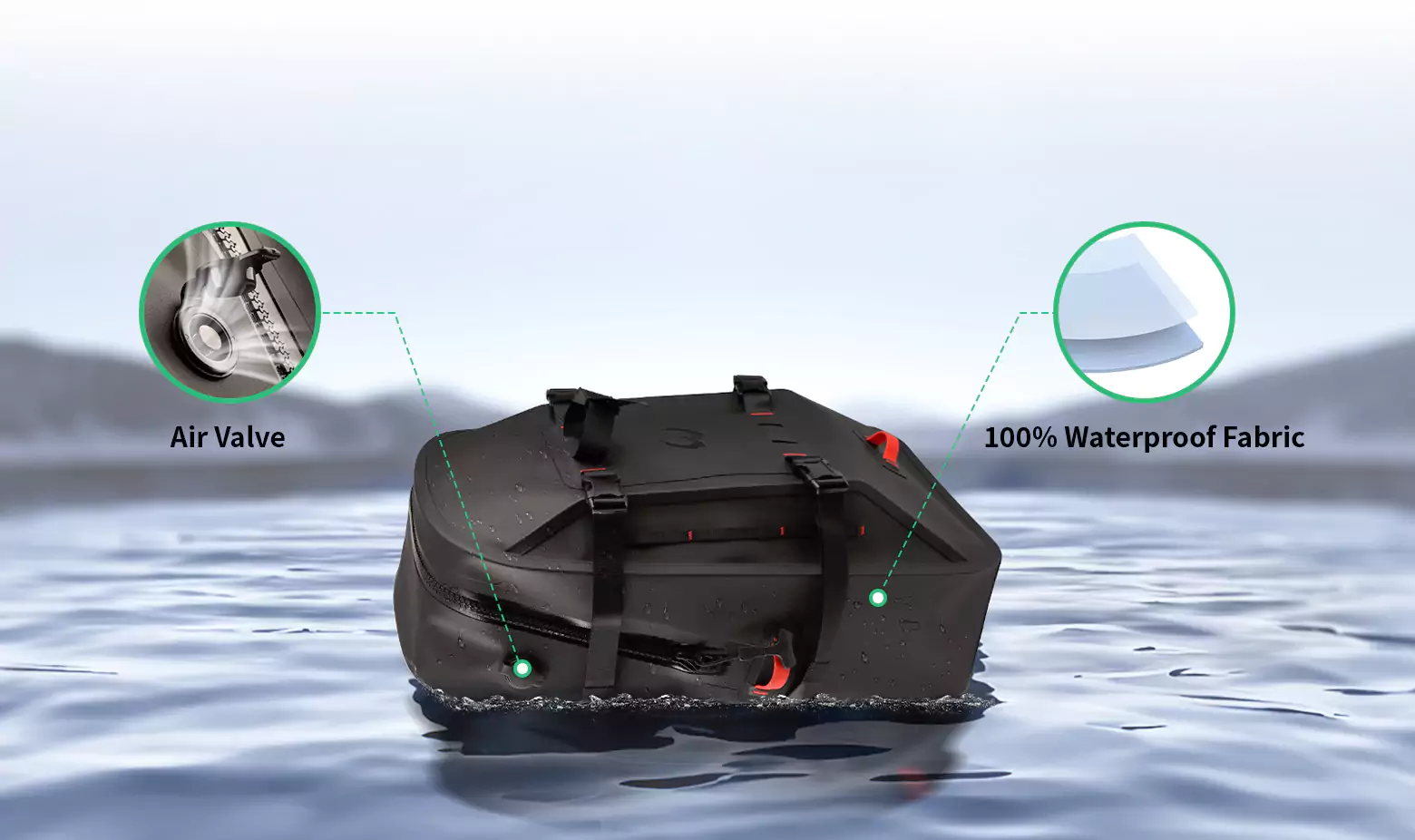
In the competitive world of outdoor equipment, “waterproof” is arguably the most dangerous word on a spec sheet. For a retail buyer, it is a selling point; but for a fishing bag distributor, it is a potential liability. If a customer trusts a bag to protect expensive electronics or high-carbon steel hooks and it fails, the damage goes beyond the ruined gear—it erodes trust in the brand.
As we navigate the market in 2026, the technology behind keeping gear dry has advanced significantly. Simple PVC backings are no longer the industry standard for high-performance gear. Today’s market demands a nuanced understanding of hydrostatic heads, RF welding, and ingress protection. Whether you are sourcing for a mass-market retail chain or developing a niche product line with a manufacturer like weierken, this guide cuts through the marketing fluff to provide the technical clarity needed to make informed procurement decisions.

1. Decoding the Alphabet Soup: IPX, Hydrostatic Head, and DWR
To communicate effectively with a fishing bag distributor or factory, you must speak the language of the laboratory. Confusing these terms is the primary reason for product returns and mismatched expectations.
The IPX Rating System (Ingress Protection)
The IEC 60529 standard, known as IPX, is the definitive benchmark for water intrusion.
- IPX4 (Splash Proof): The bag withstands water splashing from any direction. This is the baseline for general tackle bags. It handles rain but not a drop in the lake.
- IPX6 (Powerful Water Jets): This rating is critical for boat bags. It means the gear can withstand high-pressure jets (100 liters/minute). If a bag sits on a boat deck being washed down with a hose, it needs IPX6.
- IPX7 (Temporary Immersion): The “Holy Grail” for wade fishermen. The bag can be submerged up to 1 meter for 30 minutes without leakage. This requires airtight zippers and welded seams.
- IPX8 (Continuous Immersion): hermetically sealed for depths beyond 1 meter. Usually reserved for specialized diving or extreme kayak gear.
Hydrostatic Head (Water Column)
While IPX rates the finished product, Hydrostatic Head (HH) usually rates the fabric itself. It is measured in millimeters (mm). Imagine a column of water standing on the fabric; how high can it get before water seeps through?
- < 1,500mm: Water-resistant. Good for light showers.
- 3,000mm – 5,000mm: Rainproof. Suitable for most jackets and standard bag rain covers.
- 10,000mm – 20,000mm+: Highly waterproof. This is the territory of high-end membranes and heavy TPU coatings used by premium waterproof fishing gear manufacturers.
DWR (Durable Water Repellent)
Buyers often confuse DWR with waterproofing. DWR is a chemical polymer applied to the exterior face of the fabric. It causes water to bead up and roll off.
- Crucial Distinction: A bag can have excellent DWR but still leak. If the DWR fails (wets out), the outer fabric gets heavy and sodden, though the internal membrane might stop water from entering the main compartment. DWR is maintenance; waterproofing is construction.
2. Scenario-Based Requirements: Matching Specs to the Angler
Over-engineering is as bad for your margins as under-engineering is for your reputation. A savvy fishing bag distributor helps retailers segment their inventory based on the actual environment the angler faces.
The Shore and Bank Angler
- Scenario: Walking canals, lakesides, or urban fishing. Risk involves rain showers and wet grass.
- Recommended Spec: IPX4 or 600D Polyester with PVC backing.
- Why: These anglers rarely submerge their gear. Paying for airtight zippers (which are expensive and stiff) is unnecessary. A standard reverse-coil zipper with a DWR treatment is sufficient and keeps the cost accessible.
The Boat and Offshore Angler
- Scenario: Saltwater spray, heavy waves, and deck washdowns. The bag sits in a puddle of water.
- Recommended Spec: IPX6 or a rigid molded bottom.
- Why: The bottom of the bag is the vulnerability. A wholesale fishing tackle bag designed for boats should feature a molded EVA base or thick TPU-coated nylon (Tarpaulin style) that prevents water from wicking up from the deck.
The Wading and Kayak Angler
- Scenario: The angler is physically in the water. A slip means the bag goes under.
- Recommended Spec: IPX7 minimum.
- Why: This is a safety issue as much as a gear issue. These bags need to be fully submersible. Construction must shift from stitching to High-Frequency (HF) or Radio Frequency (RF) welding. Brands like weierken excel here by using TPU materials that fuse together at the molecular level, eliminating needle holes entirely.
3. Auditing the Supplier: How to Read the Test Report
When a potential fishing bag distributor hands you a test report, do not just look for the “Pass” stamp. You need to validate the methodology. Here is a checklist for your quality control team.
Scope: Fabric vs. Finished Product
The most common trick in the industry is providing a test report for the fabric while selling a bag.
- The Trap: A supplier uses 20,000mm waterproof fabric but stitches it with a standard sewing machine. The fabric repels water; the seams invite it in.
- The Fix: Demand a “Whole Product Rain Test” or “Submersion Test” report. The certificate must explicitly state that the seams and zippers were part of the testing scope.
Validating Standards
Ensure the testing lab uses recognized international standards:
- ISO 811: The global standard for hydrostatic pressure testing.
- AATCC 127: The American equivalent.
- JIS L 1092: The Japanese standard, often very rigorous regarding water resistance.
Test Conditions
Look at the fine print regarding sample conditioning. Was the bag tested brand new?
- Advanced Auditing: Ask your custom fishing gear supplier for data on “Aged Samples.” How does the waterproofing hold up after 24 hours of Salt Spray Testing (ASTM B117) or after 50 cycles of abrasion? This reveals whether the waterproof coating will peel off after a few months of use.
4. The Trade-off: Waterproofing, Breathability, and Durability
High waterproof ratings come with side effects. A transparent relationship with your fishing bag distributor involves discussing these trade-offs to manage end-user expectations.
The Condensation Trap
An IPX7 bag is airtight. While it keeps water out, it also traps moisture in. If an angler puts a wet lure box inside a TPU welded bag and leaves it in the sun, the internal humidity will skyrocket, potentially rusting hooks.
- Solution: Educate buyers. Or, incorporate “splash-proof” external mesh pockets for wet gear, keeping the main airtight compartment reserved for dry items like phones and clothes.
Durability of Coatings: TPU vs. PVC
- PVC (Polyvinyl Chloride): Cheap and waterproof. However, in cold weather, it becomes brittle and can crack. It is also heavier and less environmentally friendly.
- TPU (Thermoplastic Polyurethane): The material of choice for premium brands and manufacturers like weierken. It remains flexible in freezing temperatures, is abrasion-resistant, and binds better during RF welding.
- Breathable Membranes: For wearable gear (vests/slings), consider laminated fabrics like eVent or generic microporous membranes. These allow sweat vapor to escape while blocking rain, though they are rarely fully submersible.

5. OEM/ODM Risks: Where Customization Kills Waterproofing
When engaging an OEM fishing bag factory for a custom design, every feature you add introduces a potential leak point.
The Needle Hole Paradox
Standard manufacturing relies on needles. Every stitch is a hole.
- Risk: Adding a custom embroidered logo to the front of a waterproof bag destroys the integrity of the panel.
- Solution: Use RF-welded patches for logos, or screen printing. If pockets must be sewn, they should be attached to an additional layer of fabric, not the main waterproof chamber.
Zipper complexity
Waterproof zippers (like TIZIP or TRU Zip) are engineering marvels, but they have limitations.
- Risk: Sharp corners. Airtight zippers cannot handle tight radius turns. They need gentle curves or straight lines to function.
- Solution: Consult with the distributor’s engineers early. If your design requires a U-shaped opening, ensure the radius is wide enough to prevent the zipper teeth from separating under stress.
Seam Taping vs. Welding
- Taping: Good for rain gear. A tape is glued over a stitched seam. It can degrade and peel over years (hydrolysis).
- Welding: The materials are melted together. It is permanent. For any bag claiming to be “submersible,” welding is non-negotiable.
6. Procurement Strategy: Building a Resilient & Sustainable Supply Chain
In 2026, a fishing bag distributor is evaluated not just on product quality, but on supply chain ethics and longevity.
Sustainability and C0 DWR
Regulatory pressure (especially in the EU and parts of the US) is banning “Forever Chemicals” (PFAS/PFCs). Traditional C8 DWR treatments are being phased out.
- The Shift: Ensure your supplier uses C0 (PFC-free) DWR. Note that C0 is slightly less effective against oil and grease than C8, but it is the only compliant path forward. You need a supplier who can formulate C0 treatments that still meet performance benchmarks.
Continuous Improvement and QC
The best suppliers allow for Third-Party Inspection (TPI).
- Advice: Implement an AQL (Acceptable Quality Limit) standard for waterproofing. For a shipment of 1,000 waterproof backpacks, randomly test 80 units. If more than 2 fail a submersion test, the batch is rejected. Suppliers who know this protocol is in place will use their best technicians for your production run.
Selecting the right fishing bag distributor requires moving beyond the brochure and into the technical specifications. It is about understanding that a bag for a kayak angler needs RF welding, while a bag for a bank angler needs smart organization and durable DWR.
By demanding rigorous test reports, understanding the limitations of materials like TPU and PVC, and accounting for the manufacturing risks in OEM customization, you protect your brand from the embarrassment of product failure. Whether you are partnering with an industry veteran like weierken or vetting a new supplier, remember: in the fishing industry, the only thing that should be wet is the fish.
Frequently Asked Questions (FAQ)
Q1: What is the minimum IPX rating I should look for in a general-purpose fishing backpack?
A: For general purpose (shore fishing, light boat use), IPX4 is the industry standard. It protects against rain and splashes. However, if the backpack is intended to sit on the floor of a boat where water pools, we recommend upgrading the base to IPX6 or using a molded EVA bottom.
Q2: How much more expensive is an RF-welded bag compared to a sewn bag?
A: RF (Radio Frequency) welded bags are typically 30% to 50% more expensive than sewn bags. This is due to the higher cost of TPU/PVC materials required for welding and the slower, more precise manufacturing process. However, for a fishing bag distributor targeting the high-end market, this cost is justified by the “submersible” claim.
Q3: Can I customize a waterproof bag with my own logo without affecting the rating?
A: Yes, but you cannot use traditional embroidery, as the needles puncture the waterproof membrane. You must use screen printing, heat transfer logos, or RF-welded rubber patches. A competent OEM fishing bag factory will advise you on the safe zones for logo placement.
Q4: How do I verify if a supplier’s “Waterproof Zipper” is actually submersible?
A: Look at the teeth. Standard “water-resistant” zippers have a PU coating on the outside and look shiny, but the teeth still have gaps. True airtight/submersible zippers (like TIZIP) have teeth that interlock into a sealed rubber housing. Always ask for an air-pressure test video: fill the bag with air, zip it, submerge it, and stand on it. If bubbles escape, it is not submersible.
Q5: What is the advantage of TPU over PVC for waterproof fishing bags?
A: While both are waterproof, TPU (Thermoplastic Polyurethane) is superior for premium products. It is lighter, more abrasion-resistant, and eco-friendlier (biodegradable over long periods). Crucially for fishing, TPU does not stiffen or crack in cold weather, whereas PVC can become brittle and prone to failure after a few seasons of use.
Is your product line ready for the 2026 season?
Don’t gamble with your brand’s reputation on unverified specs. At weierken, we provide fully certified, field-tested waterproof solutions tailored to your market needs.
[Click Here to Send an Inquiry & Get Your Free Waterproof Material Sample Kit]
Let’s build gear that withstands the elements.