
Sailing and marine gear standards are shifting rapidly. As global interest in yachting, recreational sailing, and water sports expands, customer expectations for dry bags are rising. Modern buyers demand more than basic water resistance. They want lightweight designs, eco-friendly materials, and extreme structural durability.
Sourcing managers and product development teams face tough choices for upcoming product cycles. You must navigate tightening chemical regulations, fluctuating international tariffs, and intense real-world performance demands. Standard off-the-shelf dry sacks no longer satisfy professional marine clients.
Planning a product line for 2026 requires a technical manufacturing partner who understands ocean conditions. Weierken brings two decades of technical expertise to custom marine bag manufacturing. This technical guide outlines key engineering standards, material advancements, and supply chain strategies for your next OEM project.
The 2026 Market Outlook for Sailing Duffels
The global marine accessories market is moving toward high-end technical gear. Sailors use their gear in aggressive offshore environments. A duffel bag on a sailboat deck sits in pooled saltwater, faces intense UV rays, and endures rough handling against cleats and winch handles.
Traditional low-cost materials are losing market share. Legacy PVC construction faces heavy scrutiny due to environmental rules across North America and Europe. Meanwhile, poor manufacturing leads to delaminated seams and leaky closures after just one season at sea.
Successful brands in 2026 will focus on three core pillars:
Regulatory Compliance: Using non-toxic, REACH-compliant materials without harmful plasticizers or fluorine compounds.
Technical Reliability: Relying on air-tight seals that survive total immersion and heavy wave impacts.
Supply Chain Resilience: Utilizing flexible production locations to lower duty costs and secure shipping timelines.
Technical Benchmarks for B2B Buyers
When evaluating a waterproof sailing duffel OEM partner, you must look beyond surface aesthetics. The raw materials and welding technologies determine whether a bag lasts on the open ocean.
Material Selection: TPU vs. Traditional PVC
Heavy PVC tarpaulin was once the standard for waterproof bags. However, high-performance brands are shifting toward Thermoplastic Polyurethane (TPU) fabrics for modern sailing collections.
A high-density 500D TPU fabric offers clear engineering advantages over traditional PVC:
Superior Cold Flexibility: TPU remains flexible at freezing temperatures, whereas PVC hardens and cracks.
UV and Hydrolysis Resistance: Advanced TPU coatings resist yellowing, cracking, and breakdown caused by prolonged sunlight and salt exposure.
Environmental Safety: TPU contains no phthalates or heavy metals, making it a fully REACH compliant waterproof bag solution.
Weight Reduction: TPU delivers higher tear strength at a lighter fabric weight, easing load-bearing stress for sailors.
Seam Construction: RF Seamless Welding Technology
Needle punctures destroy waterproof integrity. Traditional sewing machine needles leave thousands of microscopic holes that leak under continuous water pressure. High-end marine duffels rely entirely on heat-fused seams.
We use high-frequency RF seamless welding to bond fabric panels. This machinery uses electromagnetic energy to melt thermoplastic coatings together at the molecular level. The result is a seamless, solid join that matches the structural strength of the raw fabric itself.
Airtight Zipper Integration
The main zipper is often the primary point of failure on a dry duffel. Standard coil zippers with weather flaps offer light splash protection, but they fail during heavy downpours or deck washouts.
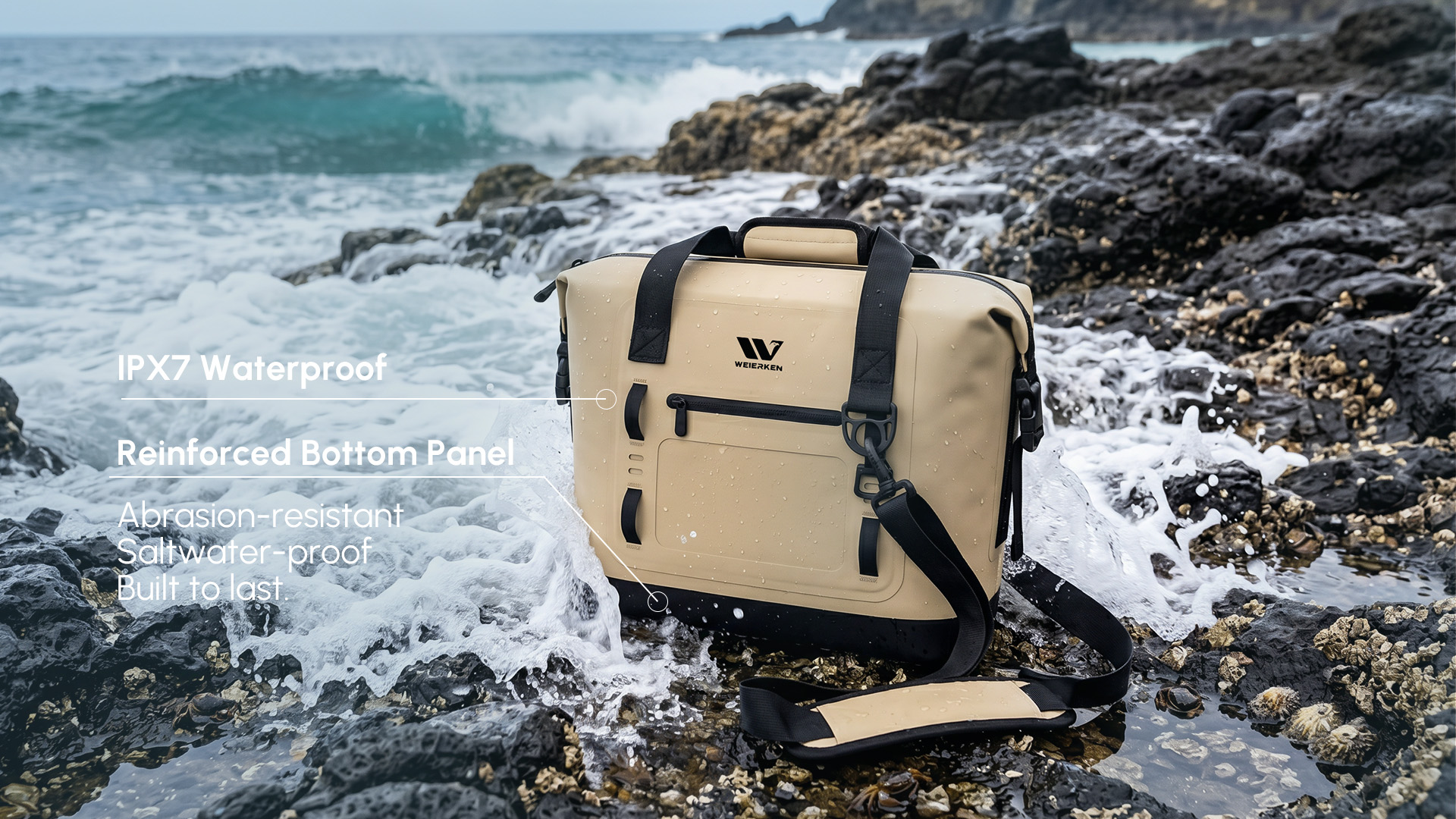
Professional marine duffels require a true IPX7 waterproof zipper or an IPX8 airtight zip closure. These specialized components use interlocking teeth enclosed in a flexible rubber track. When zipped shut, they form a pressure-proof barrier that prevents water ingress even when submerged under one meter of water.
Custom Design Features for 2026 Sailing Duffels
Customization allows your brand to stand out in a competitive market. A well-engineered custom airtight waterproof duffel must combine smart ergonomics with marine-specific functionality.
Multi-Mode Convertible Carry Systems
Boat decks offer limited storage space. Crew members need bags that transition easily from dockside transport to tight berth stowage.
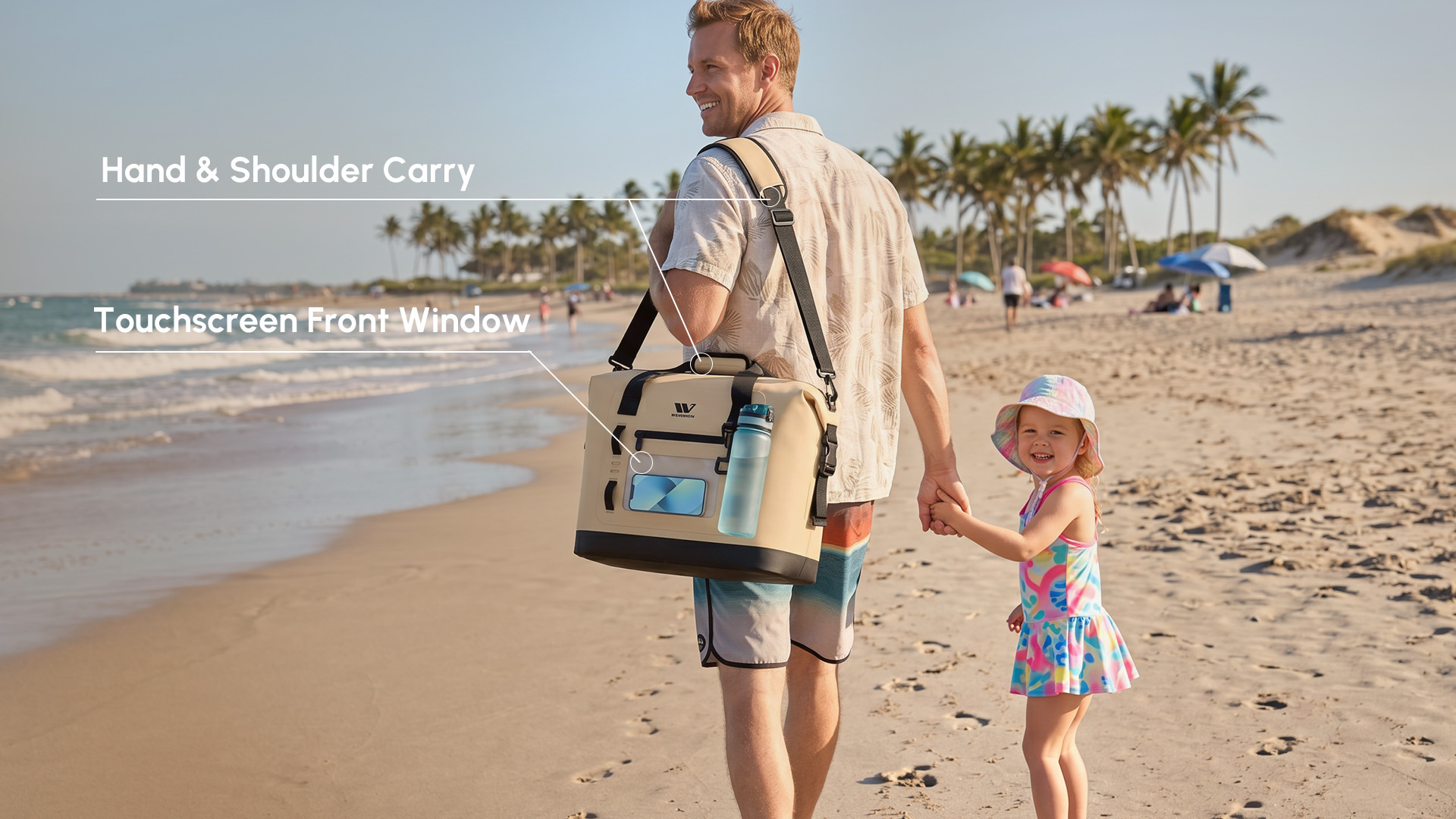
Backpack Conversions: Ergonomic, padded shoulder straps that clip off quickly when not needed.
Low-Profile Grab Handles: Reinforced end handles made from non-absorbent webbing for quick lifting out of hatches.
Stowable Straps: Pocket systems that conceal loose webbing to prevent snags on boat rigging.
Pressure Relief Valves for Buoyancy and Compression
Air seal integrity can make a bag bulky to pack. An integrated 2-way pressure relief valve solves this issue instantly.
Sailors can open the valve to bleed excess air out while cinching compression straps, minimizing overall storage volume. Conversely, closing the valve traps air inside. If the duffel slips overboard, it functions as a floating container, keeping expensive gear dry on top of the water.
Internal Organization and Electronics Protection
Modern sailors carry delicate navigation gear, satellite phones, and personal electronics alongside wet foul-weather gear. Single-cavity bags force users to mix clean, dry items with damp clothing.
Our custom layouts include clear internal dividers, water-resistant mesh zip pockets, and removable padded sleeves. This keeps sensitive marine electronics isolated from damp outer layers.
Deck Anchoring and Night Safety Systems
Unsecured bags slide across slick fibreglass decks during rough sailing. A technical duffel must include robust attachment hardware:
Reinforced D-Rings: Heavy-duty, salt-resistant attachment points for securing tie-down straps to deck cleats.
3M Reflective Panels: High-grade retroreflective strips positioned on all four sides for clear visibility under spotlight beam sweeps during night operations.
High-Visibility Trims: Fluorescent accents that help crew members spot essential equipment in low-light cabins.
Supply Chain Strategy: The China + Cambodia Advantage
Product quality is only half the equation. Sourcing managers must also manage geopolitical risks, shipping schedules, and import tariffs.
Relying on a single manufacturing origin introduces supply chain vulnerabilities. As an established marine grade dry bag supplier, Weierken addresses this risk through a mature dual-base manufacturing strategy.
Mitigating Import Tariffs with Dual Sourcing
Trade policies between Asia and Western markets remain volatile. Importing technical textiles directly into North America or Europe can incur significant tariff surcharges depending on country-of-origin rules.
By operating an OEM waterproof bag factory Cambodia alongside our original China headquarters, we give clients a clear logistics strategy. Our Cambodian facility qualifies for favorable trade terms under major international agreements, helping you reduce tariff exposure while staying fully compliant with origin regulations.
Combining R&D Agility with Mass Scale
Our dual-factory model optimizes every phase of your product lifecycle:
China Innovation Hub: Handles complex raw material sourcing, rapid pattern development, advanced mold engineering, and quick-turn prototyping.
Cambodia Production Center: Built for large-scale, cost-effective assembly runs supported by over 80,000 square meters of production space and 3,000 skilled workers.
This China+1 manufacturing strategy lets you sample and refine designs rapidly in China, then transition smooth mass production to Cambodia for maximum margin efficiency.
Our OEM/ODM Implementation Process
Weierken follows a disciplined development framework to bring your custom marine bags from technical sketch to final delivery without unexpected delays.
1. Technical Discussion & Tech Pack Review
We evaluate your initial concepts, target price points, and intended performance specifications. Our engineering team reviews fabric weights, zipper types, and seam placements to optimize durability and cost.
2. Rapid Prototyping (3-7 Days)
Our sample room builds physical prototypes using exact technical specifications. We provide 3D visual renderings and material swatches so your team can test form, fit, and function quickly.
3. Marine-Grade Quality Testing
Before launching mass production, every design must pass rigorous laboratory and real-world quality control checks:
Airtightness Test: Bags are inflated to target pressure and monitored for 24 to 48 hours to confirm zero pressure drop.
Tensile & Stress Test: Handles, haul loops, and shoulder straps are pull-tested on dynamic rigs to prevent seam tears.
Salt Spray & UV Chamber Test: Fabrics and hardware undergo accelerated salt spray and UV testing to verify corrosion and degradation resistance.
4. Mass Production & Final Delivery
Mass assembly takes place under strict inline inspection protocols. Completed orders are packed according to your distribution center guidelines and shipped with full custom compliance documentation.
Prepare Your 2026 Product Line with Weierken
Building high-performance marine bags requires proven engineering, advanced welding machinery, and flexible international manufacturing options. Choosing the right production partner protects your brand reputation and secures your product margins.
Weierken supplies technical OEM solutions for outdoor and water sports brands globally. Our combined engineering capabilities in China and large-scale manufacturing capacity in Cambodia ensure your products deliver uncompromising offshore performance.
Ready to start your 2026 waterproof sailing duffel OEM project? Contact our engineering team today to request a free technical consultation, custom material swatches, and a competitive factory quote!
Frequently Asked Questions (FAQ)
1. What is the main difference between TPU and PVC for a waterproof sailing duffel OEM project?
TPU (Thermoplastic Polyurethane) is lighter, remains flexible in freezing temperatures, resists UV radiation, and contains no toxic phthalates. PVC is heavy and cost-effective, but it can crack over time under harsh sunlight and faces environmental restrictions in key markets like Europe. TPU is the preferred material for premium marine gear in 2026.
2. How does Weierken's Cambodia bag factory help us lower import costs?
Our Cambodian facility allows international brands to utilize favorable trade agreements that lower import duties in markets like the United States and Europe. By shifting bulk assembly to Cambodia, you legally minimize tariff exposure while maintaining strict quality standards overseen by our core management team.
3. What waterproof rating is required for marine-grade duffel bags?
For deck bags subjected to heavy splash and rain, an IPX6 rating is sufficient. However, for bags intended to withstand deck washouts, wave impacts, or accidental immersion, an IPX7 (submersion up to 1 meter for 30 minutes) or IPX8 rating using an airtight zipper and RF welded seams is necessary.
4. What is your minimum order quantity (MOQ) for custom marine bag manufacturing?
Our standard production MOQ generally starts at 500 to 1,000 units per style, depending on fabric selections, custom color runs, and hardware complexity. We can adjust batch sizes during initial launch phases for established brand partners.
5. Can you manufacture REACH-compliant and fluorine-free waterproof duffels?
Yes. All raw fabrics, TPU films, webbings, and plastic hardware sourced by Weierken can be specified to meet strict European REACH standards, PFAS-free water repellency mandates, and Proposition 65 requirements.
6. How long does it take to manufacture a prototype sample?
Once we receive your technical pack or reference design, our prototype team creates a physical sample within 3 to 7 business days. This allows you to evaluate physical construction and complete field testing without losing timeline momentum.