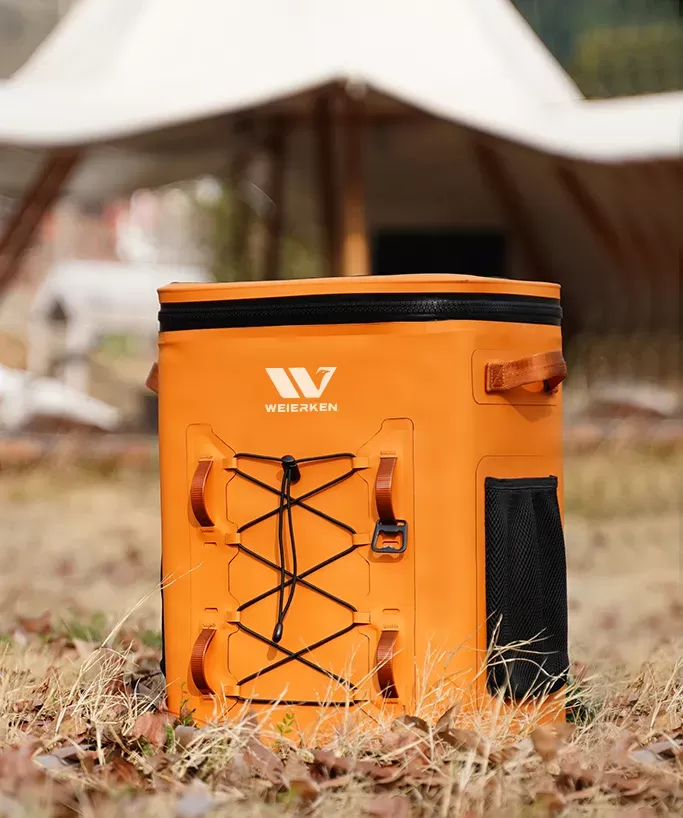

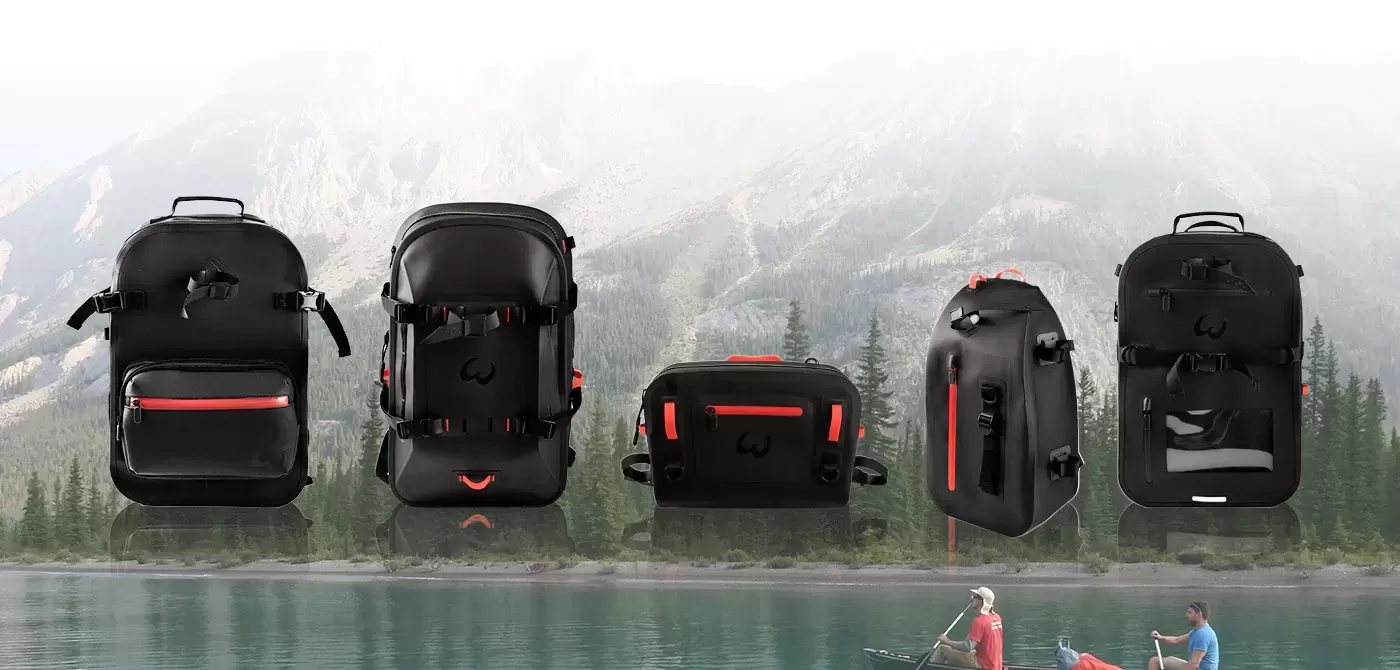
The outdoor gear market is shifting rapidly. Outdoor enthusiasts no longer buy stiff, neon-colored PVC dry bags that look like industrial utility sacks. Modern consumers expect complete submersibility (IPX7 ratings) without sacrificing sleek design, daily versatility, or environmental standards.
By 2026, buyers will demand gear that transitions from morning whitewater paddling to an evening city commute. Meeting these expectations requires specialized engineering. Experienced factory partners, such as Weierken, help brands bridge the gap between design concepts and technical execution.
If you want to build a high-margin lineup for upcoming seasons, you must align with an advanced IPX7 bag manufacturer. Below, we break down five critical market trends for 2026 and outline the specific production capabilities your factory partner must offer.
1. The Non-Negotiable Shift to PFAS-Free and Bio-Based TPU Materials
Regulatory mandates in the United States and Europe now restrict per- and polyfluoroalkyl substances (PFAS). These "forever chemicals" were once the industry standard for water-repellent coatings. By 2026, non-compliant gear will face import bans across key Western markets.
Leading brands are swapping traditional materials for sustainable alternatives. Thermoplastic Polyurethane (TPU) laminated fabrics are taking over. Buyers want Global Recycled Standard (GRS) certified recycled TPU and plant-based, bio-based TPU films.
What Your Manufacturing Partner Needs to Deliver:
Solvent-Free High-Frequency (HF) Welding: Sustainable TPU films can degrade under inconsistent heat. Your factory must use precision HF welding machinery that bonds materials without chemical adhesives.
Certified Supply Chains: Raw material suppliers must provide verifiable GRS 4.0 and REACH certifications.
Hydrostatic Testing: The factory must test sustainable seams under 10 kPa of water pressure to verify true IPX7 performance (submersion up to 1 meter for 30 minutes).
2. Gorpcore 2.0: Urban Aesthetics Meet Technical Submersibility
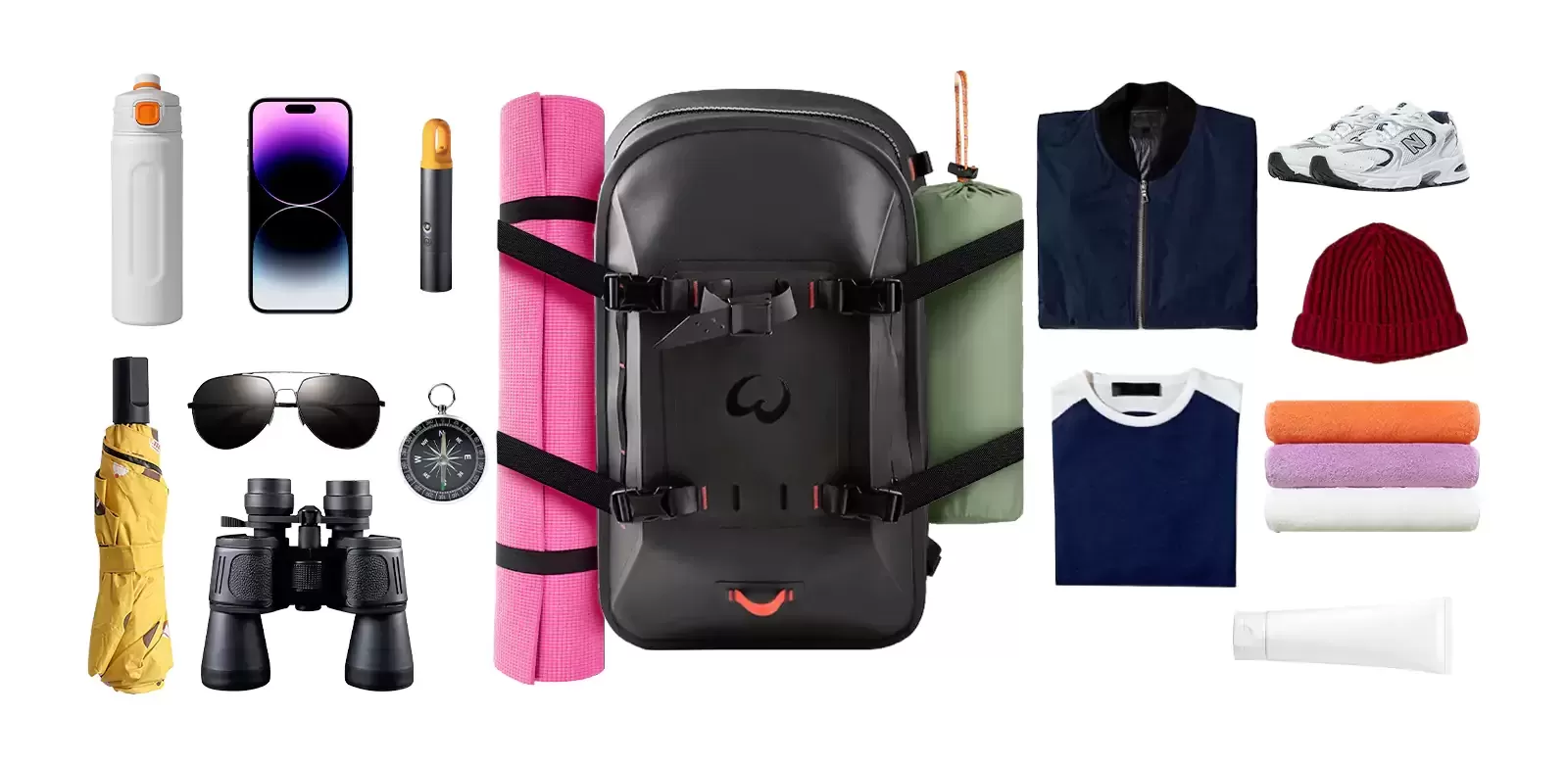
Streetwear and technical outdoor gear continue to merge. Consumers want matte finishes, clean lines, and neutral color palettes. They expect a pack to protect a laptop during a rainy bike commute and shield gear during a weekend kayak trip.
However, pure welded bags often lack internal organization. Traditional stitched bags offer great pockets but leak at the seams. A skilled custom TPU IPX7 dry bag OEM solves this problem through hybrid construction.
Essential Factory Capabilities for Hybrid Bags:
Multi-Material Laminates: Experience welding lightweight 70D or 210D Cordura nylon composite fabrics with a soft-touch matte TPU backing.
Hybrid Production Lines: The ability to weld an IPX7 airtight main compartment while stitching and seam-sealing non-waterproof outer organization pockets.
Precision Laser Cutting: Automated laser cutting systems that yield clean, fray-free edges on complex panel layouts.
3. Protecting High-Value Electronics: Drones, Cameras, and Power Stations
Stand-up paddleboarding (SUP), fishing, and backcountry drone photography are booming. Outdoor enthusiasts now carry thousands of dollars in electronic gear into wet environments. Standard splash-proof bags are no longer sufficient.
This surge drives demand for rigid, shockproof, fully submersible carry solutions. Brands need an airtight zipper bag supplier that can integrate structural foam inserts into fully sealed fabric shells.
Innovative manufacturers like Weierken integrate advanced sealing hardware into thermoformed chassis designs. This provides dual protection against impact and water ingress.
Key Engineering Standards for Electronics Packs:
Airtight Zipper Integration: Precision welding of heavy-duty TPU airtight zippers that maintain a seal under continuous immersion.
Custom Molded EVA Foam: In-house thermoforming capabilities for shock-absorbing EVA liners tailored to custom gear dimensions.
Pressure Relief Valve Assembly: Ultrasonic welding of manual or automatic purge valves to prevent vacuum lock during elevation changes.
4. Modular Systems and Magnetic Quick-Release Interfaces
Modern consumers prefer customizable gear systems. A core backpack should adapt into a light hip pack or mount onto a bike handlebar in seconds. Modular attachment systems, such as MOLLE grids and magnetic hardware, are driving this trend.
Adding external mounting points to a waterproof bag is challenging. Every stitch hole destroys the IPX7 seal. Your sustainable waterproof bag manufacturing partner must anchor external hardware without puncturing the inner shell.
Advanced Attachment Techniques:
RF Welded Anchor Patching: High-frequency welding of heavy-duty TPU patch mounts directly onto the exterior wall.
Encapsulated Magnetic Hardware: Sealing Fidlock or similar magnetic hardware inside TPU pockets to protect metal components from saltwater corrosion.
Load-Bearing Seam Reinforcement: Structural stress calculations that prevent welded anchor points from peeling off under heavy loads.
5. Supply Chain ESG Metrics and Automated High-Frequency Capacity
Global brands must report Scope 3 carbon emissions and ensure ethical labor practices across their supply chains. Working with a reliable factory helps you meet these compliance standards effortlessly.
Manual assembly leads to high defect rates in complex airtight products. Top-tier factories solve this issue by investing in automated production machinery, which lowers scrap rates and conserves raw materials.
For instance, Weierken uses automated HF welding robotic arms to maintain consistent temperature, pressure, and dwell time on every seam, ensuring reliable waterproof quality.
What Procurement Managers Should Audit:
ISO 9001 & BSCI Compliance: Valid international management and social accountability audits.
Automated Tooling: CNC-machined welding molds and robotic feeding tracks for complex bag shapes.
Material Traceability: Clear documentation tracking raw TPU pellets from chemical plant to finished product.
Summary Checklist: Selecting Your IPX7 Bag Manufacturer
Developing a breakthrough product for 2026 requires early planning. Working with a factory that acts as a true R&D partner speeds up development and helps avoid costly quality recalls.
Before signing a production agreement with an IPX7 bag manufacturer, verify that they meet these baseline requirements:
In-house IPX7 immersion testing tanks and air pressure decay testers.
Proven experience with PFAS-free, GRS-certified TPU films and coated fabrics.
Ability to integrate TPU airtight zippers and vacuum release valves seamlessly.
Automated HF welding equipment to guarantee low leak rates in mass production.
Full transparency regarding ESG standards and supply chain traceability.
Start Building Your 2026 Waterproof Product Line
Securing market share in 2026 starts today. Don't let technical manufacturing limitations slow down your product strategy. Partner with an industry leader to bring your designs to life with precision and reliability.
Contact Weierken today to speak with our engineering team, request custom fabric swatches, or schedule a consultation for your upcoming OEM/ODM project.
Ready to elevate your product line? Request a quote from our supply chain experts today!
Frequently Asked Questions (FAQ)
1. What is the main difference between IPX6 and IPX7 ratings for custom bags?
An IPX6 rating protects against high-pressure water jets from any angle, making it ideal for heavy rain or water splashes. An IPX7 rating requires complete water tightness under submersion at a depth of 1 meter for 30 minutes. Achieving IPX7 requires airtight zippers or specialized roll-top closures along with high-frequency welded seams.
2. How do you ensure PFAS-free materials remain fully waterproof at IPX7 standards?
PFAS-free fabrics rely on advanced TPU (Thermoplastic Polyurethane) or PU coatings applied directly to the base fabric. An experienced factory uses high-frequency welding to melt the TPU coatings together, creating a continuous, seamless barrier that holds up under immersion testing without needing chemical DWR treatments.
3. Can an IPX7 bag manufacturer combine sewn pockets with welded compartments?
Yes. This hybrid construction is ideal for urban-outdoor designs. The factory creates a fully welded TPU inner chamber to guarantee IPX7 protection for core gear, then stitches and seam-tapes outer organization pockets onto secondary panels to add function without compromising the main waterproof seal.
4. What is the typical lead time for custom TPU IPX7 dry bag OEM projects?
Initial design and sample development usually take 2 to 4 weeks. Once samples are approved, tooling creation and lab testing take about 3 weeks. Mass production generally requires 45 to 60 days, depending on raw material availability and order volume.
5. Why is high-frequency (HF) welding preferred over ultrasonic welding for airtight zipper bags?
HF welding uses high-frequency electromagnetic energy to melt and fuse TPU materials at the molecular level, creating a thick, structural bond around heavy zipper tapes. Ultrasonic welding works well for thin fabrics or localized spot welds, but HF welding yields a stronger, air-tight seal across long, complex 3D seams.
6. What quality control steps are taken during IPX7 bag production?
A reliable factory performs tensile testing on incoming TPU rolls, continuously monitors HF weld temperature, and conducts 100% air-inflation decay tests on completed bags. Random samples from every batch undergo full submersion testing in pressurized water tanks to verify IPX7 compliance.