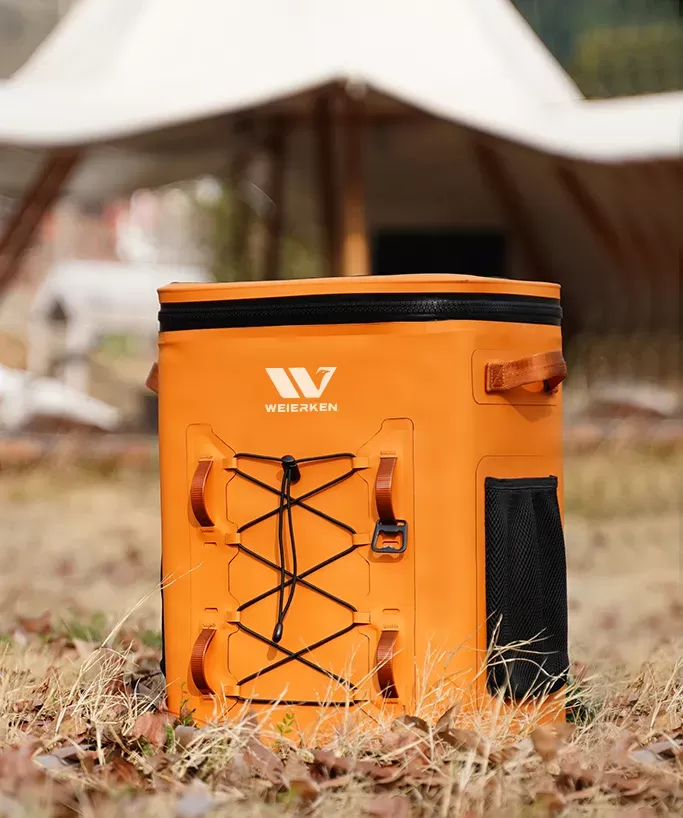

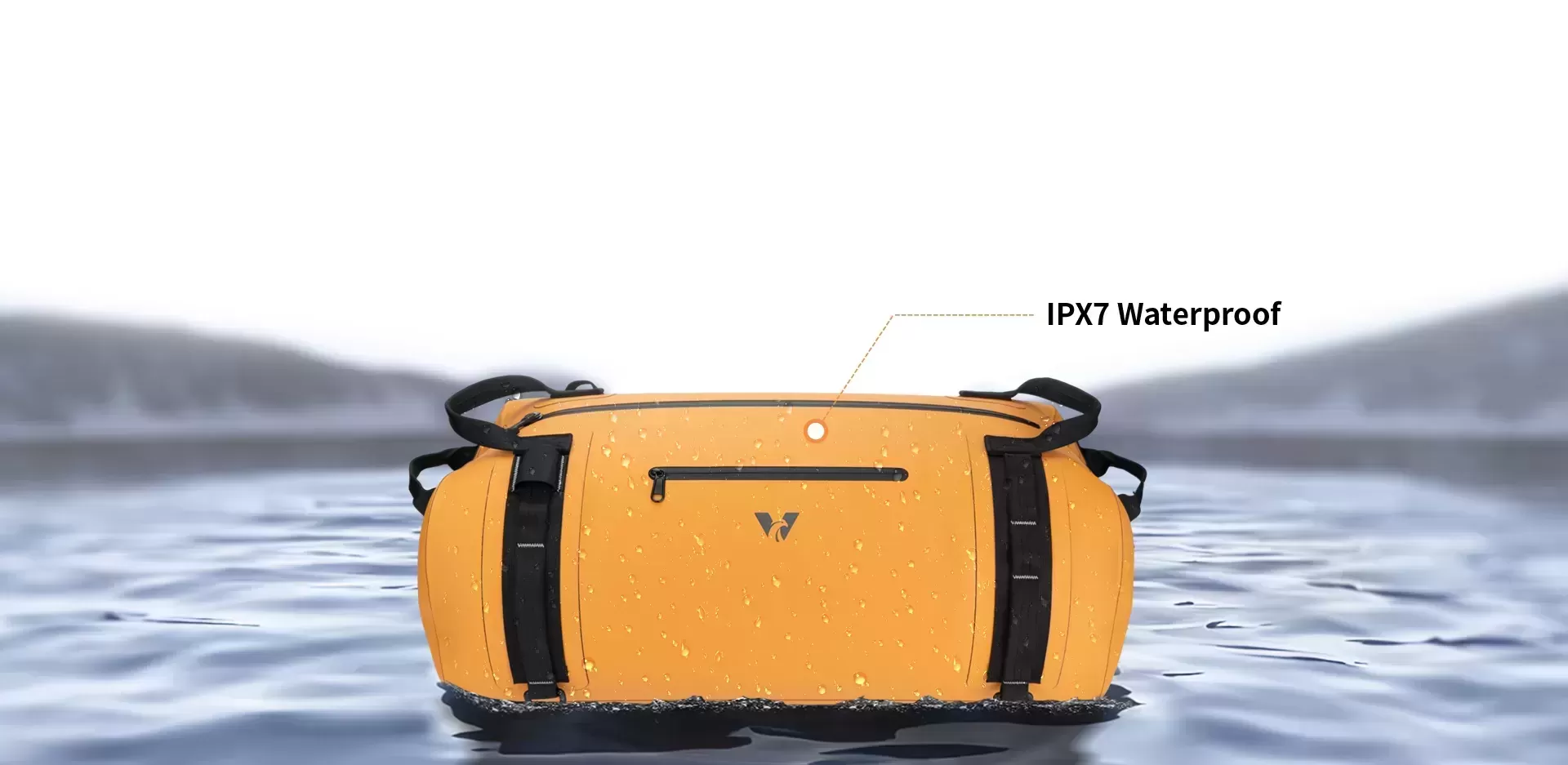
Manufacturing a standard canvas backpack requires basic cutting and sewing equipment. Building a custom bag that survives 30 minutes submerged under one meter of water is a completely different engineering challenge.
Product designers and brand founders often run into major roadblocks when attempting to translate a 2D tech pack into a certified waterproof bag. Standard cut-and-sew factories lack the specialized tooling expertise and high-frequency machinery required to build airtight seams.
When evaluating prospective IPX7 bag manufacturers, you must look beyond basic manufacturing capacity. You need a partner with advanced Original Equipment Manufacturer (OEM) and Original Design Manufacturer (ODM) capabilities.
At Weierken, we specialize in converting complex technical concepts into market-ready waterproof products. This article outlines the five essential OEM services your manufacturing partner must provide to guarantee production success.
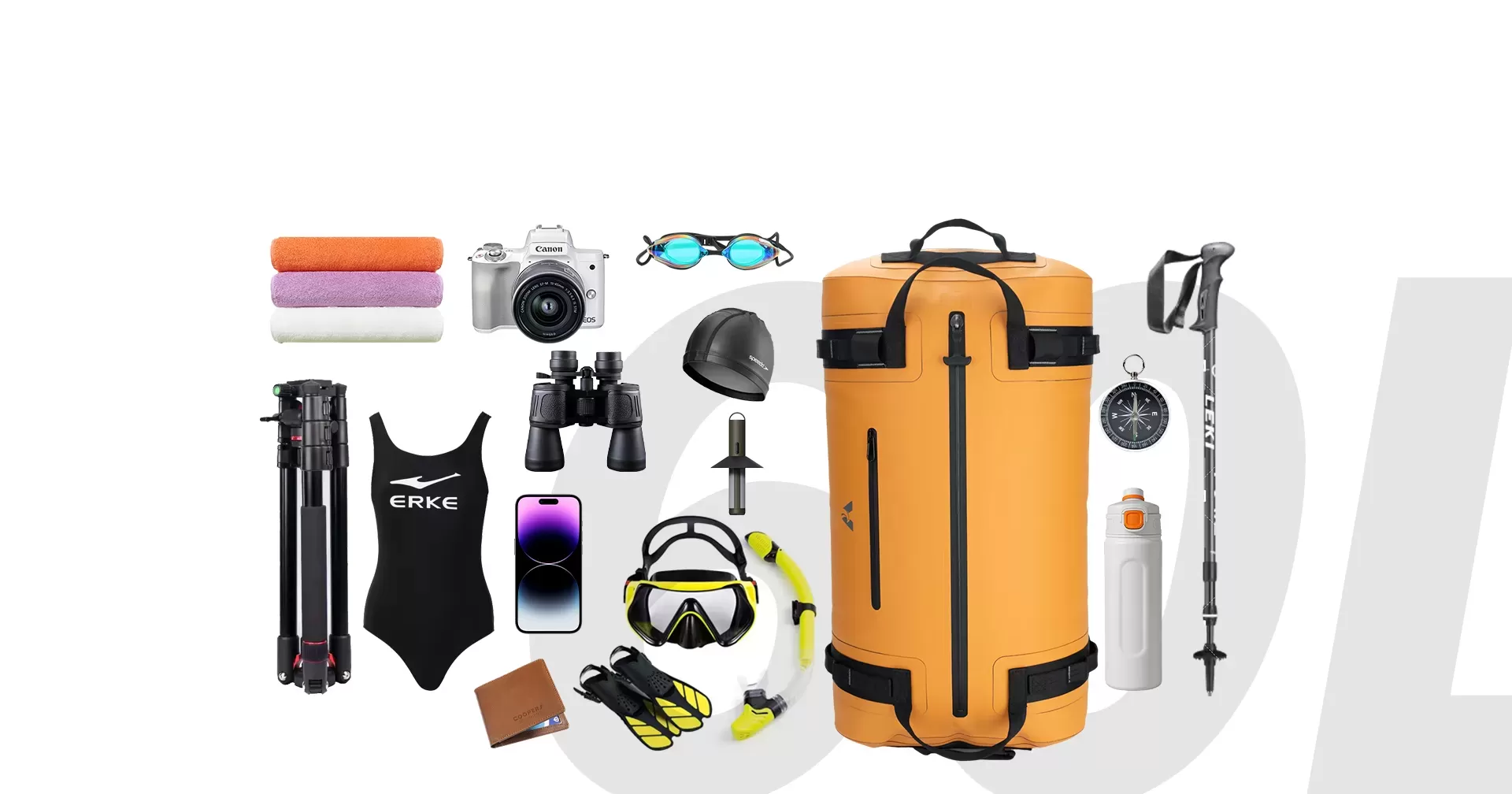
1. Custom Tooling & High-Frequency Welding Die Development
IPX7 waterproof bags do not rely on thread stitching. Instead, they use High-Frequency (HF) or Radio Frequency (RF) welding to create molecular bonds between fabric panels. Every unique bag shape, embossed logo, and structural joint requires custom welding dies made from aluminum or brass.
Generic off-the-shelf tooling severely limits your design freedom. Experienced IPX7 bag manufacturers provide complete in-house mold engineering to transform your 3D CAD files into precision welding dies.
3D Tooling CAD Design: Engineers analyze your tech pack to optimize weld seam widths, corner radii, and wall clearances.
Precision Aluminum Tooling: CNC machining centers fabricate custom welding dies within strict dimensional tolerances (±0.05mm).
Tooling Cost & Timeline Control: The factory should design, cut, and test custom tooling within 10 to 15 business days.
Proper tooling design prevents micro-pinholes at seam intersections. Correct pressure distribution across the die face eliminates weak spots where water leaks typically occur.
2. Tailored Fabric Sourcing & TPU/PVC Lamination
The foundation of any IPX7 product is its composite fabric. Buyers often require specific hand-feel, tear resistance, material weight, and custom Pantone color matching to align with seasonal brand aesthetics.
Top-tier manufacturers do not restrict you to standard stock fabrics. They work directly with specialized textile lamination mills to produce custom material formulations tailored to your exact specifications.
Custom Coating Lamination: Options for single-sided or double-sided Thermoplastic Polyurethane (TPU) lamination on 210D, 420D, or 840D nylon and polyester base fabrics.
Sustainable Fabric Alternatives: Sourcing for Recycled TPU (rTPU) and Global Recycled Standard (GRS) certified textiles to support eco-friendly product lines.
Global Chemical Compliance: Guaranteeing that all raw fabrics pass REACH, RoHS, and California Proposition 65 testing for toxic substances.
Custom fabric sourcing gives your brand a distinct competitive advantage. It ensures the exact balance of abrasion resistance, cold-crack resistance, and physical weight your target market demands.
3. Integration of Airtight Zippers & Specialized Hardware
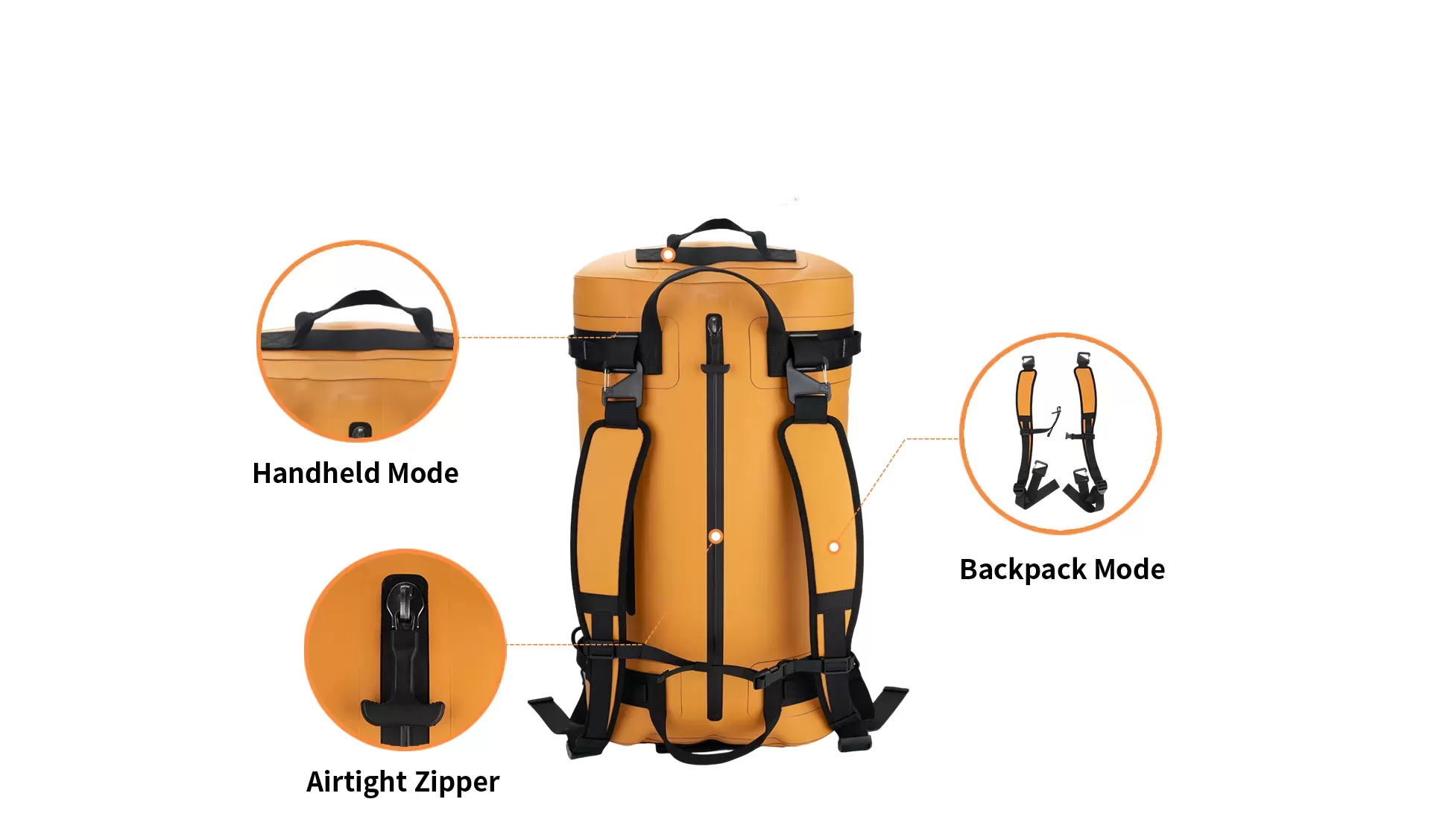
The most challenging areas on an IPX7 bag are the openings, pass-through ports, and hardware attachment points. Integrating airtight zippers, purge valves, or hydration hose ports without destroying water tightness demands advanced engineering skill.
In the middle of your engineering process, working with a seasoned manufacturer like Weierken ensures these critical components integrate seamlessly into your customized production workflow.
Airtight Zipper Welding: Precision welding of waterproof zippers directly to TPU fabrics without causing heat distortion along the zipper teeth.
Specialized Component Assembly: Seamless installation of air-release purge valves, touch-screen clear TPU windows, and magnetic closure systems.
Reinforced Load Anchors: Structural RF welding for shoulder strap attachment points and handles, ensuring they withstand high pull forces without tearing the fabric coating.
A factory with advanced hardware integration capabilities tests every high-stress weld point under heavy mechanical load. This step ensures structural seams will not peel or leak during rugged outdoor use.
4. Rapid Prototyping & Pre-Production IPX7 Functional Testing
Investing thousands of dollars in mass production without validating functional prototypes introduces severe financial risk. Prototyping allows you to test form, fit, ergonomics, and waterproof performance before mass tooling sign-off.
Capable IPX7 bag manufacturers maintain dedicated rapid prototyping lines to build functional samples quickly and perform early pressure testing.
Tech Pack to Sample Turnaround: Translating CAD drawings and tech packs into physical paper patterns and working samples within 7 to 10 days.
24-Hour Inflation Testing: Inflating prototype samples to 2–3 PSI and monitoring internal pressure over 24 hours to verify air-tightness.
Submersion Lab Testing: Testing sample bags in water submersion tanks at a 1-meter depth for 30 minutes to confirm IPX7 compliance before cutting production fabric.
Receiving fully tested prototypes alongside detailed internal lab reports gives your engineering team the confidence required to approve bulk manufacturing.
5. Private Labeling & Retail-Ready Packaging Solutions
Comprehensive OEM service extends past bag construction. It includes customized brand labeling and packaging execution. For brands selling through big-box retail, specialized outdoor shops, or e-commerce platforms, packaging compliance is crucial.
Your manufacturing partner should offer end-to-end private labeling and retail packaging solutions that streamline your supply chain and reduce secondary handling fees.
Branding Execution: Application of seamless high-frequency logo embossing, durable screen printing, or reflective heat-transfer graphics.
Custom Retail Packaging: Production of custom color boxes, eco-friendly kraft paper hangtags, and plastic-free packaging materials.
E-Commerce & Amazon FBA Preparation: Applying FBA barcode labels, suffocation warning polybags, and heavy-duty corrugated master cartons built for drop testing.
By letting your OEM factory handle final labeling, packaging, and barcoding, you receive retail-ready inventory directly at your destination warehouse.
A capable IPX7 bag manufacturer serves as an extension of your product design team. Selecting a supplier with expertise in custom tooling, tailored fabrics, hardware integration, prototyping, and private labeling can reduce your product development cycle by over 30%.
At Weierken, our engineering team brings decades of high-frequency welding experience to every custom OEM project. We help brands turn complex waterproof designs into market-ready commercial products.
Do you have a tech pack or design sketch for an upcoming waterproof bag line? Contact our OEM team today to get a technical assessment report and a custom tooling quote within 24 hours!
Frequently Asked Questions (FAQ)
1. How much does custom high-frequency welding tooling cost for an IPX7 bag?
Custom tooling costs vary depending on bag size, seam complexity, and the number of welded accessories. Simple welding dies for small pouches start around $800 to $1,500, while complete tooling sets for complex multi-compartment backpacks range between $3,000 and $6,000.
2. Can IPX7 bag manufacturers work with recycled TPU or eco-friendly materials?
Yes. Modern high-frequency welding equipment works effectively with Recycled TPU (rTPU) and GRS-certified fabrics. However, engineers must verify TPU coating purity during sampling to ensure consistent weld strength across production batches.
3. What information must be included in a tech pack for custom waterproof bag OEM production?
A detailed tech pack should include 2D/3D vector drawings with dimensions, fabric specifications (denier and TPU coating thickness), color references (Pantone numbers), hardware placement, logo artwork files, and target waterproof rating requirements.
4. What is the typical lead time from prototype sign-off to mass production delivery?
After prototype approval and tooling completion, standard mass production lead time is typically 35 to 45 days. This timeline accounts for raw material coating lamination, high-frequency welding assembly, 100% inflation testing, and final packaging.
5. How do factories test whether an airtight zipper installation meets IPX7 standards?
Factories install the airtight zipper into the TPU body panel, close the seal completely, inflate the bag with compressed air, and submerge the entire unit in a clear water tank. If no air bubbles escape from the zipper teeth or welded seams over several minutes, the installation passes inspection.