

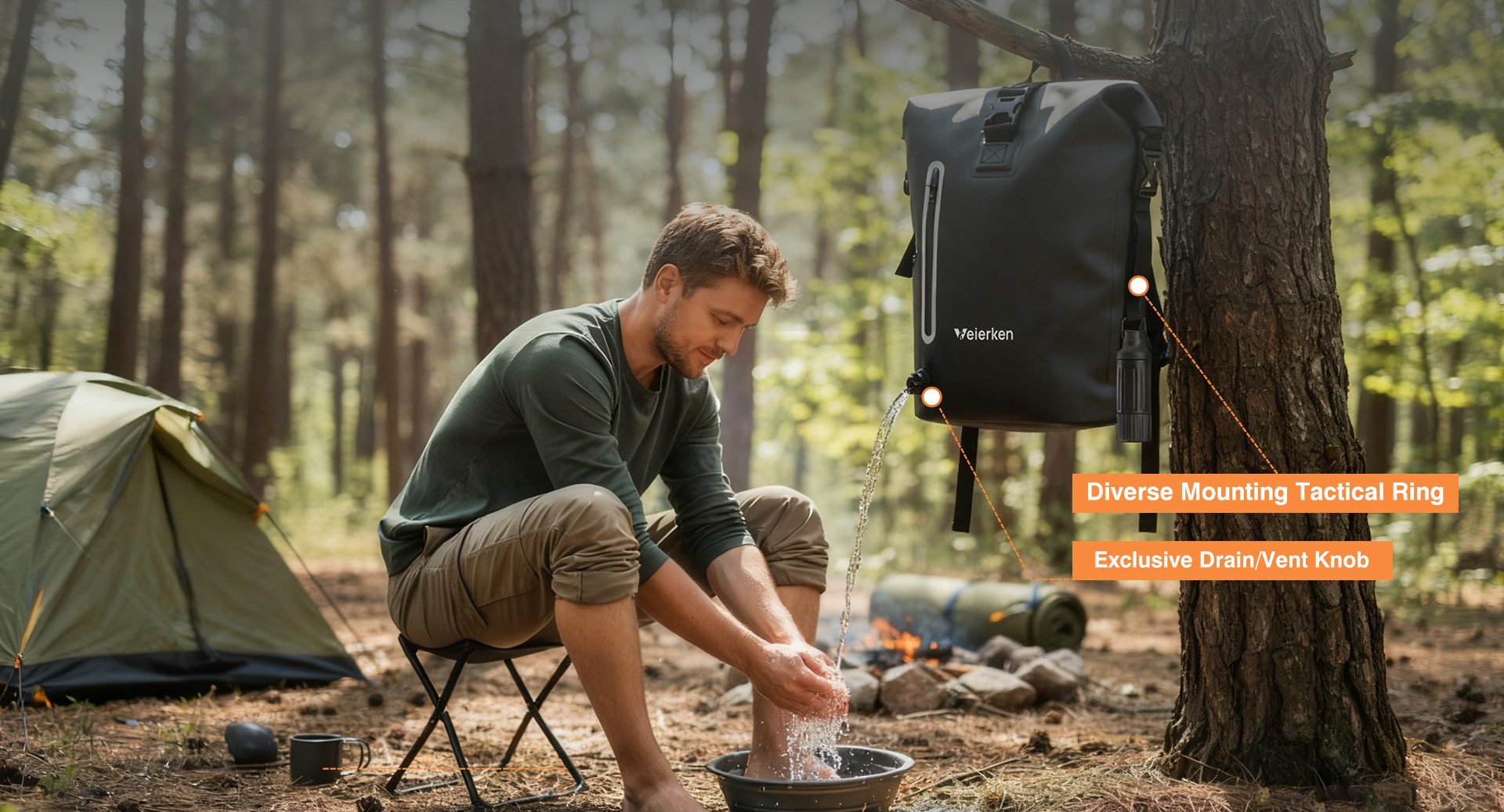
Roll top bags remain a dominant product style across outdoor, urban commute, and specialized transport markets in 2026. The expandable roll-down closure offers reliable weather protection and adaptable volume control. For product managers and procurement leads, launching a market-leading bag line requires selecting the right manufacturing partner.
Sourcing a high-performance odm roll top bag involves balancing material specs, waterproof welding techniques, and resilient supply chain logistics. Brands need manufacturers capable of handling advanced engineering while keeping production efficient. As a trusted partner with 20 years of industry experience, Weierken helps global brands turn complex technical concepts into reliable commercial products.
1. Core Material Specifications for High-Performance Roll Top Bags
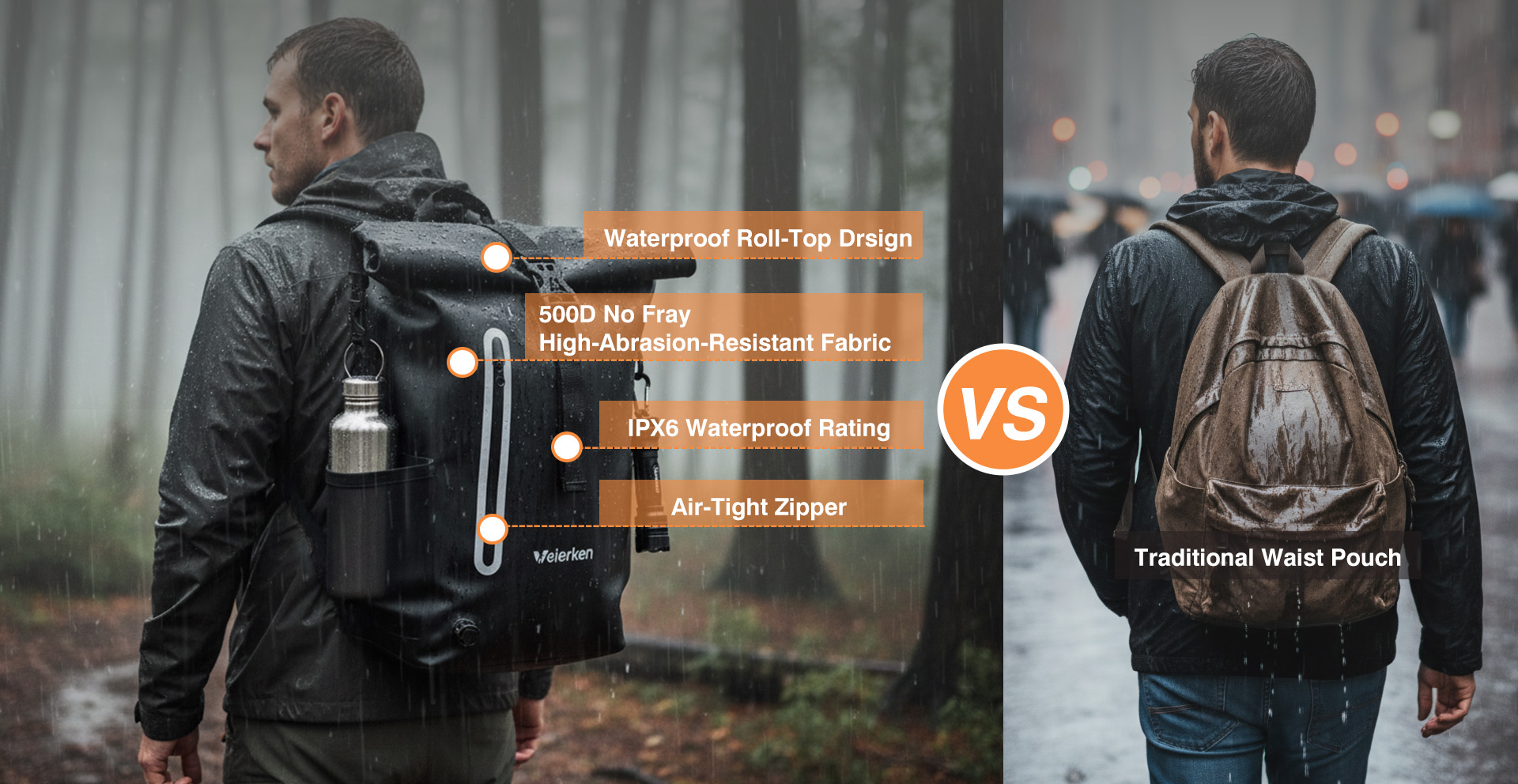
The core material forms the first line of defense against abrasion, water penetration, and UV degradation. Evaluating fabric specifications early prevents costly product failures in the field.
TPU vs. PVC: The Shift Toward Sustainability
Thermoplastic Polyurethane (TPU) has replaced traditional Polyvinyl Chloride (PVC) as the industry standard for premium dry gear. TPU offers distinct performance advantages:
Low-Temperature Flexibility: TPU remains flexible below freezing, whereas PVC turns brittle and cracks.
Non-Toxic Profile: TPU contains no phthalates or heavy metals, meeting strict European REACH and US CPSIA compliance rules.
High Peel Strength: TPU coatings bond directly with target base fabrics, resisting delamination even under heavy stress.
While PVC remains a lower-cost option for basic entry-level products, modern brands prioritize TPU to meet environmental expectations and secure longer product lifespans.
Recycled Fabrics (RPET) and Eco-Friendly Coatings
Environmental requirements shape current market demand. High-performance eco-friendly ODM bags now utilize Recycled Polyethylene Terephthalate (RPET) derived from post-consumer plastic bottles. Combining RPET shell fabric with solvent-free TPU lamination creates a sustainable bag without sacrificing waterproof protection or tensile strength.
Fabric Denier and Abrasion Resistance Balance
Selecting the correct yarn weight (denier) depends on the intended end-use of your custom waterproof roll top backpack:
420D Nylon/Polyester: Lightweight and packable. Ideal for daily commuter packs and packable dry sacks where lower weight matters most.
840D Nylon: The ideal sweet spot for heavy-duty outdoor gear. Offers superior puncture resistance without adding unnecessary bulk.
1680D Ballistic Nylon: Built for extreme rugged environments, commercial delivery, and tactical applications requiring high tear resistance.
2. Engineering & Manufacturing Specs: Waterproofing & Durability
Fabric choice alone does not make a bag waterproof. The real technical challenge lies in how panels are joined together at the factory level.
Advanced Seam Construction: RF Welding vs. Hot-Air Taping
Traditional needle stitching punches thousands of microscopic holes into fabric, requiring heat-applied seam tape on the inside. For absolute waterproof performance, High-Frequency Radio Frequency (RF) Welding or Ultrasonic Welding is necessary.
RF welding uses electromagnetic energy to melt TPU coatings at the atomic level, fusing seam panels into a single solid piece. This process creates a 100% airtight seam that withstands submersion. Hot-air taped seams work well for lighter weather-resistant commuter packs, but welded construction is mandatory for true submersible dry bags.
Watertight Ratings Demystified
Defining clear watertight specs protects your brand from warranty claims. You should align your target IPX rating with product intent:
IPX6: Protects against powerful water jets and heavy rainstorms. Requires three tight folds of the roll top closure.
IPX7: Withstands temporary submersion in water up to 1 meter deep for 30 minutes. Requires an airtight zipper or specialized roll top seal design.
IPX8: Built for continuous underwater immersion under specified pressure conditions.
Critical Stress Point Reinforcement Techniques
Roll top closures endure constant twisting, pulling, and folding. High-performance manufacturing requires heavy-gauge bar-tack stitching at shoulder strap attachment points. Factories should add reinforced Hypalon or TPU patches behind key tension zones to prevent fabric tear-out during heavy loads.
3. Functional Design Innovations for 2026 Trends
Modern consumers demand versatile functionality. Sourcing an updated odm roll top bag means adding features that adapt to daily multi-use scenarios.
Dual-Functionality: Cooler + Dry Bag Hybrid Systems
A growing trend combines dry bag welding techniques with closed-cell thermal foam insulation. This hybrid design functions as a leakproof cooler bag and a heavy-duty waterproof pack. Using closed-cell NBR or EVA foam between welded TPU layers keeps ice frozen for days while preventing melted water from leaking through seams.
Next-Gen Closure Systems and Hardware
Standard plastic side-release buckles remain common, but premium lines are adopting upgraded hardware systems:
Magnetic Buckles (e.g., Fidlock): Allow single-handed operation and fast access, even while wearing winter gloves.
Aluminum G-Hooks: Deliver low-profile durability for outdoor adventure packs.
Reinforced Stiffening Bars: Integrated polymer strips inside the top seam ensure a smooth, tight roll every time.
Ergonomics and Modular Storage Options
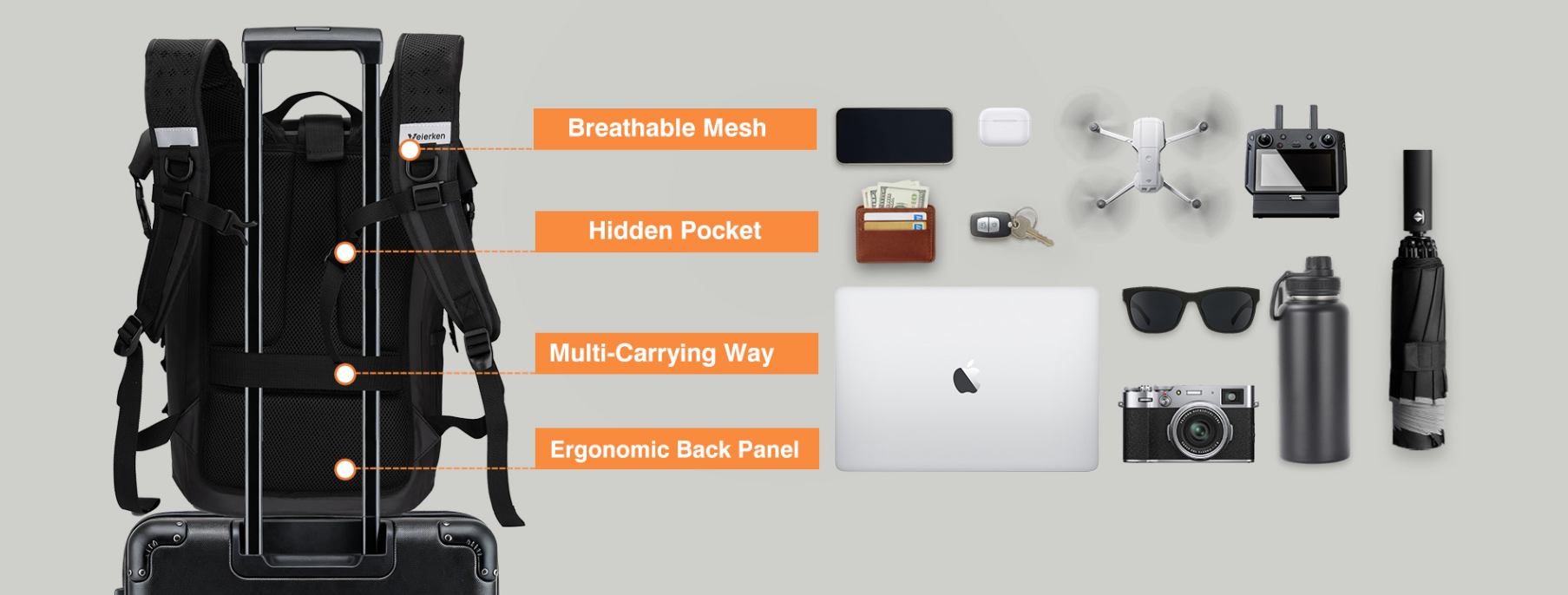
A simple dry bag can feel uncomfortable during long hikes. Modern custom waterproof roll top backpack designs incorporate 3D molded EVA back panels with airflow channels. Modular internal sleeves—such as removable padded laptop compartments—allow users to switch quickly from a weekday work pack to a weekend outdoor dry bag.
4. Supply Chain Resilience: China + Cambodia Dual-Base Advantage
Selecting a partner involves evaluating global manufacturing logistics and trade policies alongside technical capacity.
Strategic Tariff Optimization via Duty-Free Production
Tariffs can significantly reduce profit margins for North American and European brand owners. Working with a duty-free bag supplier (Cambodia base) offers significant cost advantages. Brands can handle R&D, material sourcing, and initial sampling in China, then shift mass volume production to Cambodia to optimize import duties.
High-Capacity Production and Reliable Lead Times
Production delays disrupt seasonal retail windows. Weierken operates three self-owned manufacturing bases covering over 80,000 square meters. Supported by more than 3,000 skilled workers, our facilities provide reliable output stability for high-volume orders.
Strict Quality Control and Testing Protocols
A true high-performance dry bag manufacturer runs systematic factory quality checks before shipping. Standard protocols include:
Raw Material Tensile Testing: Verifying fabric tear strength prior to cutting.
Inflation Air-Pressure Testing: Inflating welded bags for 24 hours to check for slow leaks.
Hydrostatic Head Testing: Confirming water pressure resistance under extreme lab conditions.
AQL 2.5 Inspection: Conducting final outbound quality audits based on strict international standards.
5. Partnering with Weierken: Your Trusted ODM Manufacturing Partner
Building a successful bag line requires an experienced manufacturing partner who understands technical specs and market deadlines.
Weierken brings 20 years of dedicated experience to waterproof bag manufacturing, operating continuously since 2006. Over two decades, we have supported more than 2,000 global brands with customized OEM and ODM production solutions.
Our team assists across every stage of the product lifecycle:
Reviewing original tech-packs and offering Design-for-Manufacturability (DFM) advice.
Prototyping sample designs quickly using advanced R&D equipment.
Running eco-friendly material testing tailored to your market destination.
Executing scalable mass production through our China and Cambodia dual-factory network.
Conclusion & Next Steps
Sourcing a high-performance odm roll top bag requires careful attention to material selection, high-frequency seam welding, and functional hardware integration. Working with an experienced manufacturer ensures your product delivers long-term durability and weather protection.
Are you ready to develop your next custom bag collection? Contact the engineering team at Weierken today to discuss your tech-pack, review eco-friendly material swatches, and request a detailed quote for your production run.
Frequently Asked Questions (FAQ)
1. What is the standard MOQ for a custom odm roll top bag?
Minimum order quantities typically start at 500 to 1,000 units per style or colorway, depending on custom fabric dyeing requirements and specific TPU coating specs. Contact our team to discuss your specific batch needs.
2. What is the main difference between RF welding and hot-air taping?
RF welding fuses TPU-coated fabric panels together using electromagnetic energy to create a seamless, watertight bond ideal for submersibles. Hot-air taping applies a heat-sealed tape over stitched seams, making it suitable for rain-resistant backpacks and light outdoor gear.
3. How does manufacturing in Cambodia help lower import tariffs?
Cambodia benefits from preferential trade agreements with several major import markets. Producing volume orders at our Cambodia facility can lower or eliminate import tariffs for US and European brand buyers compared to direct shipments from China.
4. What is the typical lead time from design to bulk delivery?
Initial sample development and tech-pack adjustments usually take 7 to 14 days. Once pre-production samples are approved, mass production typically takes 35 to 50 days depending on order volume and material availability.
5. Can Weierken source certified recycled eco-friendly fabrics?
Yes. We offer a wide range of Global Recycled Standard (GRS) certified RPET fabrics paired with eco-friendly TPU laminations, allowing your brand to launch fully sustainable and waterproof bag lines.