
The global marine and water sports market is expanding rapidly. Marine gear has moved beyond commercial sailing vessels into mainstream recreational boating, kayaking, and coastal travel.
Today, end-users demand clean aesthetics paired with professional-grade technical performance. Sourcing managers and outdoor brand buyers need custom gear that protects equipment against extreme elements.
Staying competitive in 2026 requires partnering with an experienced factory that understands raw material innovation, advanced seam engineering, and international trade strategy.
Selecting a capable partner for your odm sailing bag line ensures your brand stays ahead of market demands while protecting your profit margins.
At Weierken, we combine 20 years of specialized waterproof bag manufacturing with dual-country production capabilities to help global brands launch market-leading marine equipment.
1. The 2026 Marine Bag Market: What B2B Buyers Need to Know
Consumers no longer buy separate bags for weekend boating and city travel. Modern outdoor enthusiasts expect a high-performance custom waterproof marine bag to function on deck and look stylish on urban streets.
This market shift creates unique challenges for procurement managers and brand product directors during product development.
Key market pressures driving B2B decisions include:
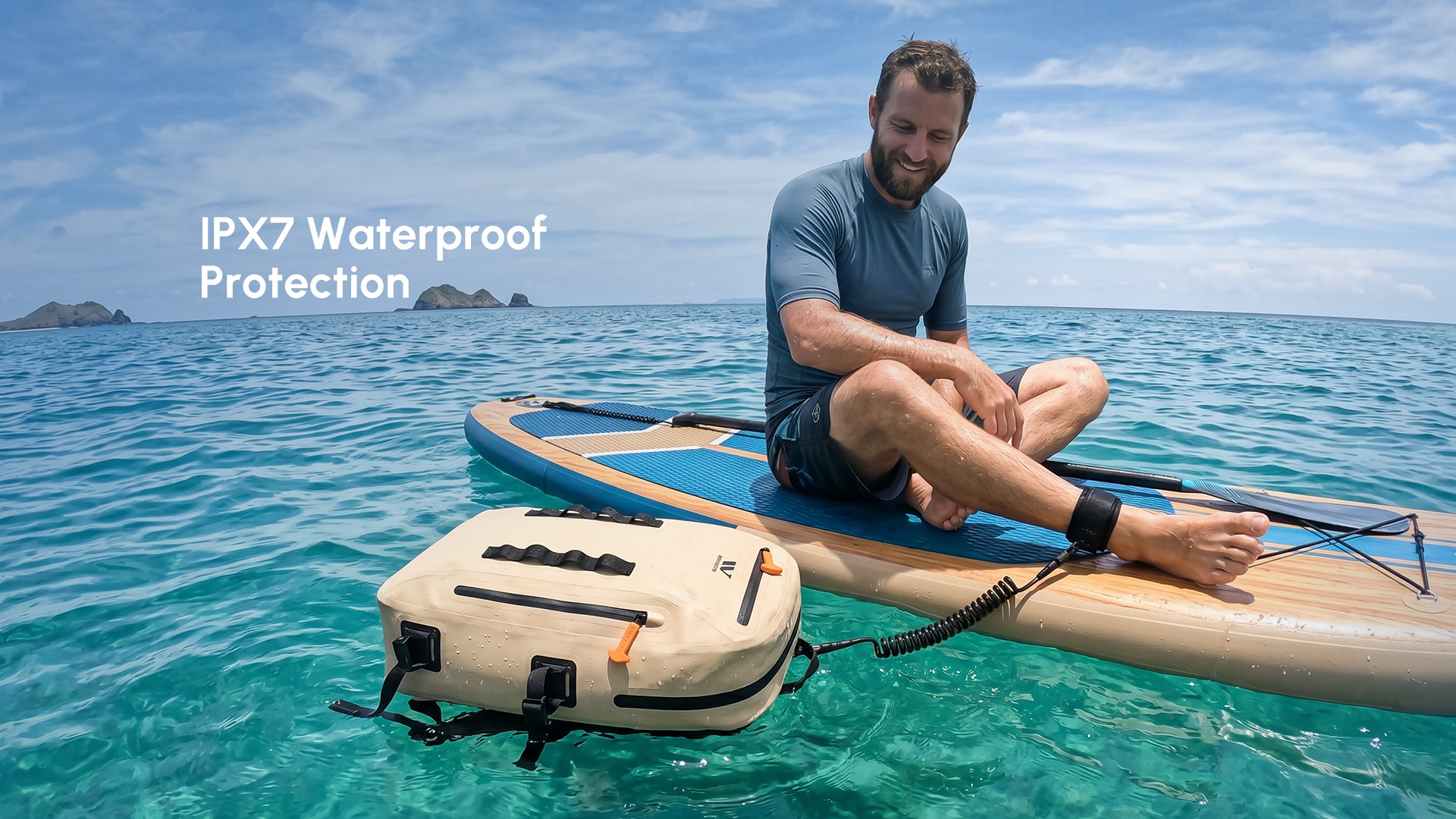
Higher Technical Expectations: Basic splash resistance is no longer enough. End-users demand true IPX7 or IPX8 submersion waterproofing.
Premature Material Degradation: Cheap PVC fabrics crack under harsh sunlight and turn sticky when exposed to saltwater.
Geopolitical Supply Risks: Relying on a single manufacturing country exposes your business to tariff surges and freight delays.
Successful brands are shifting away from off-the-shelf catalog products. Instead, they choose complete ODM (Original Design Manufacturer) partnerships that cover initial industrial design, prototype testing, and full-scale factory production.
2. Key ODM Sailing Bag Trends Shaping 2026
Understanding emerging technical trends helps you build a product lineup that appeals to modern ocean sports consumers while lowering warranty return rates.
Trend 1: Advanced Waterproofing & Seamless RF Welding
Traditional needle stitching cuts thousands of micro-holes through waterproof fabric. Standard sewn seams taped with hot air tape eventually peel away under tropical heat or heavy salt exposure.
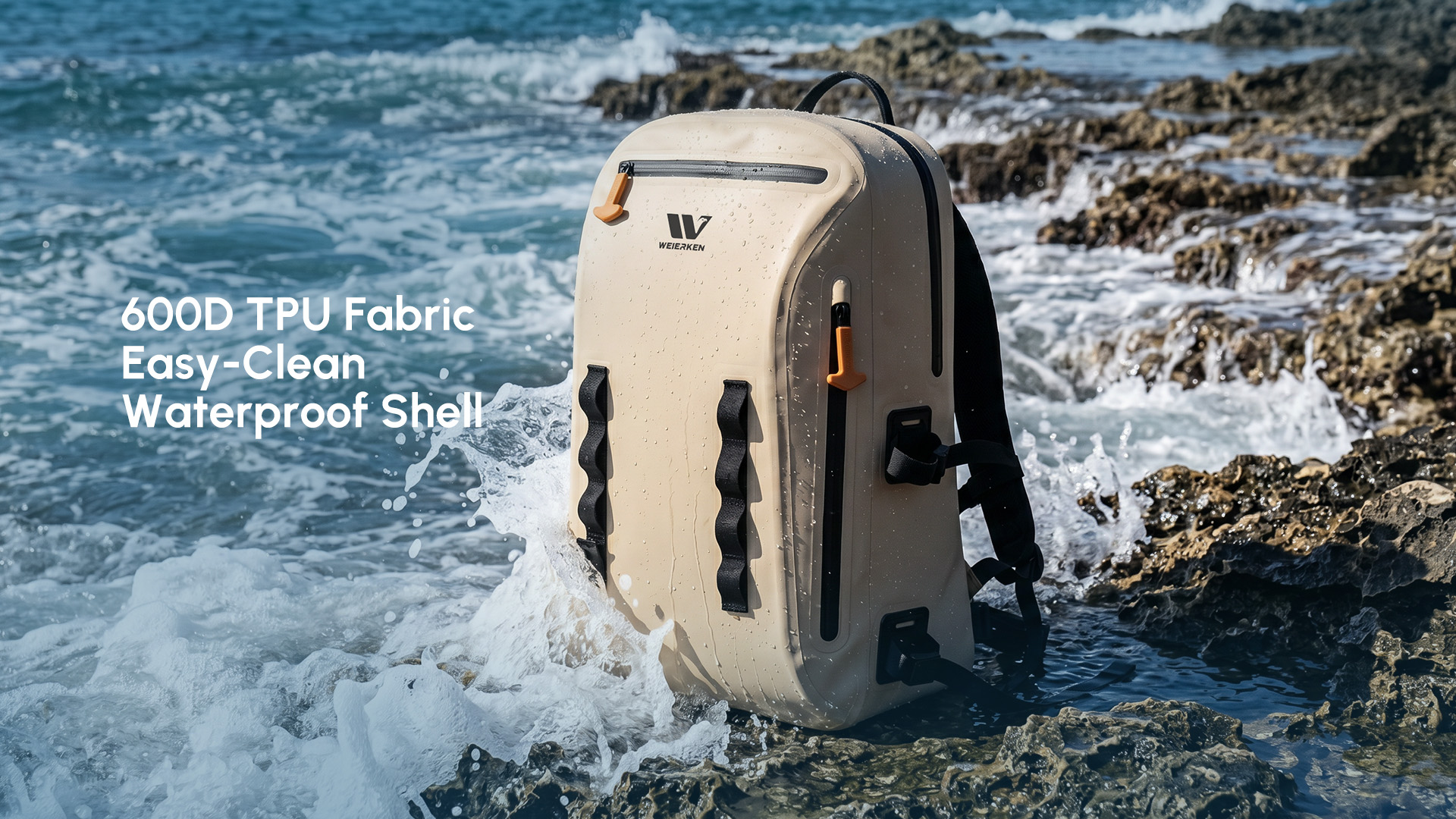
The standard in 2026 is High-Frequency (RF) welding combined with TPU-laminated fabrics. RF welding uses high-frequency electromagnetic energy to fuse multi-layer fabrics into a single solid piece.
Technical benefits of RF-welded construction include:
Puncture-Free Seams: Fused joints maintain complete structural integrity under high internal air pressure.
IPX8 Waterproof Ratings: Keeps vital electronics and dry gear completely dry even during temporary underwater submersion.
Saltwater Resistance: Seamless construction leaves no exposed needle threads to absorb sea salt or rot over time.
As a specialized heavy-duty dry bag manufacturer, Weierken operates advanced high-frequency welding lines to manufacture completely watertight sea packs built for ocean swells.
Trend 2: Eco-Friendly & Sustainable Marine Fabrics
Environmental legislation in Europe and North America is reshaping the outdoor equipment industry. Consumers actively favor brands that use recycled, non-toxic materials.
By 2026, sourcing a sustainable odm sailing bag made from recycled ocean plastics or GRS-certified RPET (Recycled Polyethylene Terephthalate) will be essential for market entry.
Key sustainable material standards include:
GRS-Certified Recycled Nylon/RPET: Fabrics made from recovered post-consumer plastics that deliver identical tensile strength to virgin nylon.
PFC-Free DWR Coatings: Fluorocarbon-free water-repellent finishes that prevent hazardous chemicals from washing into marine ecosystems.
Biodegradable TPU Films: Replacing hazardous PVC with recyclable, non-toxic TPU laminates that remain flexible in cold weather.
Our engineering team helps brands transition their product lines toward eco-friendly marine gear ODM solutions without sacrificing durability or waterproofing.
Trend 3: Ergonomic, Modular & Minimalist Marine Designs
Heavy, bulky dry duffels are being replaced by clean, modular designs that adapt to different marine adventures.
Sailors want clever storage compartments that keep wet gear separate from dry clothing, alongside secure attachment options for boat decks.
In-demand functional design features:
Wet/Dry Separation Pockets: Internal waterproof barriers keep damp wetsuits away from laptops and dry towels.
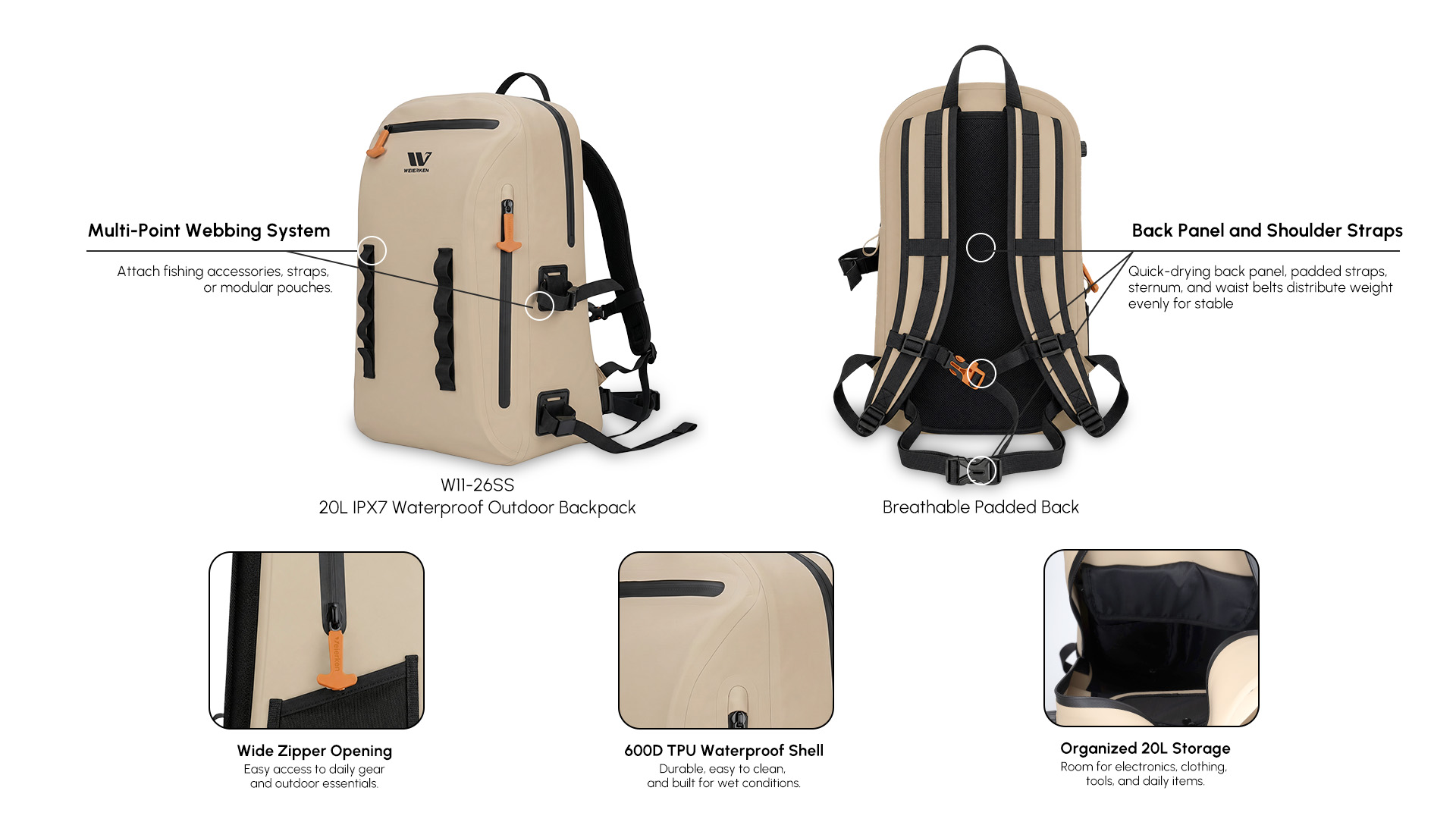
Deck Tie-Down Systems: Integrated lash points, MOLLE webbing, and low-profile D-rings secure bags to boat railings during rough seas.
Molded Non-Slip Bases: Abrasion-resistant molded bottoms prevent bags from sliding across wet fiberglass boat decks.
Ergonomic Carry Options: Convertible shoulder straps turn heavy duffel bags into comfortable wholesale sailing backpacks within seconds.
Our in-house R&D studio balances functional innovation with clean aesthetics, turning complex gear requirements into simple, modern product designs.
Trend 4: Agile Supply Chains: China + Cambodia Dual-Base Manufacturing
Unpredictable trade policies and shifting tariff structures can ruin product profit margins overnight. B2B buyers require flexible manufacturing solutions to mitigate financial risk.
Partnering with a supplier that maintains multiple manufacturing bases provides immediate trade flexibility and supply continuity.
Advantages of Weierken's dual-base footprint:
Tariff Mitigation: Production options in Cambodia allow buyers in North America and Europe to optimize import duty structures.
Massive Scalability: Over 80,000 square meters of production space across 3 owned factories handle large seasonal order spikes smoothly.
Stable Workforce: More than 3,000 trained assembly technicians deliver consistent stitch quality and seam welding accuracy.
This dual-region strategy gives your brand supply security, reliable delivery timelines, and optimized landed costs regardless of global trade shifts.
3. Why Weierken is Your Strategic ODM Partner for Sailing Bags
Navigating the transition from initial design sketches to mass production requires an experienced production partner. Weierken provides end-to-end support at every development phase.
Since 2006, we have specialized in manufacturing high-performance waterproof gear, outdoor packs, and thermal bags for more than 2,000 global brands.
Why international procurement teams choose Weierken as their custom boat bags supplier:
Complete Design-to-Delivery Support: We turn crude sketches, tech packs, or 3D renderings into production-ready samples in days.
In-House Testing Facility: Every manufacturing batch undergoes salt-spray corrosion testing, 24-hour inflation leak checks, and drop tests.
Strict Quality Assurance: Full inline and final AQL 2.5 inspection protocols ensure zero defective bags leave our factory floor.
Material Innovation Network: Direct relationships with major fabric mills ensure early access to cutting-edge TPU films and eco-friendly textiles.
We combine deep manufacturing expertise with rapid prototype development to get your new product lines to market quickly.
4. How to Start Your ODM Sailing Bag Project with Weierken
Launching a custom technical bag line is straightforward when working with our standardized development workflow.
Our streamlined 5-step ODM process:
Step 1: Project Discovery & Consultation: Share your design ideas, target specifications, quantity needs, and target delivery windows with our team.
Step 2: Material & Hardware Selection: Select from our extensive inventory of TPU nylons, recycled RPET, airtight zippers, and salt-proof hardware.
Step 3: Rapid Prototyping: Our R&D sample room creates functional prototypes for your team to test in real-world conditions.
Step 4: Mass Manufacturing: Production begins at our China or Cambodia facility based on your preferred duty optimization strategy.
Step 5: Quality Inspection & Delivery: Final testing confirms compliance before we manage sea or air freight straight to your warehouse door.
Our dedicated account managers guide you through every milestone, keeping your project on schedule and within budget.
Conclusion & Call to Action
Capturing market share in the growing 2026 marine sports sector requires combining modern eco-friendly materials, flawless RF-welded waterproofing, and robust supply chain planning.
Standard bag factories cannot provide the specialized equipment, corrosion testing, and multi-country production footprint needed for high-end marine gear.
Ready to launch your next high-performance odm sailing bag collection?
Contact the engineering team at Weierken today to request your custom design consultation, project price quote, or product catalog!
Frequently Asked Questions (FAQ)
1. What materials are best suited for an odm sailing bag intended for offshore use?
For high-exposure marine use, 840D to 1000D TPU-laminated nylon is ideal. TPU provides superior UV stability, excellent abrasion resistance, flexibility in cold weather, and complete water protection when high-frequency welded. It outperforms traditional PVC in environmental impact and durability.
2. How does Weierken's dual-base manufacturing in China and Cambodia lower tariff costs?
Different importing countries apply varying tariff rates based on the country of origin. By operating fully equipped factories in both China and Cambodia, Weierken allows buyers to route production through Cambodia, taking advantage of favorable trade terms and lower duty rates for US and European imports.
3. What certifications do your sustainable marine fabrics hold?
Our sustainable fabrics hold Global Recycled Standard (GRS) certification, ensuring full traceability of recycled fibers from raw waste to finished textile. Additionally, our fabrics comply with European REACH and US California Proposition 65 safety regulations.
4. What is the typical lead time from initial product design to final shipping?
Sample creation takes 7 to 12 days once tech specs are finalized. Upon sample approval and order confirmation, mass production typically takes 35 to 45 days. Transit times vary based on sea or air freight choices to your final destination.
5. Can we customize the hardware, logos, and color combinations for custom waterproof marine bags?
Yes, as a full-service ODM factory, we offer complete customization. You can customize fabric colors, print high-durability reflective logos, select specialized airtight or water-resistant zippers, and mold custom hardware branded with your company logo.
6. How does RF welding compare to traditional stitched and taped seams?
High-Frequency (RF) welding melts TPU coatings together at a molecular level, creating a completely seamless, solid connection without needle holes. Traditional stitched seams rely on taped backings that can peel or leak after prolonged exposure to heat, salt, and humidity.